The Latest: President Trump meets NATO leaders as they try to show they are serious about defense
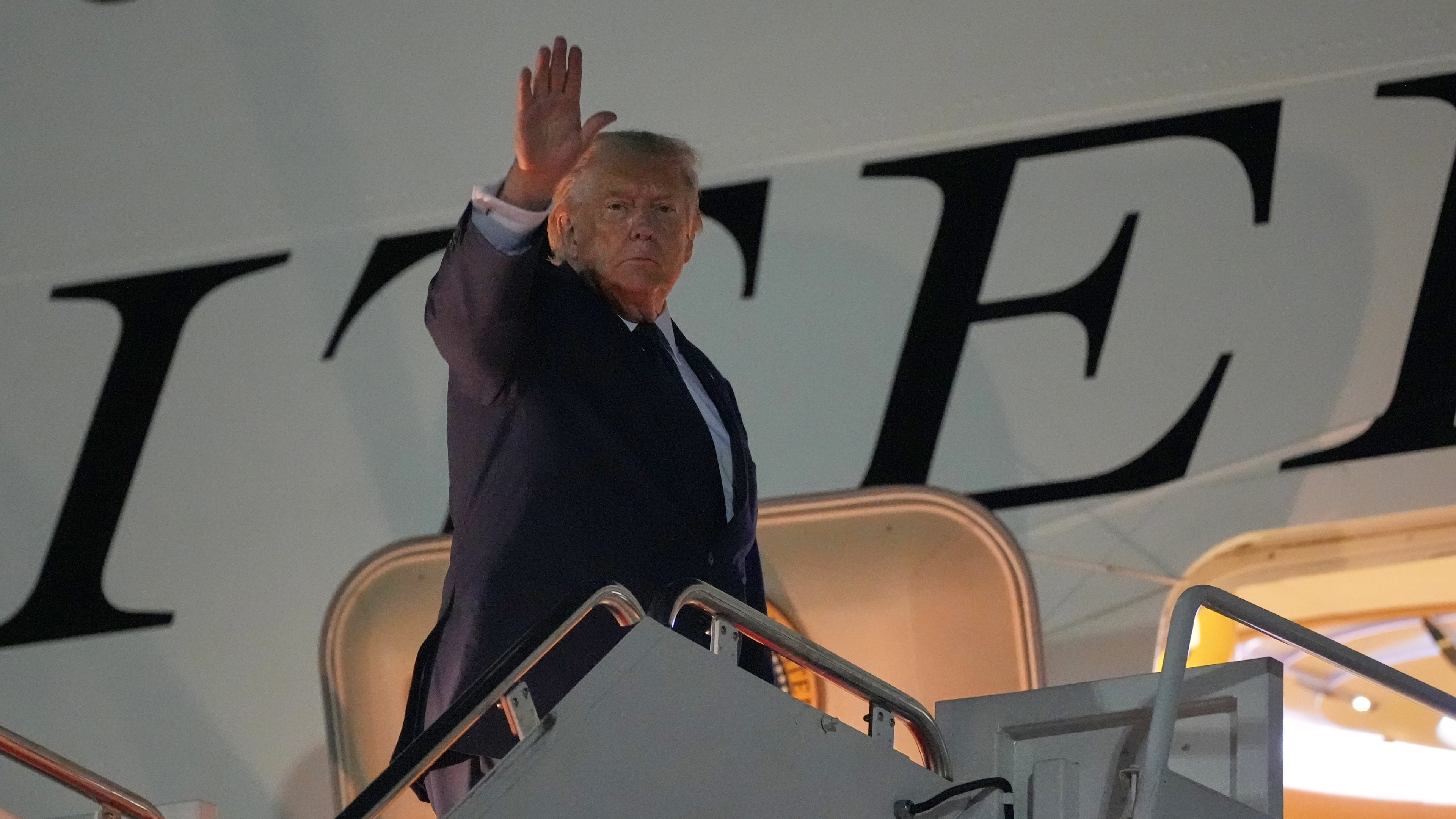
U.S. President Donald Trump meets fellow NATO leaders at a summit on Tuesday as the alliance tries to persuade him that their countries are actively increasing their military capabilities even as the American focus shifts away from its defense of Europe toward Asia.
Trump has been critical of NATO's abilities to function without American leadership and power, moved to withdraw U.S. troops from Europe and cast doubt on whether the U.S. would come to the aid of a NATO ally under attack. He also remains disappointed at some NATO allies’ refusal to join the Iran war, which he had launched alongside Israel without consulting them.
The two-day summit in Ankara, Turkey, will showcase a series of military projects worth billions of dollars in an attempt to persuade Trump they are making a stronger Europe for a stronger NATO.
The Latest:
Zelenskyy reiterates call for Ukraine to join NATO
Zelenskyy made a fresh appeal for Ukraine to be allowed to join NATO, saying that his country’s armed forces are highly experienced and resilient would only boost the alliance’s defense capabilities.
“Ukraine belongs in NATO,” Zelenskyy said at a defense industry forum, near where NATO leaders were due to gather later on Tuesday.
Zelenskyy highlighted Ukraine’s adaptability and its ability to strike deep inside Russia, hit oil refineries and other energy targets. He said that Ukraine’s armed forces are “eliminating” on average 30,000 Russian troops every month.
“Do you believe it would be right to live outside NATO, a country and a people with this level of defense capability?” he said.
Trump and Erdogan greet each other with arm squeezes
The Turkish leader was waiting on the blue carpet for Trump as he descended from Air Force One. They shook hands and Trump squeezed Edrogan’s shoulder.
Erdogan was wearing sunglasses as they posed for pictures in the bright sun.
He then tapped and squeezed Trump’s arms, and they walked the carpet together, inspecting the Turkish troops, with Erdogan gently guiding Trump by the arms at times.
They did not make comments to reporters, but Trump could be heard speaking to Erdogan and his wife about the new airplane he’s using as Air Force One.
Ukraine seeks continued funding in war
Another top agenda item is continued support to Ukraine, now in a fifth year of full-scale war with Russia. European allies and Canada are funding most of Ukraine’s needs, including paying for about 90% of the country’s air defenses.
With European countries fearing what Moscow’s territorial ambitions might lie beyond Ukraine, leaders have described Kyiv as a bulwark against Russian advances.
Trump is expected to meet with Ukrainian President Volodymyr Zelenskyy on Wednesday.
The Netherlands announces more and smarter defense spending
The Dutch defense ministry says it is investing together with the United Kingdom in new amphibious transport vessels and with other NATO allies in replacing aging AWACS surveillance planes.
The government announced the plans on the first day of the NATO summit in Ankara to underscore its commitment to ramping up defense spending.
The ministry says the Dutch also are playing a leading role in a European initiative to co-produce and maintain American arms such as Stinger, Amraam, and PAC-3 missiles.
Defense Minister Dilan Yesilgöz-Zegerius says the Netherlands and European allies “are investing much more in strengthening European defense” with extra money “but also by working together smarter.”
Trump arrives in Ankara
Trump arrived in Ankara Tuesday afternoon for the NATO summit, as the transatlantic military alliance was announcing billions in arms deals in an attempt to appease the mercurial U.S. leader.
The U.S. president was expected to head first to the presidential compound of Turkish leader Recep Tayyip Erdoğan, a close ally to Trump who is hosting this year’s gathering.
Just before Air Force One touched down in Ankara, NATO hosted a defense forum that spotlighted billions of dollars in military projects aimed at demonstrating to Trump that European allies are investing more of their own money in defense.
NATO summits are highly symbolic
The 32 member countries of the world’s biggest military alliance will underline their unshakeable commitment to each other’s security, although the transatlantic bond has rarely seemed shakier. Still, the meeting is being organized around the theme of a stronger Europe in a stronger NATO.
Trump insists on loyalty
Trump has repeatedly slammed NATO, arguing the U.S. carries more than its fair share of military spending.
His grievances have been louder since the Iran war, as he has fumed over the fact that some member countries restricted the use of their bases to U.S. forces during the war and have not helped to reopen the Strait of Hormuz.
Pressed last month on what key U.S. allies could do to get back on his good side, Trump responded, “Just be loyal.”
German leader wants ‘signal of strength and unity’ in Ankara
Chancellor Friedrich Merz stressed before leaving Berlin that his country has doubled its defense spending since 2022.
He said that “we are not making this effort to do anyone a favor; we are making this effort because it is necessary for our defense, for our security.”
Merz said that “Russia remains a serious threat” and is “testing our determination every day.” He added that “it is all the more important that we send a signal of strength and unity in Ankara.”
Merz said: “This summit should send the message that we are building a more European NATO so that NATO can remain trans-Atlantic.”
Kremlin says it will keep a close watch of NATO summit
Kremlin spokesman Dmitry Peskov said that Moscow will closely watch the NATO summit in Ankara.
Asked about Ukraine urging its Western allies to deliver air defense assets, Peskov said that Kyiv’s push for more weapons wouldn’t prevent Russia from reaching the goals of what the Kremlin calls its “special military operation.”
Asked about the prospects for reaching a peaceful settlement in Ukraine, Peskov told reporters that “we maintain contact with the Americans via working-level channels, and we hope that their efforts to steer the situation onto a peaceful track will ultimately succeed.”
He reaffirmed that the hostilities could end once Kyiv “demonstrates goodwill and shows a readiness to make those important decisions that need to be made.”
Czech leaders divided over NATO spending
The bitterly divided leaders of the Czech Republic travelled separately to Turkey to attend the NATO summit on Tuesday.
Populist Prime Minister Andrej Babiš was flying with his Foreign Minister Petr Macinka and Defense Minister Jaromír Zůna, while President Petr Pavel followed them separately later.
Babiš returned to power after his ANO, or YES, movement won big in an October election, forming a governing coalition whose agenda includes steering the country away from supporting Ukraine.
The country’s budget for this year falls short of a NATO target for defense spending (less than 1.8% of GDP), despite pressure from the United States and repeated complaints from the president.
Before his departure for Ankara on Tuesday, Babiš said the government would meet at least the minimum of 2% next year but no increase.
Unlike the government, Pavel, a retired army general, is a staunch supporter of Ukraine in its fight against the Russian invasion.
The government originally refused to include Pavel in the delegation for the summit and did it it only after an intervention from the Constitutional Court.
Anti-NATO protestors detained in Ankara
Turkish police detained more than 20 protestors at a demonstration in central Ankara against the NATO summit.
Officers raised their riots shields to prevent media from filming and photographing the protest by supporters of left-wing political parties.
A legal association said 22 students affiliated with the Turkish Workers’ Party and three lawyers had been detained.
Turkish foreign minister says defense cooperation checks are liability
Hakan Fidan has warned against restrictions on defense industry cooperation among NATO members on the opening day of the alliance’s summit in Ankara.
In a social media post, he said trade barriers “undermine efficiency and slow response,” adding that “these constraints have become strategic liabilities.” The United States and several European countries have imposed restrictions on selling military and dual-use goods to Turkey in recent years.
“European defense initiatives must remain fully inclusive of all NATO Allies,” Fidan said.
NATO unveils billions in arms deals to prove its firepower to Trump
NATO on Tuesday showcased a series of military projects worth billions of dollars in an attempt to persuade President Donald Trump that U.S. allies are converting fresh defense spending into real firepower.
“It’s money well spent,” an energized NATO Secretary-General Mark Rutte told government ministers and defense industry officials on the sidelines of a summit in Turkey. He was speaking at a defense industry forum billed as NATO’s “big reveal,” to the thrum of techno music and a slick video display.
Trump, who is slated to arrive in Ankara later Tuesday, has branded NATO a “paper tiger” that would cease to function without American arms and leadership.
NATO as an organization does not own any weapons — these are the property of the 32 member countries — but it does have a fleet of 14 AWACS early warning radar surveillance planes that are about 50 years old, along with some newer surveillance drones.
A deal to replace the aging planes was announced Tuesday. Swedish manufacturer Saab will be supplying up to 10 new GlobalEye surveillance aircraft for a 10-nation consortium, Swedish Prime Minister Ulf Kristersson announced.