The Latest: Trump refuses to sign housing affordability bill in protest over GOP voter ID law
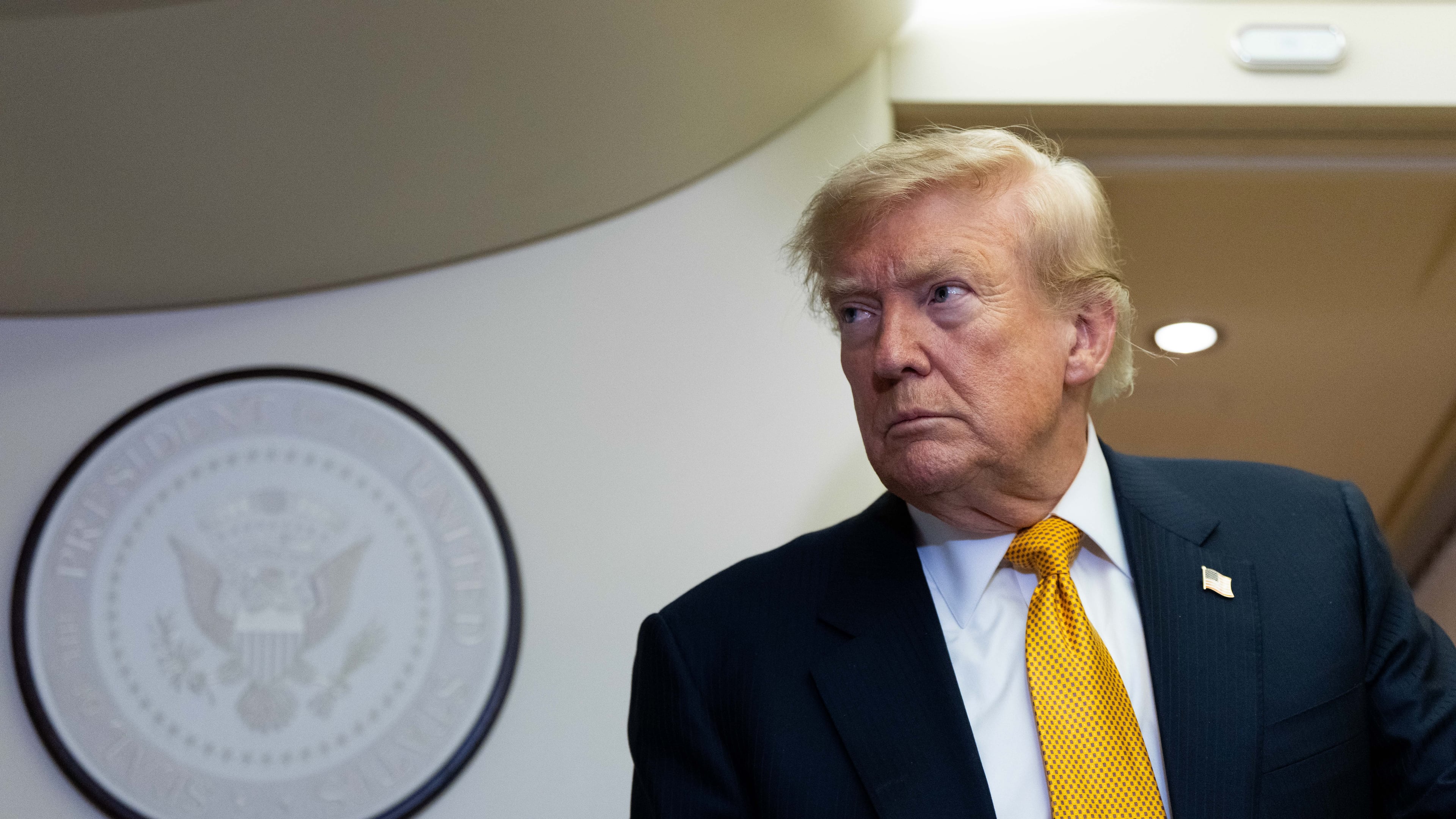
President Donald Trump has chosen not to sign a sweeping housing affordability bill Friday, in protest of Congress not approving a strict voter ID bill that lacks sufficient support to pass.
The housing measure will become law without Trump’s signature because he didn’t veto it. Still, the president’s rejection of the legislation cuts short the GOP’s efforts to address a key voter concern about rising costs, exacerbating tensions with his own party in a midterm election year.
Also, in another move to expand White House influence over the U.S. elections process, Trump ousted members of a bipartisan federal election commission that resisted his efforts to require would-be voters to document their U.S. citizenship before registering. The move builds on a recent Supreme Court ruling giving the president new personnel authority to fire members of independent agency boards.
Here's the latest:
A US license could let Ukraine produce Patriot missiles, but it won’t be simple or quick
President Trump’s pledge to give Ukraine a license to produce Patriot air-defense systems could mark a major breakthrough for Kyiv, but experts and Ukrainian officials warn that turning the idea into real weapons would likely take years.
Speaking Wednesday alongside Ukrainian President Volodymyr Zelenskyy at a NATO summit in Ankara, Turkey, Trump said the United States would allow Ukraine to make the U.S.-designed systems Kyiv has long sought to shield its cities and infrastructure from Russian missiles and drones.
“We’ll give them the right to make Patriots. We’ll show them how to do it,” Trump said. “I think they can produce them pretty quickly.”
But the statement left open a crucial question: What exactly would Ukraine be allowed to produce?
Trump says talks with Iran to continue despite ceasefire ending
The president posted Friday on social media that Iran had “asked us to continue ‘talks’” and his administration has agreed to do so.
But Trump added that “in no uncertain terms” that the ceasefire is no longer in place.
It’s unclear how productive talks can be to end the war with Iran so long as the status of the Strait of Hormuz is uncertain and attacks could supersede any commitments made in negotiations.
Trump’s decision on housing bill comes more than a week after he canceled plans to sign it
He announced then that he was using it as leverage in his push for a strict voter ID bill.
The 21st Century ROAD to Housing Act aims to lower the cost of housing and spur more home construction. It’s the broadest federal effort in decades to address America’s housing affordability problems, as state and local regulations have made it difficult to build in many of the communities that are also sources of job growth and economic opportunity. White House economists estimated earlier this year a national shortage of 10 million homes and the bill could help to close a portion of that gap.
But Trump called the bill “a yawn” and “so unimportant” compared to legislation that would require proof of citizenship for all voters.
He surprised Republican lawmakers June 24, when, shortly before a planned signing ceremony at the Capitol, he announced he wouldn’t approve the bill until lawmakers first passed the voting legislation.
Stocks and oil prices drift as global markets continue to calm
U.S. stocks and oil prices are drifting toward a quiet finish of the week Friday following earlier fireworks on worries about how the war with Iran will affect the global flow of crude.
The S&P 500 rose 0.1% and was on track to close out a fourth winning week in the last five. The Dow Jones Industrial Average was up 65 points, or 0.1%, as of 9:35 a.m. Eastern time, and the Nasdaq composite was 0.1% higher.
Oil prices were holding relatively steady, even after a series of unclaimed airstrikes hit Iran after the U.S. said it finished its attacks. The price for a barrel of Brent crude oil, the international standard, rose 0.2% to $76.47.
That’s above the $72 it was at the start of the week, when it was back below its level from before the war with Iran, but it’s still well below its wartime peak of nearly $120.
Trump won’t sign housing bill but will let it become law
Trump has chosen not to sign a sweeping housing affordability bill Friday, in protest of Congress not approving a strict voter ID bill that doesn’t have enough support to pass.
“I will not sign the Housing Bill, which has been fully approved by Congress and sent to the White House, in PROTEST over the fact that the United States Senate is not capable of passing THE SAVE AMERICA ACT,” Trump posted on social media.
The housing measure will become law without Trump’s signature. He had 10 days to issue a veto and stop the measure, which he chose not to do.
Trump’s rejection of the bipartisan housing legislation exacerbates tensions with his own party in a midterm election year and cuts short their efforts to address a key voter concern about rising costs.
Trump ousts election commission members in latest push to reshape US voting process
Trump has ousted members of the bipartisan federal election commission that resisted his efforts to require would-be voters to document their U.S. citizenship before registering.
The White House on Friday confirmed the executive action against members of the Election Assistance Commission, which distributes federal grants to states, oversees the testing of voting systems and maintains the national voter registration forms.
It’s the latest move in the Republican president’s effort to expand White House influence over how U.S. elections are conducted and comes after a recent U.S. Supreme Court ruling that gave the president new personnel authority to fire members of independent agency boards.
Unclaimed airstrikes target Iran after US attacks, raising questions of who launched them
The series of unclaimed airstrikes that hit Iran after the U.S. said it finished its attacks have again raised questions of who else may be targeting the Islamic Republic.
The strikes Thursday, just as Iran prepared to bury the late Supreme Leader Ayatollah Ali Khamenei, hit areas across southern Iran. The country’s theocracy hasn’t directly blamed anyone for the strikes, though one lawmaker issued a warning to the United Arab Emirates over allegedly providing support to the United States in its campaign against Iran.
Gulf Arab states, which repeatedly have been targeted by Iran since the war began Feb. 28, did not immediately respond to requests for comment Friday over the strikes. The attacks come as they and the U.S. insist the Strait of Hormuz must be open and free to ships to transit.