Suki Waterhouse finds a new version of herself on her latest album, 'Loveland'
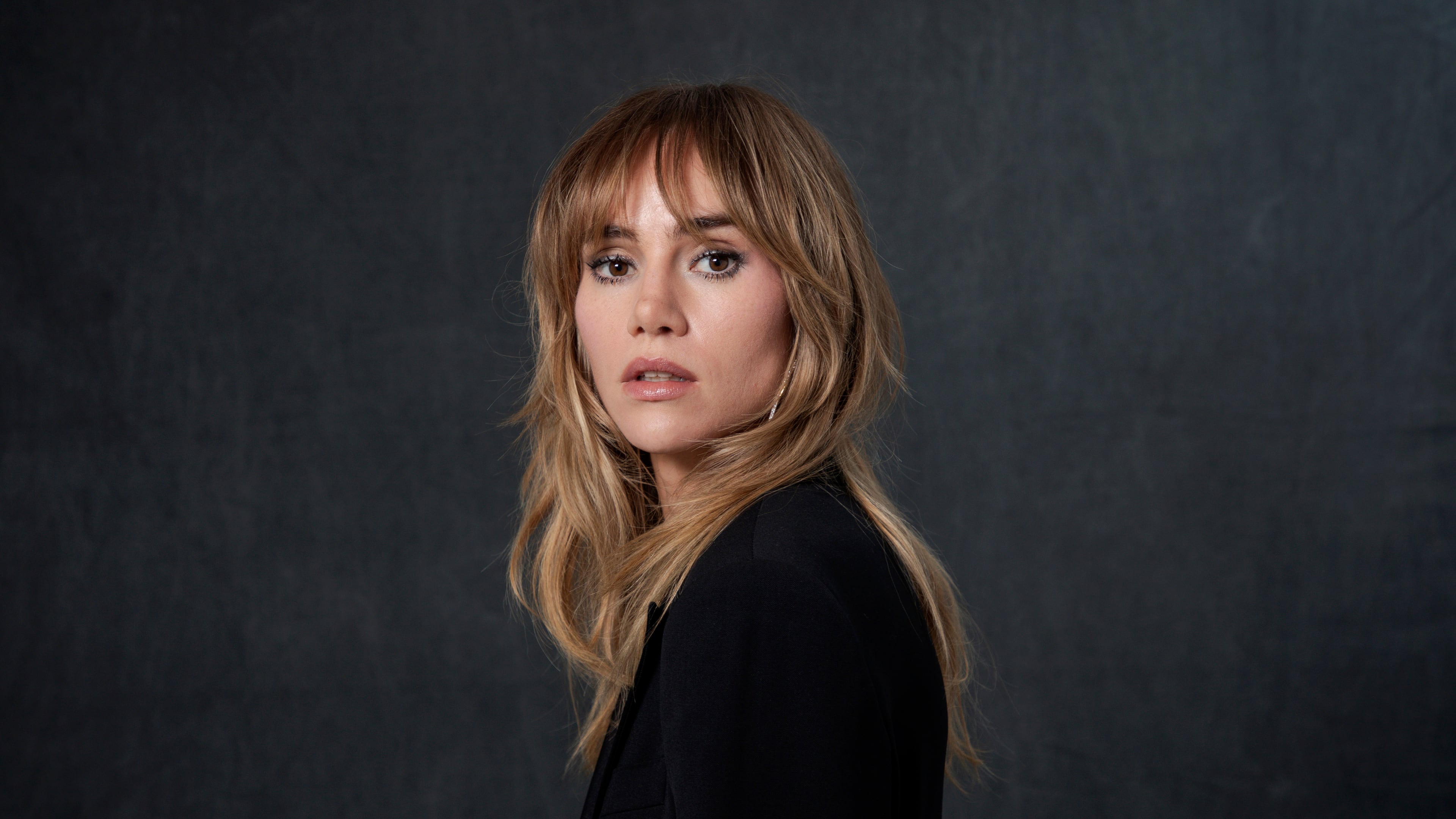
New York (AP) — Suki Waterhouse started working on “Loveland,” her third record, immediately after she finished her 2024 sophomore album, “Memoir of A Sparklemuffin.”
“I was looking for, like, a personal revolution,” Waterhouse said. Putting the words together for “Loveland,” the album's wistful penultimate track, helped her get there. “It’s always amazing to me how, you kind of write the album and you become it. You become somebody new from it.”
True to that spirit, Waterhouse worked with new collaborators on the project — including songwriter Amy Allen and producer Aaron Dessner, a member of the rock band The National and a frequent collaborator of pop-crossover artists including Taylor Swift, Gracie Abrams and Noah Kahan. Mick Fleetwood of Fleetwood Mac put down a drum track for “Morals” — a fun twist after Waterhouse acted in the limited series “Daisy Jones & the Six,” based on a Taylor Jenkins Reid novel widely considered to be inspired by the band’s origins.
“Maybe that’s what made me think to reach out,” Waterhouse, said. “I thought, you know, maybe he’s seen the show. It might help me get in the door.”
Waterhouse spoke to The Associated Press about making “Loveland” and exploring the evolution she has felt since welcoming her daughter with partner Robert Pattinson. She also teased future projects. Remarks have been edited for clarity and brevity.
AP: When announcing the album, you wrote that this project was “born in the space between who I was and who I’m becoming.” How did you attempt to capture the emotions of that experience in the album?
WATERHOUSE: A revelation I've had for myself recently is that there is inherently a friction there, that I think has been really deepened by becoming a parent. I think before I had much more of a kind of wild abandon, where my whole life was my work and my artistic life. And now that I have this beautiful gift that's been given to me — my daughter and this responsibility, and also how present I feel in her life, and want to be — I had a lot of insecurity and fear and doubt about how I was going to still have these two things exist at once. So it's funny, I don't think the record is like a record, really, about me, you wouldn't listen to it and be like, “Oh, this is a 'she's just become a mum' record" but it's the things I know about it that are laced deep within it. There are certain songs where I address that very rawly, I think in the song “Weirdo” especially.
AP: On songs like “Weirdo,” or “Notting Hill,” how do you navigate interrogating your personal experiences and emotions, while also maintaining your privacy?
WATERHOUSE: When I’m writing I don’t really think about that much at all because I also know that not everything that I write has to go on an album and be released into the public. There's things that you can write that can just be for yourself, and kind of like help you externalize a feeling that’s unexplainable.
It’s interesting, it’s like two different parts of my brain: The part that doesn’t care what anybody thinks and is just writing so freely, and then, later on, when you're like choosing the singles, or choosing what's going to be on the record, this other voice comes in and it's not a purist. It’s much more like, I want people to like this and I want to be loved. You’ve got the two different voices warring with each other, and it’s hard to get them to speak to each other, or know which voice should succeed.
I’m always mining from my own past in a way, and “Notting Hill” was really about mourning a place, but also memorializing it. I sold my apartment and never really said goodbye to it because I had a baby in America. And I, you know, fell in love in that apartment, had some of the worst nights of my life, some of my best. And then suddenly you outgrow somewhere so quickly and you’re having a baby in a different country, and it’s a walk-up and you’d never be able to get a stroller in there, and it's like full of everything in your 20s. It's giving its flowers to this place that raised me.
AP: I saw that Mick Fleetwood played drums on “Morals.” I’m curious how that came to be.
WATERHOUSE: That was a fun way to collaborate. When we got a response from Mick Fleetwood, I was kind of amazed. We struck an agreement that he would drum on “Morals” — I got like a billion videos of him in a studio in Hawaii playing all these incredible takes and I was just blown away that the whole thing was happening. And then I recorded a song for his record, that is with Amy Allen. He’s been working on a record for quite some time. I don’t know how much I’m allowed to say about it, but it was a very cool thing to have happened.
AP: When we last talked, you were preparing to bring your daughter, then 6 months old, with you on tour. Has she heard the new album?
WATERHOUSE: She knows now what I do, it's funny. I was reading to her the other night and there was a “choose, what would your world be like? and where would you live? the mountains?" and we were kind of like picking things and there were a bunch of jobs and I said, “Which one does mommy do?” and she pointed to the woman with the guitar. So it’s kind of crazy. She's almost 2 1/2 now, so she’s really switched on, like knows what we’re doing, I can explain it to her much better. I’m just like in heaven with her, just enjoying her so much and I feel so deeply grateful that I get to bring her with me.