New traffic pattern? Bike barriers elevate safety, and some drivers’ tires
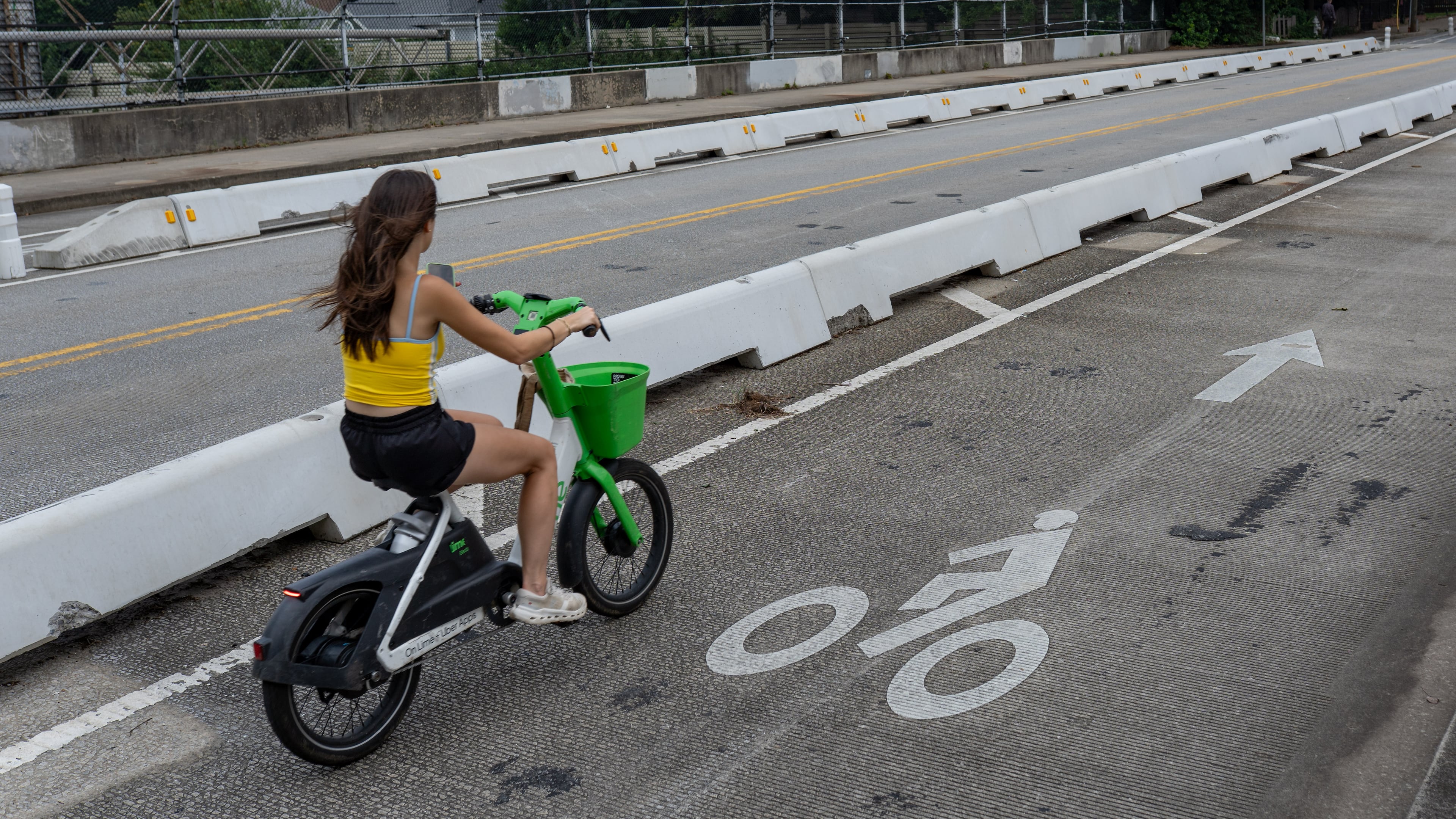
Cherokee Avenue has had a protected bike lane since late 2022 as part of now-gubernatorial candidate Keisha Lance Bottoms’ Safer Streets plan, but in May, Atlanta Department of Transportation added a wrinkle that has stymied at least a few drivers, leaving them hanging — literally.
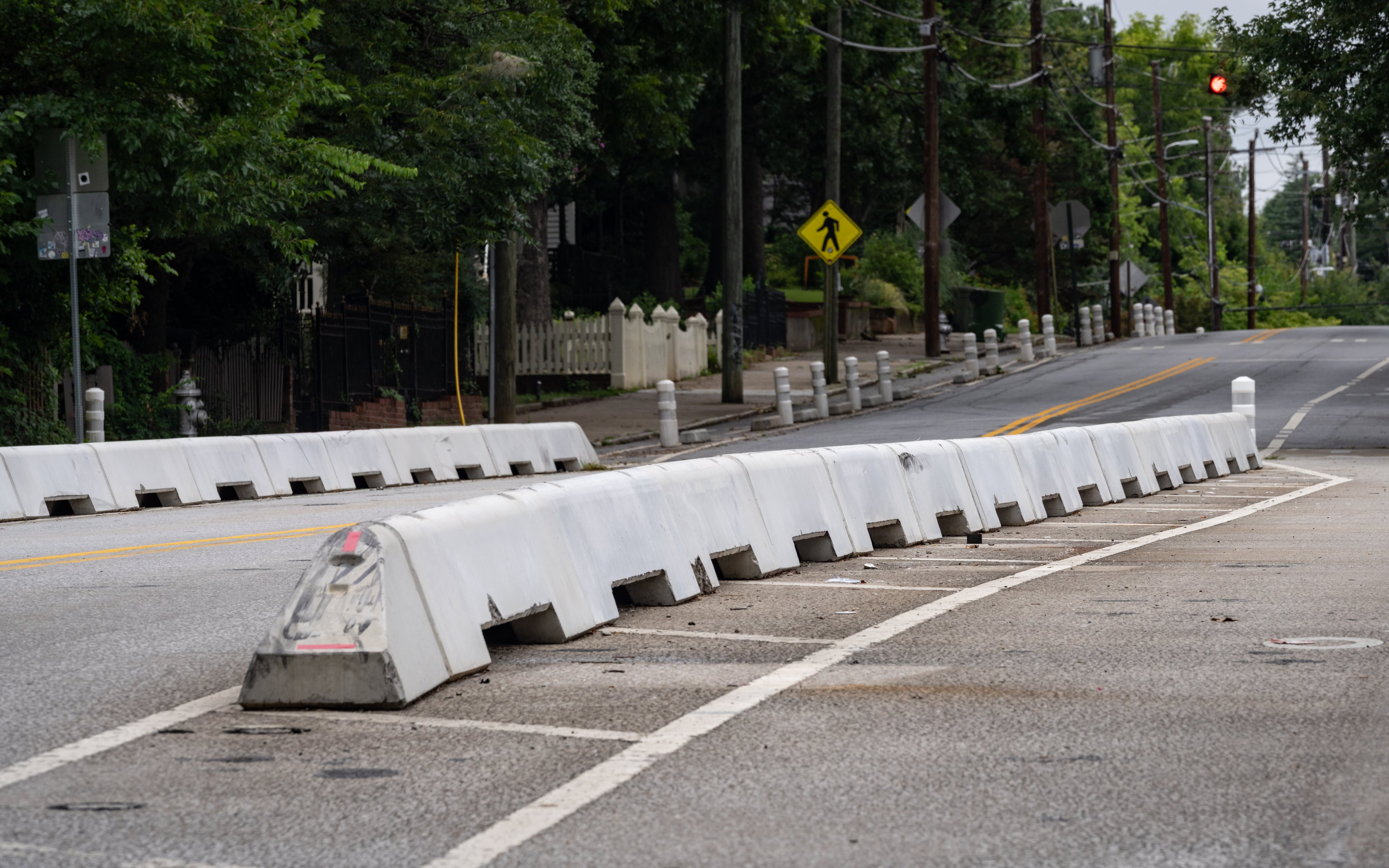
The department installed two concrete Jersey barriers, chosen for the bridge section of the bike lane because they “offer one of the highest levels of protection” from cars traveling especially at higher speeds, the agency said. The barriers form low walls to shield bikers from cars, and they don’t have to be bolted down because they link together.
But in the two months since those barriers were swapped in, vehicles have crashed into them at least three times, according to the agency.
In a July 5 crash that went viral on Reddit, a car apparently drove up on top of one of the barriers, leaving both of its right tires suspended in the air.
William Inman, who frequently bikes in the area, said he witnessed the incident. He said the driver was distracted on his phone before the crash.
ATLDOT did not provide specific details about the incident or any citations to the driver.
The agency said it shifted the barriers earlier this month to enhance “visibility and further reduce the potential for driver error,” but there are currently no other plans, such as painting them in more attention-grabbing colors, to make them more noticeable. It added that the rest of the lane is protected by polyethylene poles that have two 4-inch reflective tape collars attached to them.
The department also said it was aware of three incidents during the construction of the protected lane on Juniper Street in which drivers drove into the curbed landscaped buffer that separates the travel lane from the bike lane.
On that stretch of road, the barriers look somewhat similar in size and depth, but instead of the interlocking concrete Jersey barriers on Cherokee, the design on Juniper is raised traffic islands with plants.
Though alarming, bikers say the incidents are the reason why these physical barriers are needed.
John Devine, executive director of Go Georgia, said “as bad of a day as” these drivers most likely had, he imagines that they would prefer it to actually colliding with a person.
Go Georgia advocates for active recreation, including bike safety, in the region. Devine said the organization supports investment in physical barriers for bike lanes because they are helpful in its “mission to create a thriving, livable Georgia.”
The bike lanes are part of a promise made in 2019 by Bottoms, who, as mayor of Atlanta, rolled out a plan to triple the number of the city’s protected bike lanes in an Action Plan for Safer Streets Across Atlanta. At the time, the mayor was grappling with an influx of then-novel rentable electric scooters that had been at the heart of four fatal accidents.
The city is still following through with plans to add bike lane protections, including as part of Mayor Andre Dickens’ Moving Atlanta Forward agenda. That plan, first rolled out in 2022, promised $108 million for protected bike lanes and has included approvals and funding for bike-friendly projects.
A spokesperson for ATLDOT says that the city has already completed approximately 14 miles of protected lanes in the last five years and that 40% of the Moving Atlanta Forward project will have either been completed or under construction within the next four months.
Atlanta was listed in the 50th percentile of over 3,000 cities in a 2026 ranking by PeopleForBikes, an organization that rates how safe cities are for cyclists. The city was also recognized by The New York Times as a “great” North American biking city in June.
The transportation department also said that a number of factors, including utility relocations as well as state and federal scheduled milestone requirements contribute to what some may feel is a “slow” process from design to completion for the protected lanes.
Cherokee Avenue had no reported crashes between cars and cyclists in 2025, but The Atlanta Journal-Constitution was able to find three such crashes on Juniper Street last year. The Juniper Street traffic island barriers are decorated in colorful painted designs.
“Paint by itself does not prevent a driver from entering, parking in or drifting into a bike lane,” said Jeremiah Jones, an advocate with Propel ATL, a nonprofit organization active in pushing for more protected bike lanes in the city.
Jones said Atlanta has approved and funded many plans during the city’s push to become more bike-friendly, but the implementation of these projects has moved slowly.
Still, Jones and other advocates are pushing for the city to deliver on its promises. The risks they fear as bike lanes remain unprotected are fatal crashes like the ones that prompted Bottoms to announce the Action Plan for Safer Streets.
“City streets shouldn’t be judged solely on how easily they allow drivers to maintain speed,” Jones said. “They should be judged by how well they protect human life.”