Microsoft's best day since 2008 leads US stocks, while inflation worries remain in the bond market
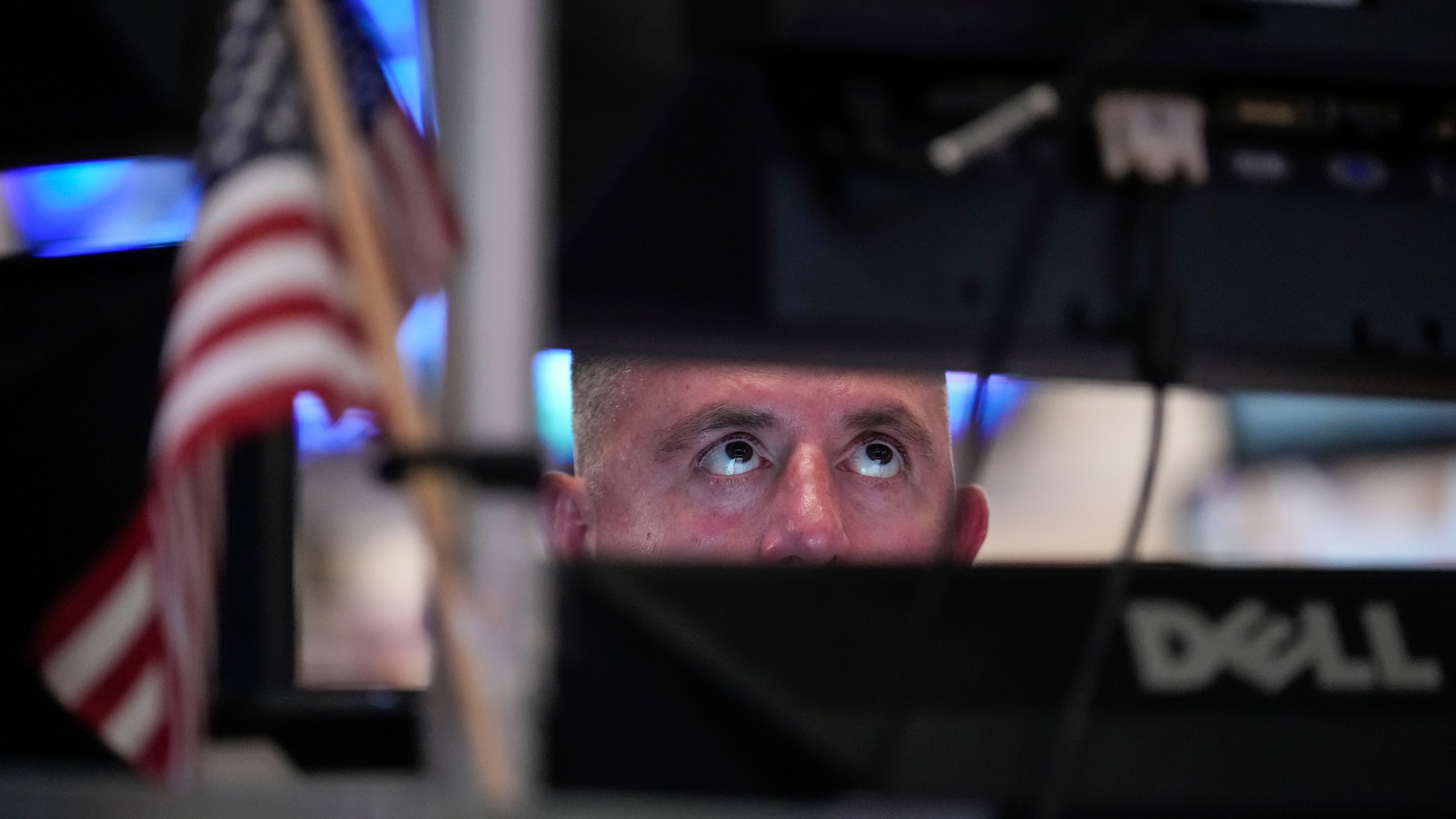
NEW YORK (AP) — A monster day for Microsoft’s stock following signals that its big spending on AI is translating into profits led a powerful rebound on Wall Street Thursday, while computer-chip companies regained some of their sharp recent losses. In the bond market, though, worries remained about inflation potentially remaining high for years.
The S&P 500 rallied 1.7% and more than recovered its drop from the day before, which was its worst in seven weeks. The Dow Jones Industrial Average jumped 613 points, or 1.2%. The Nasdaq composite, which is full of artificial-intelligence stocks, rallied 2.8% a day after it fell 9.8% below its record set last month.
Microsoft led the way and leaped 15.5% for its best day in nearly 18 years after reporting a stronger profit for the latest quarter than analysts expected. Growth was strong for its Azure cloud business, and CEO Satya Nadella said it reflects how customers are using Microsoft to move into AI.
Perhaps just as importantly for Wall Street, Microsoft did not announce a big increase in how much it plans to spend on AI investments, something that several other Big Tech rivals have done. Worries are high that such spending is eating into companies’ cash flows and may not ultimately be worth it if AI does not produce as much productivity and profits as promised.
Meta Platforms helped demonstrate such fears after falling 8%. The parent company of Facebook and Instagram reported a weaker profit for the latest quarter than analysts expected, even though it made slightly more in revenue than expected. It also raised the lower end of its forecasted range for spending on investments this year.
Companies involved in the making of the computer memory and processors that such “hyperscalers” are buying to power their AI efforts rose Thursday, recovering some of the big losses they’ve taken on worries their stock prices shot too high in the euphoria around AI.
Micron Technology jumped 18.4%, for example, to trim its loss for the week to 5%. It was the strongest force lifting the S&P 500 after Microsoft.
Lam Research, a supplier to the semiconductor industry, soared 18% after reporting stronger profit and revenue for the latest quarter than analysts expected. Chip giant Advanced Micro Devices rallied 13%.
On the losing end of Wall Street was Jersey Mike’s Subs. The sandwich chain’s stock fell 6% in its first day of trading on the New York Stock Exchange.
All told, the S&P 500 rose 121.48 to 7,437.63. The Dow Jones Industrial Average climbed 613.92 to 52,208.06, and the Nasdaq composite leaped 679.24 to 25,122.18.
In the bond market, longer-term Treasury yields held steadier following their sharp accelerations Wednesday. They had jumped after the chairman of the Federal Reserve, Kevin Warsh, gave few clues about what the central bank will do with interest rates to combat the painfully high inflation that continues to hurt the country.
Higher rates could keep a lid on inflation, but they can also slow the economy and undercut prices for stocks and other investments.
The yield on the 10-year Treasury was 4.67%, the same as late Wednesday. The 30-year Treasury yield ticked up to 5.22% from 5.20%, a day after it shot up from 5.09%. Those yields move with investors’ expectations for inflation and economic growth in upcoming years.
Warsh reaffirmed on Wednesday the Fed wants to get inflation back to 2%, even though the central bank decided not to raise interest rates despite inflation remaining higher than that. He also implied the bond market may already be doing some of the Fed’s work to restrain inflation, and he pointed to how yields have climbed since the central bank’s last meeting six weeks earlier.
That leaves investors questioning whether the Fed is prepared to act if inflation worsens, or whether it is relying on financial markets to achieve the same outcome, according to Seema Shah, chief global strategist at Principal Asset Management.
“If investors conclude that the latter is true, the credibility of the Fed’s inflation-fighting commitment could come under increasing scrutiny. Arguably, it already is.”
President Donald Trump, who nominated Warsh to lead the Fed, has lobbied for lower interest rates even though they could cause inflation to accelerate.
Reports released Thursday suggested the U.S. economy’s growth slowed by more during the spring than economists expected. A measure of Inflation, meanwhile, remained worse last month than the Federal Reserve’s target, but it slowed from May’s level.
In the oil market, prices eased. Brent crude, the international standard, fell 1.4% to settle at $86.88 per barrel.
It had swung as low as $72 early this month and as high as $102 last week on uncertainty about whether the United States and Iran could reach a deal to allow oil tankers to move freely again from the Middle East to customers worldwide.
In stock markets worldwide, indexes were mixed in Europe and Asia. South Korea’s Kospi fell 1.2%, and France’s CAC 40 rose 0.9% for two of the world’s bigger moves.
Seoul’s market has been at the center of AI’s huge swings because it’s dominated by two tech titans, Samsung Electronics and SK Hynix. After more than doubling through this year’s first six months, the Kospi has plunged 34% so far in July.
Its drop on Thursday came as Samsung Electronics dipped 0.7%. The tech giant reported a record profit for the spring and said demand for its chips continues to outpace supply, but its earnings nevertheless fell shy of analysts’ high expectations.
___
AP Business Writers Chan Ho-him and Matt Ott contributed to this report.