Mediators see progress in efforts to halt Iran war as drone attacks rattle region
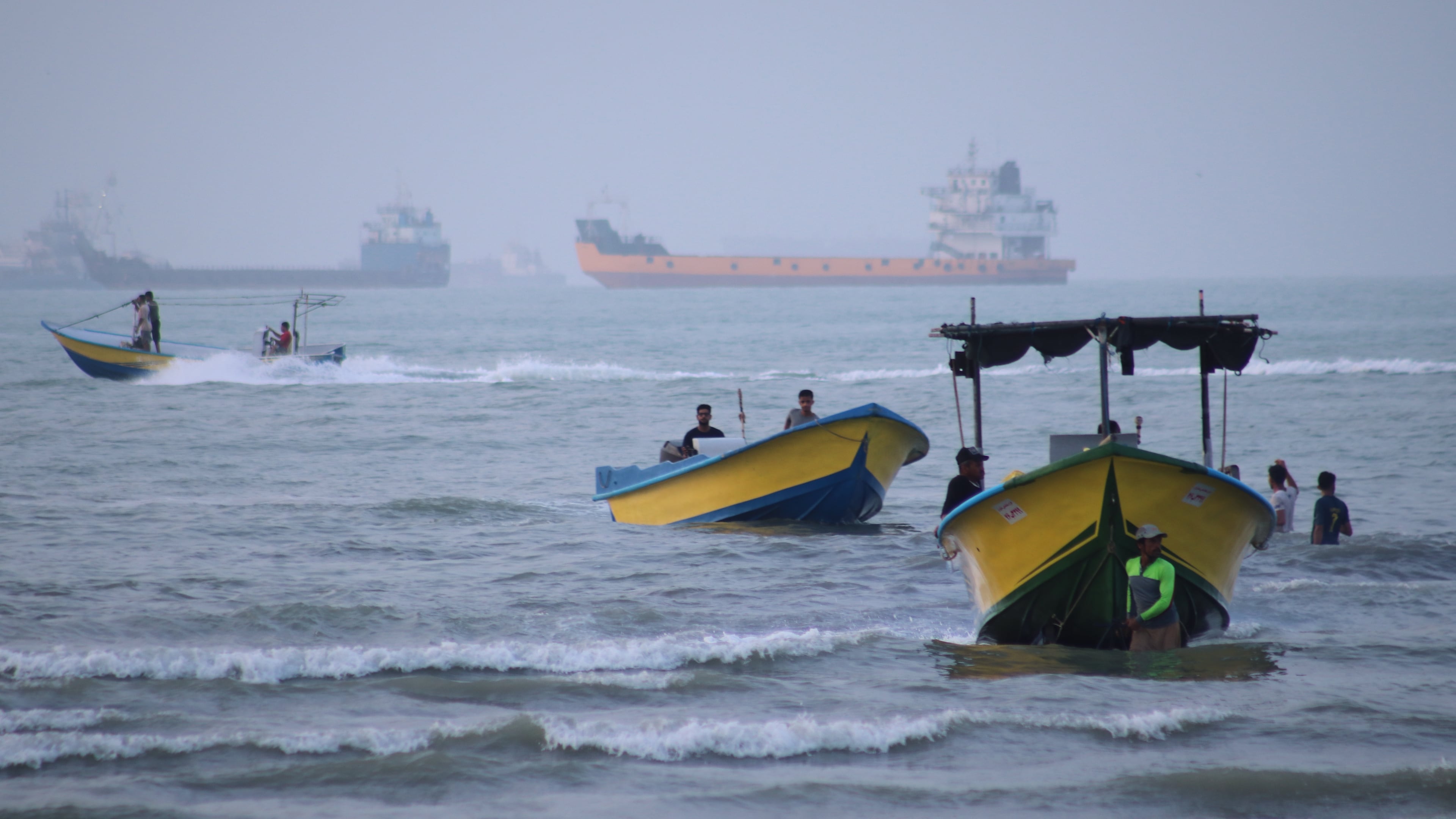
CAIRO (AP) — Mediators have achieved progress in getting the United States and Iran back to negotiations, regional officials said Monday, after both sides paused attacks following a period of rapidly escalating tensions. But scattered attacks by armed groups across the region underscored the lingering tensions.
Saudi Arabia said it had shot down drones fired by Iran-backed militias in Iraq that had targeted its petroleum facilities. Iran-backed Houthi rebels in Yemen meanwhile claimed to have attacked Saudi oil facilities as part of a separate but related conflict. It was unclear if they referred to the same attack.
Two drone attacks were reported against a Kurdish Iranian dissident group in Iraq, and Jordan said it had shot down two drones, without saying where they originated. There were no reports of casualties or damage.
Neither the U.S. nor Iran reported carrying out any attacks for three days — a respite after about two weeks of sustained bombardments that had led to increasing fears of a return to all-out war.
The two regional officials, who spoke on condition of anonymity to discuss the closed-door talks, said mediators led by Qatar and Pakistan were working to bridge the gap between Washington and Tehran to return to an interim ceasefire deal that had collapsed after the exchanges of fire.
No strikes over the weekend
The U.S. has paused attacks after targeting Iranian coastal areas and infrastructure in a nearly two-week escalation sparked by Iran’s firing at ships trying to transit the Strait of Hormuz, a crucial waterway for global oil shipments.
U.S. President Donald Trump is “giving talks some space. He’s giving it a little bit of room,” Mike Waltz, the U.S. ambassador to the United Nations, told Fox News.
Waltz dismissed the idea that the U.S. stockpile of interceptors crucial in defending against Iranian attacks is running low, but experts have questioned how long both the U.S. and Iran can afford to keep up attacks.
Iran halted its attacks following the American pause, Tehran's army spokesperson told Iranian state TV on Sunday. Tehran in recent days has counterattacked against countries in the region hosting U.S. military forces, killing at least three service members at a base in Jordan and one in Iraq.
Regional officials cite progress in talks
One of the regional officials who spoke to AP on Monday described the progress made in mediation efforts as “significant.” He said mediators were working with Iran and Oman on a mechanism for managing vessels’ transit through the Strait of Hormuz, the flashpoint for the latest strikes and counterstrikes.
Iran’s Foreign Ministry spokesperson, Esmail Baghaei, said during a news conference in Tehran on Monday that “mediators may convey messages to us from the American side” but that there were no direct negotiations.
He said Iran and Oman, which lies on the other side of the Strait of Hormuz, had already held talks on Friday and Saturday on how to manage ship traffic through the waterway.
“The objective is for Iran and Oman, as the two coastal states, to develop mechanisms to ensure safe navigation through the Strait of Hormuz while respecting the sovereign rights and sovereignty of both coastal states, as well as Iran’s security and national interests” Baghaei said. He stressed that the waterway remains closed.
Tehran has asserted that the interim deal with the U.S. allows it to manage shipping on the waterway and potentially charge fees, and it has objected to U.S. efforts to support an alternative route that passes close to Oman. The strait was open to all without fees before the war.
The U.S. military on Saturday said its recently reimposed naval blockade against Iran continued, with a dozen commercial ships redirected, two disabled and two boarded.
The 60-day period established by the interim deal in mid-June is now well into its second half, and major issues that were meant to be negotiated — notably Iran’s nuclear program at the heart of tensions — have been set aside as mediators try to keep both sides talking.
Shipping traffic on the strait is at a 3-week low
Concerns have grown about shipping through another crucial waterway in the region, the Bab al-Mandeb strait to the Red Sea. The Houthis last week threatened a blockade of Saudi shipping there, and fired on at least one Saudi tanker, setting it alight.
Global energy supplies and the economy remain in the balance as gasoline prices have risen again.
Commercial shipping traffic in the Strait of Hormuz was at a three-week low, a maritime body overseen by the U.S. Navy said Sunday, adding that no new attacks had been confirmed in the past 72 hours. It said traffic remained steady through Bab el-Mandeb.
Netanyahu says he ‘fully’ backs Trump’s efforts
Meanwhile, Israeli Prime Minister Benjamin Netanyahu said he plans to meet with Trump in Washington on Tuesday. They last met in Washington in February, weeks before they launched the war on Iran that killed senior leaders, including Supreme Leader Ayatollah Ali Khamenei.
The Iranian-backed Hezbollah militant group in Lebanon fired at Israel two days after the war began, and Israel responded with airstrikes and a ground invasion. Since then, the U.S. has supported landmark direct talks between Lebanon and Israel to try to calm that front and find a way to disarm Hezbollah.
Iran criticizes Ukraine for targeting ship in Caspian Sea
Separately, Baghaei slammed Ukrainian President Volodymyr Zelenskyy after he said over the weekend that Ukraine had struck “vessels used in military cargo shipments involving Iran” in the Caspian Sea.
On Sunday, Iranian Foreign Minister Abbas Araghchi said Ukraine’s strike on an Iranian vessel had killed a sailor.
Araghchi denounced the attack in a statement on X as a “blatant U.N. Charter violation done at Israel’s behest to drag Europe into its war.”
Iran is an ally of Russia in its war against Ukraine, helping Moscow build up its drone expertise.
___
Becatoros reported from Athens, Greece. Associated Press reporters Cara Anna in Lowville, New York; Darlene Superville and Ben Finley in Washington; and Jill Lawless and Emma Burrows in London contributed.