Last-minute launch problem delays satellite rescue mission for NASA
CAPE CANAVERAL, Fla. (AP) — A rush rescue mission to save a NASA space telescope remains grounded, this time because of a last-minute launch problem.
Northrop Grumman’s rocket-launching plane took off from the Marshall Islands in the Pacific on Thursday, following weather delays all week. But an issue prevented the team from releasing the Pegasus rocket strapped to the plane's belly, according to NASA.
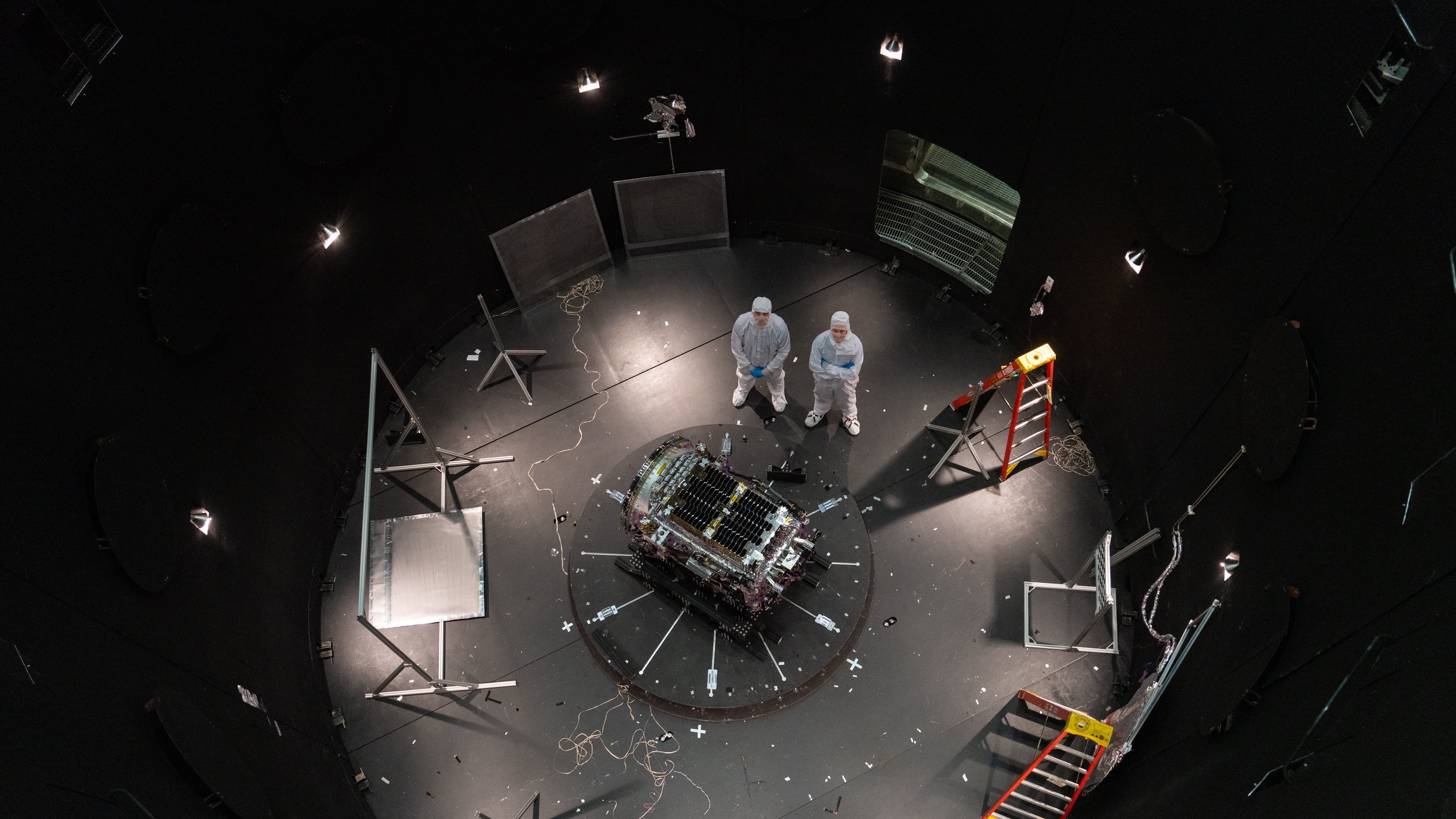
The rocket holds a three-armed robotic spacecraft built by Katalyst Space Technologies to capture the Swift Observatory, which will come crashing down by October if no help arrives. No new launch date has been set.
NASA paused Swift's science operations earlier this year to preserve its orbit as long as possible. It has detected thousands of gamma ray bursts and exploding stars since its launch in 2004, tipping off other telescopes for more detailed observations.
Anxious to continue Swift's scanning of the universe, the space agency hired Katalyst Space last September for the $30 million salvage operation.
___
The Associated Press Health and Science Department receives support from the Howard Hughes Medical Institute’s Department of Science Education and the Robert Wood Johnson Foundation. The AP is solely responsible for all content.