Iran-backed Houthi rebels in Yemen say Saudi airstrikes hit Sanaa International Airport
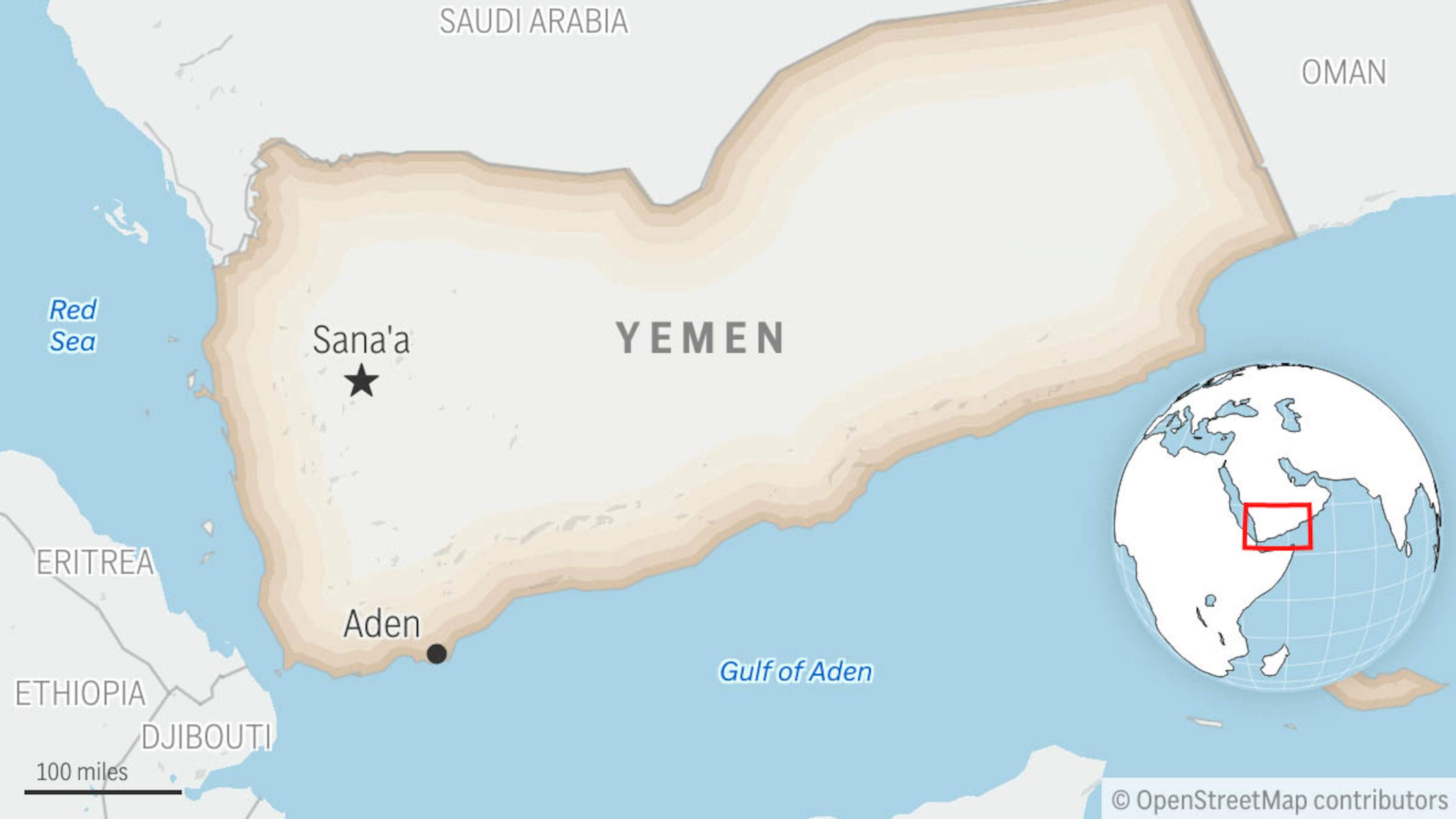
CAIRO (AP) — Iranian-backed Houthi rebels in Yemen said Saudi airstrikes hit Sanaa International Airport on Monday, and the internationally recognized government in Yemen said the strikes were meant to prevent an Iranian plane from landing.
Saudi Arabia did not immediately acknowledge carrying out airstrikes in Yemen, and its officials did not immediately respond to a request for comment. For years, a Saudi-led coalition based in Yemen’s south, including the internationally recognized government, has been fighting the Houthis in the north.
The attack comes after tensions between the two sides flared earlier this month when the Houthis said Saudi planes violated their airspace to try to prevent an Iranian plane carrying a Houthi delegation to Tehran for the funeral of Iran’s Supreme Leader Ayatollah Ali Khamenei.
Gen. Taher al-Aqili, the defense minister in Yemen's internationally recognized government, said on X that the airport’s runway was struck Monday to stop an Iranian plane carrying the Houthi delegation returning from the funeral.
In a video statement released shortly before the strikes, Al-Aqili warned against infiltrating Yemeni airspace with Iranian aircraft.
“At this moment, we say that our patience has run out. Accordingly, we will respond appropriately to this treacherous and brutal act, and we will confront and deal with the hostile aircraft violating Yemeni airspace and sovereignty by all available means,” he said.
The Houthis said the plane changed its route and landed at Hodeida Airport.
The Houthi-controlled al-Masirah broadcaster showed footage of a missile striking a runway at the airport in Sanaa and a strong explosion.
A statement later from the internationally recognized government in the south of Yemen said that all airports in Yemen were “closed until further notice, with immediate effect."
A Houthi official, Brig. Gen. Yahya Saree, said on Telegram that Saudi Arabia launched the airstrikes in what he called the end of a period of “de-escalation.” He warned that “this aggression will not go unanswered or unpunished.”
The Yemeni defense ministry issued orders to evacuate the airport and surrounding areas.
Rashad al-Alimi, who leads Yemen's ruling Presidential Leadership Council, the internationally-recognized governing body that is backed by Saudi Arabia based and based in the south, said Iran had made a request to operate a flight by Iranian airline Mahan Air from Tehran to Sanaa to return the Houthi delegation.
The Presidential Leadership Council denied the request. The council said in a statement Monday that Houthis had insisted on receiving the Iranian flight “outside the legal and sovereign frameworks governing civil aviation."
Hans Grundberg, the U.N. special envoy for Yemen, said in a statement that his office is monitoring Yemeni airspace developments and expressed concern about the risk of wider escalation. He called on involved parties to engage in dialogue that preserves the “relative calm Yemen has experienced since 2022."
Yemen’s ruinous civil war began in 2014 when the Houthis seized the capital of Sanaa and much of northern Yemen and forced the internationally recognized government into exile. A Saudi-led coalition including the UAE intervened the following year to try to restore the government to power.
Houthi-controlled areas were last targeted by a Saudi-led coalition several years ago before a U.N. brokered truce to cease hostilities came into effect in 2022.