German leader Merz reshuffles top posts as he tries to counter far-right advance
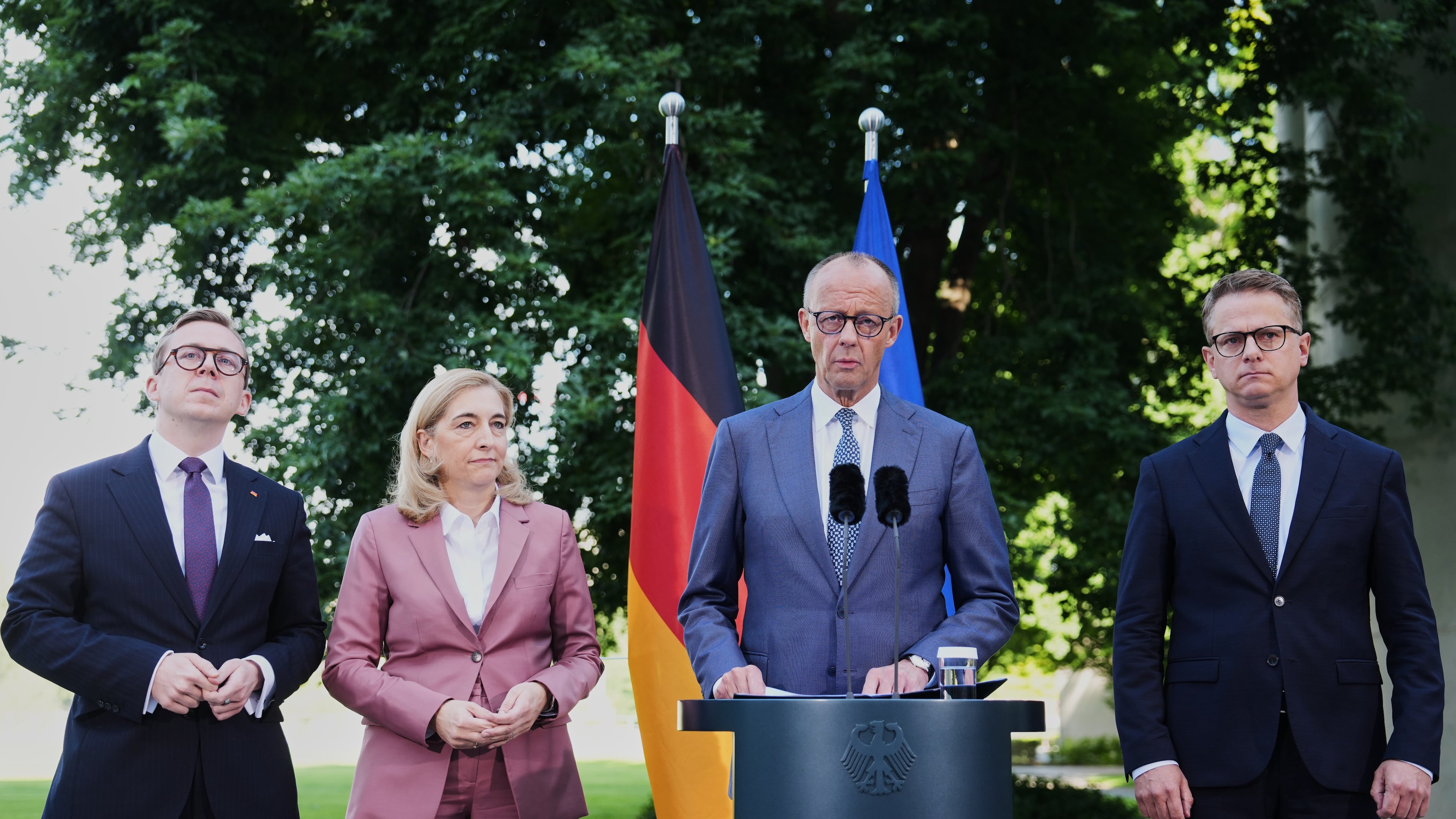
BERLIN (AP) — German Chancellor Friedrich Merz reshuffled top posts on Friday as he tries to boost the fortunes of his deeply unpopular government ahead of regional elections in which a far-right party could get its first state governor.
Merz took office less than 15 months ago with pledges to reform and turn around Germany’s economy, Europe’s biggest, after years of stagnation. But that economic turnaround has been slow to start. And the middle-of-the-road coalition of Merz’s center-right Union bloc and the center-left Social Democrats, two traditional rivals, has yet to persuade voters that it can produce results.
That has resulted in Merz’s popularity sinking to rock-bottom levels, while the far-right Alternative for Germany, or AfD, has capitalized on widespread discontent.
Merz took the opportunity to make a series of changes after a senior ally quit as the leader of his party’s parliamentary group over personal conduct that undermined his credibility. Merz plans to put his chief of staff, Thorsten Frei, in that job.
The German leader said Health Minister Nina Warken will take Frei’s place at the chancellery, a post that is key to the smooth functioning of the government. Another close ally, Carsten Linnemann, the general secretary of Merz’s party, will become health minister.
Merz said that there will be further Cabinet changes, but didn’t offer details. He said those decisions will take “a few days yet, and perhaps more time.”
The governing parties face three difficult regional elections in September. In the eastern region of Saxony-Anhalt on Sept. 6, AfD is hopeful of winning a majority that would give it control of a state government for the first time.
After months in which voters were turned off by squabbling in the coalition, Merz’s government recently embarked on big plans for potentially painful change — including a proposed reform of the creaking pension system that would include raising the retirement age gradually, income tax cuts for low- and middle-income earners and an effort to slash red tape.
“The government has found its rhythm, despite some criticism,” Merz declared last week. “We have delivered, and we have recognized the dimension of the tasks we face.”
Only days later, though, he faced a new distraction. Jens Spahn quit as leader of the Union’s parliamentary group — one of the most powerful positions in the coalition — after it emerged that he and his husband had used the services of a surrogate mother in the U.S. to have a baby.
Surrogacy isn’t allowed in Germany. Merz’s party opposes allowing it, a position that it reaffirmed at a convention in February, and Spahn himself had spoken out against it in the past. That prompted accusations of double standards.
Frei will now take Spahn’s job, a position he’s widely considered better suited to than coordinating the chancellery. Frei was the Union’s parliamentary chief whip under Merz when the center-right was in opposition.
Warken takes his place at the chancellery after shepherding the first of the government’s reforms, meant to curb rising costs in the German health insurance system, through parliament earlier this month. She will become the first woman to serve as chief of staff at the chancellery.
Linnemann, a conservative who lacks government experience, will take her place at the Health Ministry.