Defendant in Salman Rushdie stabbing declines to testify in terrorism trial
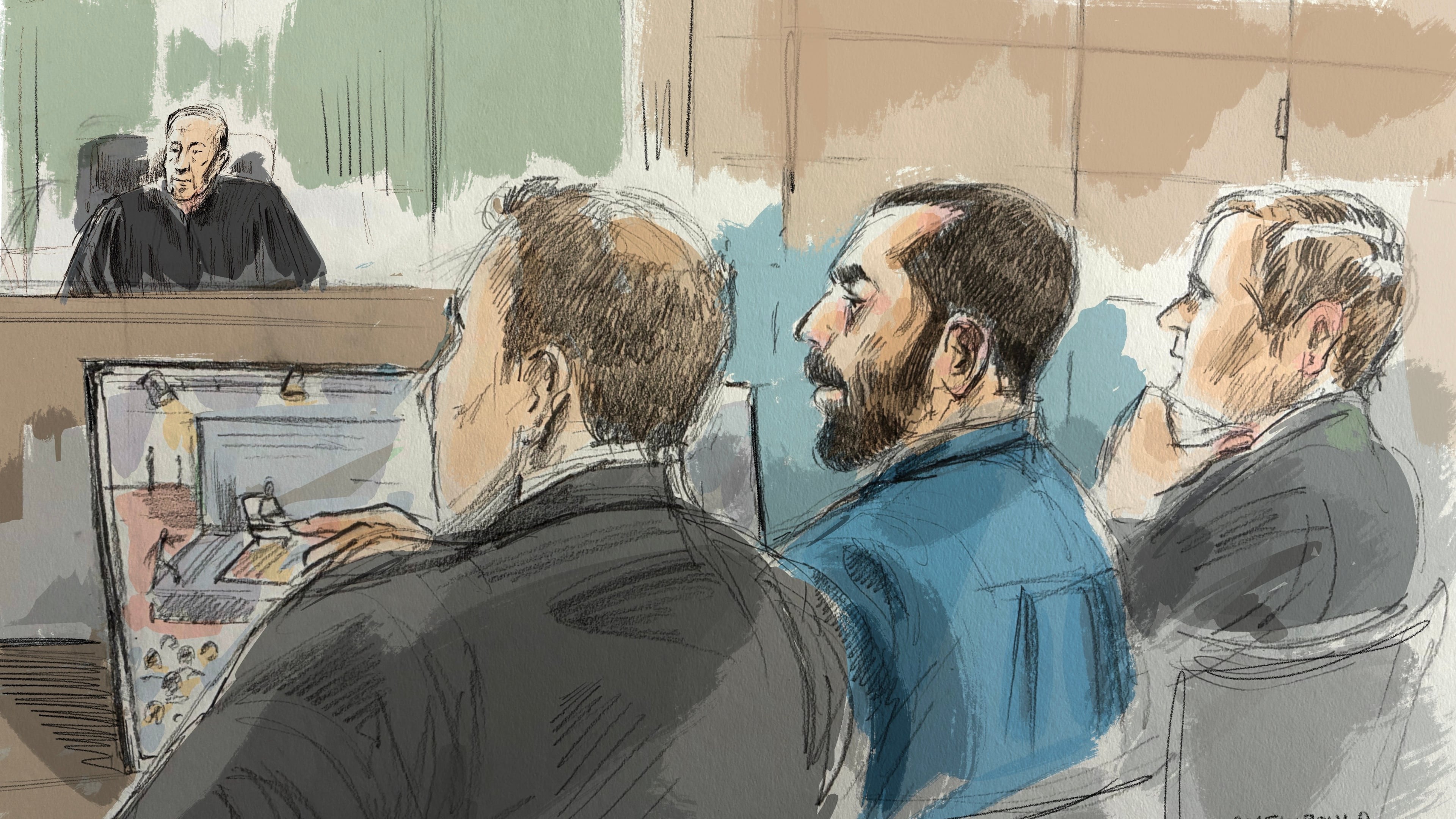
BUFFALO, N.Y. (AP) — The man on trial in the stabbing of Salman Rushdie chose Tuesday not to testify or call any witnesses in the federal terrorism case, which is expected to head to the jury as soon as Wednesday.
Hadi Matar's lawyer told the court that the 28-year-old — who already has been convicted of state-level attempted murder charges — wouldn't take the stand at his trial on charges that include engaging in an act of transnational terrorism.
“At this time, the defense rests,” attorney Nathaniel Barone said. Matar has pleaded not guilty.
Prosecutors also rested their case Tuesday, and closing arguments are expected Wednesday morning. Rushdie, the prize-winning author of novels including “Midnight’s Children” and the controversial “The Satanic Verses,” testified last week about the 2022 attack that nearly killed him and left him blind in one eye.
Rushdie was about to give a talk — about writers' safety, no less — when his attacker climbed on stage behind him and stabbed him 15 times in front of a stunned audience at the Chautauqua Institution, an arts and intellectual retreat.
Spectators and another speaker, Henry Reese, scrambled to aid Rushdie and restrain the assailant, who was arrested by law enforcement officers assigned to the event. He initially gave authorities a fake driver's license, but Matar soon disclosed his real name to a state trooper, according the trooper's testimony and body camera video.
Prosecutors contend that Matar was acting upon a former Iranian leader's 1989 call for Rushdie's death because of “The Satanic Verses,” which ignited protests across the Muslim world. Some believers considered it blasphemous because of a dream sequence featuring Islam's Prophet Muhammad.
Rushdie, who was born in India into a Muslim family and is now a U.S. citizen, went into hiding for years. He gradually emerged after Iran's government distanced itself in 1998 from the late Supreme Leader Ayatollah Ruhollah Khomeini 's fatwa, or religious order, about the writer. Khomenei died in 1989.
Prosecutors say Matar, a U.S.-born American-Lebanese citizen, acted out of loyalty to Iran and to the Lebanon-based Hezbollah militant group. The late Hezbollah leader Hassan Nasrallah said in 2006 that if someone had carried out the fatwa, European newspapers wouldn't have dared publish a caricature of Muhammad that was causing an uproar in Muslim communities.
Iran’s government denied involvement in the 2022 stabbing, though its Foreign Ministry’s then-spokesperson suggested Rushdie courted trouble by insulting Islam. Nasrallah did not comment on the attack.
The U.S. government designates Hezbollah as a foreign terrorist organization. Matar, too, described the group in a 2016 paper as a terrorist organization, Assistant U.S. Attorney Timothy Lynch said Tuesday during legal arguments when jurors were out of the room.
Matar started researching Rushdie's whereabouts in 2020, eventually writing in private notes that “we need to kill him ASAP” and “become a warrior and just get it over with,” prosecutors have said.
Matar didn't testify at his 2025 state court trial, either. His lawyer has said federal prosecutors are making implications but don't have proof about the man’s intentions.
“There’s no facts. There’s no hard evidence,” Barone said in an interview outside the courthouse last week. “There could be a number of reasonable, plausible explanations as to what he was thinking.”
Barone unsuccessfully argued Tuesday that prosecutors hadn't presented enough evidence for the trial to continue. A judge declined Barone's request to dismiss the case.
Matar is currently serving a 25-year state prison sentence. If convicted in the federal case, he faces a potential life sentence.
___
Peltz reported from New York.