Alan Walden, who managed Otis Redding and Lynyrd Skynyrd, dies at 83


MACON — Alan Walden had a hand in launching fellow Maconite Otis Redding to superstardom, he signed a fledgling Lynyrd Skynyrd and helped older brother Phil Walden build Capricorn Records into an iconic label of the Southern rock era.
He died of cancer here Thursday after weeks in hospice care. He was 83. His daughter, Jessica Walden, confirmed the death.
Alan Walden, a brash dynamo with a flair for promotion and an ear for hitmakers, got his start arranging performances while still in high school. For a time early in Redding’s rise to fame, he befriended, toured with and helped manage the soul sensation. He went on to spot and manage other up-and-coming talent, including Skynyrd and the Outlaws, and created his own publishing company, Hustlers Inc.
The impresario was a key figure in Macon’s meteoric arrival as a music business hotbed from the middle 1960s into the 1970s, when Redding and the Allman Brothers Band and other acts like Sam and Dave of “Soul Man” fame, who he also promoted, made this Middle Georgia city an unlikely focal point of the soul, rock and rhythm and blues worlds.
According to music critic and author Peter Guralnick’s 1986 book “Sweet Soul Music: Rhythm and Blues and the Southern Dream of Freedom,” after a Redding breakthrough at New York’s Apollo Theater in fall 1963 and after Phil Walden went in the Army, it was Alan Walden who accompanied Redding on early tours as a manager.
“Blond, innocent-looking, no more than 120 pounds — Alan is the original self-invented ‘baby-faced assassin,’” Guralnick wrote of 20-year-old Alan Walden’s ventures on the road with Redding. “It was quite an awakening for him.”
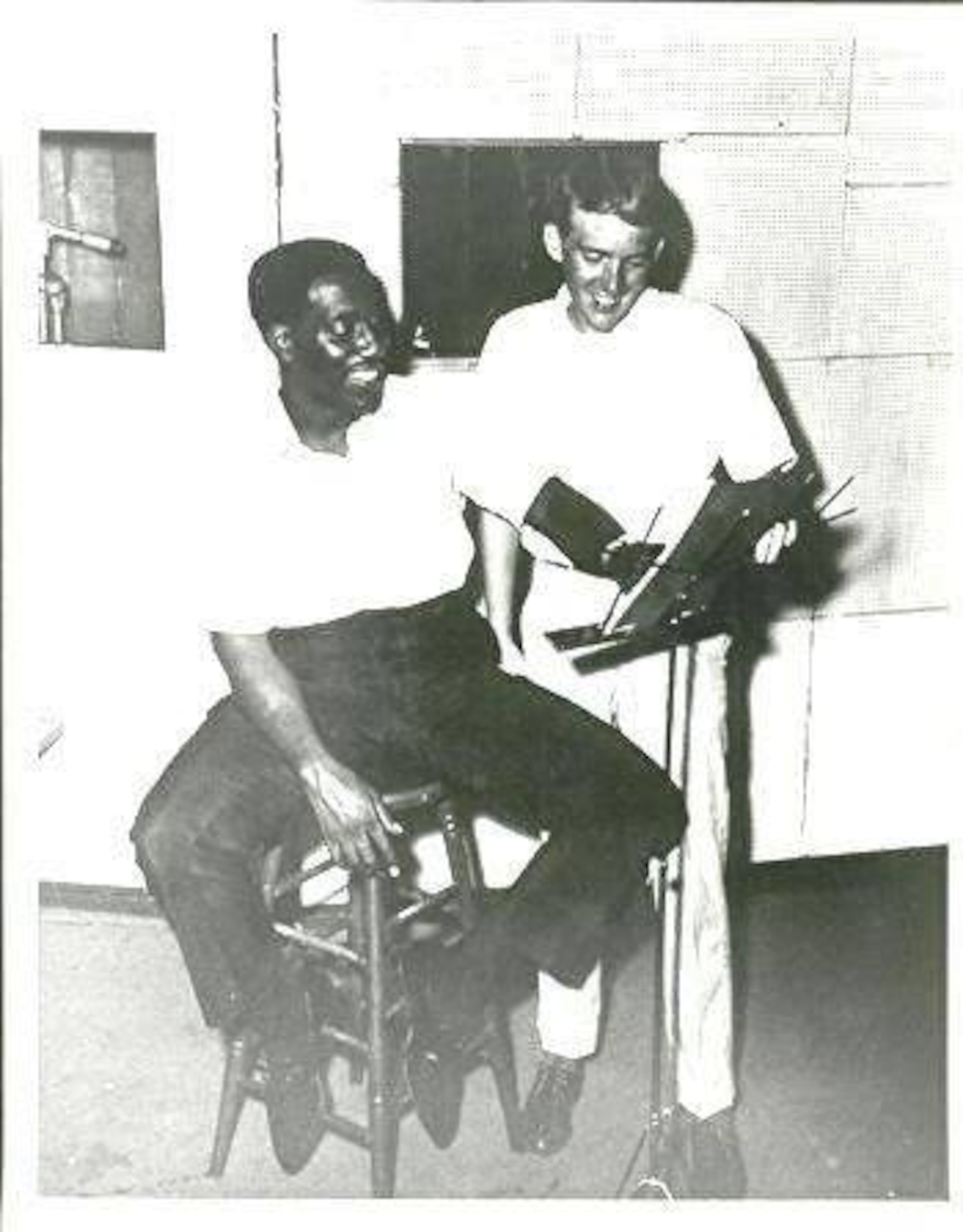
In the book, Alan Walden, who was white, told of journeys across the South with Redding, who was Black, during the height of tensions surrounding the Civil Rights Movement.
“Sometimes it was like going to war,” Alan Walden told Guralnick for his book. “I carried a gun. All of us carried guns. You had to in those days. … I wasn’t going to get written off like some of them civil rights workers by the side of the road. I’ll tell you, with Otis it was never dull. … He was just an overpowering figure. Wherever you went, people would wonder, ‘Who is that?’”
In the mid-1960s in Macon, Redding and the Walden brothers were, as Guralnick noted, “inseparable.” They each owned the same model of new Cadillacs. Phil Walden said in Guralnick’s book, “You couldn’t make up a story like ours. … Take all these people from diverse backgrounds, different cultures, different races, mix them all together in a small little Georgia town.”
Said Alan Walden: “With Otis, it was just family. It was, ‘Hey, we’re gonna conquer the world! … There was so much love between the three of us.”
Roger Alan Walden was born in Macon on May, 23, 1943. He graduated from Lanier High School in 1961, attended what was at the time known as Middle Georgia College and went to Mercer University.
Alan Walden had known Redding from Macon’s music scene and later grew closer as Redding surged to regional prominence, according to a multipage chronicling of the city’s former homegrown stars and star-makers that was published in the Macon Telegraph in 1987.
“He could write at the drop of a hat,” Alan Walden said of Redding in that 1987 article. “You might be sitting in a room and say one sentence and he would hear a song title, whip out his flat-top acoustic guitar and write. In 15 or 20 minutes the whole song would be done.”
Alan Walden went on to describe what it was like in that era for a Black man to have white business partners and friends: “There was always constant pressure on him like, ‘Hey man, you’re a brother, you’re supposed to be with the cause.’ There’s always somebody telling you how to run your career. There’s a line in ‘Dock of the Bay,’ ‘I can’t do what 10 people tell me to do.’ Everybody was trying to tell him how to run his damn life, and he already knew pretty well what he wanted out of life.”

Alan Walden, who was known to at times conduct business over lunch at a downtown Macon barbecue restaurant over a beer, said Redding just “knew how to go out there … and charm the world.”
In the middle 1960s, the Waldens and Redding founded Redwal Music Company, a blending of their surnames.
In the years after Redding’s death in 1967, the Walden brothers took on separate ventures. In 1970, Alan Walden founded Hustlers, Inc., a music publishing and management company. In a 2002 interview, he claimed to have auditioned 187 bands in a single year, signing just one: Lynyrd Skynyrd.
Phil Walden, meanwhile, developed Capricorn as a landmark label, headquartered in the heart of downtown Macon, with The Allman Brothers Band as its flagship act.
Music journalist and author Alan Paul, who in 2023 wrote, “Brothers and Sisters: The Allman Brothers Band and the Inside Story of the Album that Defined the ’70s,” recently told The Atlanta Journal-Constitution that the Waldens “had the ability to recognize talent and encourage the talent. It sounds simple, but you have to realize, like with Lynyrd Skynyrd, they had been out there. They got turned down by everyone. … They couldn’t get traction and Alan found them and signed them.”
Over the years, Alan Walden had ties to scores of musicians and singers, including Etta James, Al Green, Clarence Carter, Percy Sledge and Boz Scaggs. He managed the Outlaws band into the late 1990s and was inducted into the Georgia Music Hall of Fame in 2003.
During the 1976 presidential campaign, bands that Alan Walden was associated with were said to have raised nearly $100,000 for Jimmy Carter in his tight race with incumbent Gerald Ford. In the days before Carter’s inauguration, like many Georgians at the time, Alan Walden braved icy conditions and traces of snow in the Peach State to fly north. He drove to Macon’s airport in a Ford pickup with the word “Ford” blotted out and “Carter” painted in its place. “My Continental just wouldn’t go in that snow,” Walden told the Macon Telegraph.
When Phil Walden, who had been the driving force behind Capricorn, died of cancer in 2006, Alan Walden told the Macon newspaper that his brother “had a way of looking into the future when it came to the whole music business. I’ve heard other record executives say the difference between Phil Walden and other people in the record business is that he truly lives the music. ... Not many people listened to music as much as Phil did, which made him so much more aware of what was going on.”
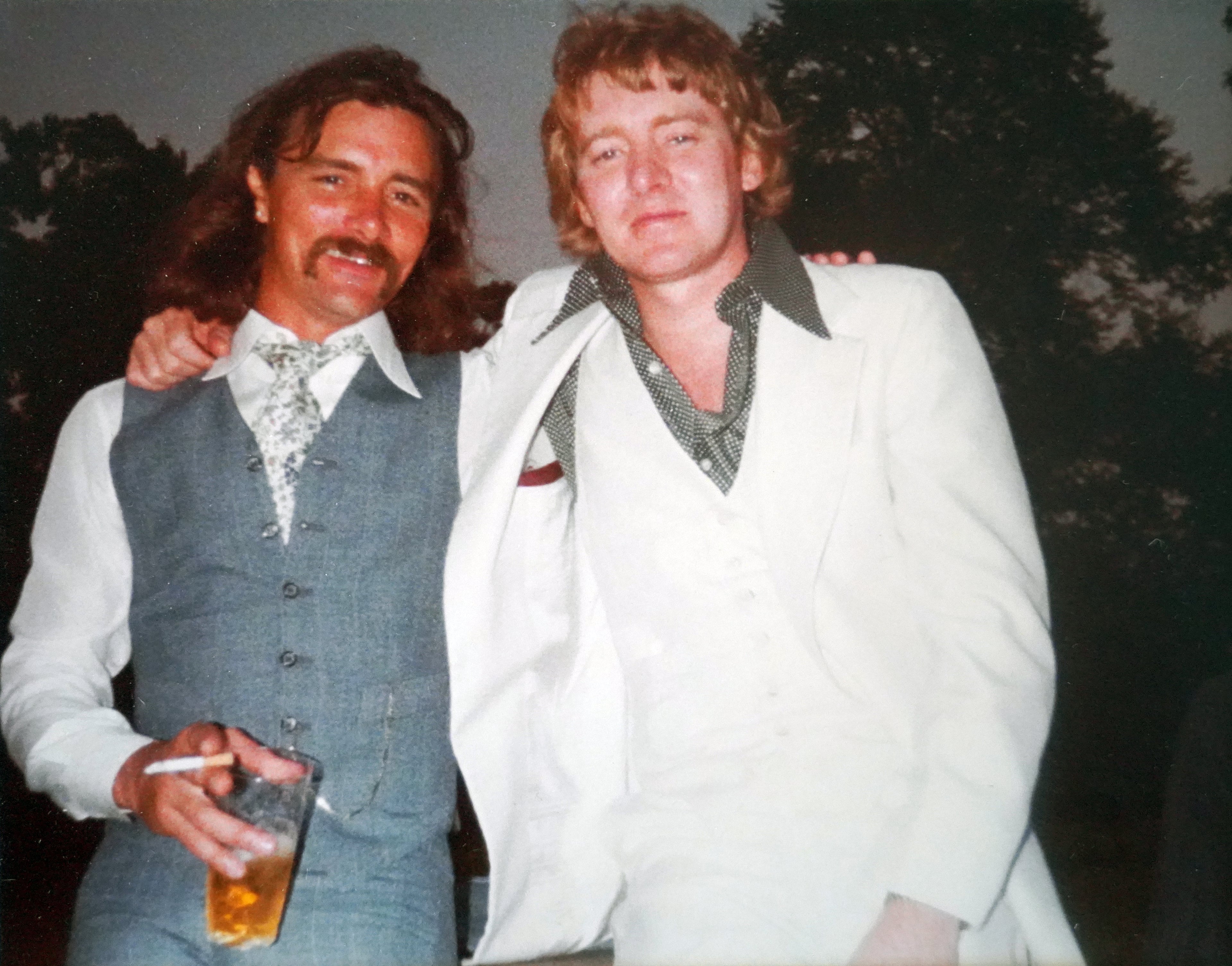
Pianist and keyboardist Chuck Leavell, an Allman Brothers alum who now tours with the Rolling Stones and who lives just outside Macon, said, “I always admired Alan. Alan was always congenial.”
Leavell recalled that Alan Walden’s first date with his wife, Tosha Walden, had been at a dinner party at the Leavell home.
“I always thought very fondly of Alan,” Leavell said. “He’s had quite a positive career and he is the longest-standing Walden today, and there is something to be said for that.”
Leavell also mentioned how Alan Walden was “always on the hunt.”
“Every time I would run into Alan,” Leavell recalled, “he would say he saw so and so” in his quest to find a rising star.
And that had been Alan Walden’s way down the decades, even as Macon’s time in the limelight faded. He was ever in search of a comeback.
During one of those efforts to scope out new stars to promote, in 1982, Alan Walden told a reporter for the Macon News, “Everybody said the Waldens were finished when we lost Otis, when Sam and Dave left, when I quit managing Lynyrd Skynyrd, and when the Allman Brothers left. We’ve always come back.”
Four years later, in 1986, Alan Walden was still trying to spark Macon’s return to musical prominence. He scouted local talent and invited aspiring musicians to his Broadway studio. “I’m bound and determined not to let our heritage go under,” he told the Macon Telegraph.
Though he and, in many ways, his hometown never recaptured the star-studded days of the 1960s and 1970s, his mark and that of others in his orbit maintains a continued presence in downtown Macon.
Capricorn Sound Studios has been restored and continues operating as a studio, now dubbed Mercer Music at Capricorn, operated by Mercer University. Blocks away, the Otis Redding Center for the Arts rises on Cotton Avenue just up the street from the Otis Redding Museum. The city was also home to the Georgia Music Hall of Fame from 1996 until it closed in 2011.
Walden had written of the city’s musical heritage in a 1980s letter published in the Telegraph:
“If we get behind Macon’s music it will perhaps deliver another singer like Otis Redding. … It’s happened here before and it can happen again.”
He is survived by his wife, Tosha Walden, and his children, Jessica Walden, Georgeanna Walden and Roger Alan Walden Jr., and one grandson. A funeral service will be private. A public visitation is expected, but details were not immediately available.