AI stocks keep falling, while oil prices keep climbing
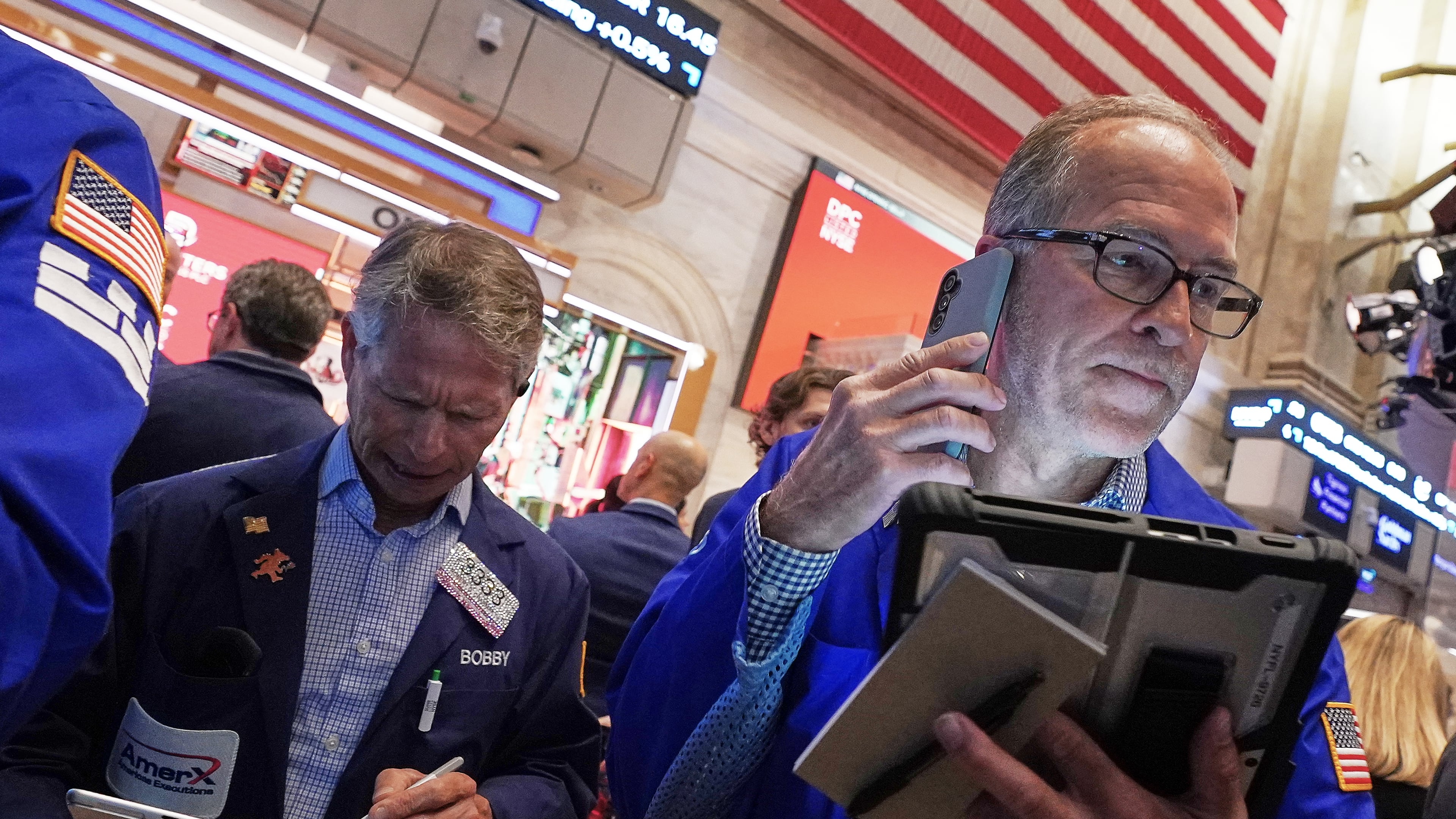
NEW YORK (AP) — More swings for computer chip companies and other winners of the artificial-intelligence boom are yanking stock markets lower Friday. Oil prices, meanwhile, continue to climb because of the war with Iran.
The S&P 500 fell 0.5% after dropping as much as 1.4% in the morning. It's on track for its first losing week in the last three and only its third since March, just a couple days after it climbed within 0.5% of its all-time high.
The Dow Jones Industrial Average was down 149 points, or 0.3%, as of 12:53 p.m. Eastern time, after veering between an early loss of 566 points and a modest gain. The Nasdaq composite fell 0.7%.
Chip stocks once again were at the center of the shakiness. They’ve been under pressure for weeks on worries that their prices shot too high and that voracious demand for computer memory and processors may be unsustainable if AI ends up producing less profit and productivity than promised.
Applied Materials sank 2.6% to trim its surge for the year to about 112%. Micron Technology rose 4.6% after sliding earlier in the day.
Earlier in the morning, tech sold off worldwide. Indexes tumbled 6.5% in Taipei, 4% in Tokyo and 3% in Shanghai as stocks like Taiwan Semiconductor Manufacturing Co. dropped 7.3%.
South Korea’s stock market was closed for a holiday, offering some respite, if only temporary. It’s been at the center of the AI swings because it’s dominated by two huge tech companies, Samsung Electronics and SK Hynix. This past week alone, Seoul’s Kospi stock index had one day where it surged 6.2% and two others where it sank 6.4% and 8.9%.
News of a Chinese open-sourced AI model by startup Moonshot, Kimi K3, further shook markets. Similar to when China’s DeepSeek announced its AI model in early 2025, another low-cost rival to big Western AI models like ChatGPT and OpenAI could potentially hurt demand for computer chips and other components.
European stock indexes, which have less of an emphasis on AI and tech, had milder moves.
Adding to the pressure on Wall Street Friday were drops for several stocks following their latest earnings reports. It’s a departure from much of the rest of the week, when companies like Goldman Sachs and BlackRock jumped after delivering better profits for the spring than analysts expected.
Netflix sank 6.8% after its revenue for the latest quarter fell just short of analysts’ expectations, even though its profit was bigger than expected. Its forecasts for upcoming revenue and profit in the summer also fell below expectations.
Intuitive Surgical, a maker of robotic surgical systems, dropped 12.6% despite topping expectations for the latest quarter. Analysts pointed to worries about slowing procedure growth because of the expiration of enhanced tax credits that helped lower the cost of health insurance for many Affordable Care Act enrollees.
Elon Musk’s SpaceX fell 4.1% and touched its lowest level since its stock began trading on the Nasdaq just over a month ago. The owner of the xAI business has been swept up in the swings of AI stocks, and it had to abort a test flight of its mega Starship rocket Thursday within a second or so from blasting off.
More climbs for oil prices also pressured the stock market.
The price for a barrel of Brent crude, the international standard, rose 3.9% to $87.48, up from roughly $76 a week ago.
The United States expanded its airstrike campaign against Iran early Friday by hitting more bridges and collapsing a tower at a key Iranian port. That raised further worries about whether oil tankers will be able to use the Strait of Hormuz to carry crude from the Persian Gulf to customers worldwide.
High oil prices have sent Treasury yields upward in the bond market, which threaten to slow the economy and undercut prices for stocks and all kinds of other investments. Higher yields have already sent the average 30-year mortgage rate to its highest level in nearly a year.
But Treasury yields eased Friday. The yield on the 10-year Treasury fell to 4.54% from 4.57% late Thursday.
A report suggested sentiment among U.S. consumers is improving more than economists expected, while expectations for upcoming inflation eased. That's important for the Federal Reserve, which is considering hikes to interest rates to keep a lid on inflation. If expectations for inflation remain anchored, it could prevent a vicious cycle where people make moves in anticipation of higher inflation, which only worsen it.
The preliminary reading from the University of Michigan’s survey for U.S. consumer sentiment hit its highest reading since February. But much of the rise was due to recent drops for prices at gasoline pumps, according to Joanne Hsu, director of the survey. If gasoline prices rise again because of crude’s recent rally, the improvement could be under pressure.
___
AP Business Writers Matt Ott and Elaine Kurtenbach contributed to this report.