Work vans ‘are the target’: How police traffic stops can funnel drivers to ICE
Federal agents working to fulfill President Donald Trump’s mass-deportations agenda have benefited in Georgia from a powerful tool: local traffic enforcement.
Footage of three traffic stops in northeast Georgia obtained through the Georgia Open Records Act illustrate how local officers cooperating with Immigration and Customs Enforcement found and flagged immigrants for federal agents on Georgia roadways, as stops for minor infractions quickly escalated into immigration arrests when police summoned ICE to the scene.
One of the stops captured in police body camera video shows local officers talking about targeting work vans for ICE — vehicles associated with construction, landscaping and other industries reliant on immigrant labor.
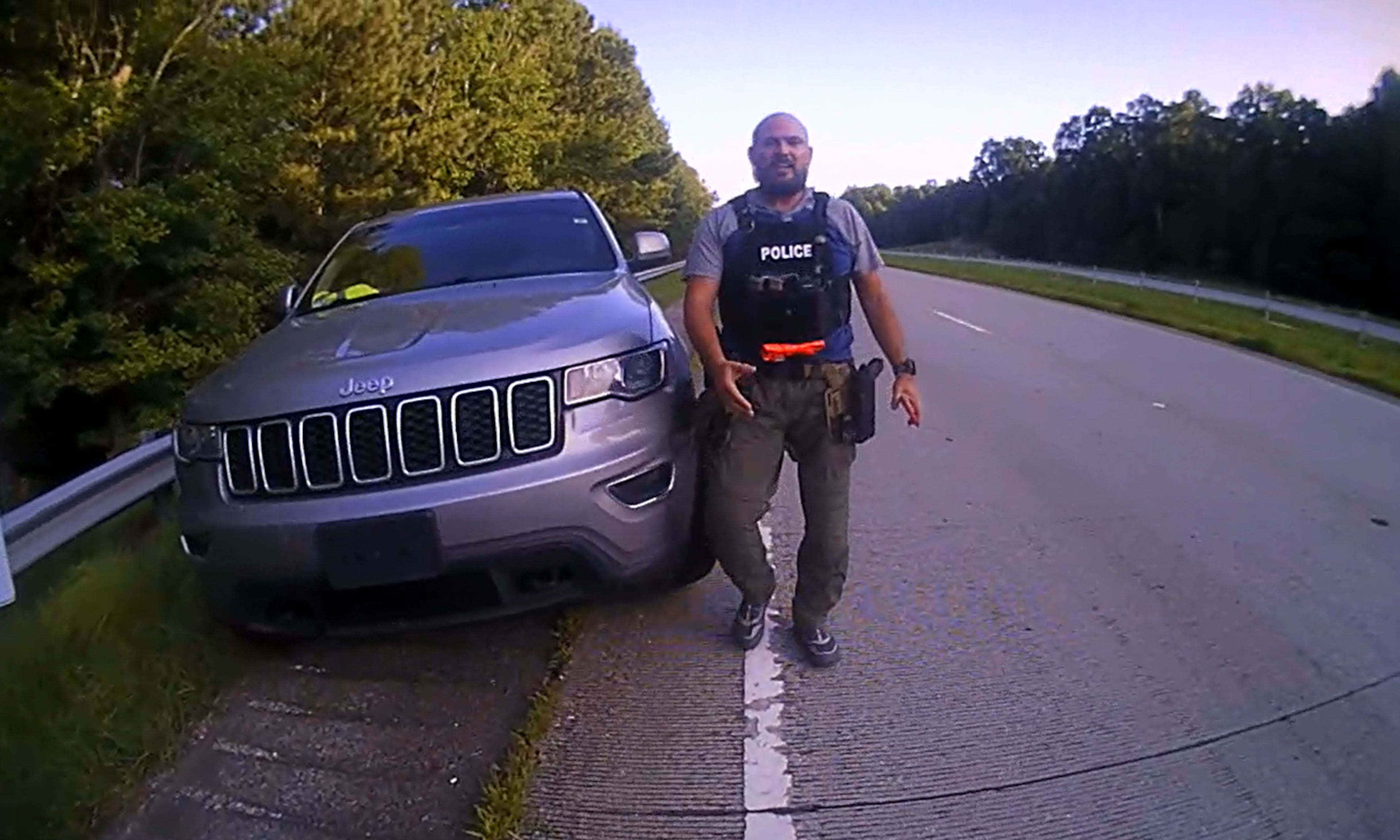
“If you get a wild hair and want to snatch up some folks just let me know,” then Jefferson Police Officer Jordan Redman texted to a colleague, inviting him to help report suspected unauthorized immigrants to ICE. The text exchange, captured by Redman’s body camera footage during the stop involving immigrants, was with Jefferson Police Officer Nick Hobbs, City Attorney Robert Alexander confirmed to the AJC.
“Yeah, I’ll come out,” Hobbs replied.
“Work vans or trucks with multiple occupants are the general target. If you get one stopped holler at me and I’ll have them (ICE) en route,” Redman, who left the Jefferson police force last year, wrote in the same exchange.
“Yeah, white work van and a ladder rack is like a 90% chance lol,” Hobbs replied. “Where do y’all go?”
“I generally sit in front of Waffle House and catch them coming off the interstate,” Redman responded.
Multiple attempts at reaching Hobbs and Redman, through the department and personal communications, were unsuccessful. The Jefferson Police chief also did not respond to multiple requests for comment and questions emailed to him.
In addition to the Jefferson Police officer footage, the AJC reviewed dash-camera videos of two stops in Gainesville conducted by Georgia State Patrol, which is formally partnering with ICE through a federal program known as 287(g).
Jefferson police’s collaboration with immigration authorities was the product of an informal agreement, according to the city attorney. Last year, the AJC also published stories on close coordination between police and ICE on traffic stops in Savannah and Hoschton.
Joshua McCall, a Gainesville-based immigration attorney, said minor traffic stops are often pretext for immigration enforcement action.
Collaboration with local and state officers, such as Jefferson police or Georgia State Patrol personnel, allows federal immigration authorities to rely on agencies that can conduct traffic stops. ICE on its own does not have authority to stop cars in Georgia over traffic violations.
Near international borders, federal agents can set up random checkpoints to verify people’s immigration status. Outside those areas, agents can only interrogate and arrest noncitizens over suspected violations of immigration or federal law.
To begin enforcement actions, immigration officers need to have “reasonable suspicion, based on specific articulable facts” that individuals are breaking the law. Race or ethnicity is not sufficient to clear that standard, according to a longstanding U.S. Supreme Court decision (currently being tested under Trump).
But once local or state police pull vehicles over for a traffic violation, no matter how minor, federal agents are able to check whether passengers may be subject to deportation. According to McCall, these stops fit into a pattern of inappropriate treatment.
“Let me tell you, this is not something that’s isolated … It’s the same pattern: bulls--- pretextual stop, ICE officers already waiting,” McCall said. “You don’t hear a lot about it because these people get locked away in the shadow land” of immigration detention.
On July 18, 2025, now former officer Redman in Jefferson, a city of roughly 13,000 people near Athens, pulled over a white work van on the side of a local highway.
Body camera video of the traffic stop shows the officer explaining to the driver that he was in violation of the “Slow Poke” law, which requires slower drivers to move out of the left-most passing lane to make way for faster-moving traffic.
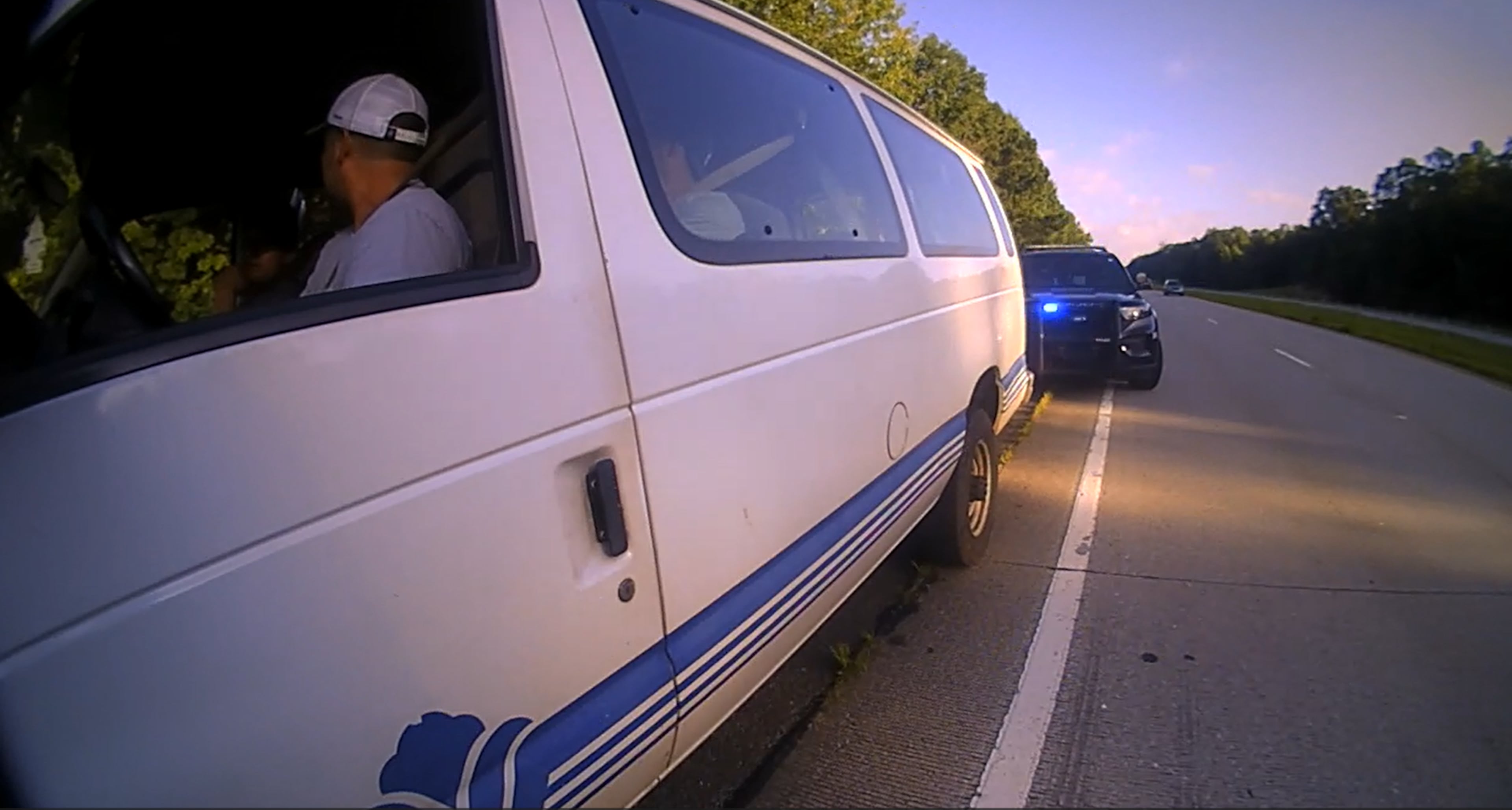
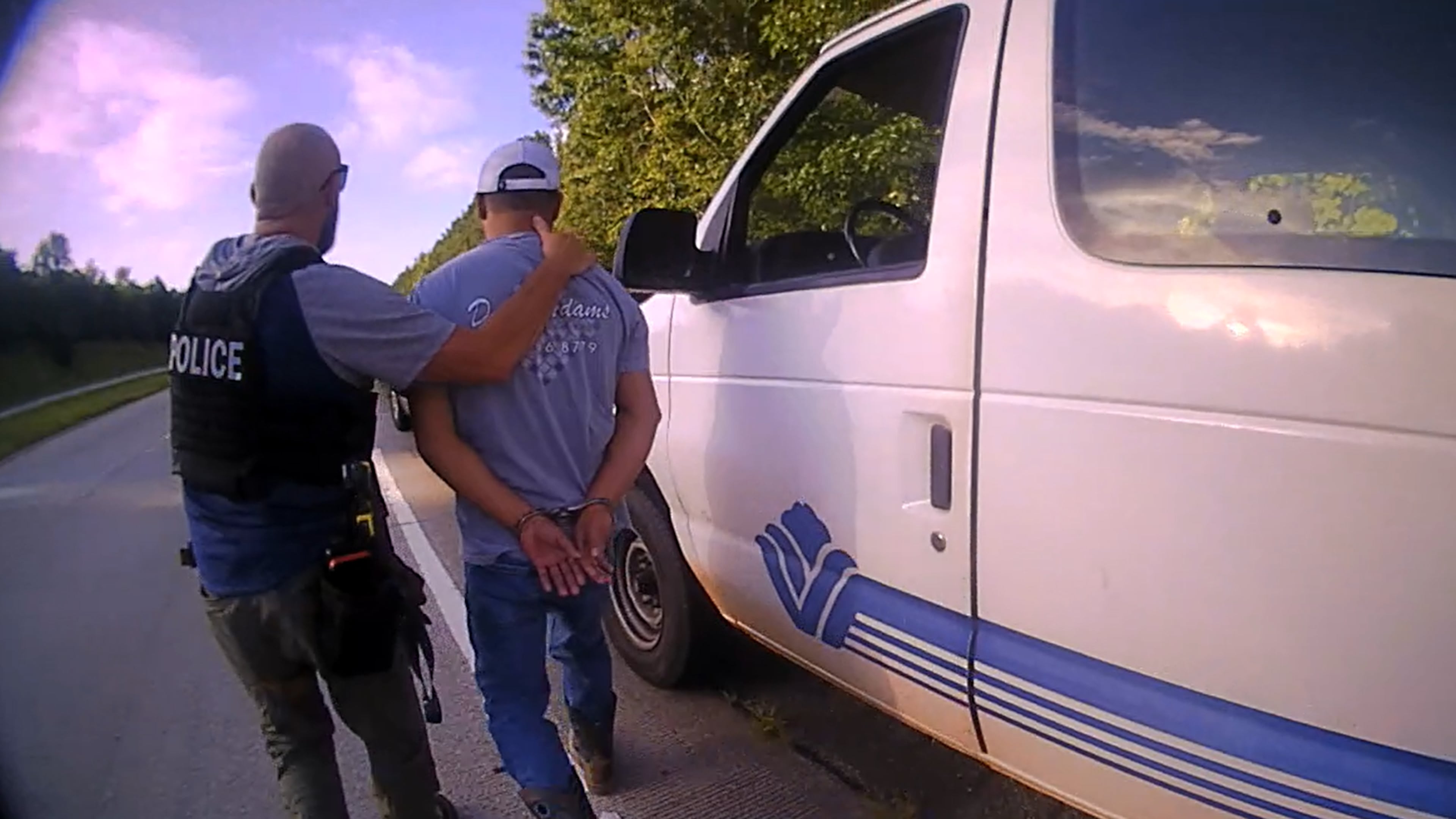
With the work van stopped on the side of the road, Redman returned to his vehicle carrying the Mexican passport of the driver, who was unlicensed. Redman’s body camera captured the officer looking through his phone and opening a text exchange with a contact identified as an ICE agent.
“Jordan, just drop a pin on here whenever you have something we might be interested in & we’ll head to you. A pic of any ID’s would be great too, so we can start running checks on our way there,” one of the ICE agent’s last messages to Redman said.
“I have 2 other guys that’ll be out here shortly so we should get a few,” Redman replied.
Redman shared his location with the ICE agent, as well as a photo of the driver’s passport. He added that the van was carrying four additional passengers.
Less than three minutes later, the ICE agent arrived on the scene, driving an unmarked vehicle and wearing a black vest that read “police.”
“Hey what’s up, bro?” the ICE agent said to Redman, noting he would take all five of the vehicle’s occupants into federal custody.
“You can bounce,” the ICE agent told Redman.
An ICE statement says the agency works with local and state police under both formal and informal agreements.
“ICE’s cooperation with local law enforcement is guided by the shared goal of protecting communities and upholding the law,” the statement says. “These interactions may be formal or informal and are not contingent on the existence of a written agreement or specific policy. ICE’s role is to complement — not interfere with — the work of local police, and the agency remains committed to transparent and lawful operations in all communities.
ICE agreement `done informally’
Alexander, the Jefferson city attorney, told the AJC that the city police department’s work with ICE started with a federal agent showing up in the lobby and asking to talk with a shift sergeant.
The agent invited JPD officers to get in touch if they came in contact with someone they thought could be in the country illegally, Alexander said.
“It is my understanding that this was all done informally,” Alexander said in a statement. “There was no official collaboration and no JPD policy was enacted related to this request. It is my understanding that some JPD officers did elect in their own discretion to notify ICE when they were on a stop that they believed may include undocumented immigrants.”
In response to the stop involving Redman, Alexander said police “should not” be targeting specific types of vehicles for traffic stops: “Traffic laws should be enforced impartially based upon the alleged infraction committed.”
Calls to ICE from JPD officers were few and far between, according to Alexander.
“It is my understanding that only a few JPD officers ever participated in ICE’s request for notification and even those were sporadic and isolated,” Alexander said. He added that it is the city’s “belief” that the July 18 operation was the last time Jefferson police had direct involvement with ICE.
Thaddeus Johnson, a Georgia State University criminology professor and former Memphis police captain, said there is a difference between notifying ICE after a good-faith traffic stop and using traffic enforcement “as a tool to locate people for ICE.”
“The first is cooperation after a police encounter has already occurred,” Johnson said in a statement. “The second starts to look more like local traffic authority being used as a front-end immigration enforcement tool. That distinction matters legally, operationally, and from a public trust standpoint.”
Johnson added that targeting work vans for traffic stops “becomes troubling if it is being used as a proxy for race, ethnicity, national origin, occupation, or presumed immigration status.”
Work vans were also involved in previous AJC reporting on traffic stops featuring local police working with ICE in Savannah and Hoschton.
‘They’re going to where workers live’
There is a similar chain of events captured in the dash camera footage from two Georgia State Patrol traffic stops in Gainesville reviewed by the AJC.
In both those instances, troopers pulled vehicles over for minor traffic infractions. The drivers were then whisked away by federal immigration agents within a matter of minutes.
Pretextual stops — instances when police pull over drivers for minor traffic violations with the intent of investigating something else — are generally lawful in the U.S., according to Supreme Court precedent, if a violation was indeed committed.
“But the fact that a stop (is lawful) does not mean it is good policing, neutral enforcement, or free from civil rights concerns,” Johnson said. “If the practical pattern is that certain groups or certain types of vehicles are being singled out because they are believed to contain immigrants, that raises serious equal protection, profiling, and public trust issues.”
The Gainesville arrests took place roughly one hour apart on June 24, 2025.
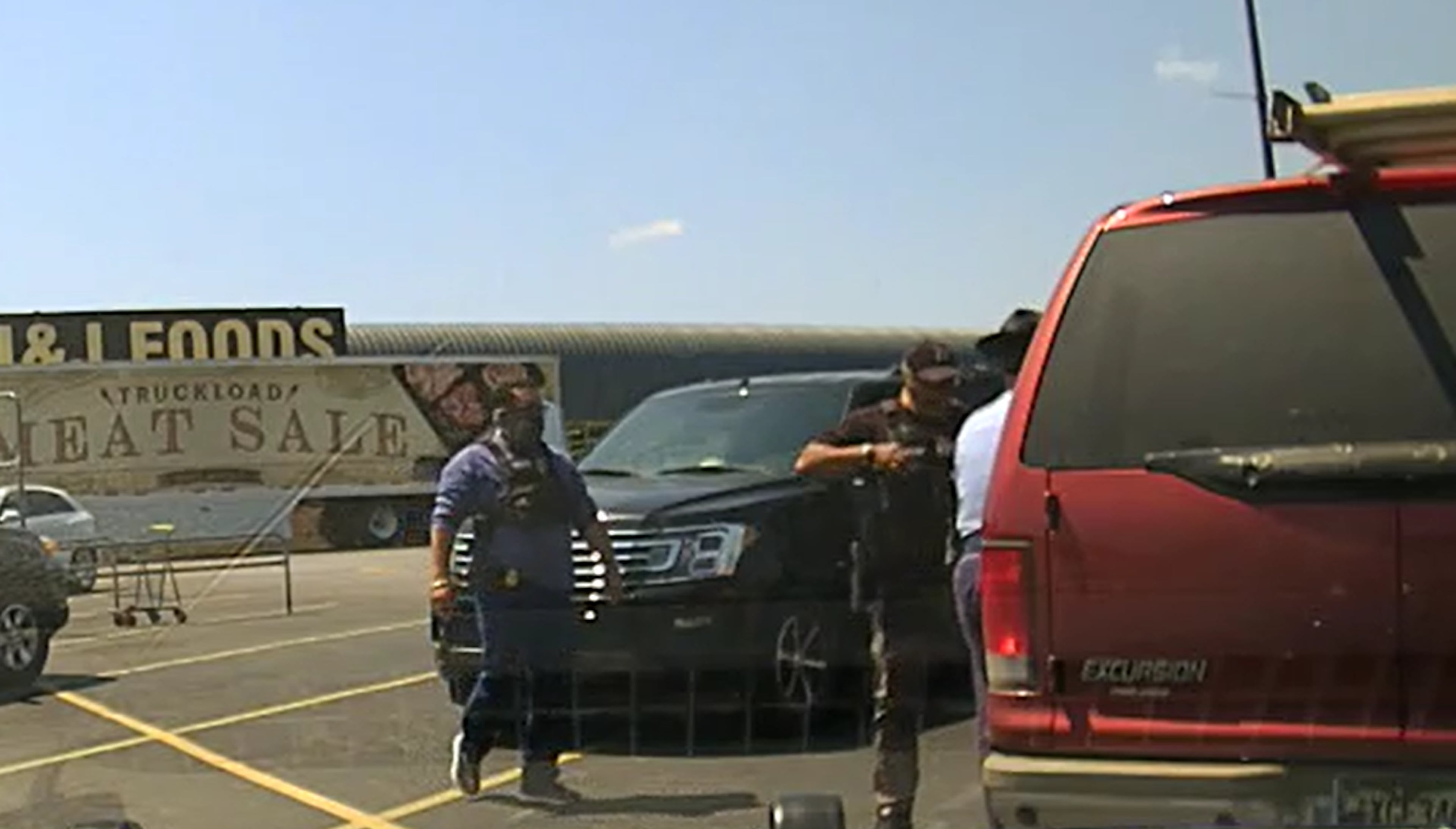
One trooper stopped a red SUV with a ladder affixed to its roof over a dark window tint. A second trooper pulled over a white SUV because of a crack in its windshield. Both stops were conducted in the parking lot of a grocery store on Jesse Jewell Parkway, GSP records show.
It took federal immigration agents roughly three minutes to arrive on the scene in an unmarked black vehicle after the driver of the red SUV handed a Washington driver’s license to the trooper, dashcam footage shows.
During the second stop, five minutes elapsed from the moment the driver handed a Maryland driver’s license to the trooper and when ICE arrived at the scene.
Both Maryland and Washington allow unauthorized immigrants to obtain driver’s licenses; Georgia does not.
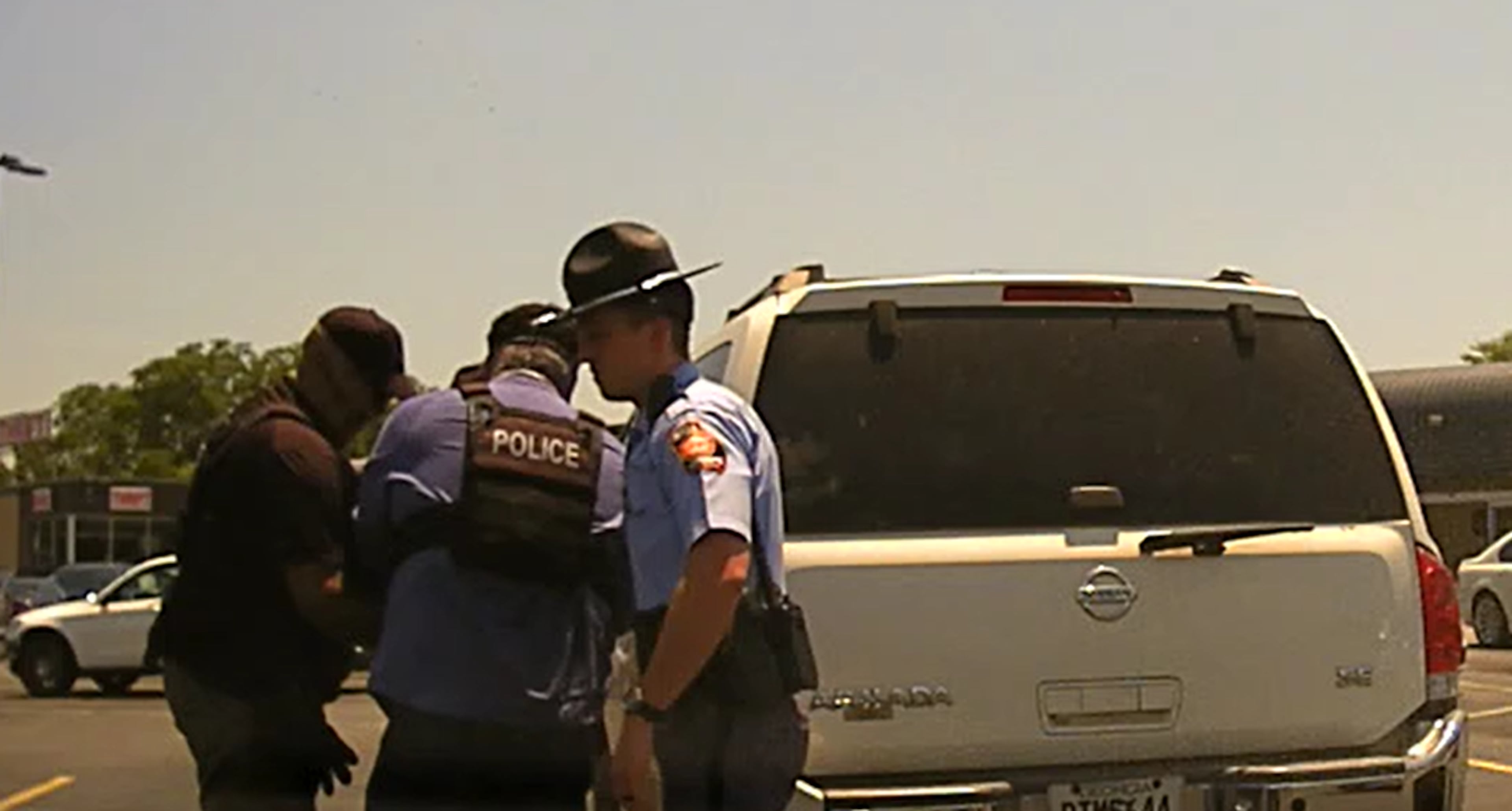
The two Gainesville traffic stops ended with ICE immediately taking custody of the drivers, according to dashcam footage and incident reports.
“When requested as a routine part of a traffic stop, neither driver was able to produce or establish authentic or valid driver credentials for driving in Georgia, which is an arrestable offense and also established reasonable articulable suspicion of an undocumented status,” Capt. Crystal Zion, a GSP spokesperson, said in a statement.
This led both troopers to contact ICE, Zion confirmed.
According to data from the 2020 U.S. Census, 41.2% of residents in the ZIP code where the GSP arrests occurred are Hispanic, compared to 37% for the city of Gainesville.
“So, they’re not doing this in the country clubs. They’re going to where workers live,” McCall said.
GSP `has not changed’ because of ICE
Since Trump’s second inauguration, dozens of Georgia law enforcement agencies have inked formal partnerships with ICE. The Trump administration has created financial incentives for local agencies that take on immigration enforcement duties through ICE’s 287(g) program.
Georgia State Patrol signed its own 287(g) agreement with ICE in March 2025. According to a representative, the existence of that partnership has not altered GSP’s approach to traffic enforcement.
The agency “has not changed its day-to-day law enforcement operations or practices for 287(g) compliance,” Zion said. “Officers do not stop motorists or anyone else for the purpose of checking any immigration status.”
When an agency formally partners with ICE under the 287(g) umbrella, local officers must undergo a training program before they are cleared to perform immigration-related duties. Coursework on “avoiding racial profiling” is part of that training, according to ICE’s website.
Traffic stops performed in coordination with ICE are not the only example of cooperation between local law enforcement and immigration authorities. State law also mandates statewide collaboration between immigration agents and Georgia jailers.
That dynamic has helped make Georgia a top state for immigration arrests since Trump’s White House return last year, despite the lack of a Minneapolis-style mass deployment of federal agents.
Redman, the former Jefferson police officer who invited his colleague to help him “snatch up some folks,” left the department last fall.