US lifts blockade of Iran and Iranian supreme leader endorses direct talks with American officials
WASHINGTON (AP) — The U.S. on Thursday lifted its blockade of Iran, and oil tankers began freely moving through the Strait of Hormuz after months of being unable to use the critical channel, as the tentative agreement to end the war took effect.
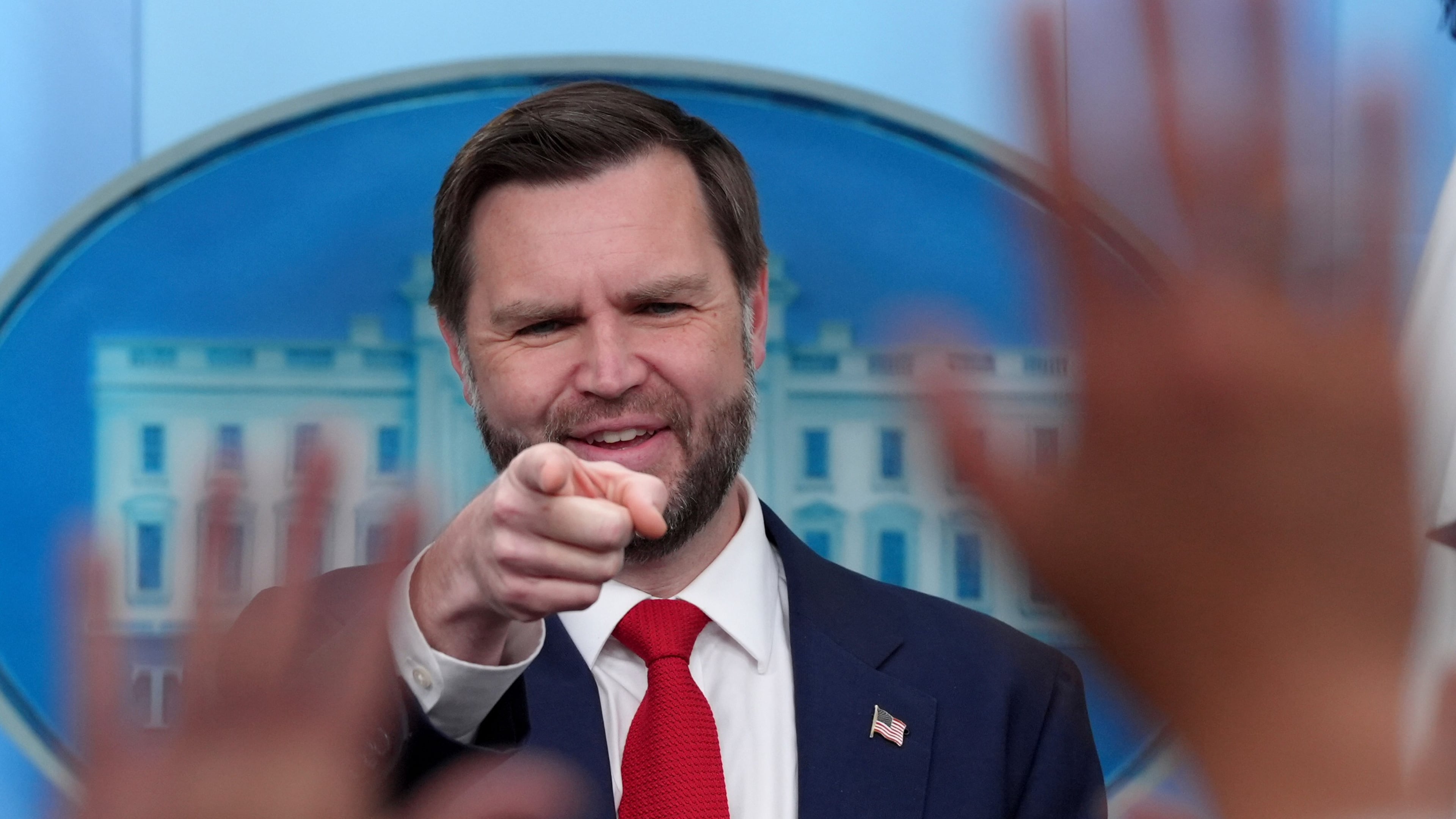
Meanwhile, Vice President JD Vance announced that he may postpone a trip to Switzerland that had been planned for Friday and included a ceremonial signing of the deal. And a Trump administration envoy told U.S. lawmakers in a private briefing that Iran will invite the U.N.’s nuclear watchdog agency to inspect its nuclear sites.
In other developments, Iranian Supreme Leader Ayatollah Mojtaba Khamenei endorsed direct negotiations with the U.S. in a statement read by state media.
“It is obvious that the face-to-face negotiations that will be held in the future will not mean accepting the enemy’s opinion,” he said.
It was Khamenei’s first reaction to the agreement, and it indicated a shift in Iran’s approach. Hard-liners, especially Khamenei’s father, the previous supreme leader, have long opposed direct talks, especially after the U.S. pulled out of the 2015 nuclear deal between Iran and world powers.
The supreme leader has not been seen in public since he was wounded in a strike at the start of the war.
Trump envoy tells lawmakers Iran will invite UN inspectors to its nuclear sites
Trump envoy Steve Witkoff told lawmakers that Iran will invite the U.N.’s nuclear watchdog agency to inspect its nuclear sites and begin work on identifying and uncovering the locations of Tehran’s enriched material, which is believed to be buried under rubble.
The private briefing was described by two people familiar with the conversation who spoke to The Associated Press on condition of anonymity to share the closed-door details.
Witkoff told congressional leadership and members of national security-related committees that the agreement that the U.S. struck with Iran did not include any side deals, but a side letter was drafted between Tehran and the International Atomic Energy Agency extending the invitation.
Witkoff disclosed the existence of the letter and invitation in the briefing, according to the people.
Witkoff said the letter to IAEA Director-General Rafael Mariano Grossi would enable him to bring U.S. nuclear inspectors to Tehran.
The agreement states that Iran’s stockpile of highly enriched uranium must at minimum be diluted under international supervision. It also says that Iran shall not procure or develop nuclear weapons — a commitment it has made previously.
Uncertain timeline could make it more difficult to promote deal
Vance's visit might have helped start talks on the next, potentially even more critical, round of negotiations between the two sides.
Pakistani Prime Minister Shehbaz Sharif also postponed a planned visit to Switzerland, where Islamabad officials were to host the ceremony, because the agreement had already been signed, said two senior officials who spoke on condition of anonymity because of the sensitivity of the matter.
The uncertain timeline could raise new questions and make it even more difficult for the Trump administration to promote a deal that many in the U.S. — including some congressional Republicans — have criticized as too favorable to Tehran.
“Our plan is to go to Switzerland. I don’t know exactly when,” Vance said during a briefing with reporters at the White House when asked about not flying, as planned, to the signing ceremony.
That injected new doubt into an agreement that President Donald Trump said he signed to avoid “economic catastrophe” in the U.S.
Vance's announcement came a day after Trump signed the pact with Iran while dining with French President Emmanuel Macron at the Palace of Versailles. The deal is slated to take immediate effect and extends a ceasefire while giving each side 60 days to hammer out broader agreements on larger issues.
Trump said the deal would avoid continued stress on the U.S. economy after the war caused oil prices to skyrocket, made financial markets skittish and fueled inflation. He repeatedly said he did not want to be compared to Herbert Hoover, whose policies helped exacerbate the Great Depression of the 1930s.
Vance defends U.S.-Iran deal
The vice president, who was initially personally skeptical of the U.S. going to war with Iran, has increasingly become the administration’s face of the conflict and has been outspoken in defending the deal. Asked about concerns it concedes too much, the vice president said repeatedly that the accord would force Iran to “change their behavior.”
Vance shrugged off accusations that its rollout has been piecemeal and sometimes contradictory, saying, “I don’t think our public messaging has been chaotic."
He also offered a surprisingly blunt warning to Israel, which has pushed the U.S. to take a harder stance against Iran and launched attacks on the Iranian-backed Hezbollah militia in Lebanon throughout the war, including just before the deal extending the ceasefire was reached. Those attacks complicated the peace efforts with Iran.
Trump “is the only head of state in the entire world who is sympathetic to the nation of Israel at this moment in time," Vance said. “And he happens to be the head of state of the world’s superpower.”
The vice president said more than 12.5 million barrels went through the Strait of Hormuz on Wednesday night. That could further soothe oil prices that spiked during the war but have been falling since the U.S. and Iran announced a tentative deal to end the conflict.
He said the U.S. easing its blockade of Iran means "honoring our end of the early part of the agreement on the military side."
U.S. Central Command said American warships “will remain in the general area to make sure that all aspects of the agreement are adhered to, obeyed and in full force and effect.”
Shipping starts to pick up
At least two oil tankers left Iran and crossed the U.S. military blockade without being stopped. A merchant shipping tracking website said the ships were carrying a combined total of 3.8 million barrels of Iranian crude oil.
Iranian state media said shipping had “normalized” at Iran’s southern ports but added that the strait remains supervised and under the control of the Iranian military, and transiting through the vital waterway still requires coordination.
Major shipowners began moving vessels through the strait after the agreement was signed, according to maritime data company Lloyd’s List Intelligence, though Lloyd's did not give data on how many ships have passed through the strait as of Thursday.
In a media briefing, Richard Meade, editor-in-chief of Lloyd’s List, said for the first time in 110 days, ships owned by major companies are transiting the strait after effectively being marooned there since February.
Tankers controlled by major ship owners Grimaldi Group, Cosco, Knutsen and NYK have passed through the strait. And two Iranian-flagged, sanctioned crude oil tankers owned by the National Iranian Tanker Company have entered the strait, according to Lloyd’s List.
Phillip Belcher, marine director of Intertanko, a trade group for global independent tanker owners, said the main central route of the strait is still closed and has an estimated 80 mines that need to be cleared.
But ships have been passing through the smaller northern route, which goes through Iranian waters, and the southern route, which goes through Omani waters.
Lloyd’s List estimated that 550 merchant ships will need to exit the Persian Gulf. It could take weeks or months to fully reopen the strait, and the two alternative routes do not have as much capacity as the strait's central passage.
___
Associated Press writers Munir Ahmed in Islamabad; Aamer Madhani in Zurich; Collin Binkley in Washington; Mae Anderson in New York; and Nasser Karimi in Tehran, Iran, contributed to this report.