US, Iranian negotiators enter 2nd day of talks after rough start
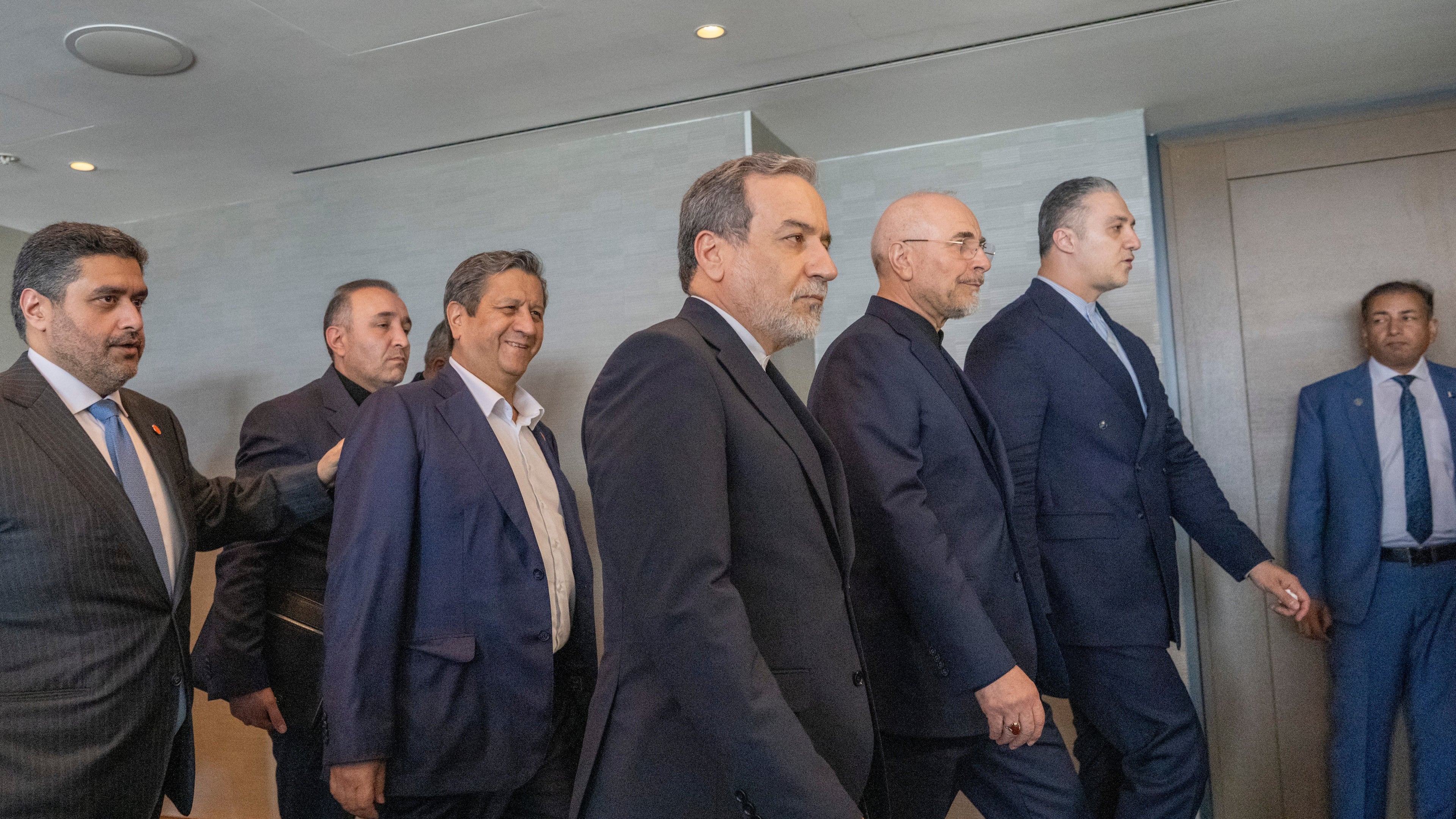
OBBUERGEN, Switzerland (AP) — Negotiators from the U.S. and Iran were set to engage in a second day of talks Monday to solidify a permanent end to the war between the countries, after a first day of mediation began with a rocky start.
Mediators Qatar and Pakistan hailed what they called “encouraging progress” made during the talks as Iran and the United States agreed to create a “de-confliction cell” to address the fighting in Lebanon. A senior U.S. diplomat claimed progress on multiple fronts, including the establishment of “mechanisms” to ensure the Strait of Hormuz, a vital waterway for global energy shipments, remains open and that a ceasefire in southern Lebanon holds.
Yet the first full day of talks between the U.S. and Iran, who were accompanied by Qatari and Pakistani officials, was jolted by blistering statements from U.S. President Donald Trump, who from thousands of miles away from the Swiss negotiating venue at a mountainside resort near Lake Lucerne was firing off comments that offended the Iranians.
Iranian state media said talks had paused after the “publication of an insulting message by the U.S. President.” The Iranian delegation then met with Qatari mediators and left the negotiating site, state media said. The senior U.S. diplomat, who spoke on condition of anonymity to brief journalists on the ongoing talks, said late Sunday that the Iranians remained on site and the negotiations were on.
Iranian President Masoud Pezeshkian had vowed to “never back down from the right to enrich uranium,” according to state media, and Trump later told Fox News in a phone interview that Pezeshkian should watch what he says and also threatened to take over Iran, according to one of the news channel's correspondents.
Trump also continued to issue warnings against Iran on social media, posting as negotiators worked: “Iran must immediately stop their highly paid PROXIES in Lebanon from causing trouble. If they don’t, we’ll hit Iran very hard again, just like we did last week, only harder!!!”
The chief negotiators for the U.S. include JD Vance, the vice president; special envoy Steve Witkoff, and Jared Kushner, the son-in-law of the president. Iran is represented by Mohammad Bagher Qalibaf, Iran’s parliamentary speaker, and Foreign Minister Abbas Araghchi.
It’s unclear when Vance will depart Switzerland, although he told Fox News in an interview Saturday that he anticipates staying only a “day or two.” Kushner and Witkoff are handling much of the technical details on behalf of the U.S. delegation.
In a joint statement, Pakistan and Qatar said the high-level talks had ended and that technical negotiations would continue in Switzerland for the rest of the week. The statement said the sides had agreed to establish a “communication line” to ensure safe passage of ships in the Strait of Hormuz, as well as a mechanism to bring about an end to the fighting between Israel and the Iranian-backed militant group Hezbollah in Lebanon.
The U.S. offered no immediate comment, while Iran praised the meditators’ work.
Araghchi wrote on X that Pakistani and Qatari mediators delivered "major progress to end the Lebanon War.” He added that the first “real test” of negotiations would be whether the mechanism succeeded in halting the fighting between Israel and Hezbollah.
The senior U.S. diplomat said among the issues discussed was Iran’s messaging as it related to the Strait of Hormuz, which Iran’s military said it closed Saturday in response to continued fighting in Lebanon. U.S. Central Command has disputed that Iran closed the strait again.
The interim deal to end the fighting in Iran, signed last week by the leaders of the U.S. and Iran, outlines a 60-day period for negotiators to settle the future of Tehran’s nuclear program amid concerns that it wants to use it for military purposes, a claim Iran denies. The fate of frozen Iranian assets, among other thorny issues, are also on the agenda.
Though the talks will encompass a vast array of complex matters, Iran first wants to focus on addressing the fighting in Lebanon.
Saturday’s renewed ceasefire in Lebanon appeared to be holding, and Israel’s military said it would lift movement restrictions for residents near the Israel-Lebanon border on Monday morning. Neither Israel nor Hezbollah is a signatory to the U.S.-Iran deal.
There was cautious calm Monday in Lebanon, with no Israeli strikes reported overnight after a day of quiet Sunday. Hezbollah likewise has not announced any attacks on Israeli forces since Saturday.
The lull in fighting in Lebanon is the longest since the outbreak of the latest Israel-Hezbollah war on March 2.
___
Kim reported from Washington. Associated Press reporters Abby Sewell in Beirut, David Rising in Bangkok and Jon Gambrell in Dubai, United Arab Emirates, contributed to this story.