Meet some birds that deserve a Father’s Day card (and some that don’t)
Sunday is the first day of summer, the longest day of the year. It’s also Father’s Day, so we’ll have more than 15 hours of daylight to celebrate dads for all they do to nurture homes, families and communities.
Paternal devotion, though, is not limited to human fathers. It can be just as strong among wild creatures.
So, Father’s Day also seems a good time to recognize the importance of dads in the natural world. Some of the hardest-working dads, in fact, are found in the animal kingdom, especially among birds: In some 90% of avian species, males play key roles in building nests and helping rear, feed and protect their young. In many species, the males are just as adept at parenting as the females.
Woodpeckers
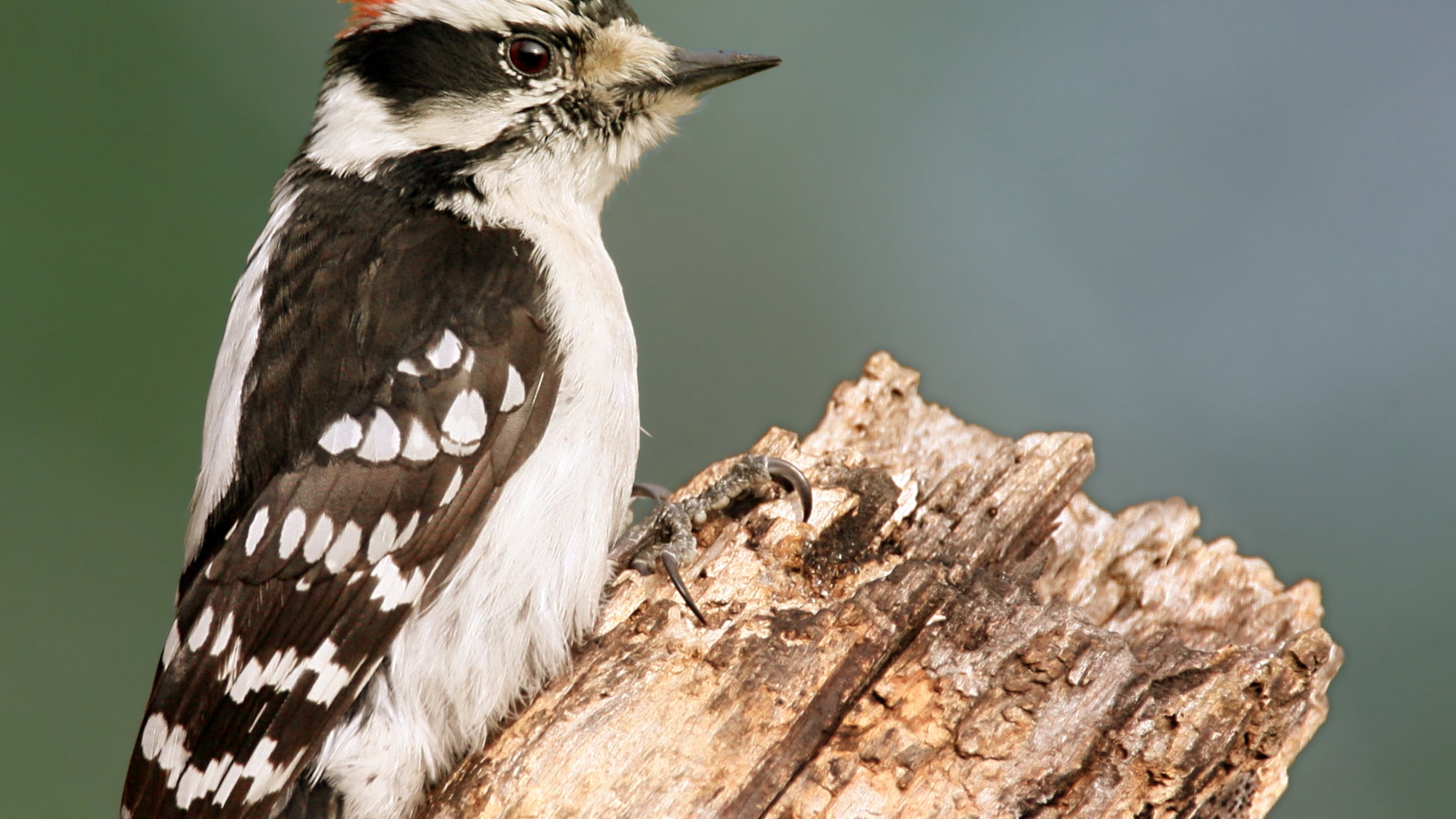
In particular, male woodpeckers are exceptional parents. Among Georgia’s birds, my candidates for fathers of the year are the males of the state‘s seven year-round woodpecker species (downy, hairy, pileated, red-headed, red-bellied and red-cockaded woodpeckers and Northern flicker.)
They take on a uniquely large, equal and sometimes primary role in rearing their young. A good example is the male downy woodpecker, common across Georgia.
A downy father does most of the work in drilling a nest cavity and then shares daytime nesting duties with his mate. At night, he entirely takes over egg incubating duties. Once the babies hatch, he roosts at night in the nest cavity with the young until they fledge. Then, he teaches them how to find food.
Amazingly, all male woodpeckers — like the females — develop “brood patches” to help incubate eggs. In most bird species, the brood patch is exclusively a body feature of nesting females. (The patches are bare, featherless areas of skin on the bird’s underbelly that swell with extra blood vessels to transfer heat directly to the eggs — like a natural heating pad.)
Brown thrashers
Also worthy of a Father’s Day card is the male of Georgia’s official state bird, the brown thrasher.
The male is a model avian father that takes on roughly half of all parental duties, from nest building to protecting the brood. Few birds show more concern over their eggs or young as does the brown thrasher. “Any intruder, whether it be a snake, a cat, or a man is savagely attacked if the nest is threatened,” wrote the late Georgia ornithologist Thomas Burleigh.
Known for his spirited singing and for a repertoire of hundreds of songs — more than any other Georgia songbird — the sleek, cinnamon-brown male thrasher helps his female mate select a site for their bulky, cuplike nest low in dense shrubs and bushes. Both he and she work together to build the nest of twigs, leaves, weeds and bark fibers, and then line it with finer materials, such as grass or rootlets.
The male thrasher actively takes his turn sitting on the clutch of three to five eggs to keep them warm. He helps feed his mate while she’s on the nest and then helps feed the brood after the eggs hatch.
The nestlings fledge 9-13 days after hatching. As is true with most other songbirds, young males will learn from their fathers how to sing to attract their own mates and defend territories.
More exemplary bird dads
Some other noteworthy fathers among Georgia’s birds include Northern cardinals, great-horned owls, bald eagles, blue jays, barn swallows, orchard orioles, Carolina chickadees, nuthatches, American goldfinches, Eastern bluebirds and others.
Interestingly, a male mourning dove — in helping his mate raise five or six broods a year — helps feed his babies by secreting a special, nutrient-rich “crop milk” from his throat, ensuring that the young have everything they need to survive and grow.
Room for improvement
Some male birds, though, are not deserving whatsoever of a Father’s Day tribute. In particular, the male ruby-throated hummingbird does nothing to rear his babies. After impregnating the mother, he abandons her — with zero contribution to nest building or feeding and protecting the babies.
IN THE SKY: From David Dundee, retired Tellus Science Museum astronomer: Summer begins at 4:24 a.m. Sunday — the summer solstice. The moon will be first quarter Sunday and full June 29.
Over the next two weeks, Mercury and Jupiter are low and Venus is high in the west just after sunset. Mars is low in the east just before sunrise. Saturn rises in the east a few hours after midnight.
Charles Seabrook can be reached at charles.seabrook@yahoo.com.