Mamdani proves his power with New York endorsements, plus more takeaways from Tuesday’s primaries
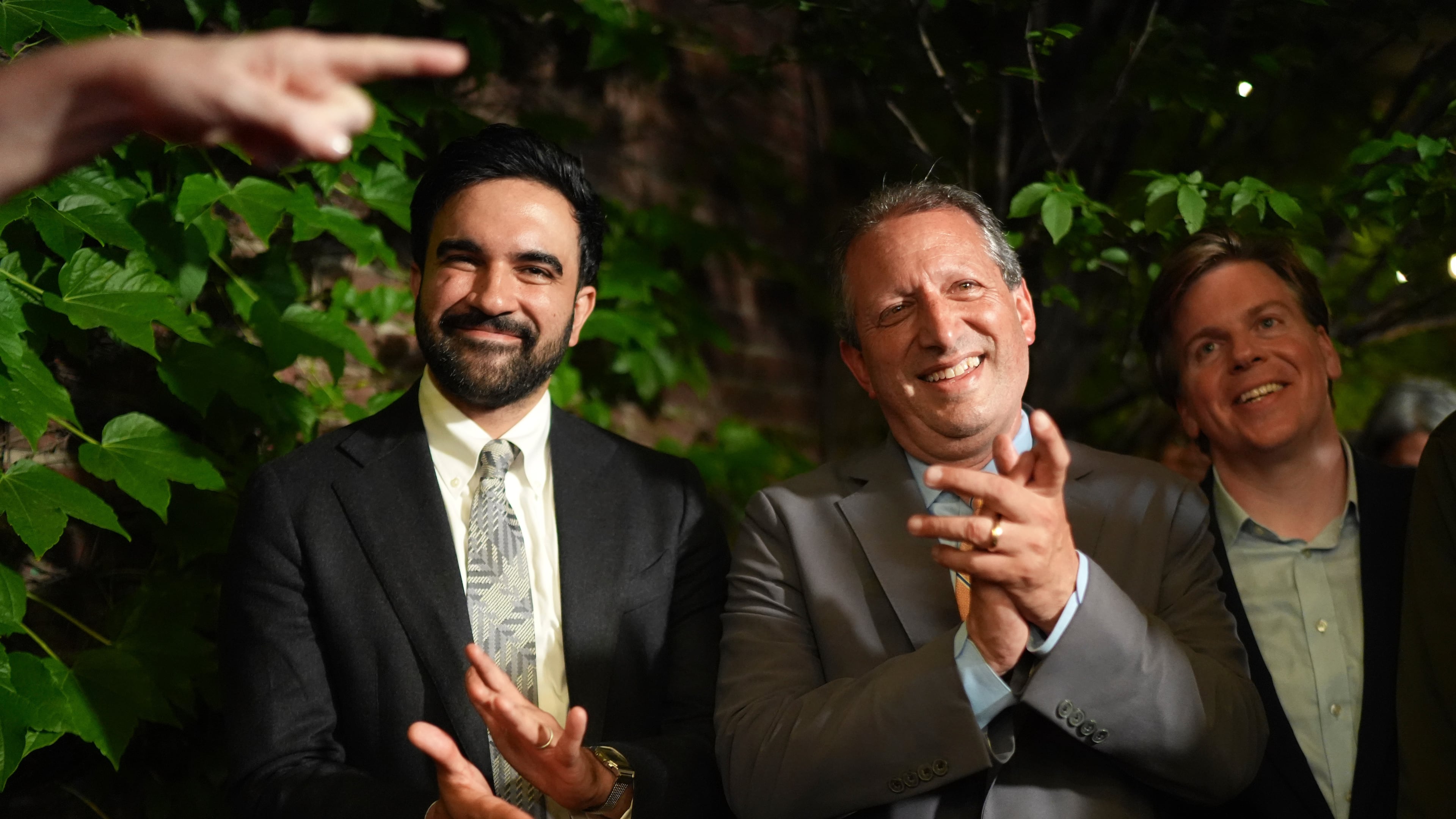
WASHINGTON (AP) — New York City Mayor Zohran Mamdani waded into Democratic U.S. House primaries to boost three progressives over establishment-backed candidates. All of them won Tuesday, defeating two incumbents and essentially ensuring that two self-described democratic socialists will be elected to Congress in their deep blue districts.
The mayor said it was a question of electing “better Democrats” who would "put working people back at the heart of politics.” The approach consternated some in Democratic leadership, but the outcome showcased Mamdani's rising influence.
Elsewhere Tuesday, two opposing factions of the artificial intelligence industry spent millions on a House race that became a proxy fight over tech regulation.
And President Donald Trump, after two of his chosen candidates for governor lost Republican primaries this month, ensured it wouldn’t happen again. The president endorsed both candidates in a South Carolina runoff — and one of his endorsed candidates inevitably won.
Mamdani successfully flexes his political power in House races
When Mamdani took the stage in Brooklyn on Tuesday night, the crowd chanted “DSA,” the initials for the Democratic Socialists of America.
It was just the latest sign of an ascendant political movement, and two of the candidates successfully backed by Mamdani are democratic socialists.
In the primary for retiring U.S. Rep. Nydia Velázquez’s seat, state Assembly Member Claire Valdez beat out Brooklyn Borough President Antonio Reynoso. Valdez was endorsed by Mamdani, and Reynoso was endorsed by Velázquez.
Democratic U.S. Rep. Adriano Espaillat lost his bid for reelection to Darializa Avila Chevalier, another Mamdani-backed democratic socialist. Avila Chevalier hasn’t held public office before and once helped organize pro-Palestinian protests at Columbia University.
A third candidate backed by Mamdani, former city comptroller Brad Lander, defeated U.S. Rep. Dan Goldman by running to his political left. The race partly revolved around the war in Gaza, with Lander assailing Goldman for not being critical enough of Israel.
All three victors are expected to win their blue districts, which would also place three Mamdani allies in Congress come January.
Lasher won Manhattan House primary where AI regulation was debated
One crowded Democratic primary in Manhattan had become a proxy battle between two powerful camps in the artificial intelligence industry because of one candidate: New York Assemblyman Alex Bores.
Bores, a former Palantir employee, had cited ethical concerns in leaving the company and pushed one of the more sweeping state-level AI regulation bills in the country. He pointed to that legislation, which faced some industry pushback, as a framework for how he’d approach regulation in Congress.
His entry in the race for retiring Democratic Rep. Jerry Nadler’s seat prompted a political group financed by investors in OpenAI to spend more than $7 million in ads attacking Bores — only for an opposing group connected to Anthropic to ride to his aid with more than $10 million.
Bores fell short in the primary, which was won by Assemblymember Micah Lasher, a longtime government hand backed by Democratic leaders. Lasher had criticized Bores by suggesting he would be beholden to the big tech faction who supported him.
“I have some news for the two big AI companies who’ve taken such an unusual interest in who won this congressional seat," he said Tuesday night. "I won’t be taking my cues from either of you when it comes to protecting our kids, our jobs, our environment.”
Jack Schlossberg, the grandson of former President John F. Kennedy, and former Republican lawyer George Conway rounded out the field.
Trump successfully hedges in South Carolina after endorsement record gets shakier
The president is proud of his ability to pick winners in Republican primaries, but he stumbled in governor's races earlier this month. First U.S. Rep. Randy Feenstra lost to businessman Zach Lahn in Iowa, then Lt. Gov. Burt Jones fell short to billionaire Rick Jackson in Georgia.
So Trump took steps to ensure a victory for his endorsement in South Carolina on Tuesday. After initially endorsing Lt. Gov. Pamela Evette shortly before the primary, he decided to also support state Attorney General Alan Wilson in the runoff.
“I can’t hurt one of them by only Endorsing the other, so therefore, I am going to Endorse, for Governor of South Carolina, both Pam Evette and Alan Wilson!” he wrote in a social media post Friday. “It’s a Wealth of Riches – With either one you can’t go wrong.”
It appeared to be a prescient decision, and Wilson swiftly came out on top in the runoff.
“I was honored to receive his endorsement,” Wilson told his supporters of Trump in accepting victory Tuesday. “I think he saw the fight in our campaign, the energy in our campaign. And think he likes a fighter and I think that’s won him over. I want to thank you, Mr. President.”
In the end, Trump's endorsement was another winner on the night.
“Alan Wilson wins!” he posted on social media. “Endorsed by President Trump!”
Former US representative beats more progressive competitors in Utah's new Democratic battleground
It's unusual for Utah's Democratic primaries to draw much attention, but that's because the party hasn't had much of a shot in the staunchly red state. That is until redistricting last year created a lone Democratic island in the Salt Lake City area.
The new district had a dark enough hue of blue that primary candidates jostled for who was furthest left, a contest that former U.S. Rep. Ben McAdams — who won Tuesday — worked to adapt to.
When McAdams last ran in 2018, ousting a Republican, he described himself as pro-life and fashioned himself as a moderate. Now, in the new left-leaning district, he pledged to support abortion rights and said he’s only “moderate in tone.”
The more progressive candidates who challenged him included state Sen. Nate Blouin, who has said the electorate had grown accustomed to Democrats who will “play nice” with Republicans and who won support from Sen. Bernie Sanders.
Maryland Republicans sought an heir to Hogan
Republican Larry Hogan reigned as Maryland governor for eight years, standing on a more moderate conservative platform to keep his perch in the left-leaning, East Coast state.
At Hogan's departure, Democratic Gov. Wes Moore took over in 2023, and he won his party's primary Tuesday in his bid for reelection to a second term. Moore is widely viewed as a potential presidential candidate in 2028.
Republicans voted for Dan Cox, who leaned furthest to the right out of the nine candidates and had a photo of himself with Trump on his law practice's website. On the campaign trail, he had pledged to cut taxes and expand housing affordability programs.
___
This story has been corrected to show Moore took office in 2023, not 2024.
___
Bedayn reported from Austin, Texas, and Lodhi from New York.