Larger World Cup led to predictions of lopsided affairs. The results tell a different story
GUADALAJARA, Mexico (AP) — Not long after FIFA announced an expanded 48-team World Cup, criticism began to pour in about how the quality of the tournament would likely be worsened.
The critics argued that by allowing smaller teams to the expanded field, the number of weak matchups would increase, as would the chances of lopsided results.
But as the biggest World Cup ever progresses, those fears have not fully materialized.
Through the first 24 games, the goal differential was unchanged compared to the tournament in Qatar in 2022, suggesting the larger field did not create more one-sided competition.
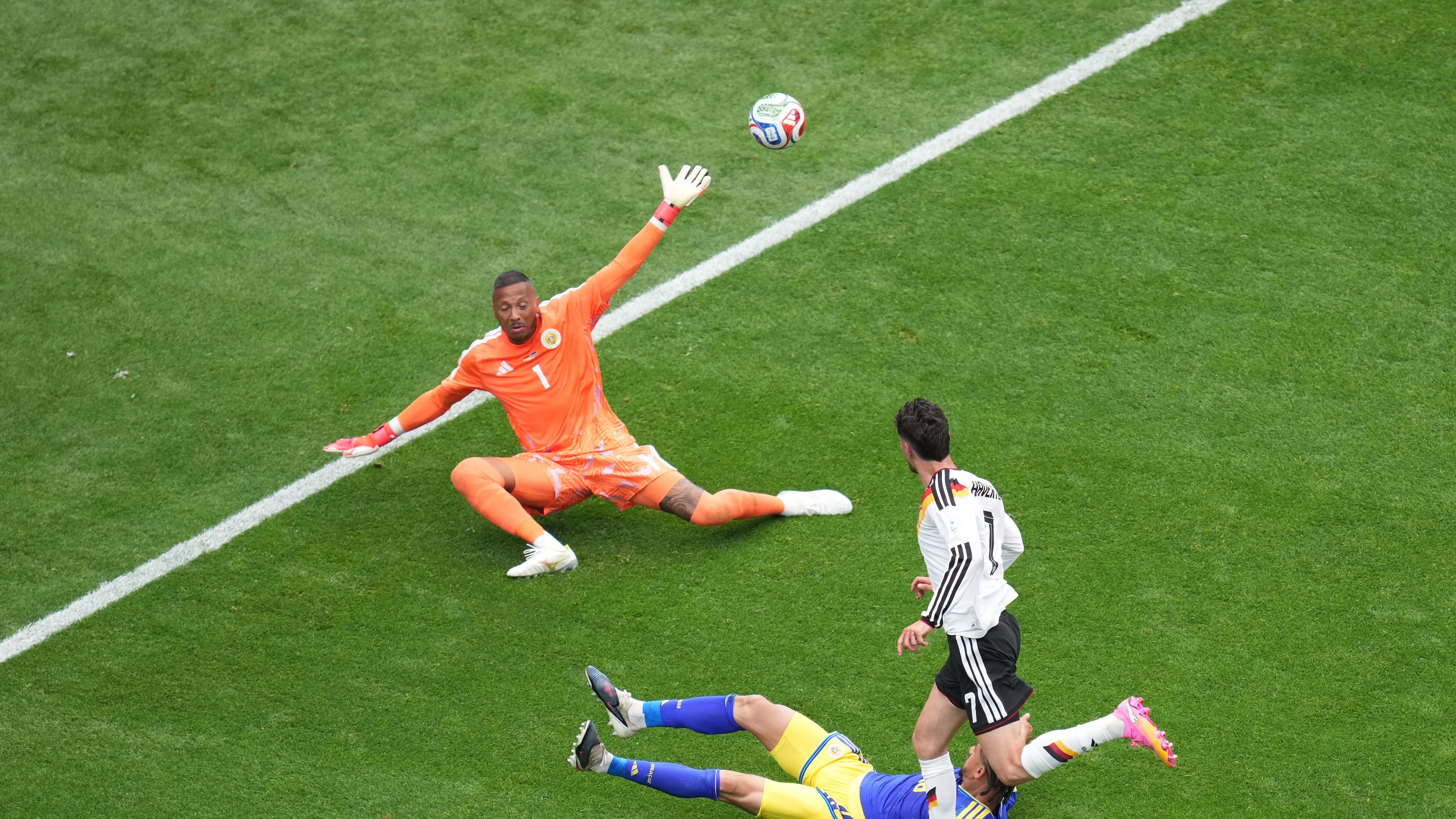
Germany did rout newcomer Curacao 7-1, Qatar was trounced 6-0 by Canada, and Haiti was eliminated after two matches. But some of the less-traditional nations were able to hold their ground early on.
Cape Verde, the fifth-lowest ranked team entering the World Cup and one of the smallest nations to ever make it to the tournament, pulled off one of the biggest surprises in World Cup history by holding European champions Spain to a 0-0 draw.
Congo, whose only other World Cup participation was in 1974 as Zaire, was unfazed while facing Cristiano Ronaldo’s Portugal, holding one of the tournament favorites to a 1-1 draw.
What are the reasons for the overall competitiveness?
Coaches, players and analysts say global soccer has become increasingly competitive, with more players joining the top leagues and more top coaches being hired by smaller nations. There is also wider availability of tactical knowledge and physical conditioning methods, allowing less-traditional teams to better compete against the traditional powerhouses.
"It’s very tough to win. It surprised me how even things are. They had talked about having 48 teams, but not counting Germany, which did have a big gap with many goals scored, all other matches were very complicated,” Mexico coach Javier Aguirre said. “It’s not easy to win. Really, believe me. The teams have been improving, until recently we didn’t know much about Cape Verde, and there it is. Morocco played a tremendous match against Brazil."
While the number of goals scored after the first 24 matches increased from 57 in Qatar four years ago to 75 now, the goal differential this year was 35, exactly the same after the same number of games in Qatar.
Cape Verde was ranked 67th when it came up with the upset by playing second-ranked Spain to a draw.
“This game showed us that the World Cup is a tournament with a lot of equality. It’s very complicated,” Spain coach Luis de la Fuente said. “These teams have their limitations, but they do what they do well. The team we faced was clearly inferior to ours, but it did what it had to do very well and defended very well. In every match you have to be fully focused and extremely precise to be able to overcome your rivals.”
Curacao, the third-lowest ranked team at the start of the tournament at No. 82, held Germany to a 1-1 draw until late in the first half before the European powerhouse took over for good.
Haiti, ranked 83rd and back in the World Cup after five decades, lost 1-0 to Scotland in a decent performance in its opener, but then was no rival for five-time champion Brazil, conceding three first-half goals before improving to hold its ground in the second half of a 3-0 loss.
Qatar, 56th in the world coming in, conceded six goals against co-host Canada, but it was coming off a 1-1 draw against 19th-ranked Switzerland.
New Zealand was the lowest-ranked team at the start of the tournament at No. 85. It drew 1-1 with 20th-ranked Iran.
UEFA President Aleksander Čeferin was criticized last Sunday by soccer governing bodies in Asia, Africa and the Caribbean for allegedly saying the expanded tournament created uninteresting matches.
“We have a huge number of matches that are completely uninteresting,” he said, according to Zurnal 24, while adding the expansion allows small countries to participate and experience the tournament’s excitement.
The associations of Cape Verde, Congo, Curaçao, Haiti, Jordan and Uzbekistan issued a joint statement they said was in solidarity with the federations of Algeria, Egypt, Ghana, Ivory Coast, Morocco, Senegal, South Africa and Tunisia.
“Football does not belong to a select group of nations. Its strength comes from its universality,” the statement said. “For many countries, participation in the FIFA World Cup is not only a sporting achievement. It is a moment that inspires a generation, accelerates football development and creates memories that last a lifetime.”
The excitement for the underdog teams can, of course, be short-lived as previous dark horses have seen following surprising debuts in the World Cup. But some of them have hope, and that can be enough to carry a team.
“When you are organized and together, you are able to compete," said new Tunisia coach Hervé Renard, admitting that Cape Verde was giving his team hope for a good result against Japan on Saturday. "We have to follow this example and not be scared of defeat.”
___
AP World Cup: https://apnews.com/fifa-world-cup