Israel and Hezbollah agree to halt fighting, officials say, as US-Iran talks hang in the balance
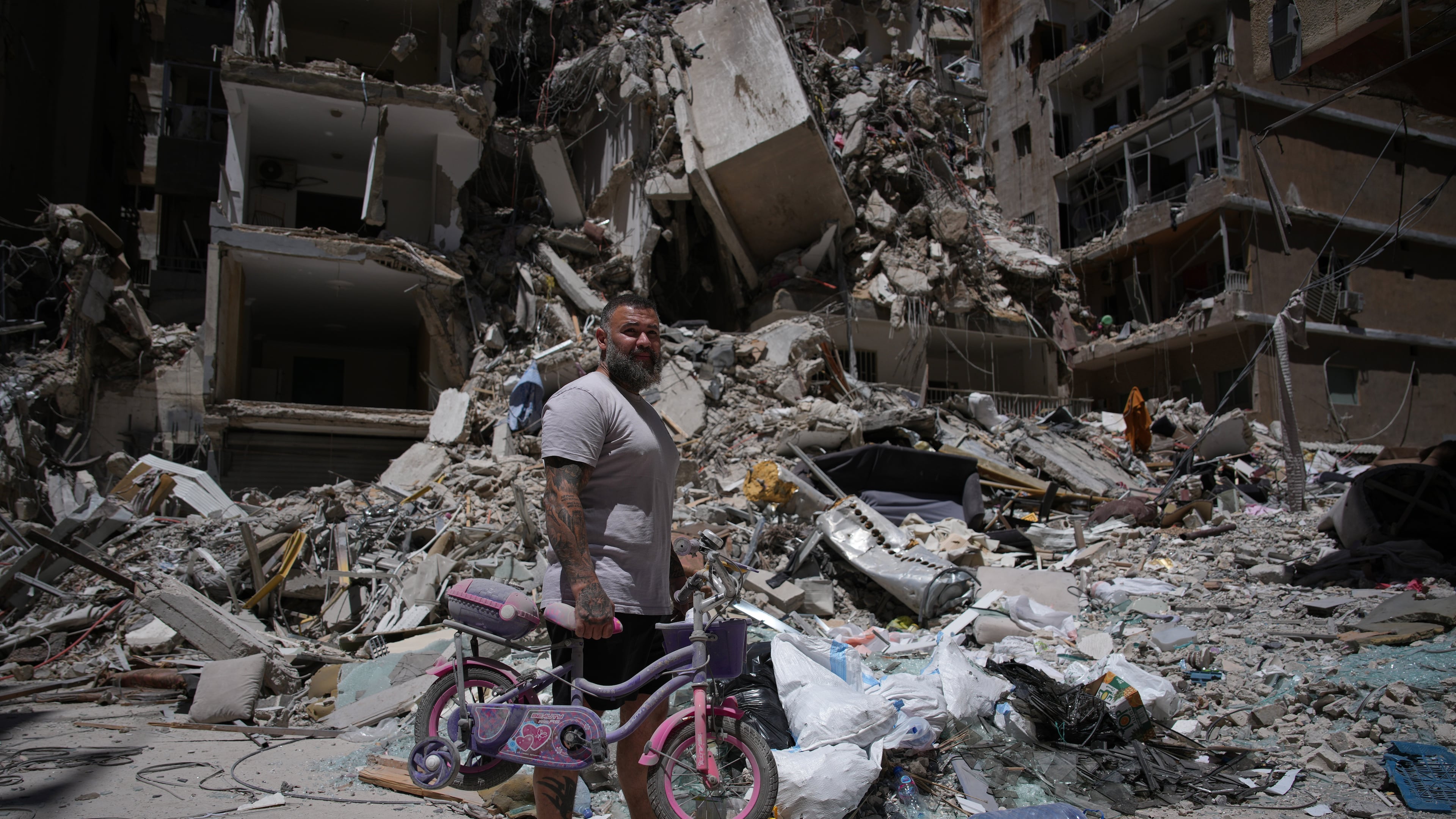
JERUSALEM (AP) — Israel and the Iranian-backed Hezbollah militant group agreed Friday to halt the heavy fighting in southern Lebanon that had threatened to unravel an interim agreement between the United States and Iran to end their war, officials said. Neither Israel nor Hezbollah immediately confirmed the truce.
It came after a heavy exchange of fire killed 47 people in Lebanon and four Israeli soldiers.
Hezbollah and Israel went to war shortly after the outbreak of the wider conflict, with Hezbollah firing rockets and drones at civilian communities in northern Israel and Israel seizing large swaths of southern Lebanon.
The interim agreement to end the Iran war has already reopened the Strait of Hormuz, which Iran effectively closed, cutting the global economy off from significant supplies of oil and natural gas. The deal would also relaunch talks on Iran’s nuclear program, the core issue over which Israel and the U.S. began the war on Feb. 28.
But the accord already faces threats, chiefly from Lebanon, with the fighting there leading to a delay in the start of talks planned for Friday in Switzerland. The agreement calls for a halt to military operations in Lebanon and for its sovereignty to be respected. Neither Israel nor Hezbollah is a party to the deal.
Israeli Prime Minister Benjamin Netanyahu has vowed to keep Israeli forces in southern Lebanon until the threat is eliminated. Hezbollah has refused to halt its attacks unless Israel commits to withdrawing from Lebanon, which Iran says is also a condition of the deal.
Firing goes on along Lebanese border
Hours after officials told news organizations about the truce, Israeli artillery fire could still be heard from northern Israel along the Lebanese border, and a large explosion was seen erupting inside Lebanon, according to an AP journalist in northern Israel.
Word of the attempt to halt the fighting came from two regional officials and a U.S. official. The effort was mediated by Qatar, the U.S. and Iran, the regional officials said. The three officials were not authorized to comment publicly and spoke to The Associated Press on the condition of anonymity.
Fighting between Israel and Hezbollah was supposed to end at 4 p.m. local time, according to a second U.S. official who was not authorized to speak publicly and also spoke on condition of anonymity.
A Hezbollah official said an agreement to stop fighting could be announced soon, but he stopped short of confirming it was in place. The official spoke on condition of anonymity because he was not authorized to discuss the matter publicly.
Netanyahu's office did not immediately comment. However, Netanyahu posted Friday on X that, on his orders, the Israeli army had “struck powerfully” 150 Hezbollah targets, killing dozens of militants.
Military spokesman Brig. Gen. Effie Defrin said the military has not received different instructions from the government. He said Israeli forces were operating in a “forward defense zone” and would continue doing so.
The Israeli ambassador to the U.S., Yechiel Leiter, posted on X that Israel “remains firmly committed to an immediate ceasefire” if Hezbollah honors the agreement and ceases hostilities.
Iranian and U.S. officials cancel travel to Switzerland
Iranian officials did not travel as planned to Switzerland, insisting that the fighting in Lebanon must stop before the talks can take place, according to the two regional officials, an Iranian official and a fourth person familiar with the matter who spoke on condition of anonymity to discuss sensitive conversations behind the scenes. U.S. Vice President JD Vance also postponed his trip.
The future talks are supposed to bring about a permanent end to the conflict.
On Friday, Iranian Foreign Ministry spokesperson Esmaeil Baghaei said consultations through mediators were ongoing regarding the next phase of negotiations to draft a final agreement.
Because the initial deal was signed digitally earlier this week, the talks in Switzerland were not urgent, and plans were underway to hold a meeting in the coming days, he said.
Fighting forces families to flee from villages
The Israeli military said four soldiers, including a lieutenant colonel, were killed in an attack on a tank in a village near the southern Lebanese city of Nabatiyeh. An explosive drone attack wounded another five, military officials added.
Israel then launched multiple strikes against “Hezbollah infrastructure sites” in Nabatiyeh and other areas, according to a military statement, which accused the militant group of “blatant ceasefire violations.”
Later, the military said it also struck targets in the Bekaa Valley in eastern Lebanon, with Lebanese media saying the village of Douris was hit.
“Israel will not tolerate attacks on our soldiers or on our territory, and it will exact a very heavy price from Hezbollah for these attacks,” Netanyahu said in a statement.
Hezbollah acknowledged targeting Israeli tanks and said its attacks were in response to what it called Israel’s own violation of the ceasefire. It said the attacks came after Israeli forces attempted to reach the northern side of Ali al-Taher hilltop, a strategic point that overlooks Nabatiyeh and that Israeli troops have been trying to capture.
In southern Lebanon, many were forced to flee their villages.
“The situation is lawless, we couldn't stay,” said Mustafa Zain, who was with his six daughters in a pickup truck.
Israel’s actions have created a rift between Israel and the U.S., with Trump becoming increasingly critical of his close ally Netanyahu, who is also facing increasing criticism at home.
Much still needs to be resolved
The discussions in Switzerland were expected to focus on Iran’s nuclear program. Tehran maintains it is peaceful, though it has highly enriched uranium that could be used to build multiple atomic bombs, should it choose to do so, according to the International Atomic Energy Agency.
Those talks are expected to be difficult. The 2015 nuclear deal, which Trump scrapped during his first term, took more than 18 months to negotiate.
The interim deal gives negotiators 60 days to come up with a nuclear agreement, but that can be extended. It outlines lucrative incentives if Iran does reach a new agreement, including the eventual lifting of all international sanctions and a $300 billion fund for postwar reconstruction.
Already Iran has won some concessions. Following the signing of the interim deal, the U.S. lifted its blockade of Iran’s ports and is allowing it to sell its oil freely. The deal also calls for Iran’s assets to be unfrozen — though it’s not clear how quickly.
___
Gambrell reported from Dubai, United Arab Emirates, and Madhani reported from Zurich. Associated Press journalists David Rising in Bangkok, Abby Sewell and Bassem Mroue in Beirut, Samy Magdy in Cairo, Malak Harb in Tyre, Lebanon, Munir Ahmed in Islamabad and Areej Hazboun in Jerusalem contributed to this story.