High gas prices are changing how we car shop, but slowly

It’s a tough time to be the owner of an automobile with an internal combustion engine.
The war in Iran has snarled worldwide trade in the petroleum we refine into fuels, and an end to the war remains elusive. The price of regular unleaded continues to hover around $4 per gallon in the Atlanta area, up more than a third since before the start of the war.
Such an increase could change how Americans shop for new cars.
The Federal Highway Administration estimates that the average driver logs 13,476 miles each year. Doing that in a V8-powered Chevrolet Tahoe, at 17 mpg in combined driving, would cost the average American about $3,400 at the gas pump at today’s prices — almost $1,000 more than a year ago.
It’s enough to make people search for more fuel-efficient cars.
That’s precisely what they’re doing — searching. Searching is free. Actual sales? Those change much more slowly.
Hybrid shopping is speeding up
Kelley Blue Book parent company Cox Automotive recently surveyed car shoppers on how gas prices are changing their decisions.

Alex Bland, senior director of research and market intelligence, explains, “Three-fourths of the folks we talked to said it’s going to impact their decision in some way. Seventy-four percent told us they’re more likely to consider a fuel-efficient vehicle for their next purchase.”
Some are delaying a purchase, he says, while others say, “‘I’d like to move quicker into something that’s more efficient and bite the bullet on the purchase but lower my ongoing fuel costs.’”
That tends to mean a hybrid, not an electric vehicle.
“We saw a lot of love for hybrids come up here,” Bland says.
Hybrid technology is now very familiar to Americans. The first Toyota Prius and Honda Insight hybrids reached U.S. sales lots in late 1999. For many drivers, Bland notes, hybrid ownership is “the nearest neighbor to what they have today.”
EV sales are fluctuating
Demand for electric cars, meanwhile, has been inconsistent since the war began in late February.
In March, Americans bought 20% more EVs than they had a year earlier. In April, they bought 6% fewer.
All this might have happened without gas prices rising
Both trends, however, are more complicated than a simple reaction to gas prices.
Hybrid sales are surging, in part, because Americans can only buy cars that are on the sales lots. Increasingly, those vehicles are hybrids. Cox Automotive analysts predicted a surge in hybrid sales this year before the conflict in the Middle East because of an industrywide trend toward building more of them.
The Toyota RAV4, alone, is responsible for part of the spike. It ended 2025 as the third bestselling vehicle in America. Two full-size pickups, the Ford F-series and Chevrolet Silverado, outsold it. But, by some measures, they outsell it only because of fleet sales. The RAV4 is, most months, the bestselling retail vehicle in America.
In the 2026 model year, most RAV4s were powered by gas only, though you could buy a hybrid or plug-in hybrid version. But for the 2027 model year, Toyota redesigned its bestseller, getting rid of the gas-only model in the process.
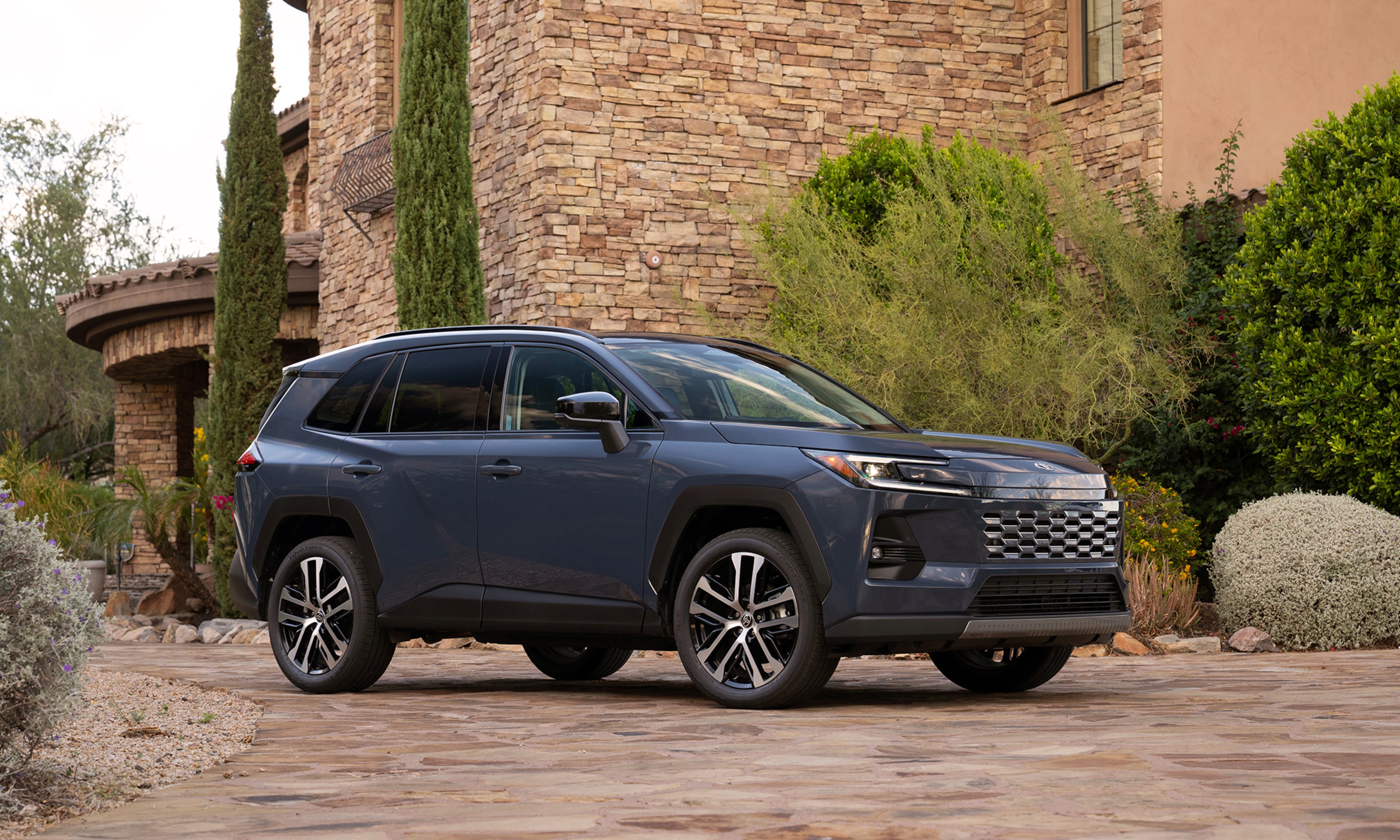
As dealers run out of 2026 models and restock with 2027s, hybrid sales surge simply because every RAV4 buyer is now a hybrid buyer.
The same is true of the Toyota Camry and Sienna.
Other automakers are following suit. The Jeep Cherokee recently returned to the market after a three-year absence, coming back as a hybrid-only model.
Some of the surge in hybrid sales is a choice. Honda sells its CR-V compact SUV in gas-powered or hybrid form, but says 56% of buyers in April chose the hybrid.
But some of the surge is simply Americans buying what’s for sale.
The EV market, meanwhile, is still stabilizing from a turbulent 2025. EV sales briefly topped 10% of all new cars sold in the third quarter of 2025, as Americans rushed to claim a $7,500 federal EV tax credit before it ended. They crashed to just 5.8% in the fourth quarter. Most buyers interested in going electric had already done so.
What’s the natural level for EV sales without the support of a tax credit? We still don’t know. Like water finding its level after a splash, they’re still settling.
Outside the U.S., EV sales are surging. The International Energy Agency notes that “electric car sales grew by 20% globally to exceed 20 million in 2025, meaning one-quarter of all new cars sold were electric.”
The U.S. is likely to reach that point eventually. Automakers, after all, have to design cars for the global market.
Here, Toyota may prove the example to watch again. The world’s largest automaker was later than most to the EV market. But its electric offerings are speeding up, with redesigned versions of both the Highlander and C-HR recently introduced as electric-only models.
Sean Tucker is a managing editor for Kelley Blue Book. He’s based in Washington, D.C., where he has covered the auto and energy industries for a quarter-century.
The Steering Column is a weekly consumer auto column from Cox Automotive. Cox Automotive and The Atlanta Journal-Constitution are owned by parent company, Atlanta-based Cox Enterprises.