Georgia’s three signers of Declaration of Independence: ‘Unlikely patriots’?
Button Gwinnett didn’t want to be in Philadelphia for the Second Continental Congress in the summer of 1776, and not just because a heat wave gripped the city and delegates dressed in wool and powdered wigs.
Gwinnett, one of three Georgians in attendance, would rather have been prepping the Georgia battalion of the Continental Army to invade British-controlled Florida. But that commission had gone to a rival, Lachlan McIntosh.
Electing Gwinnett and sending him north diffused tension in the still-nascent rebel colony. Georgians had removed the royal governor just a few months earlier — nearly nine months after the Revolution’s first shots were fired at Lexington and Concord — and Gwinnett’s ambitious personality was deemed to better serve Georgia far from home.
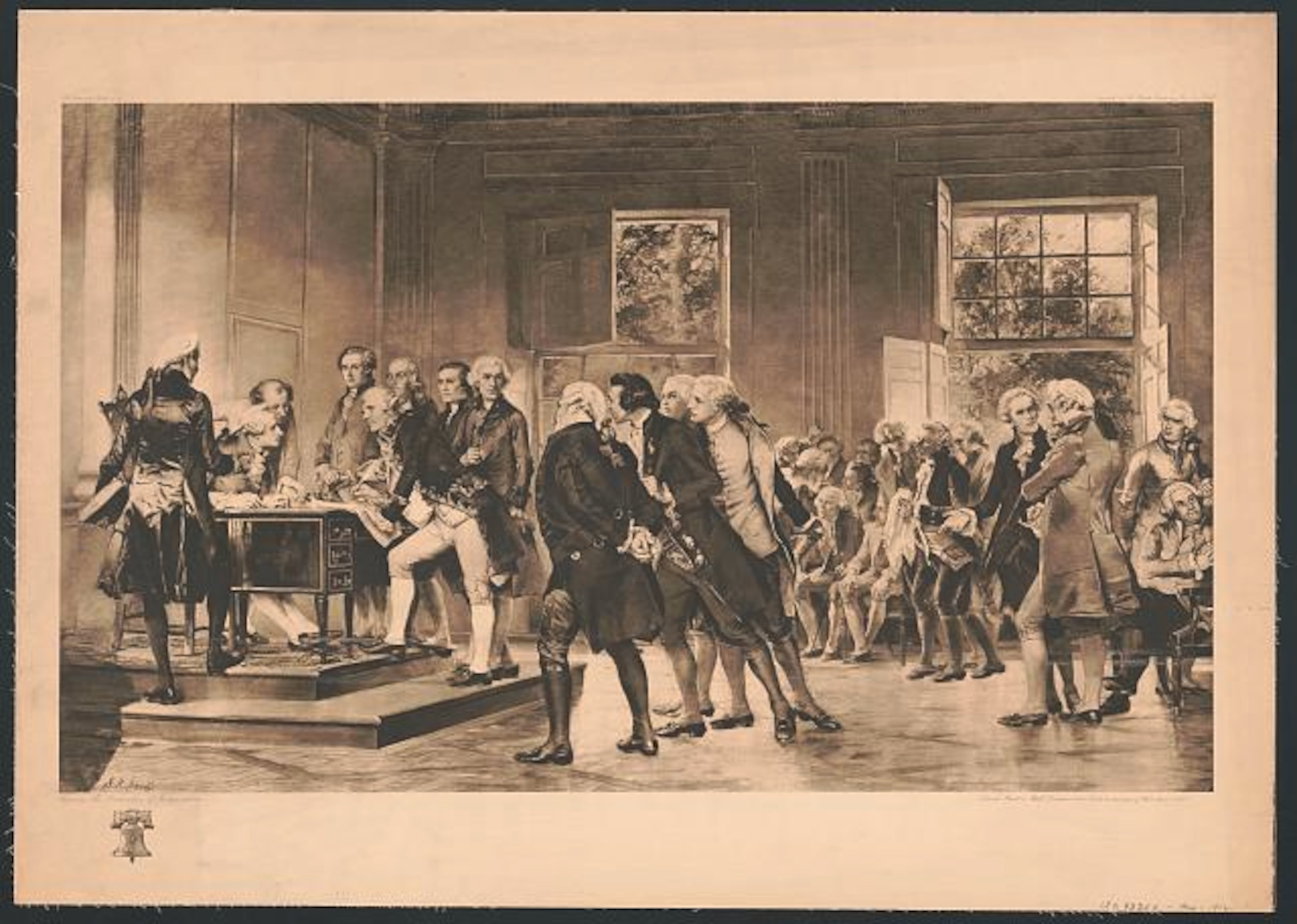
That’s how he came to be at the Pennsylvania State House, soon to be renamed Independence Hall, on Aug. 2, 1776, to sign his name on one of the most revered documents in history, the Declaration of Independence.
Read the signature line on the parchment top to bottom and left to right, and Gwinnett’s name is first. Right above that of fellow Georgians Lyman Hall and George Walton.
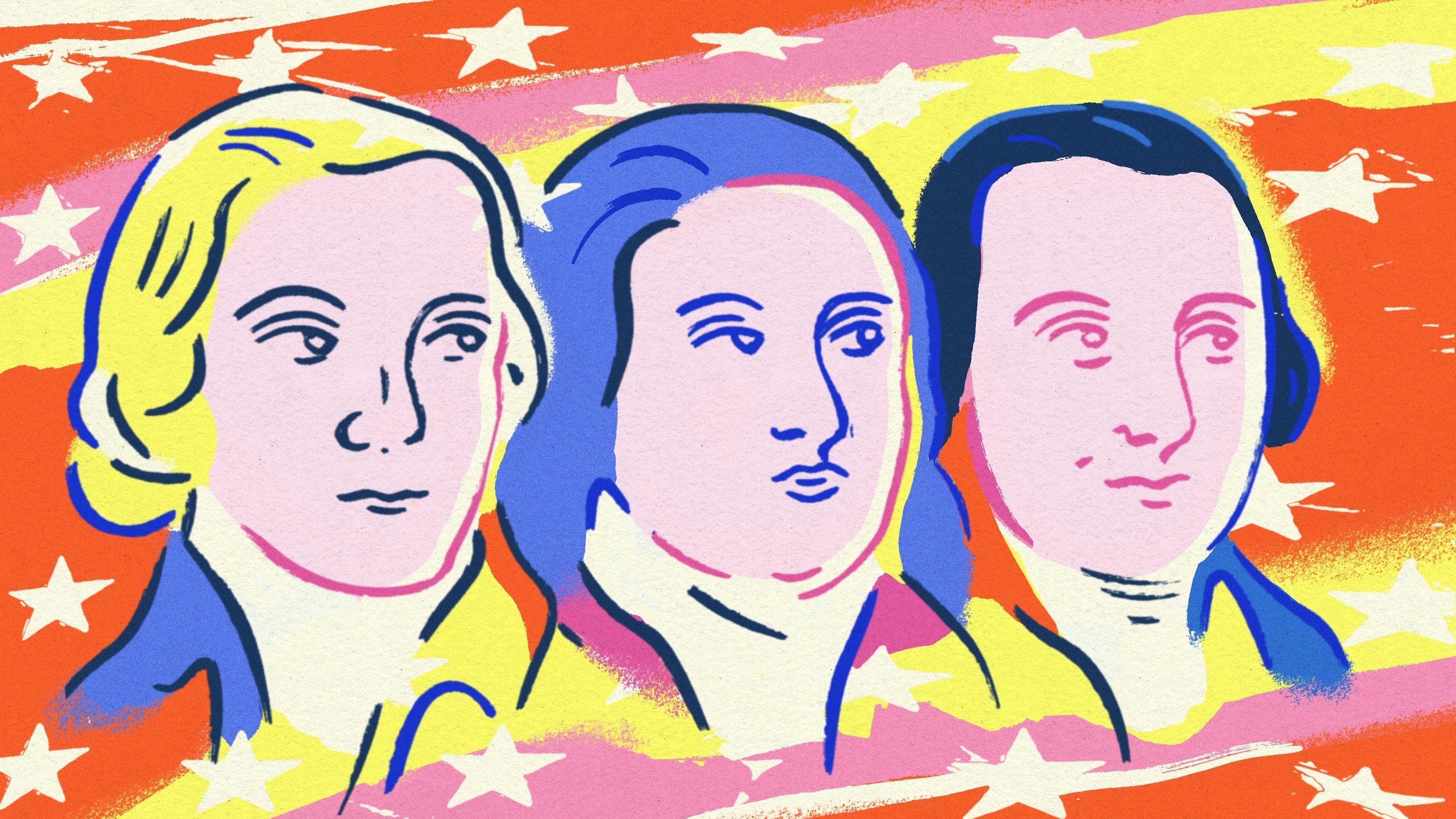
Historians attach many labels to the state’s signers. “Unlikely patriots.” “Unremarkable men.” “Opportunists.” Compared to many of the 53 others to sign the document 250 years ago, they were certainly low-profile. They didn’t invent the lightning rod or bifocals like Benjamin Franklin, author the Constitution like James Madison or revolutionize political theory like Thomas Jefferson.
Georgia’s signers instead featured Gwinnett, a chronic business failure; Hall, a once-defrocked minister turned doctor; and Walton, an orphaned builder’s apprentice-cum-lawyer. Their place in history as Declaration signers was more a product of right place, right time than revered leaders of the patriot cause sent to Philadelphia.
“We think of them as Founding Fathers, but they were not famous in their own day,” said Stan Deaton, senior historian with the Georgia Historical Society. “You don’t see statues to them around the state. Counties weren’t named for them until well after their deaths. Signing the Declaration made them remarkable, but only in the eyes of later generations.”
To the signers, Georgia was a land of opportunity. The colony was the last of the Colonial era and established as a strategic buffer between prosperous South Carolina and Spanish-occupied Florida. Sparsely populated and largely without the well-monied “gentleman” class that dominated commerce and politics in other colonies, Georgia attracted men of modest backgrounds seeking to make their mark.
Men like Gwinnett, Hall and Walton.
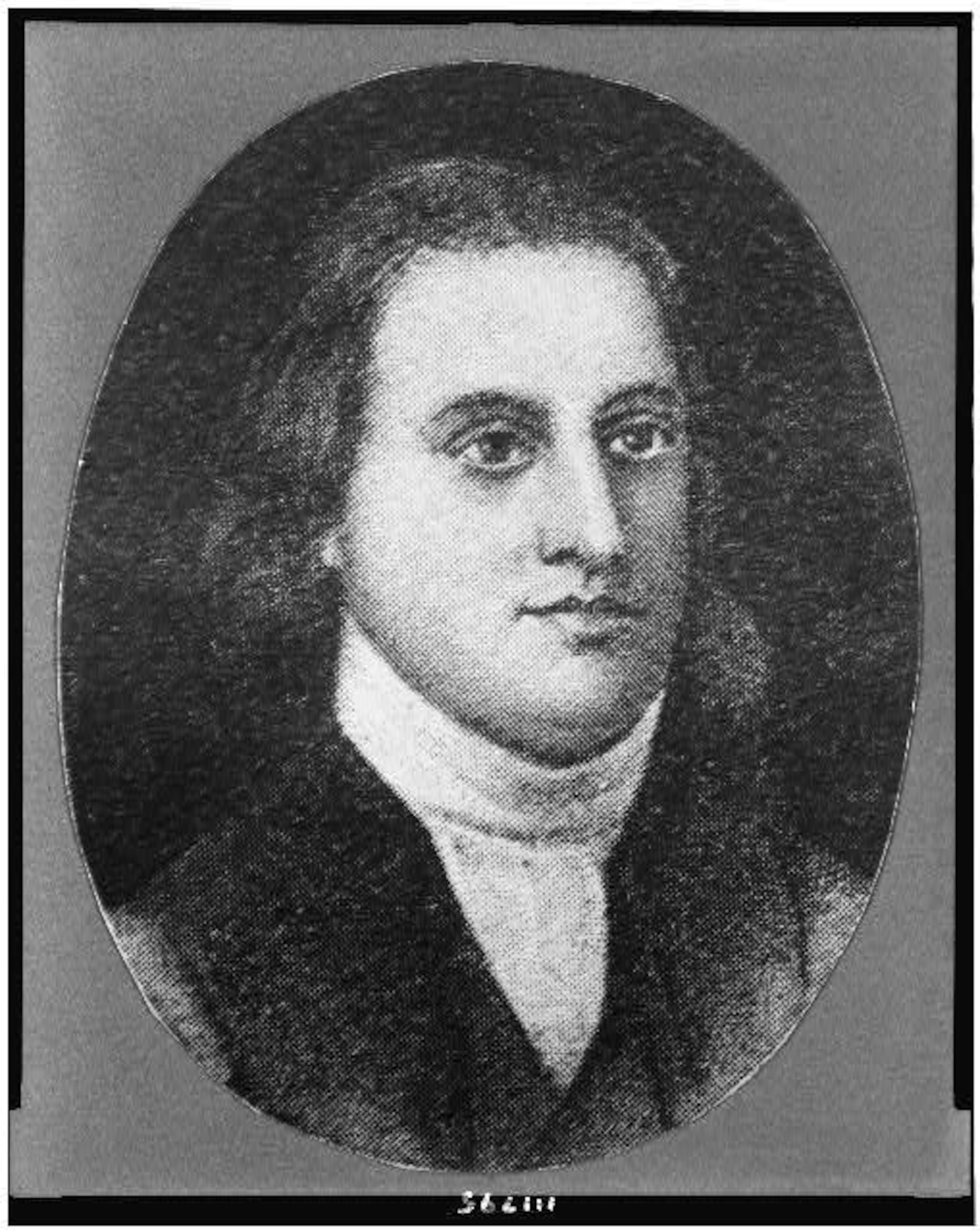
Button Gwinnett: Failing to the top
Of the 56 signatures on the Declaration of Independence, Gwinnett’s is the most treasured today.
That’s because his is the rarest, with only about 50 surviving documents bearing his autograph. And as a distant relative jokes, many can be found on mortgages, loans and other debts.
Gwinnett was an English clergymen’s son who sailed for the colonies in 1762 and opened a general store in Savannah in 1765. The business struggled. He relocated the shop south to Sunbury a few years later and bought neighboring St. Catherines Island on credit intent on becoming a planter.
That venture also failed. But the timing — 1774 — and Gwinnett’s swagger positioned him to be a force in patriot politics.
“What Gwinnett was ultimately after was the American dream at that time: status,” said Colin Sharp, who descends from one of Gwinnett’s grandparent’s siblings and who wrote a book about his distant relative. “He didn’t have that in England and saw America as his opportunity.”
Living in Georgia’s epicenter of revolutionary fervor, St. John’s Parish, lifted Gwinnett’s credibility as independence fever took hold. He rose up the leadership ranks of the colony’s rebels, eventually heading the military arm, the Georgia Continental battalion.
Yet Gwinnett had no soldier’s training or experience and his election was controversial. He was shuffled off to Philadelphia for the Second Continental Congress ostensibly to secure money for the colony’s defense but also to get him out of the way.
Gwinnett returned to Georgia after signing the Declaration and ordered a military operation that failed, driving a deeper wedge between him and McIntosh, the Georgia Militia’s top general.
He died less than a year after signing the Declaration following a pistol duel with McIntosh. The general had called Gwinnett “a scoundrel and a lying rascal” during a Georgia General Assembly meeting, and Gwinnett responded by challenging him to the shootout. The rules called for the combatants to square off with just eight paces between them — rather than the 20 or 30 paces typical of the time — and both men hit their targets.
Gwinnett’s wound was in his leg, and he died of an infection a few days after the duel.
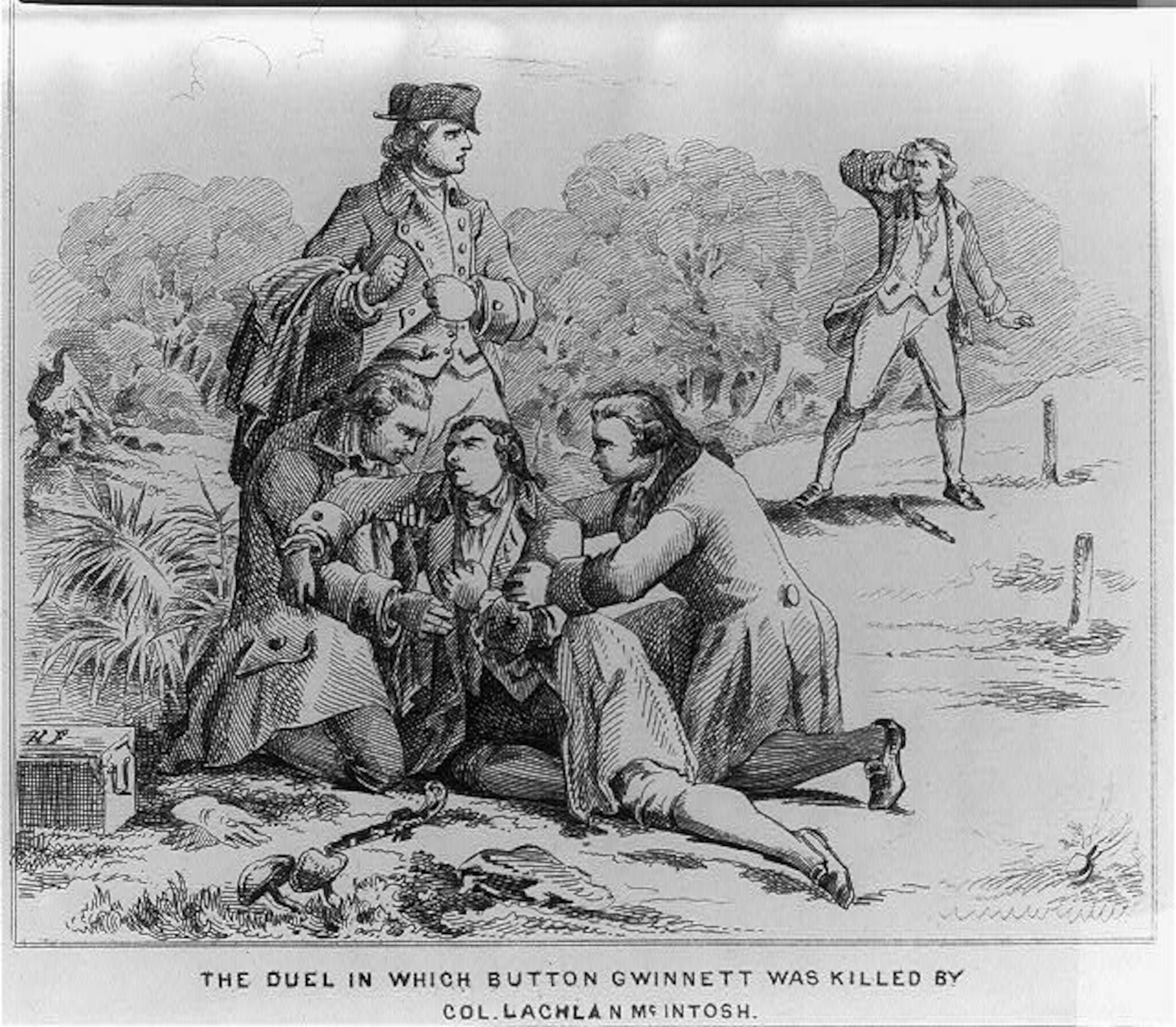
He was buried in what is today known as Colonial Park Cemetery in downtown Savannah. But the location of his grave was lost once British troops retook the city in late 1778 and occupied it through the war’s end, camping in the cemetery.
A memorial to Gwinnett, erected in 1964, is thought to be close to his hidden remains.
“As an indirect descendant, I’m proud Gwinnett signed the Declaration,” Sharp said. “But I’m convinced his arrogance kept him from achieving more afterwards.”
Lyman Hall: The elder statesman
Hall scrawling his signature on the Declaration was in doubt in the run-up to the first Independence Day.
He was the lone Georgian in attendance for much of the Second Continental Congress, which began in May 1775. He’d gone to Philadelphia on behalf of St. John’s Parish as the rest of Georgia waffled on whether to break with King George and the British.
Hall went north alone again in the spring of 1776 as Georgia’s patriot government, which had removed the royal governor in January and taken control of the colony, debated the priorities the colony would pursue at the Congress. Until the other delegates — Gwinnett and Walton — arrived with an agreed-upon agenda, Hall declined to participate in votes.
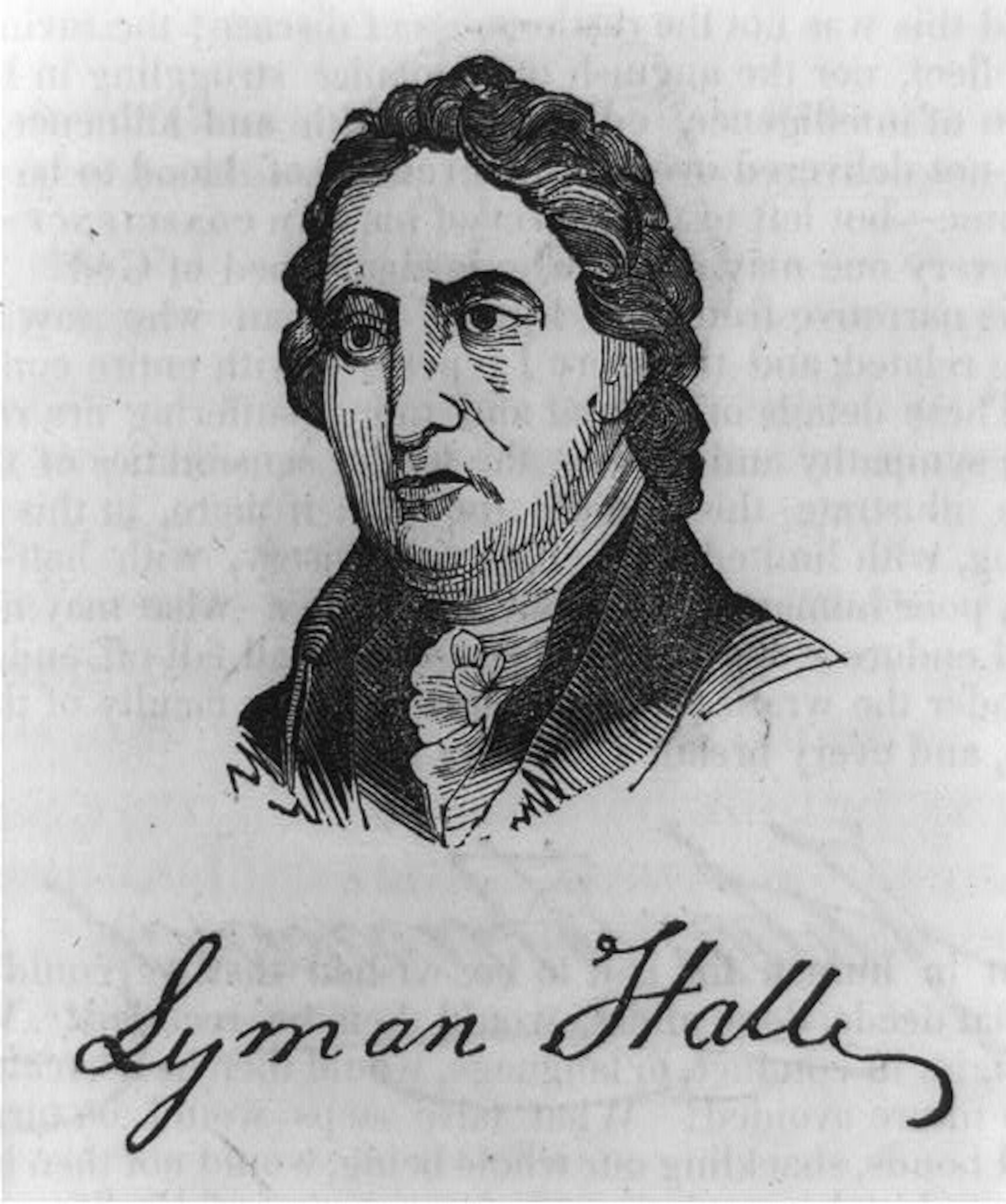
Hall was 52 years old and a respected doctor, farmer and community leader at home. He was also a nomad: Born, raised and educated in Connecticut, he moved to South Carolina in 1757 to join a group of New Englanders who’d set up a faith community there.
A congregationalist who’d trained as a minister, he thrived in the South despite an earlier scandal involving undisclosed immoral conduct that briefly led to his removal from the pulpit.
In 1760, he was granted land in Georgia and shuttled between the two colonies until 1774, when he settled in St. John’s Parish. He stoked the idea of revolution there and in nearby Savannah.
After the war, Hall excelled in the role of elder statesman. Elected governor in 1783, he proposed the establishment of the University of Georgia, America’s first public college. After his gubernatorial term, he served in the state Legislature and as a judge.
He retired to a farm in Burke County along the Savannah River and died in 1790.
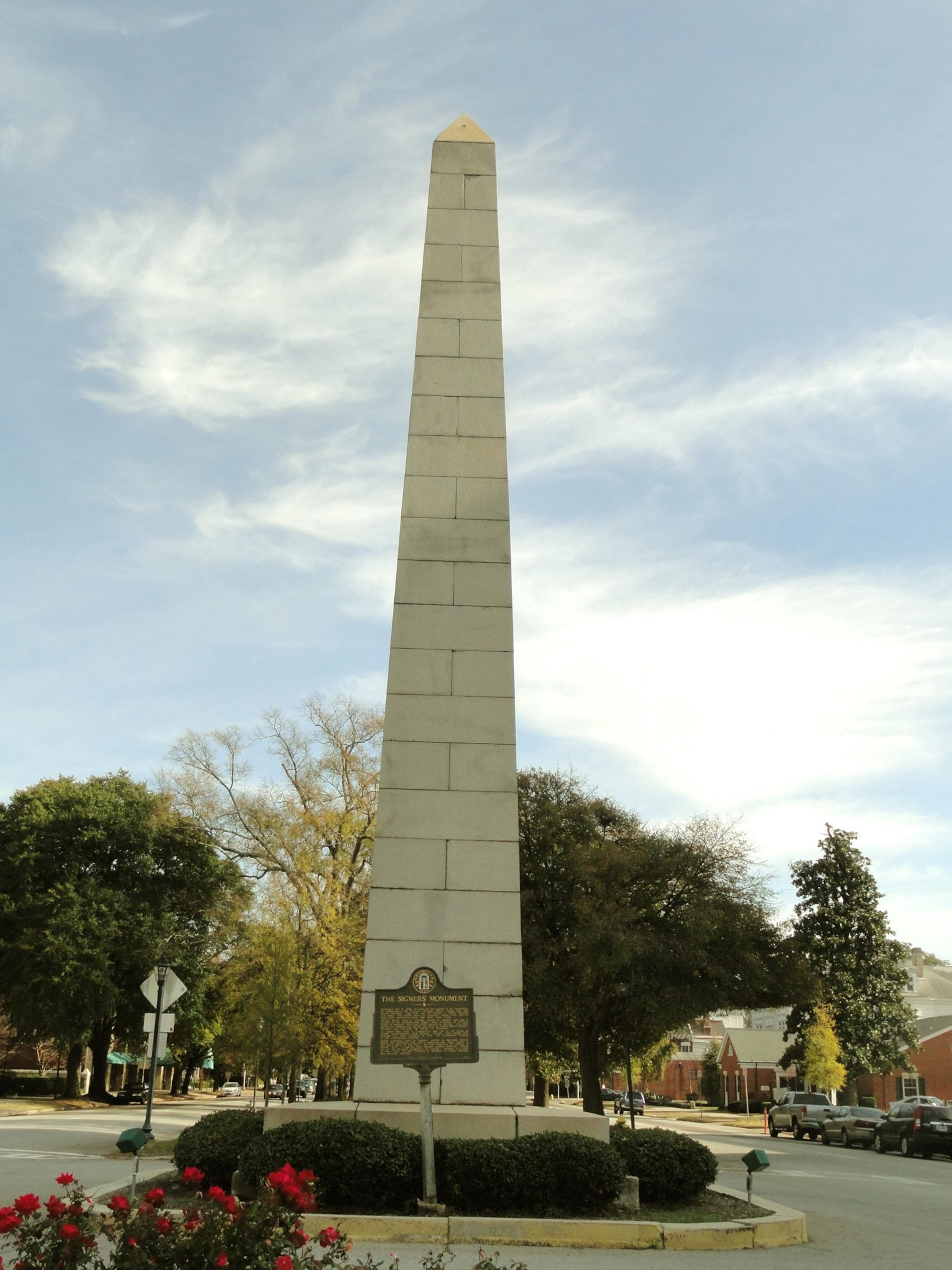
Hall today is entombed at the Signers’ Monument in Augusta alongside Walton. The stone plinth was erected in 1848 as Georgians began to recognize the significance of the signers’ historical contributions.
Originally part of an expansive green space, the Signers’ Monument today is wedged into the median of Greene Street across from Augusta’s municipal government building.
George Walton: A ‘champion’ for Georgia
Walton’s flourished signature on the Declaration bears the strength and aspirations of a young man committed to a cause.
Just 26 years old when he arrived in Philadelphia — on the very day, July 2, when delegates voted to declare independence — Walton’s post-Declaration signing accomplishments far outpaced those of Gwinnett and Hall.
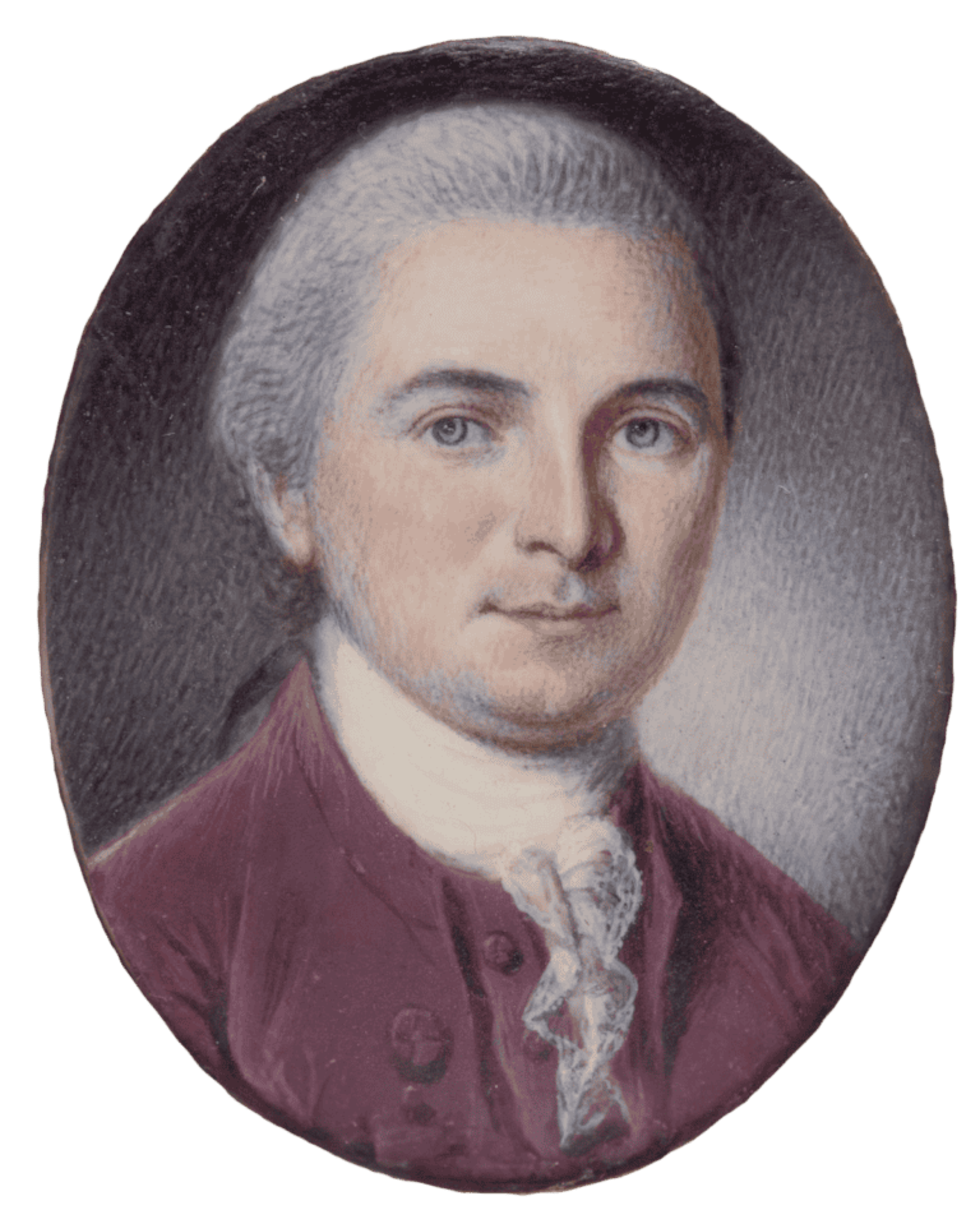
He commanded the Georgia militia on the battlefield during the Revolutionary War, was twice elected Georgia governor, presided as the state’s chief justice and served in the U.S. Senate.
“Georgia provided him an opportunity to move up in society,” said Ransom Schwerzler, director of the Walton house museum in Augusta known as Meadow Garden, “and he made the most of it.”
Walton, too, came from a modest background. Born in Virginia, he was orphaned at age 7 and taken in by his aunt and uncle, who had 13 children of their own. At age 15, he apprenticed to a builder.
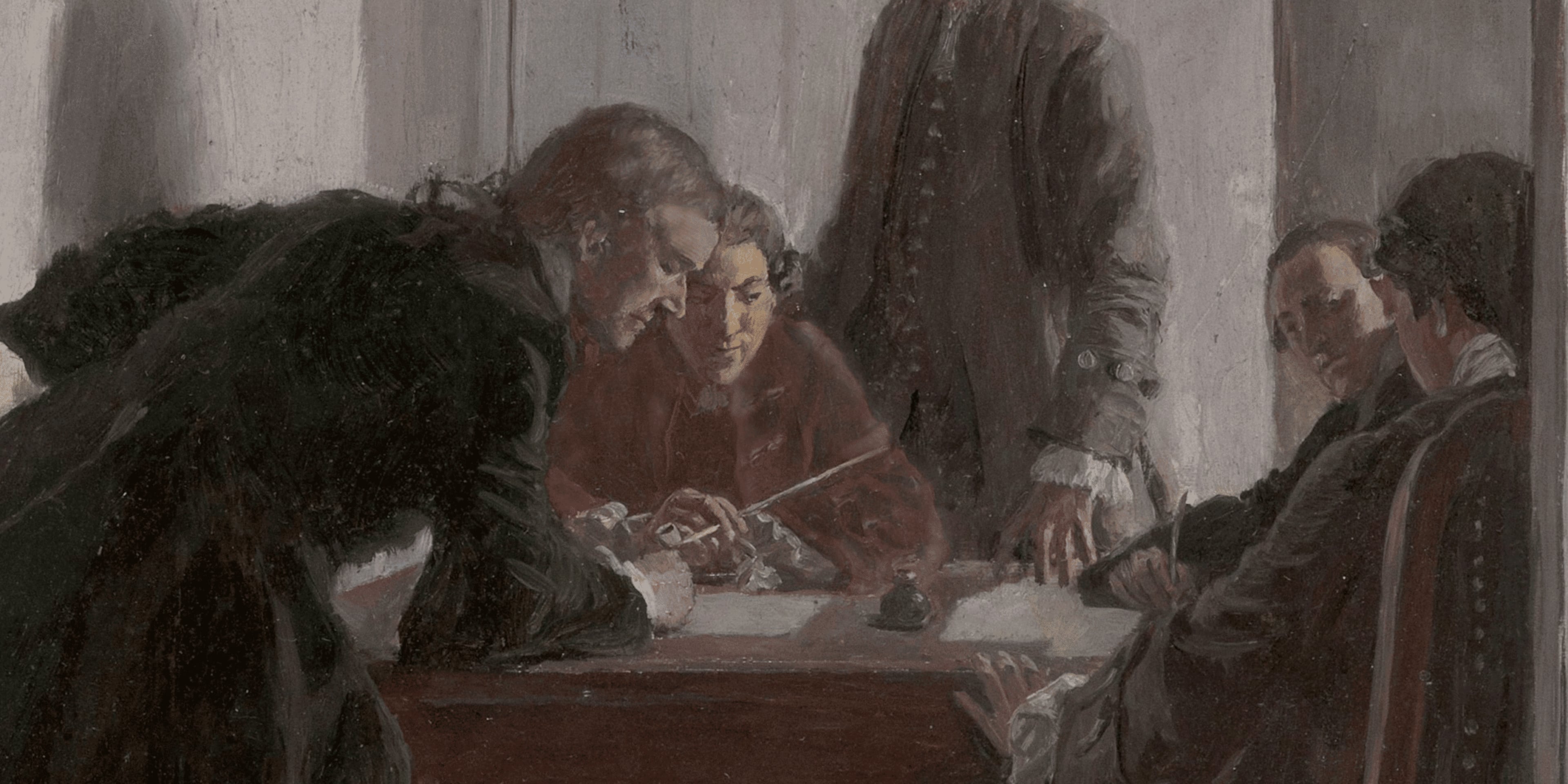
Around that time, his two brothers moved from Virginia to Georgia, settling in Augusta. Two years into what was intended to be a seven-year apprenticeship, Walton quit and followed his siblings south. But rather than make his new life in Augusta, he went to Savannah to study law under prominent local attorney Henry Young.
Walton had found his calling in the courts and lawyers, then as now, often dabbled in politics. By 1775, he was the third-ranking official in the Council of Safety, the most powerful of the patriot organizations.
As president of that council in January 1776, Walton ordered the arrest of the colony’s royal governor, James Wright, cementing Georgia’s push for independence. He left for Philadelphia and the Second Continental Congress not long after.
His military service began once he returned to Georgia. He was commissioned a militia colonel as the British mobilized off the Georgia coast intent on retaking Savannah. Walton was shot during the redcoat attack, fell from his horse and was captured.
He spent 10 months as a prisoner of war before being exchanged for a British officer. His commander immediately ordered him to Augusta to recruit and manage the continental forces there.
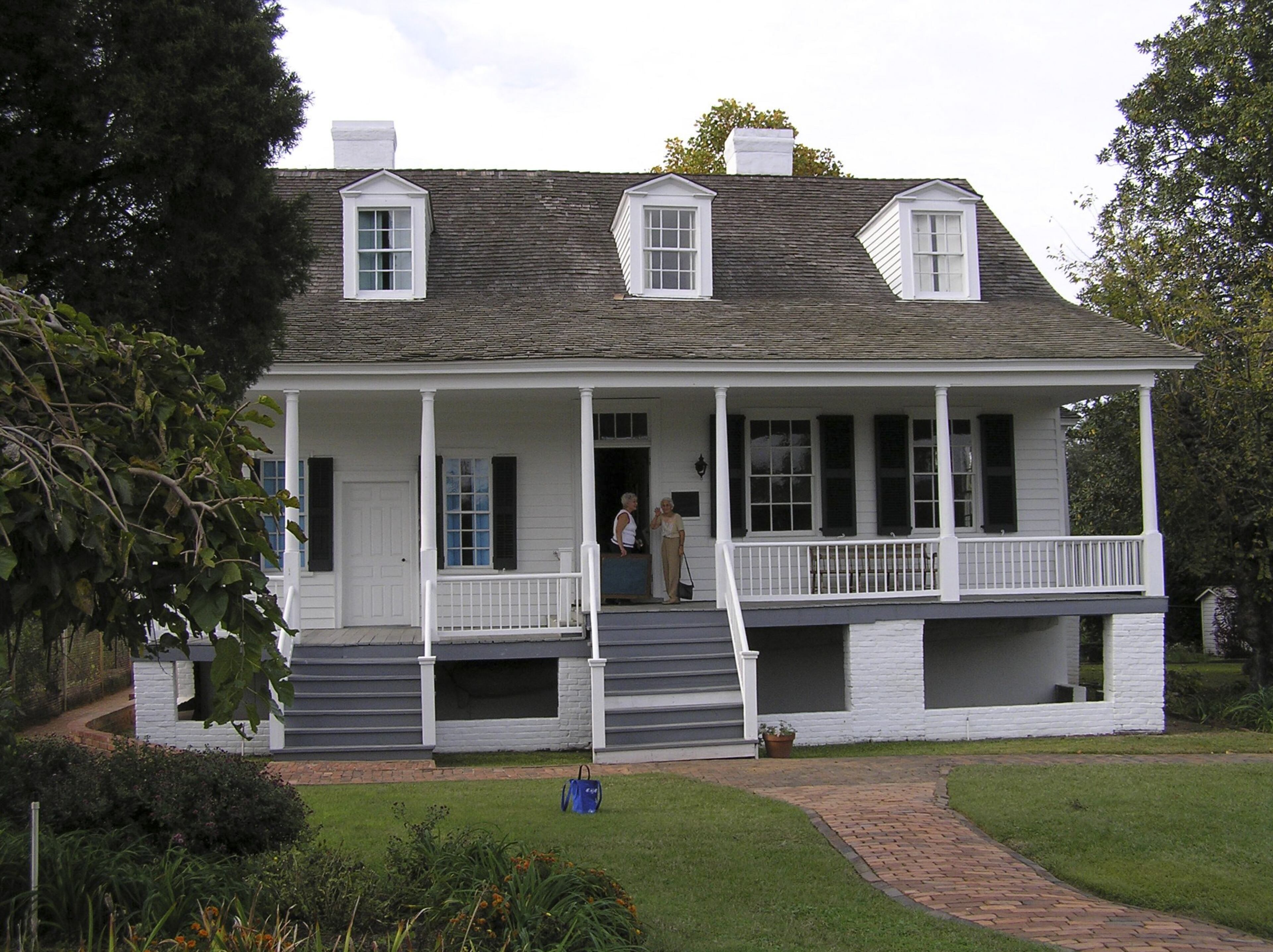
He easily transitioned to politics following the war’s end and in 1791 settled on 121 acres of farmland on the edge of Augusta’s downtown. He died in 1804. His Meadow Garden today is a cozy homestead flanked by the Augusta Canal, repurposed textile mills and medical buildings.
“He didn’t go on to be president or have a musical made about him like other Founding Fathers, but George was a signer and a significant historical figure,” Schwerzler said. “He championed Georgia for much of his life.”
Where to learn more about the signers
Meadow Garden museum (Augusta)
George Walton retired to this farm on the city’s outskirts in 1791. The site today includes the house, a small garden and a gift shop and is operated by the Daughters of the American Revolution. 1320 Independence Drive, Augusta. Open 10 a.m. to 4 p.m. weekdays. Admission: $10.
Georgia Signers’ Monument (Augusta)
Walton and Lyman Hall are buried at this granite plinth located in the Greene Street median downtown. It was erected in 1848. Greene Street, Augusta. Always open. No admission charge.
Savannah History Museum (Savannah)
The museum debuts a new exhibit “Loyalists & Liberty” on Thursday that details Georgia’s role in the American Revolution and includes a display about the signers. The battlefield where Walton was wounded in the Siege of Savannah is across the street. 303 Martin Luther King Jr. Blvd., Savannah. Open 9 a.m. to 4 p.m. every day. Admission: $12.
Colonial Park Cemetery (Savannah)
A memorial to Button Gwinnett, believed to be near his lost grave site, stands in this historic cemetery in downtown. 201 Abercorn St., Savannah. Open 8 a.m. to 8 p.m. every day. No admission charge.
Midway Museum (Midway)
Hall and Gwinnett lived in Midway and St. John’s Parish and are featured in the museum, located next to a circa-1754 historic church. 491 N. Coastal Highway, Midway. Open 10 a.m. to 4 p.m., Tuesday through Saturday. Admission: $15.