Georgia stakeholders cheer Supreme Court upholding birthright citizenship


Georgia-based immigrant advocacy organizations and their allies sighed in relief Tuesday after the U.S. Supreme Court rejected an attempt from the Trump administration to end the country’s long-standing guarantee of birthright citizenship.
But some raised concerns about the future given how narrowly the case was decided.
In the decision, written by Chief Justice John Roberts, the divided court determined that an executive order signed by President Donald Trump on the first day of his second term was unconstitutional. The order had declared that children born in the U.S. to parents who are undocumented or in the country legally but temporarily were not American citizens.
Trump had sought to topple a long-standing legal precedent, stretching back to the ratification of the 14th Amendment of the Constitution after the Civil War, of granting automatic citizenship to almost every baby born in the country — regardless of the immigration status of his or her parents.
Advocates had warned of major impacts to rapidly diversifying Georgia had justices sided with the president.
“The Court decided that citizenship is decided by the Constitution, not by who is in the White House,” said Gigi Pedraza, executive director of the Atlanta-based Latino Community Fund, a philanthropic and nonpartisan service organization.
But Pedraza also noted that only five of the nine justices had signed onto the majority opinion, despite a more than century-old consensus about the intent behind the 14th Amendment protections. A sixth justice, Brett Kavanaugh, backed the majority opinion but also agreed with dissenters that the executive order didn’t violate the Constitution, which some legal analysts noted could allow Congress to limit birthright citizenship in the future.

“Judge Kavanaugh’s opinion left the door open to potential exceptions, and for Latinos — one of the fastest-growing, youngest and the most economically active in Georgia — it could mean a whole new chapter in our journey towards inclusiveness and belonging,” Pedraza said. “This is really an important distinction.”
It didn’t take Trump long to respond on his Truth Social account, saying the decision was “too bad for our Country.” He urged Congress to pass legislation to do what the court would not.
“No long and unwieldy Constitutional Amendment is necessary! Congress should start TODAY to work on ending expensive and unfair to our Country, Birthright Citizenship,” the post says.
Some of Georgia’s congressional Republicans indicated they would back that push.
U.S. Rep. Clay Fuller, R-Lookout Mountain, said justices were “prioritizing the futures of illegals over Americans” and noted he had previously sponsored legislation that proposed a constitutional amendment to end birthright citizenship for the children of undocumented migrants.
A spokesperson for U.S. Rep. Mike Collins, the Republican nominee for U.S. Senate, did not respond to a request for comment. But early last year Collins spoke at a news conference in which he called for an end to birthright citizenship.
Rick Jackson, the GOP nominee for governor, declined to comment.
U.S. Rep. Buddy Carter, R-St. Simons Island, said justices were “allowing our Constitution to be abused by non-American parents, including illegal immigrants, having children in the U.S. solely for that child to gain citizenship.”
Meanwhile, Democratic gubernatorial nominee Keisha Lance Bottoms said she was “thankful that the Supreme Court ruled against Trump and his relentless and unpatriotic effort to undermine the Constitution.”
“The challenge to birthright citizenship, a bedrock of the United States Constitution, is indicative of the blatant disregard Donald Trump has for the diversity of this country,” she said.
U.S. Sen. Jon Ossoff’s office did not respond to a request for comment.
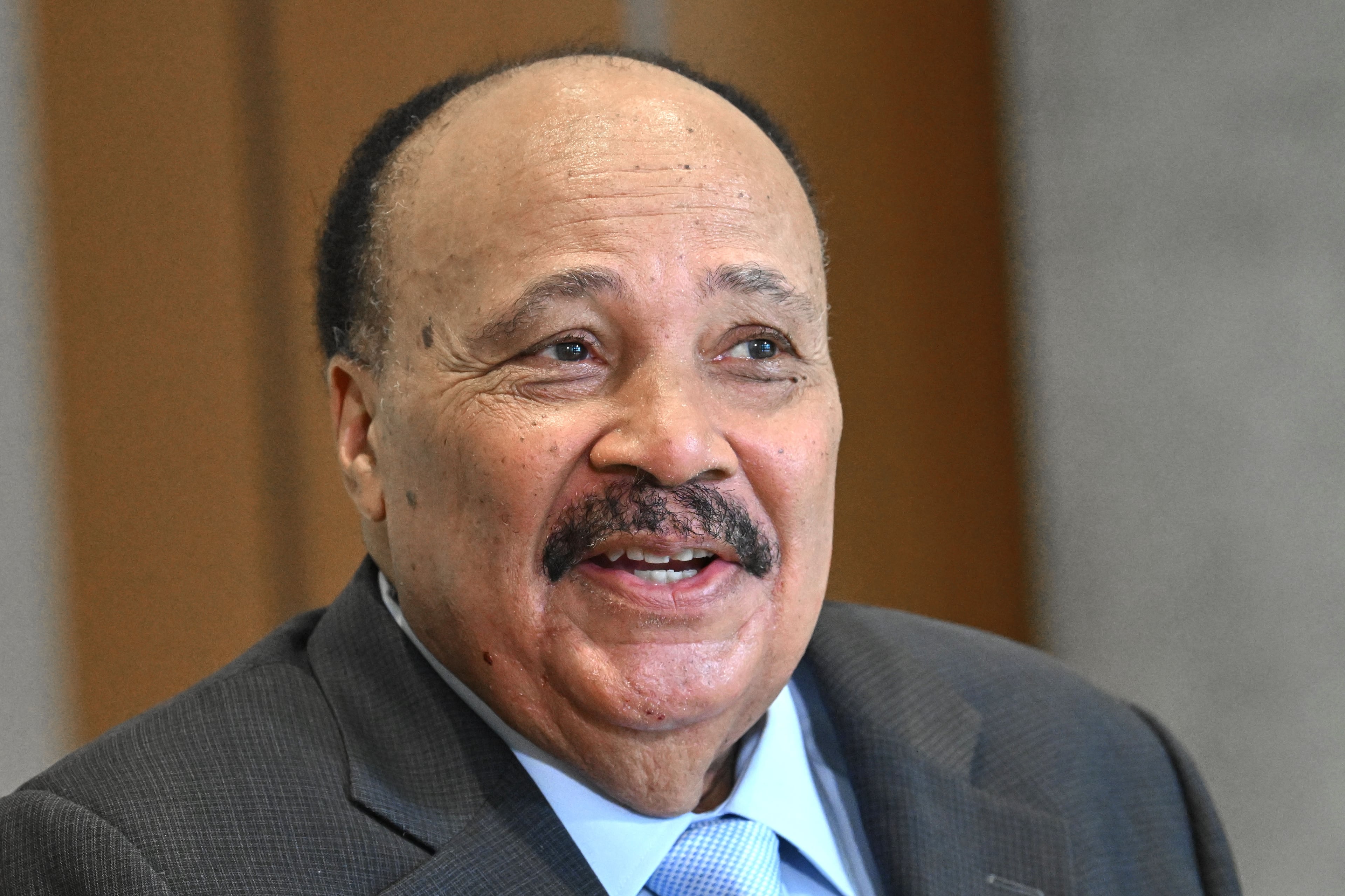
Martin Luther King III, the Rev. Martin Luther King Jr.’s eldest son, and his wife, Arndrea Waters King, cheered the decision for upholding “a promise of equal belonging that is fundamental to our democracy.”
“This is not simply a legal victory, but a rejection of a dangerous effort to redraw the boundaries of citizenship and belonging in America,” they said in a joint statement.
Georgia impacts could have been massive
Nationally, the decision is expected to affect more than 250,000 babies born in the U.S. each year, according to The Associated Press.
Roughly 479,000 undocumented people lived in Georgia as of mid-2023, according to a recent estimate by the Migration Policy Institute. It was the nation’s sixth-largest population of unauthorized immigrants.
Georgia’s population of undocumented people increased by more than 45% since 2018, the nonpartisan think tank said. The institute estimated that more than one-third of the country’s unauthorized immigrants were born in Mexico, and a majority have lived in the U.S. for more than 15 years.
Cynthia Neal Spence, an associate professor of sociology at Spelman College, said there could have been massive implications for Georgia’s economy had the court overturned birthright citizenship.

“If this decision had, in fact, gone the way of the president, it would have certainly placed our state economy in a vulnerable position because we are so dependent upon immigrant labor,” said Spence, adding that there would have been a “mass exodus” of Georgia’s farmworkers and that a new subclass of “stateless individuals” would have been created.
The consequences would have stretched far beyond the rural parts of the state, according to Charles Kuck, an Atlanta-based immigration attorney.
“There are vast swaths of cityfied Georgia where this is just as big an issue as it is down in the Vidalia onion fields,” Kuck said. “Just walk into any restaurant kitchen in metro Atlanta and you will see what I’m telling you is true.”
Groups representing South Asian immigrants in Georgia also applauded the ruling. The executive order, had it been upheld, targeted holders of H-1B visas for skilled workers, over 70% of whom come from India.
Indians are Georgia’s second-largest immigrant group.
The South Asian Bar Association of Georgia said it was “heartened” by the ruling and that the principle of birthright citizenship “should never have been in doubt.”
“Over the past few decades, Georgia has become home to a rapidly growing South Asian immigrant community who have built families, careers, and lasting ties across our state,” the group said in a statement. “For many, the promise of birthright citizenship has been an essential pathway to the American Dream.
“This decision provides reassurance to members of our community and reinforces the constitutional principles that have long defined our nation.”
Feeling `reassured’
Emily Espino, 20, said she feels “reassured” by Tuesday’s ruling.
Espino’s mother left her family and small, rural home in Mexico for Georgia at the age of 19, in search of work and better economic opportunities. Three decades later, she’s an entrepreneur who raised three daughters, with Espino now at Abraham Baldwin Agricultural College in Tifton with dreams of going into wildlife biology.
“As a child of an immigrant, I got birthright citizenship,” Espino said. “The way that the executive order was written, if I had been born today and that executive order still stood I wouldn’t be a citizen. That’s definitely a very scary thought because a lot of stuff is tied to citizenship, like going to college.”
Being roughly the same age as her mother when she ventured to the U.S., Espino said she couldn’t imagine making that trip herself.
“I’m just going to keep making the most of my life, especially with all the privileges that citizenship has given me,” said Espino, who is also an activist with the advocacy organization We Are Casa. “I’m going to get that degree, and then I’m going to keep working. When I graduate, I’m going to get a good job.”
Alberto Feregrino, 30, grew up as an undocumented immigrant, moving to Georgia from Mexico at age 2 with his parents after the 1996 Olympics construction boom. He became a naturalized U.S. citizen at 17 under the Deferred Action for Childhood Arrivals policy and is now the organizing director of We Are Casa.
In case birthright citizenship was not upheld, Feregrino said he and his team were prepared to operate in an “alternate reality” if birthright citizenship was not upheld. The group was already fielding questions from concerned callers about necessary documents for hospital visits, asylum seekers, work and student visas.
“This was a huge awakening for our immigrant community to really unite us all,” he said. “Even though the undocumented immigrant community has been the one that’s been scapegoated from day one from this administration, we know that the administration’s goals have been broader.”
Indeed, the high court’s decision came less than a week after the court’s conservative majority handed the president two major victories on immigration policy. The justices allowed the Trump administration to turn away migrants seeking asylum along the U.S.-Mexico border and to end a program providing temporary humanitarian protections for Haitians and Syrians.
Kuck noted that much of Roberts’ opinion read like a history lesson, tracing the origins of citizenship back to British common law.
“Roberts saw this as a moment in which you’re judged in history, and he did not want to go down as the guy that said: `People born here are not citizens,’” Kuck said.
Scott Titshaw, a professor at Mercer University School of Law, said the only thing that surprised him about the ruling was the dissenters.
“I think it’s settled, but frankly, it was settled law since 1898,” said Titshaw, adding that it would have been “chaotic and crazy” if the decision had gone the other way.
Not only would there have been a flood of litigation in response, he said, but “there would be likely millions of people who are suddenly noncitizens when they thought they were citizens their entire lives.”
— Atlanta Journal-Constitution reporter Lautaro Grinspan and The Associated Press contributed to this article.