US and Iran launch airstrikes after Trump blames Tehran for downing Army helicopter
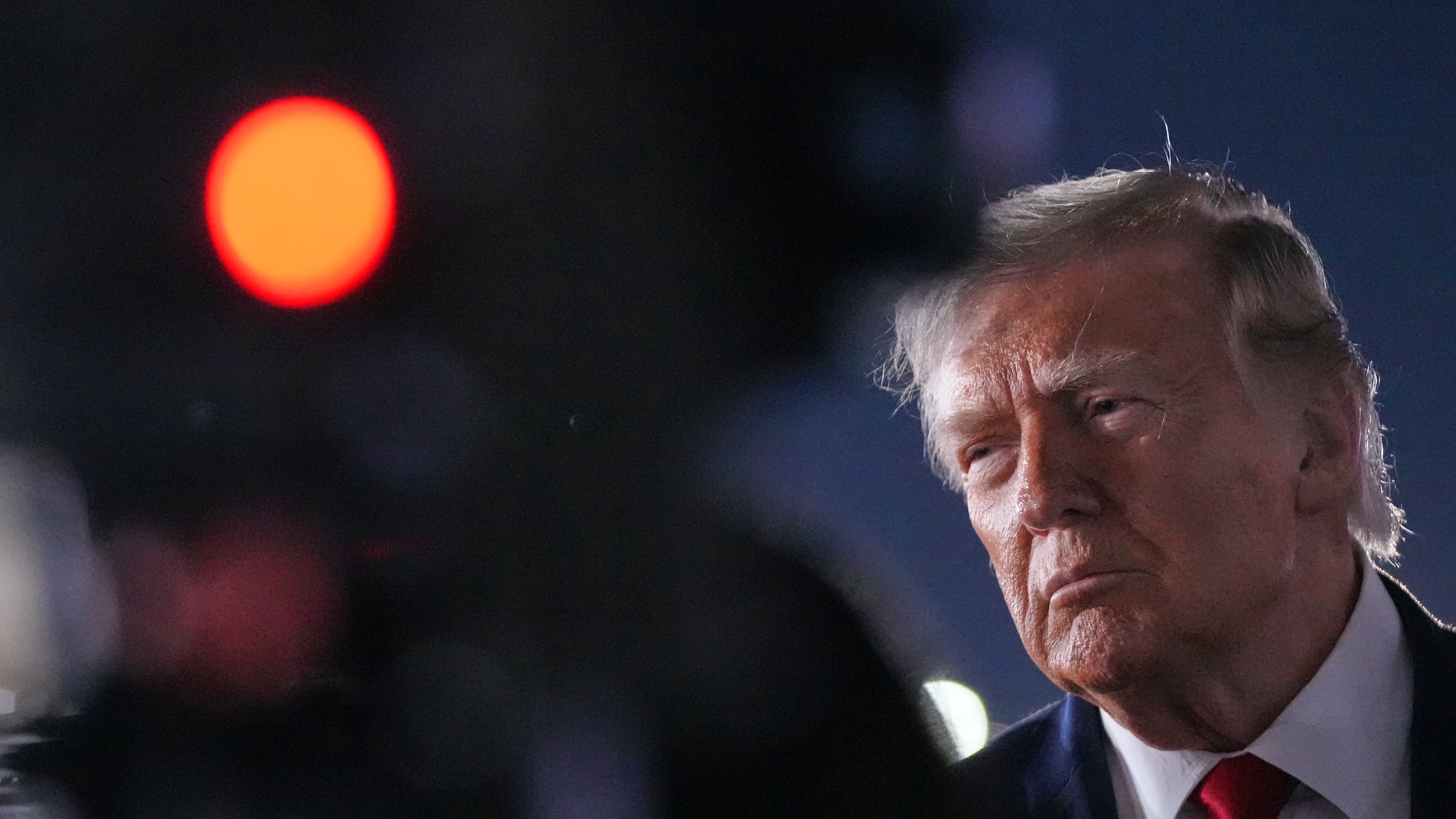
DUBAI, United Arab Emirates (AP) — The U.S. military launched airstrikes and Iran retaliated Wednesday following the crash of an Army helicopter near the Strait of Hormuz that U.S. President Donald Trump blamed on the Islamic Republic.
Iran launched attacks in Bahrain and Kuwait, which both sounded alerts and fired air defenses in response. Iran also said it targeted an air base in Jordan hosting U.S. forces, which was not immediately acknowledged either by American or Jordanian officials.
Since the U.S. and Israel began striking Iran on Feb. 28, the war has shaken the global economy, driven up energy prices around the world and made many basics, including food, more expensive.
Officials have been unable to turn the April ceasefire into a deal to permanently end the conflict, particularly as Israel intensifies and expands its military campaign in Lebanon against the Iranian-backed militia Hezbollah.
Strikes by US and Iran shake the Mideast
Fighter jets from the U.S. Air Force and Navy conducted the strikes in Iran, the U.S. military's Central Command said, targeting “air defense, ground control stations, and surveillance radar sites.” Iran acknowledged strikes around Bandar Abbas and Qeshm Island, but gave no details on the damage.
“The operation was a proportional response to recent attacks on U.S. forces and international commercial ships transiting regional waters,” Central Command said.
Trump said earlier in a social media post that Iran had shot down the aircraft while it was on patrol over the strait and declared that the U.S. “must, of necessity, respond to this attack.” Iran's top diplomat said foreign military forces near its territory “are at constant risk” and later vowed that there would be a response to the new U.S. strikes.
Iranian forces “will leave no attack or threat unanswered,” Iranian Foreign Minister Abbas Araghchi said on X. “Leave our region if you want to be safe.”
The downing of the Apache attack helicopter and the strikes by the U.S. military further strained a two-month ceasefire a day after Iran and Israel exchanged fire for the first time since the fragile truce took effect. Iranian state television said Tuesday that the Israeli attacks killed at least two members of the country’s air-defense units.
US helicopter collided with Iranian drone, official says
The Army AH-64 Apache attack helicopter went down after colliding with an Iranian drone, according to a U.S. official, who spoke on condition of anonymity to discuss an ongoing investigation.
It wasn’t clear whether the collision was intentional, and official statements only said the crash is under investigation. CNN, CBS News and other outlets earlier reported the collision.
In the first known operation of its kind by the American military, a drone boat rescued two aviators at 3:30 a.m. local time Tuesday, about two hours after their aircraft went down during a patrol off the coast of Oman, U.S. Central Command said.
Trump said both service members were "safe and uninjured."
The U.S. service members were spotted and picked up by a drone boat that took them to another location on the water, where they were picked up by a helicopter, said Capt. Tim Hawkins, a spokesman for U.S. Central Command. He initially said the drone took the two to shore, and he did not elaborate on the updated timeline.
It was the first known drone rescue at sea by the U.S. military, Hawkins said.
AH-64 Apache helicopters have been a key asset for the American military as it enforces a blockade on Iranian crude oil shipments and tankers, seeking to pressure Tehran into a deal. The helicopters have also been used by the United Arab Emirates to shoot down Iranian drones.
The drone used to perform the rescue was a 24-foot (7.3-meter) vessel called a Corsair, Hawkins said. It’s manufactured by Saronic Technologies.
The drone was assigned to the Navy’s Task Force 59, established in 2021 as the Navy’s first uncrewed and artificial intelligence unit. It focuses on maritime security in the Middle East, including the Strait of Hormuz and the Suez Canal.
Soon after Trump made his accusation that Iran shot down the aircraft, Araghchi said the strait is “thousands of miles away from U.S. shores.”
“Foreign forces in proximity to our territory are at constant risk on account of their own human errors, plain accidents, or potentially being caught in crossfire,” Araghchi wrote on social media. “To reduce risk, best solution is for them to leave.”
Trump had insisted an Iran deal was coming
Before he accused Iran of downing the U.S. helicopter, Trump expressed renewed optimism over negotiations with Iran, but didn't say why there was reason for optimism.
Mediators, led predominantly by Pakistan, have been trying for weeks to get a deal across the line. However, both Iran and the U.S. have taken hard-line positions.
The U.S. wants to see Iran give up its stockpile of highly enriched uranium, which is believed to be entombed in the aftermath of American airstrikes that happened during the 12-day war in 2025. But Iran is refusing that and demanding relief from sanctions. It also wants the release of frozen assets even before a final agreement is in place, something rejected by Trump.
The continued fighting between Israel and Hezbollah is still a top Iranian priority. Lebanon’s army chief, Gen. Rodolphe Haykal, traveled to Pakistan on Tuesday. There, he met Pakistan’s army chief, Field Marshal Asim Munir, who has been a key figure in the Iran-U.S. talks.
Haykal's visit comes as Lebanon's government takes an increasingly hard line on Hezbollah but remains unable to disarm the powerful militia. Hezbollah thanked Iran on Tuesday for attacking Israel “in defense of our Lebanese people,” suggesting that Lebanon's government should take this opportunity to improve relations with Tehran.
___
This version corrects that the rescue of the two aviators, not the helicopter crash, occurred at 3:30 a.m.
___
Superville and Toropin reported from Washington. Associated Press writers Michelle L. Price in New York, Will Weissert in Washington, Bassem Mroue in Beirut, Munir Ahmed in Islamabad and Russ Bynum in Savannah, Georgia, contributed to this report.