Another surge for Micron, Wall Street's latest $1 trillion company, sends US stocks to records
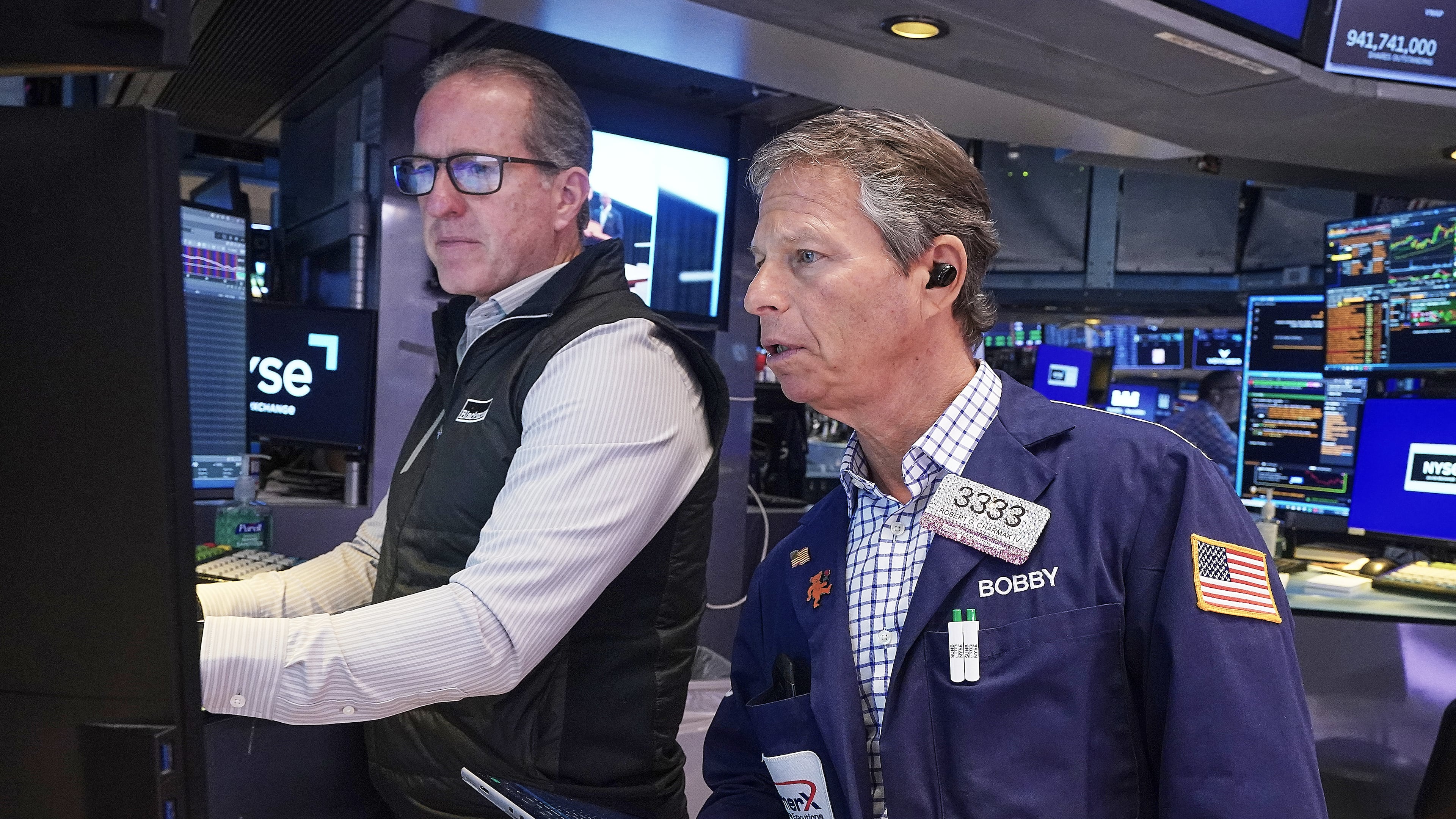
NEW YORK (AP) — The U.S. stock market rose to records Tuesday as it caught up with climbs for others around the world from the day before, when President Donald Trump said negotiations were “proceeding nicely” with Iran on ending their war.
The S&P 500 climbed 0.6% after trading resumed following Monday’s holiday and set an all-time high. The Nasdaq composite rallied 1.2% to set its own record, while the Dow Jones Industrial Average dipped 118 points, or 0.2%, from its all-time high.
Stock markets in much of the rest of the world pulled back from their gains the day before, as fighting continued in the region and the U.S. military said it carried out “self-defense” strikes in southern Iran, including on missile launch sites and boats placing mines. Markets have rallied in the past on hopes for a coming end to the war with Iran, only to see the conflict drag on.
The price for a barrel of Brent crude, the international standard, rose 3.5% to $96.67, but that reclaimed only some of its plunge from Monday. The price for a barrel of U.S crude oil, meanwhile, fell 2.8% to settle at $93.89.
Oil prices have been at the center of financial markets' action since the United States and Israel attacked Iran in late February. The ensuing war has closed the Strait of Hormuz and kept oil tankers pent up in the Persian Gulf instead of delivering crude to customers worldwide. That in turn has driven up oil’s price and sent a wave of painful inflation around the world.
Hopes for a deal to improve the flow of oil helped lift stocks of companies with big fuel bills. United Airlines rose 6%, and Norwegian Cruise Line Holdings steamed 4.9% higher.
Big technology stocks also continued their big runs. Micron Technology's stock leaped 19.3% to top $895.88 and was the strongest force lifting the S&P 500 after analysts at UBS led by Timothy Arcuri raised their 12-month price target for the stock to $1,625 from $535.
The analysts are forecasting continued strength in demand for computer memory, and Micron’s stock has already more than tripled so far this year. It's the latest Big Tech company to top an overall value of $1 trillion and joined such behemoths as Nvidia, Apple and Microsoft, which have each blown past $3 trillion.
On the losing side of Wall Street was AutoZone, which dropped 9% after reporting slightly weaker revenue for the latest quarter than analysts expected. CEO Phil Daniele said performance for the retailer’s stores in Brazil and Mexico was below its plan, though its overall profit topped analysts' expectations.
All told, the S&P 500 rose 45.65 points to 7,519.12. The Dow Jones Industrial Average dipped 118.02 to 50,461.68, and the Nasdaq composite climbed 312.21 to 26,656.18.
Lower oil prices helped pull yields down in the U.S. bond market, which eased the pressure on Wall Street. The yield on the 10-year Treasury fell to 4.49% from 4.56% late Friday.
It’s a respite following recent gains for yields in bond markets worldwide, which threatened to slow economies and undercut prices for stocks and all kinds of other investments. High yields have already forced the average long-term U.S. mortgage rate to its most expensive level since last summer, and they could curtail companies’ borrowing to build the artificial-intelligence data centers that have supported the U.S. economy’s growth recently.
Most big U.S. companies have been reporting both profit and revenue for the start of 2026 above what analysts expected. The strong performances have helped vault U.S. stocks to records, even with all the uncertainty around oil prices and the war with Iran.
U.S. households have been feeling discouraged about the economy because of accelerating inflation, and a report on Tuesday said consumer confidence edged downward in May, though the number was not as bad as economists expected. It followed a report on Friday that said sentiment among U.S. consumers hit its lowest level on record.
In stock markets abroad, many indexes slipped, including a 0.2% dip for Japan’s Nikkei 225 from its all-time high set the day before.
South Korea’s Kospi jumped 2.5% as it caught up with other markets following its closure on Monday for a holiday. London’s FTSE 100 added 0.2% even though British petroleum giant BP fell 4% there. BP ousted its chairman over what it called serious concerns related to “important governance standards, oversight and conduct.”
___
AP Business Writer Elaine Kurtenbach contributed to this report.