Wall Street rallies to records after oil prices ease and corporate profits keep topping expectations
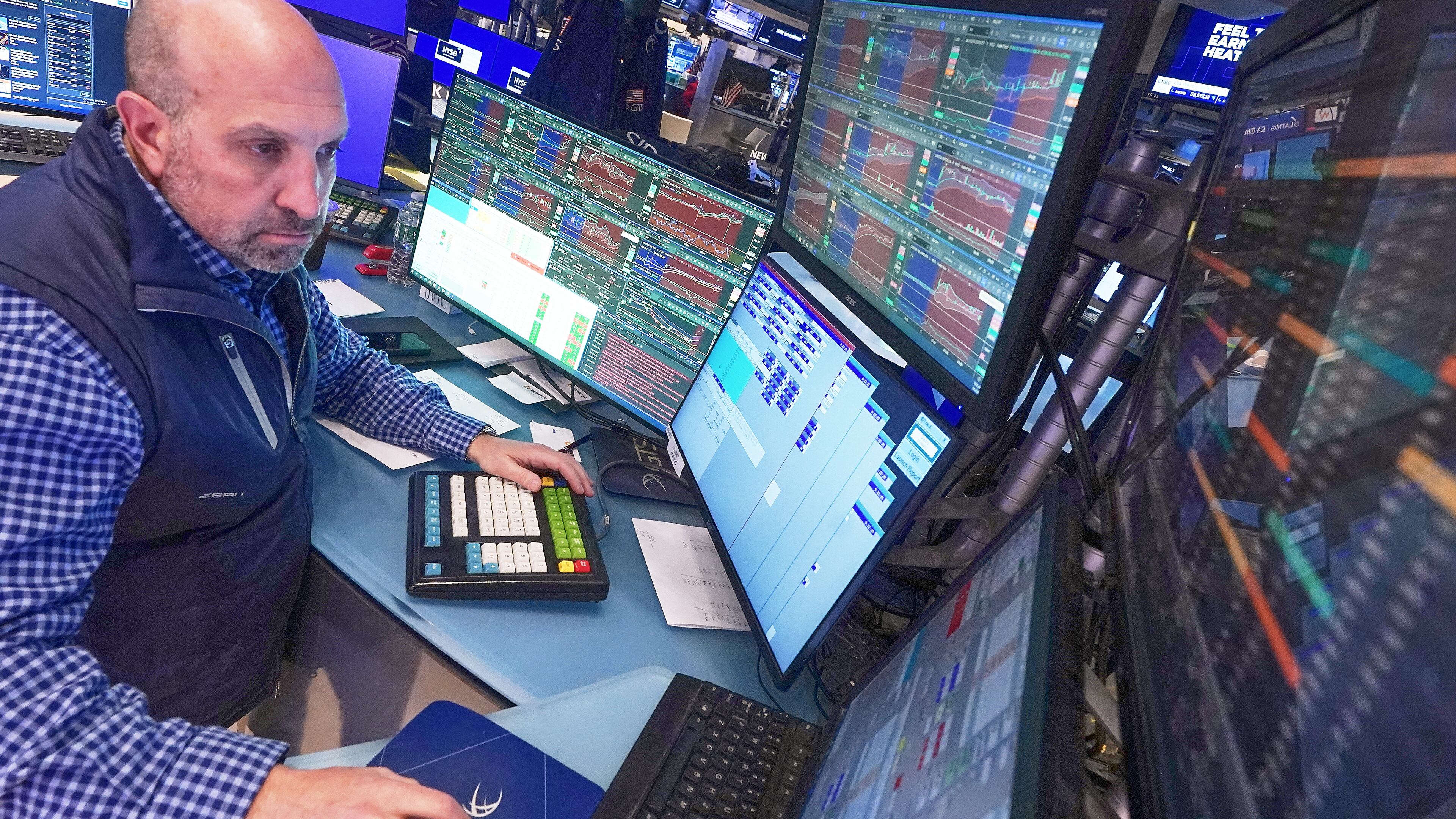
NEW YORK (AP) — The U.S. stock market rose to records Tuesday after oil prices eased and companies kept reporting bigger profits for the start of the year than analysts expected.
The S&P 500 climbed 0.8% to top its prior all-time high set at the end of last week. The Dow Jones Industrial Average added 356 points, or 0.7%, and the Nasdaq composite set its own record after rallying 1%.
Stocks got a boost after oil prices gave back much of their big jumps from Monday. The price for a barrel of Brent crude, the international standard, fell 4% to $109.87 after briefly cresting $115 on Monday, though it’s still well above its roughly $70 price from before the war with Iran.
U.S. military leaders said Tuesday that a ceasefire with Iran remains in effect, even though Iran was blamed for attacks against the United Arab Emirates, a U.S. ally, the day before. The U.S. military is meanwhile trying to force open a path in the Strait of Hormuz, which would allow oil tankers to resume shipments from the Persian Gulf and hopefully bring down the price of crude.
Even with the war ongoing, the U.S. stock market has remained remarkably resilient on its record-setting run. That’s in large part due to the strong profits that U.S. companies have reported for the first three months of 2026 despite the rise in oil prices since the end of February.
“This has been a ‘why ask why’ market,’” according to Scott Wren, senior global market strategist at Wells Fargo Investment Institute. “You just have to go with it.”
Even though many risks are still weighing on the market, “investors are looking at earnings” and how much companies are spending on AI data centers and other investments, he said.
DuPont’s stock rallied 8.4% after the chemical giant led another cavalcade of companies reporting better-than-expected profits for the latest quarter.
DuPont said its water technologies business felt some impact from the war due to logistics disruptions in the Middle East. But it nevertheless raised its forecasts for financial results over the full year.
Other winners included American Electric Power Co., which rose 1.8%, and Cummins, which added 2.8%, after they likewise made more money during the first three months of the year than analysts expected.
Pinterest jumped 6.9% after the online bulletin board topped Wall Street’s first-quarter sales and profit targets as its number of active monthly users jumped 11% to 631 million.
AB InBev likewise topped analysts’ profit forecasts, and it credited growth for its Corona, Stella Artois and Michelob Ultra brands outside of their home markets, among other factors. “Cheers to beer,” CEO Michel Doukeris said, as the company’s stock that trades in the United States climbed 8.7%.
They helped offset a drop for Palantir Technologies, which fell 6.9% even though it reported stronger results for the latest quarter than analysts expected. Its stock has struggled this year on worries about increased competition, like many software companies have. Its stock is also coming off a huge run where it more than doubled in each of the last three years.
All told, the S&P 500 rose 58.47 points to 7,259.22. The Dow Jones Industrial Average added 356.35 to 49,298.25, and the Nasdaq composite climbed 238.32 to 25,326.13.
In stock markets abroad, indexes were mixed in Europe. The CAC 40 rose 1.1% in Paris, but the FTSE 100 fell 1.4% in London. Many Asian markets were closed for holidays, while Hong Kong’s Hang Seng fell 0.8%.
Australia’s S&P/ASX 200 slipped 0.2% after the central bank raised its benchmark interest rate to 4.35%, saying conflict in the Middle East had sharply increased fuel and commodity prices that were already adding to inflation.
In the U.S. bond market, Treasury yields eased following oil’s drop in price and reports on the U.S. economy that came in mixed.
One report said growth for U.S. services businesses unexpectedly decelerated last month, with some companies saying the war is slowing spending. A separate report said U.S. employers were advertising slightly more job openings at the end of March than economists expected, an encouraging signal for the job market.
The yield on the 10-year Treasury fell to 4.42% from 4.45% late Monday.
That’s still well above its 3.97% level from just before the war began. The rise has made mortgages and other kinds of loans for U.S. households and businesses more expensive.
___
AP Writers Chan Ho-him, Matt Ott and Rod McGuirk contributed.