Vaccines, budget cuts and affordability: Takeaways from RFK Jr.’s gauntlet of congressional hearings
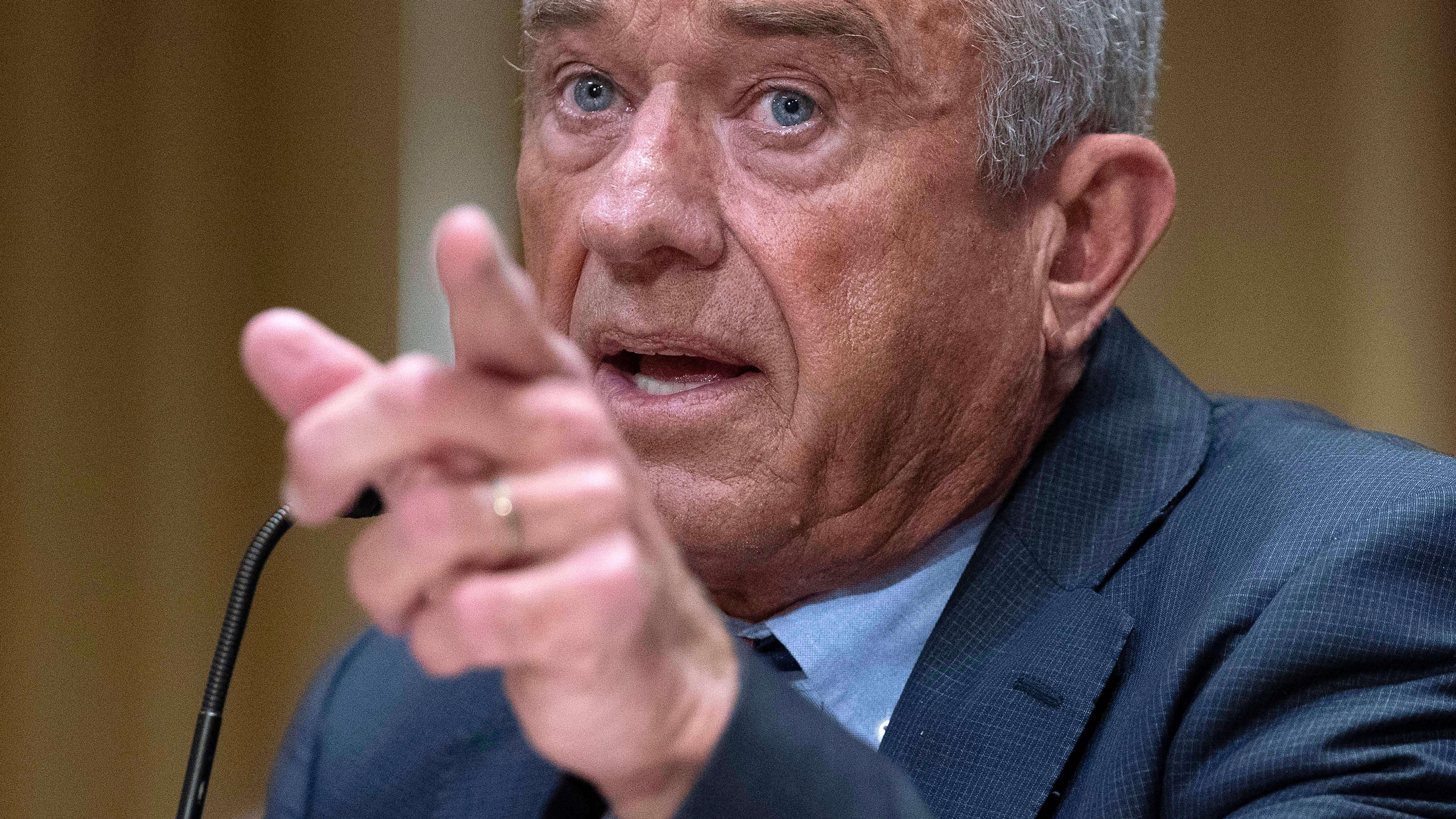
Health Secretary Robert F. Kennedy Jr. on Wednesday concluded a marathon series of hearings with federal lawmakers, during which he deflected blame for measles outbreaks and dwindling vaccination rates across the country and touted several initiatives he says are making health care more affordable.
In his testimony to various committees in both the Senate and the House over multiple days this week and last, Kennedy was tasked with defending President Donald Trump’s proposed 2027 budget, which would boost defense spending while cutting more than 12% of funding from Kennedy’s Department of Health and Human Services.
With lawmakers of both parties raising concerns about programs and research funding being reduced or eliminated, Kennedy acknowledged the cuts were “painful” but said they were necessary to address the federal government’s record $39 trillion deficit.
When Democrats came out swinging, Kennedy became more defiant, even at times screaming his rebuttals — though some of them didn’t align with the facts. He accused multiple Democratic lawmakers of grandstanding, making things up and seeking sound bites over meaningful responses.
Here are takeaways from Kennedy’s gauntlet of budget hearings:
Kennedy deflects blame for Americans not vaccinating
One of the central fights shaping Kennedy’s interactions with Democratic lawmakers was over who bears responsibility for the decline in childhood vaccination rates and measles outbreaks that have ripped across the country over the past year, threatening the country’s measles elimination status. Kennedy’s refrain was consistent: It’s not my fault.
“It has nothing to do with me,” Kennedy said Tuesday of the uptick in measles across the country over the past year. He noted there is a global rise in measles cases, including in other countries like Canada, Mexico and the United Kingdom.
Kennedy, who spent years as an anti-vaccine crusader before entering politics and in 2021 said he urged people to “resist” CDC guidelines on when kids should get vaccines, disputed accusations that he is anti-vaccine, saying he is “pro-science.”
Throughout the hearings, he sought to focus on HHS’s initiatives unrelated to vaccines — part of a broader administration pivot toward less controversial health topics like nutritious eating.
Kennedy argued that fewer Americans are vaccinating because they lost trust in government recommendations during the COVID-19 pandemic. He said he was working to restore that trust. In fact, surveys show trust in federal health agencies has continued to decline during Kennedy’s tenure.
Rep. Kim Schrier, a Democrat from Washington, argued Kennedy’s vaccine views have caused a “spillover effect” that has led to mothers not giving their babies vitamin K injections common at birth to prevent brain bleeding.
“I’ve never said anything about vitamin K,” Kennedy said.
“That’s exactly the point,” Schrier replied.
Kennedy did get credit, however, from Republican Sen. Tim Scott of South Carolina, who said his work was crucial in helping the state manage a troubling measles outbreak over the past year.
“We would not be on the right side of this outbreak without your leadership,” Scott told Kennedy.
Kennedy forcefully denies there are Medicaid cuts – a claim experts call political spin
Nearly every time Democrats brought up the nearly $1 trillion in Medicaid cuts over the next decade largely being created through new work requirements for enrollees, Kennedy lashed back to argue there are no cuts to Medicaid.
“Only in Washington is it considered a cut,” Kennedy told New Mexico Sen. Ben Ray Luján, a Democrat, on Wednesday.
Kennedy cited a Congressional Budget Office report showing that Medicaid outlays are estimated to increase by about 47% over the next decade. But experts say his analysis of that report is disingenuous, politicized framing and that the increased spending reflects factors like inflation and a growing population.
“This is an old, sort of tired argument that’s been used by conservatives to justify spending cuts by saying, well, if spending is still growing in nominal terms, somehow there wasn’t a cut,” said Edwin Park, a research professor at Georgetown University. “The federal government is spending nearly a trillion dollars less than it otherwise would have in the absence of the legislation.”
Lawmakers of both parties are concerned about affordability
A major concern for voters in the 2026 midterm elections is affordability — including skyrocketing costs for health care and health insurance. That wasn’t lost on those questioning Kennedy, as lawmakers from both parties raised the issue.
On Tuesday, Rep. Cliff Bentz, a Republican from Oregon, shared the story of his brother who pays $26,000 per year for his health coverage.
“What in the world can I go back to him and say? ‘Hey, the administration is working on trying to drive these prices down?’” he asked Kennedy.
Kennedy, for his part, cited several Trump administration initiatives to lower prices, including the White House's TrumpRx website for discounted drugs and Trump’s so-called most favored nations deals with pharmaceutical companies.
Pressed by senators, Kennedy pledged to provide details of those deals that didn’t include proprietary information or trade secrets. Some Democrats wanted him to do more.
“Why don’t you do an agreement yourself? he said in a jab to Sen. Ron Wyden, an Oregon Democrat. “You’ve had power to do that for 20 years and haven’t done it.”
Kennedy acknowledges some HHS cuts are ‘painful’
To achieve a more than 12% cut of the more than $100 billion HHS budget, the Trump administration is proposing slashing some $5 billion from the National Institutes of Health and cutting a bevy of other programs and initiatives, including a low-income home energy assistance program.
Several senators asked Kennedy why different areas were being cut. NIH cuts, in particular, raised bipartisan outcry.
“There’s an argument to be made that we’re handing China our lunch,” said Republican Sen. Thom Tillis of North Carolina.
Kennedy was candid that neither he nor others at his agency wanted to see the cuts, which he called “painful.”
“There’s a lot of cuts to the agency that nobody wants,” he said.