These ‘smart fabric’ sheets could revolutionize how hospitals prevent bedsores
Spending hours in one position can do more than cause discomfort. It can lead to chafing, irritation and skin sores, whether in a hospital bed or at home.
But for babies, some wheelchair users, and many nursing home patients, that simple adjustment is a challenge. Caregivers must reposition them every two hours — the standard medical guideline — to prevent painful and potentially deadly pressure ulcers or injuries commonly known as bedsores.
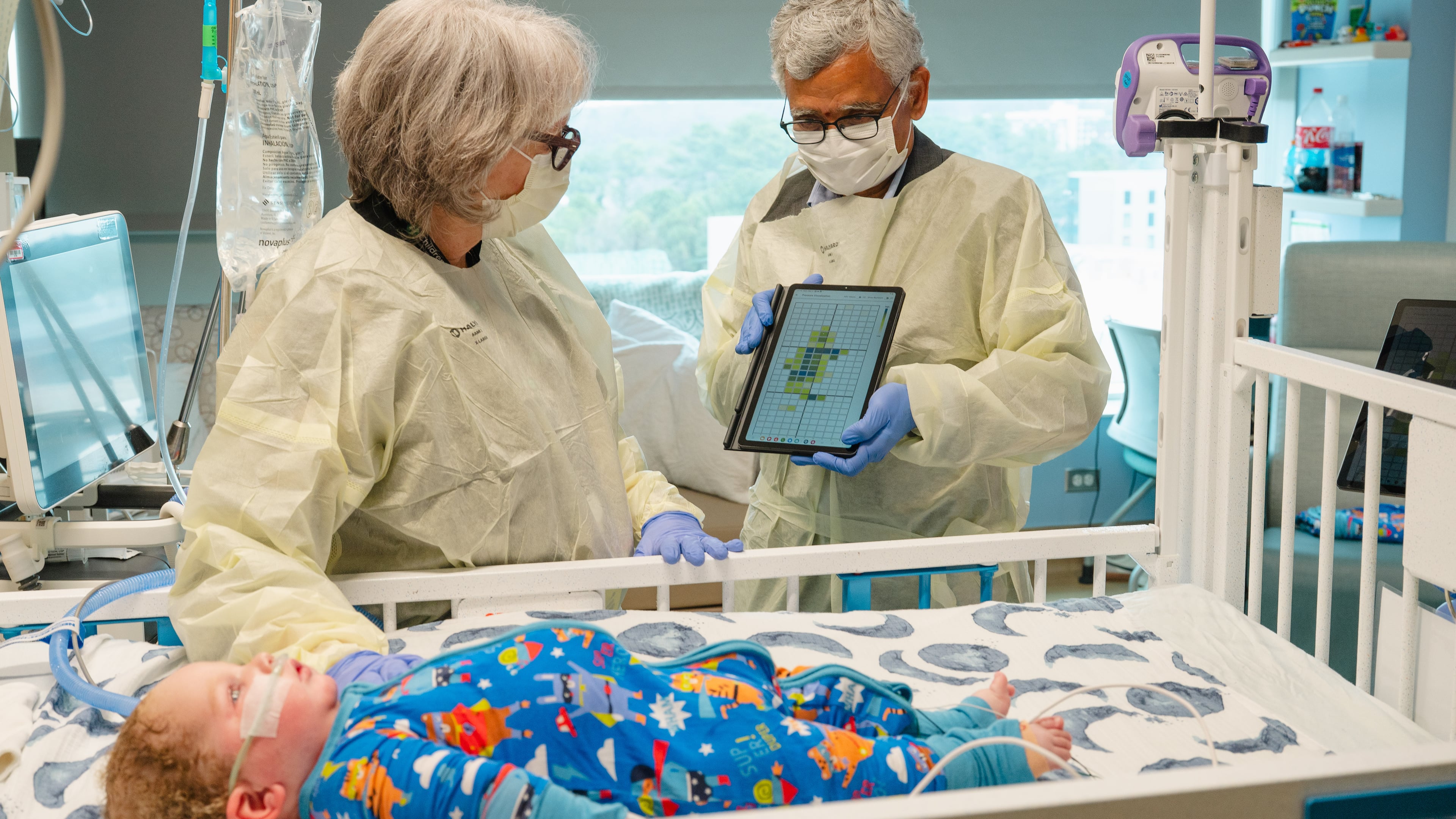
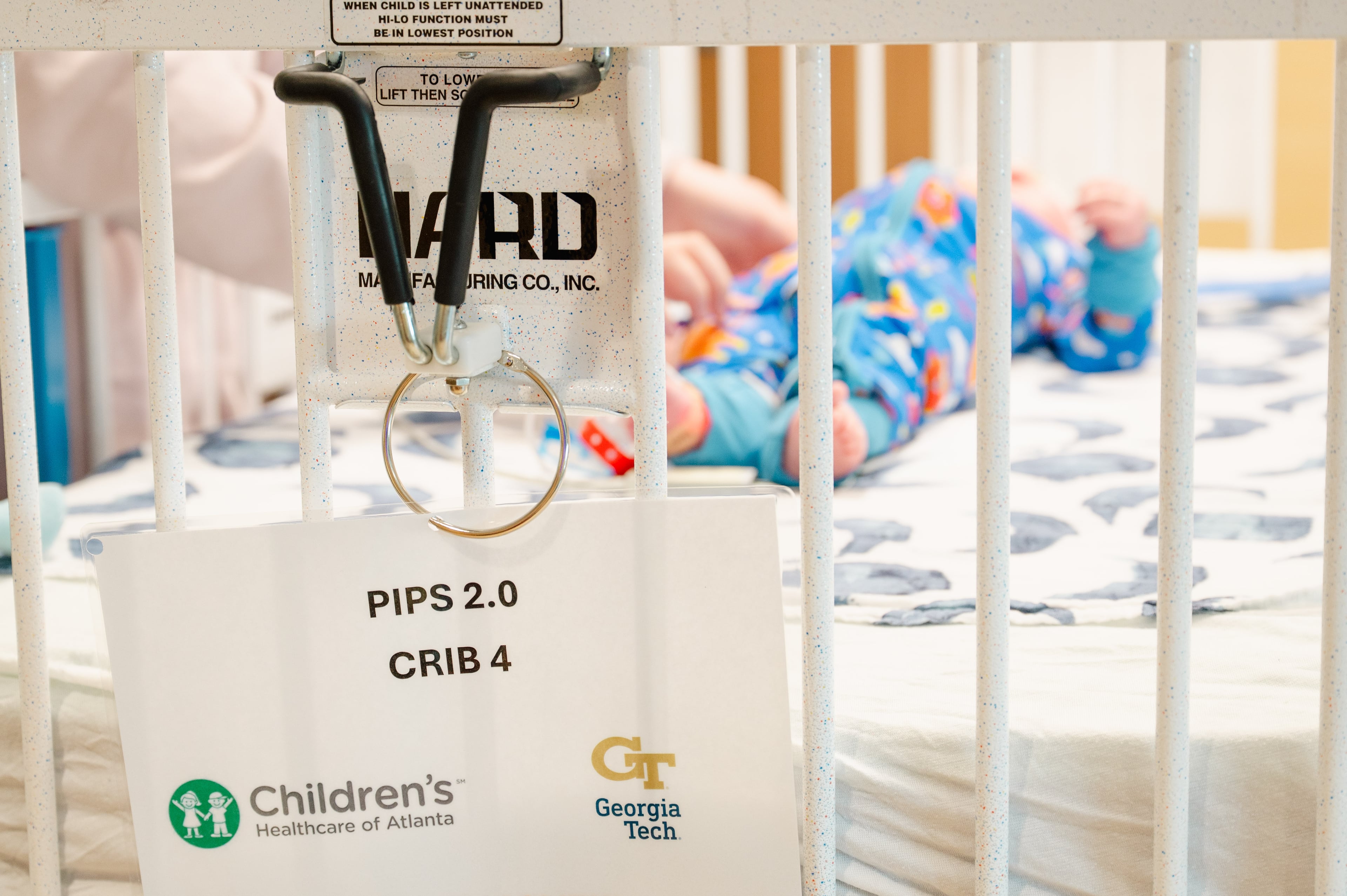
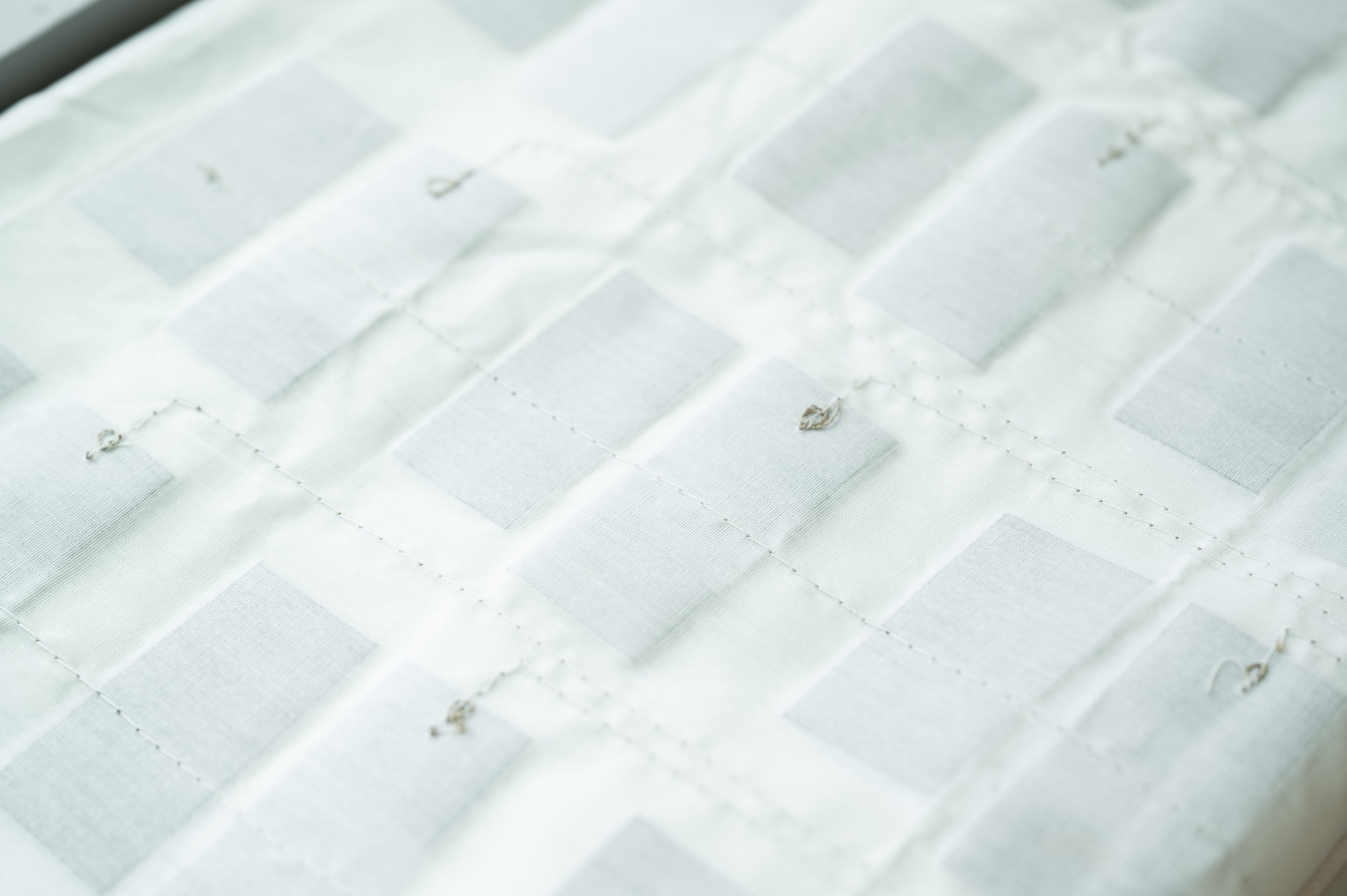
Georgia Tech researchers are piloting a new “smart fabric” technology on a handful of cribs at Children’s Healthcare of Atlanta to make it easier for medical professionals to know when patients are at risk of suffering skin damage from friction, pressure and moisture, such as from sweating or incontinence.
“Our kids in the pediatric intensive care unit and really any of our intensive care units … may have a significant injury or significant illness, which puts them at risk for developing pressure injuries or skin breakdown,” explained Dr. Jana Stockwell, a pediatric critical care physician at Children’s who collaborates with the team on pressure‑injury prevention technology in the pediatric intensive care unit at Children’s Arthur M. Blank Hospital.
Stockwell estimated that about 10% of the ICU patients have a significant risk of developing a pressure injury. Since February, 15 patients have been part of the pilot program involving four cribs in the hospital’s PICU.
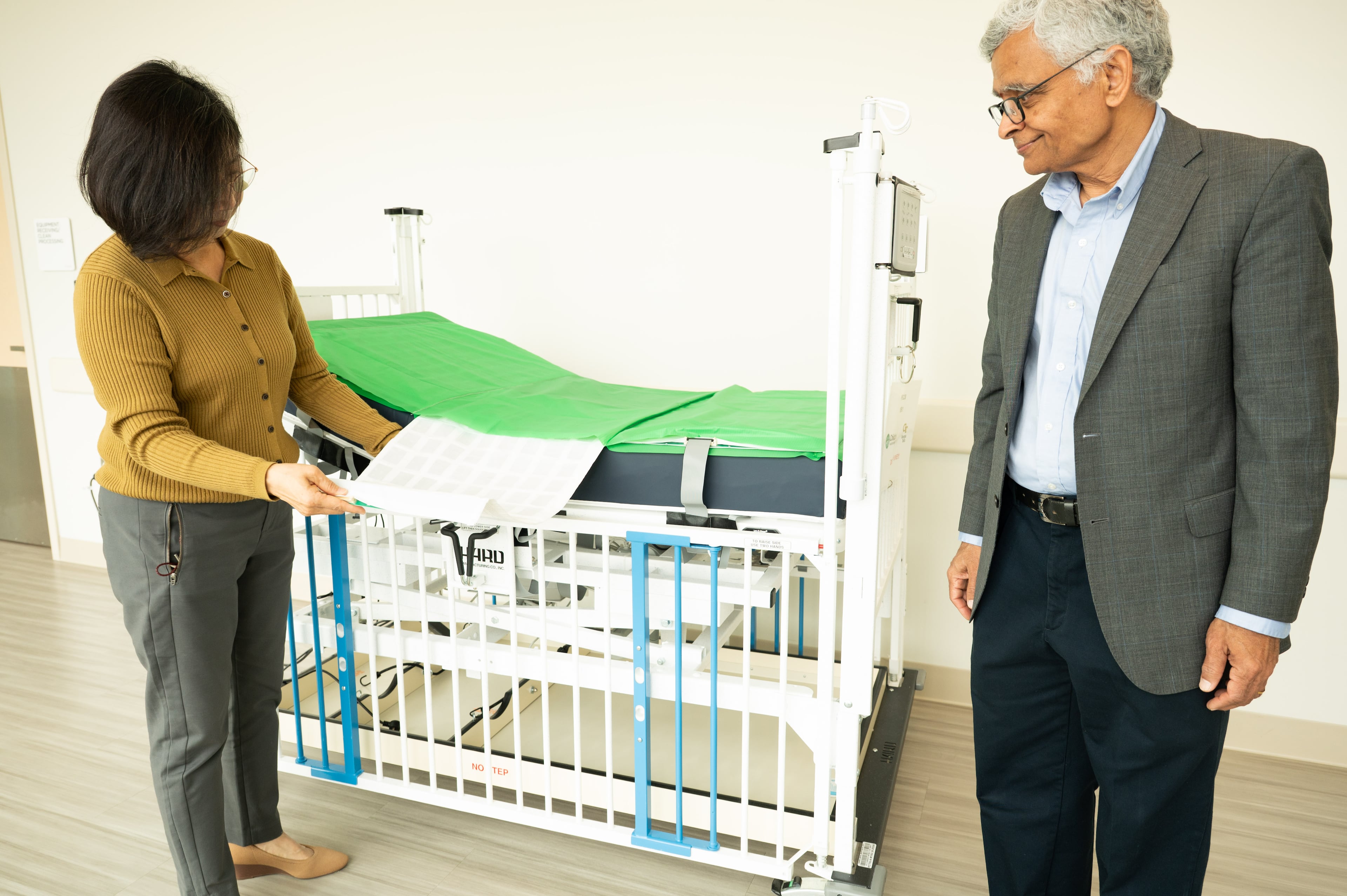
In each crib, a sheet embedded with lightweight fabric sensors sits atop the crib mattress and under the fitted crib sheet. The sensors, which are flexible and reusable after being sanitized, send data to an app that monitors a patient’s condition.
“This project will potentially give us the ability to detect those areas before the nurse would ever even see that there’s redness — so totally preventing the skin injury,” Stockwell said.
Each year, more than 2.5 million people in the United States develop pressure ulcers, or bedsores, according to the U.S. Department of Health & Human Services’ Agency for Healthcare Research and Quality. The skin lesions can be painful and result in serious infection or other health conditions, AHRQ reports, and can often lengthen hospital stays. The agency estimates about 60,000 Americans die every year from complications related to bedsores.
“The rule of thumb is that babies are repositioned every two hours in the ICU,” said Sundaresan Jayaraman, a Georgia Tech professor in the School of Materials Science and Engineering and the lead researcher of the pressure injury prevention system.
However, that timing isn’t the same for every patient.
“Some babies need to be repositioned sooner and some babies that are moving on their own do not need to be repositioned,” he said, adding that the app collects data to help evaluate patient care with customized recommendations.
For instance, the two-hour guideline for repositioning a patient may depend on how often the patient moves on their own or their nutrition, said Sungmee Park, a principal research scientist with the material science and engineering school.
“We have all this data and we can analyze and give back information that two hours may not be correct — with scientific proof.”
The PIPS technology offers “an ongoing, constant, reliable assessment of the pressure that the child is experiencing,” Stockwell explained. The system can tell whether there’s an area developing that’s at risk of becoming a pressure injury even if nurses checked earlier in the day.

The material engineers who pioneered the smart fabric hope to expand the project to 50 cribs, and gain approval in the next two years to market the new sensor system to consumers and other medical facilities such as hospitals, nursing homes, and veterans’ health organizations, Jayaraman said.
The smart textile technology in the pilot grew from research Jayaraman led in the 1990s, which resulted in a smart shirt or wearable motherboard. The sleeveless T-shirt that could monitor the wearer’s vital signs is now in the Smithsonian’s National Museum of History.
In the future, Jayaraman hopes the data can be used to automatically intervene to help improve a patient’s quality of life. If someone is in a wheelchair, for instance, and the pressure exceeds a certain value and the person’s bottom becomes wet, the wheelchair could automatically adjust to relieve the pressure and dry up the moisture, he said.
“Right now, we are demonstrating how successful it is, how effective it is in a healthcare setting.”
Ultimately, Stockwell believes the technology will help patients but also make it more efficient for nurses caring for ill and injured children.
“If we can prevent the pressure injuries … no infections, no wounds to be surgically taken care of, that would be fantastic.”