US stocks rally and return to where they were before the US-Iran war
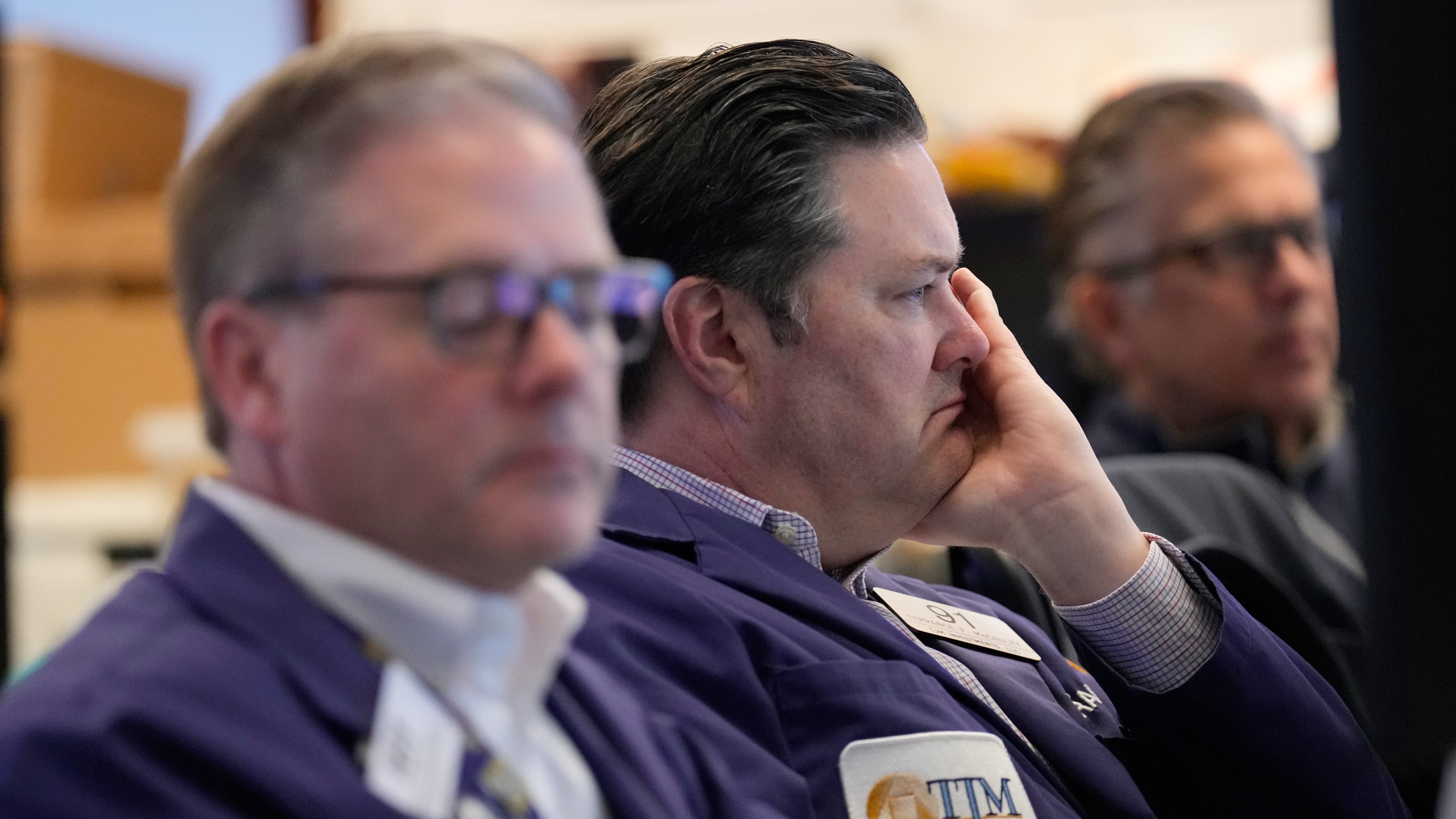
NEW YORK (AP) — U.S. stocks rallied Monday and recovered the last of their losses caused so far by the U.S.-Iran war, as Wall Street remains hopeful that the global economy can still avoid a worst-case scenario.
The S&P 500 rose 1% and is back to where it was before the United States and Israel attacked Iran in late February, just 1.3% below its all-time high set early this year. The Dow Jones Industrial Average added 301 points, or 0.6%, and the Nasdaq composite climbed 1.2%.
Even in the oil market, where prices jumped above $100 per barrel after ceasefire talks over the weekend failed to end the war, prices pared their leaps as Monday progressed. The moves for financial markets overall were much more modest than the extreme swings that have hit since the war began.
Markets have been pinballing between worries that the war will last a long time and hopes for a resolution because all the parties would benefit from a freer flow of crude oil.
After the weekend’s talks failed, President Donald Trump announced a blockade of the Strait of Hormuz, which raises the pressure on Iran by trying to prevent it from making money by selling oil.
A blockade would keep even more oil off the global market, after prices already jumped for everyone worldwide because of Iran’s restrictions on traffic in the important strait. The narrow waterway is how much of the oil produced in the Persian Gulf area reaches customers worldwide.
Iran responded by threatening all ports in the Persian Gulf and the Gulf of Oman. Afterward, the price for a barrel of Brent crude, the international standard, rose 4.4% to settle at $99.36 and is well above its roughly $70 level from before the war.
But it remains below the $119 peak it’s touched at times, when worries about the U.S.-Iran war have been at their heights. It also pulled back from its nearly $104 price reached earlier Monday morning.
“Markets are taking some encouragement from the fact that the two sides are talking and that the broader ceasefire seems to be holding, for now,” according to Sameer Samana, head of global equities and real assets at Wells Fargo Investment Institute.
Speaking outside the Oval Office, Trump suggested on Monday the United States is still willing to engage with Iran.
“I can tell you that we’ve been called by the other side,” Trump said.
In the meantime, big U.S. companies are beginning to tell investors how much money they made during the first three months of the year. Strong reports could help make up for Wall Street's worries about the Strait of Hormuz because stock prices tend to follow the trend of corporate profits over the long term.
Goldman Sachs, the investment bank, said it made $5.63 billion in profit during the quarter, more than investors expected. But financial analysts pointed to some potentially concerning signals underneath the surface, including lower revenue from the trading of fixed income, commodities and currencies. Its stock fell 1.9%.
Big banks traditionally lead earnings reporting season each quarter, and Citigroup, JPMorgan Chase, Wells Fargo, and Bank of America will all report later this week. So will Johnson & Johnson, Netflix and PepsiCo.
Helping to lead Wall Street on Monday was Sandisk, which jumped 11.8% after learning it will replace Atlassian Corporation in the Nasdaq 100 index before trading begins on April 20. That means it will get included in funds that track the index, such as Invesco’s QQQ, which controls nearly $395 billion in investments.
The only stock to rise more in the S&P 500 index was Oracle. It gained 12.7% to recover some of its sharp recent losses taken on worries that it may be spending too much to build its artificial-intelligence capabilities.
Different kinds of worries about AI have been hammering software companies, centered on the risk that their businesses may become obsolete. They also rallied to recover some of their big recent losses.
ServiceNow climbed 7.3% to trim its loss for the year so far to less than 42%, and AppLovin climbed 6.7% to get its loss for 2026 down to 38%.
All told, the S&P 500 rose 69.35 points to 6,886.24. The Dow Jones Industrial Average added 301.68 to 48,218.25, and the Nasdaq composite climbed 280.84 to 23,183.74.
In the bond market, Treasury yields ticked lower as oil prices receded from their morning highs. The yield on the 10-year Treasury fell to 4.29% from 4.31% late Friday.
That could offer some relief for the housing market and rates for mortgages, which have been climbing with Treasury yields since the war began on worries about high oil prices and inflation. A report on Monday said that sales of previously occupied homes were weaker in March than economists expected.
In stock markets abroad, indexes fell across much of Europe and Asia. Hong Kong’s Hang Seng fell 0.9%, and South Korea’s Kospi dropped 0.9% for two of the world’s larger losses.
___
AP journalists Yuri Kageyama, Matt Ott and Mayuko Ono contributed to this report.