Former chancellor Erroll Davis remembered as ‘always a leader’

Erroll Davis became one of the most celebrated engineers and successful executives in the country, but he never forgot the Pittsburgh neighborhood of his youth.
Davis held regular Zoom calls with about 70 classmates from Westinghouse High School, and he paid for the publication of a book featuring their profiles.
“Erroll was class president, he was always a leader,” says Reggie Young, who grew up with Davis. “He really believed in being prepared for opportunities. He was always reading and sharing his knowledge with others.”
The son of Erroll B. Davis, Sr., a former Pennsylvania state representative and Eleanor Boykin Davis, a seamstress, Erroll B. Davis, Jr., died on April 26 of complications from primary lateral sclerosis, a rare, progressive neuromuscular disease. He was 81.
After graduating from Westinghouse High School, where he was first clarinet in the school orchestra, Davis attended Carnegie Mellon University, then Carnegie Technical Institute. He majored in electrical engineering, and was chancellor of a social fraternity at the school. He once told a friend, “I don’t have any emotion left. They beat it out of me in engineering school.”

From Pittsburgh, Davis moved west and earned an MBA in finance from the University of Chicago. After graduating, he told his friend Pratap Mukharji years later, he did some research and found that MBA graduates kept their first jobs for 18 months, so “he decided to have some fun.” He settled in Long Beach, California, to work for Chevron, knowing he wouldn’t stay long.
In 1968, Elaine Casey and he married — they had known each other since seventh grade.
They moved to Madison, Wisconsin, in 1978, where Davis would work for Wisconsin Power & Light Company, a utility powering a third of the state.
In 1987, he was named president of the company. He later became CEO of Alliant Energy, formed by merging Wisconsin Power & Light with several power companies in Iowa.
He was very involved in Wisconsin civic organizations and boards. In 1988, he became chairman of the board of the United Way of Dane County. He served on the University of Wisconsin System Board of Regents from 1987 through 1994. In 2004, he was selected for the 11-member U.S. Olympic Committee’s Board of Directors.
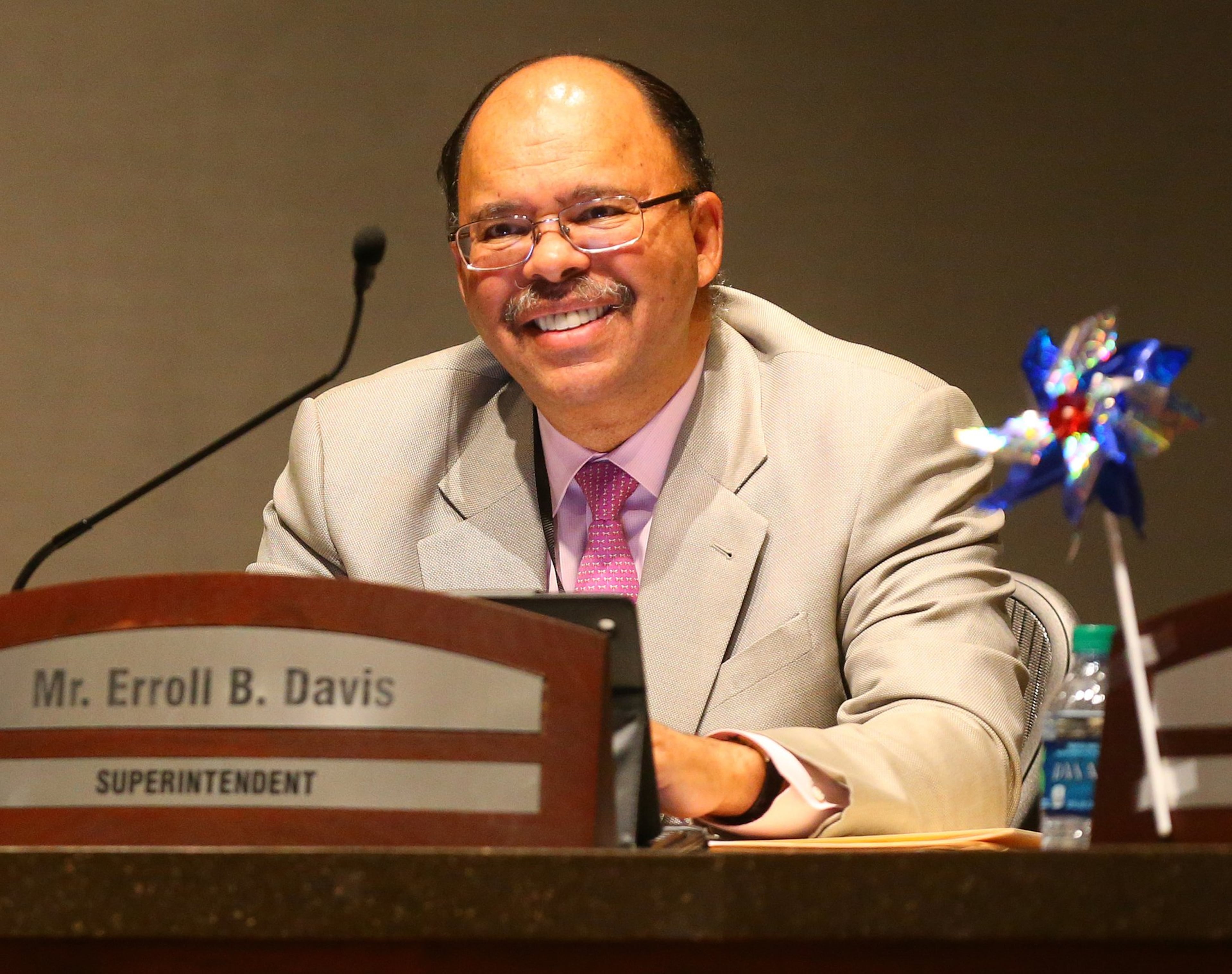
After Davis retired from Alliant Energy in 2006, then Gov. Sonny Perdue selected him to be the chancellor of the University System of Georgia, the first African American in that role. He served in that position until 2011, when he was asked to become the interim superintendent of the Atlanta Public Schools system.
Davis steered the district through the turbulence created by a cheating scandal before retiring in 2014.
“He retired on a Friday from the university system, and the Atlanta school board asked him to start on Monday, but he wanted at least three days off, so he started on Tuesday,” says Steve Smith, who served as Davis’ associate superintendent. The two met through the 100 Black Men of Atlanta organization. Davis asked Smith to join him because Smith had experience in K-12 education.
“That was a trying time for the city of Atlanta,” says Smith. “We were working hard on getting the district back in good shape. He was kind, determined and smart. I’d say he was someone who runs toward the fire.”
In 2012, Davis and his wife Elaine traveled to Chautauqua, New York, a former camp which hosts summer programs — lectures, music performances, talks, fine art, plays — and draws many famous and accomplished people. “He and Elaine fell in love with Chautauqua and built a house,” says Ted First, who lives on the grounds year-round.
“Erroll was always learning and teaching,” Elaine Davis said in a statement. “Chautauqua was the perfect microcosm for the music, arts, lectures, authors and conversations that fueled his interest in continual education.”
Davis also became involved with the African American Heritage House, working with First to design programming. They wanted it to be a place to “host all the minority voices that might be on the ground,” First says.
In working closely with Davis, they became close friends, as did their wives.
“Erroll was a man among men. After he was diagnosed, he didn’t get upset or become bitter, he did whatever he had to do, but the experience of the disease was brutal,” First says.
Davis’ leadership skills and accomplishments were recognized and celebrated. He was one of the few Blacks to head a Fortune 500 company. Davis was named Black Engineer of the Year in 1988. Fortune named him one of the “50 Most Powerful Black Executives in America,” in 1988, while Black Enterprise included him as one of the “75 Most Powerful Blacks in Corporate America.”
He received the Distinguished Alumnus Award from the University of Chicago and the Carnegie Mellon Alumni Distinguished Service Award. He was a trustee of Carnegie Mellon and served on the boards of several corporations.
In addition to his wife, Davis is survived by his children Christopher Davis and Whitney Davis; his granddaughter Alexus; and great-granddaughter, Arielle.
The funeral service will be Saturday, in Georgia State University’s Centennial Hall, 100 Auburn Avenue, at noon.
In lieu of flowers, the family suggests donations to the Mayo Clinic in Rochester, Minnesota, designated for primary lateral sclerosis research.