‘It’s very hard.’ FBI raid on Atlanta family stumps federal judge.
Tying liability to FBI agents who raided the wrong Atlanta house in a predawn sting is “very hard” within the tangled web of applicable law, a federal appeals court judge said Wednesday when weighing a case that could have major implications.
The family that lived in the home when it was wrongly raided in 2017 is trying to take its claims against the federal government to trial, buoyed by a U.S. Supreme Court decision from last year concluding its case was improperly thrown out.
On Wednesday, the case returned to the 11th U.S. Circuit Court of Appeals in Atlanta, where a three-judge panel heard arguments about if and when law enforcement officers can be liable for negligence in their work duties.
“I have so many things to say about this case,” Judge Adalberto Jordan said. “It’s very hard.”
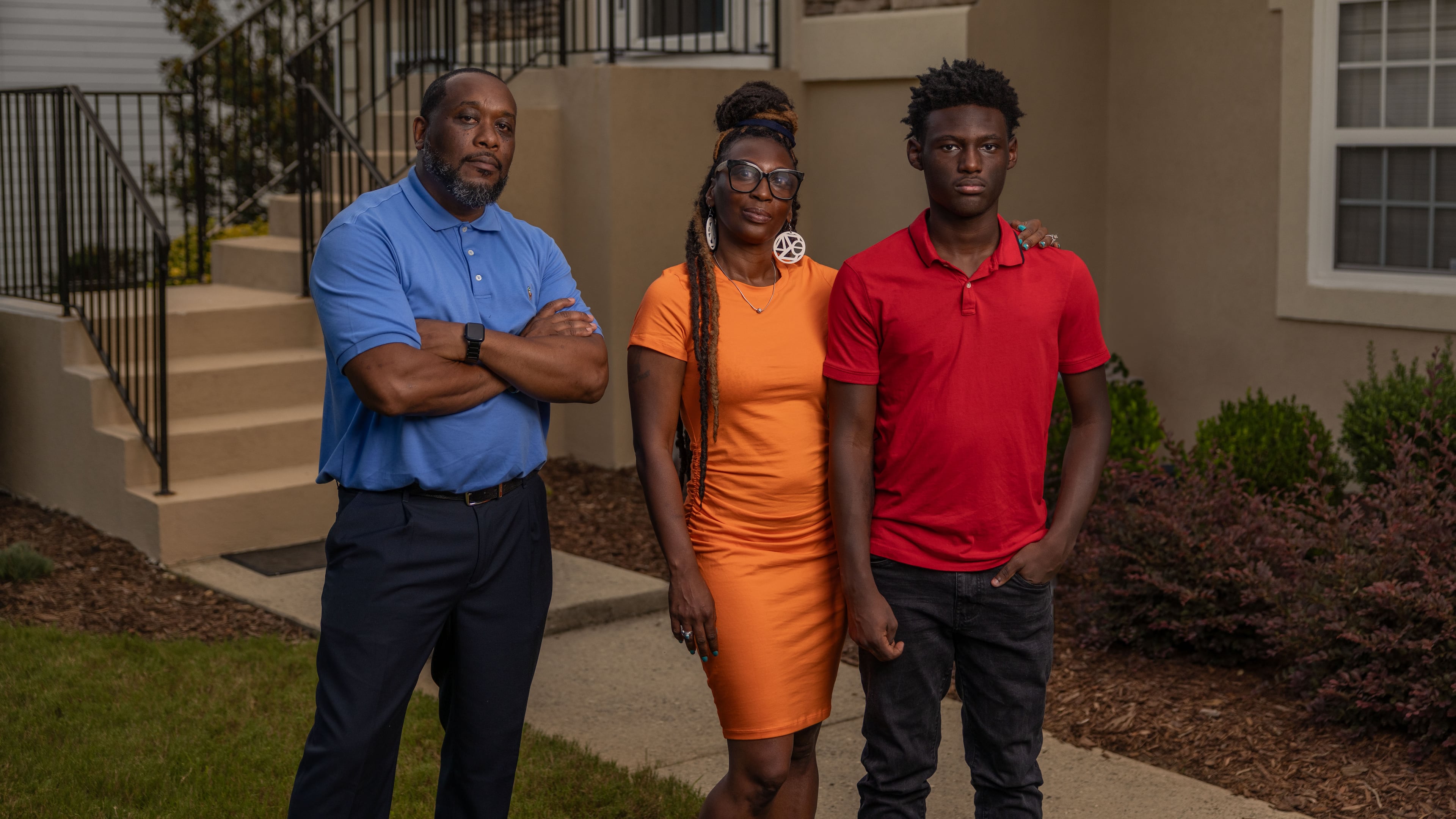
In 2017, an armed FBI SWAT team mistakenly busted into the home of Toi Cliatt, Trina Martin and her 7-year-old son, Gabe Watson, as they slept. The agents, looking for a violent gang member living a block away, detonated a flashbang grenade, drew their weapons and temporarily handcuffed Cliatt before realizing they had the wrong address.

Lawyers for the family and the federal government drilled down Wednesday on how law enforcement officers can be shielded from liability by an exception to the Federal Tort Claims Act. The exception generally immunizes officers for their actions when they are performing a part of their job that involves an element of judgment or choice and is based on public policy considerations.
Jordan pointed out that the 11th Circuit is bound by its prior decisions interpreting the so-called “discretionary function exception.” He said the court has published more than 60 decisions on that exception, “and they’re all over the place.”
“Some you can harmonize, some you can’t,” he said. “We are trying to make our way through a landscape that’s just dotted with decisions.”
Patrick Jaicomo, lead counsel for the family, said the agent in charge of raiding the house had no discretion to execute a search warrant at the wrong address. And he said there is no policy supporting such carelessness.
“Raiding the wrong house is not a permissible exercise,” Jaicomo told the judges. “It’s the policy of the United States to raid the correct house.”
Jordan suggested the exception doesn’t always shield law enforcement officers from liability and asked the federal government’s lawyer, Aaron Ross, to provide an example of conduct that wouldn’t be covered.
Ross cited an unrelated case, saying federal agents in California ran out of nonflammable ammunition in a narcotics bust on a house, so they used flammable projectiles and “ended up burning down the house and the suspect inside.”
Jordan pressed Ross on how that scenario is different from the FBI’s botched raid in Atlanta, echoing Jaicomo’s argument that there is no policy or discretion behind raiding the wrong property.
“You can only execute a search warrant at the place identified in the warrant — there’s no level of discretion involved there,” the judge said. “Everyone agrees that at some operational level, decisions on the ground — though they involve choice — are not covered by the exception.”
Ross said the FBI agents in the Atlanta raid had to be covert and conduct it swiftly in the dark because the suspect was violent and dangerous. He said the FBI did not have a policy instructing agents how to correctly identify addresses in warrants.
In the Atlanta raid, the lead agent relied on a GPS device and his memory of what the suspect’s home looked like, Ross said.
“That doesn’t seem policy-based to me,” Jordan responded. “I don’t see how you imbue that decision-making with any sort of policy determination.”
Jaicomo said the agents failed to look at the street sign and house number before barging in. He said the U.S. Congress amended the Federal Tort Claims Act to allow cases like the Atlanta family’s to proceed, and courts shouldn’t block that.
Outside court, Cliatt and Martin told The Atlanta Journal-Constitution they’re optimistic their case will be allowed to move forward. Jaicomo said they want the lawsuit to create a path for recovery whenever anyone is harmed by the federal government’s negligence.
“We’re fighters,” Cliatt said. “We’ve come this far, we’re not going to stop now.”
The case is likely to have wide implications and influence other litigation, including a similar lawsuit brought by a Sandy Springs resident against 15 armed officers she says raided her home by accident in 2023.
Cathy George alleged the officers, including U.S. Marshals, were looking for a man who at the time was in custody in Alabama, having been apprehended four months earlier in Indiana. Her case, filed in October, is pending before a federal trial judge in Atlanta.
The 11th Circuit is expected to make its decision in coming months.
About the Author

Journalist Rosie Manins is a legal affairs reporter for The Atlanta Journal-Constitution.


