Nissan’s e-Power: An EV driving experience, fueled by gas
Ask car shoppers if they’re curious about electric vehicles, and many will say yes. Ask if they’re ready to rely on public chargers, plan road trips around charging stops or pay for a home charger installation, and the enthusiasm cools a bit.
That gap between EV interest and EV reality is where hybrids have stepped in, offering better mileage with familiar ownership. Nissan’s new approach is to blur the line even more: a hybrid that behaves like a fully electric car on the road, but quietly carries its own gas-powered generator under the hood.
A hybrid that always drives electric
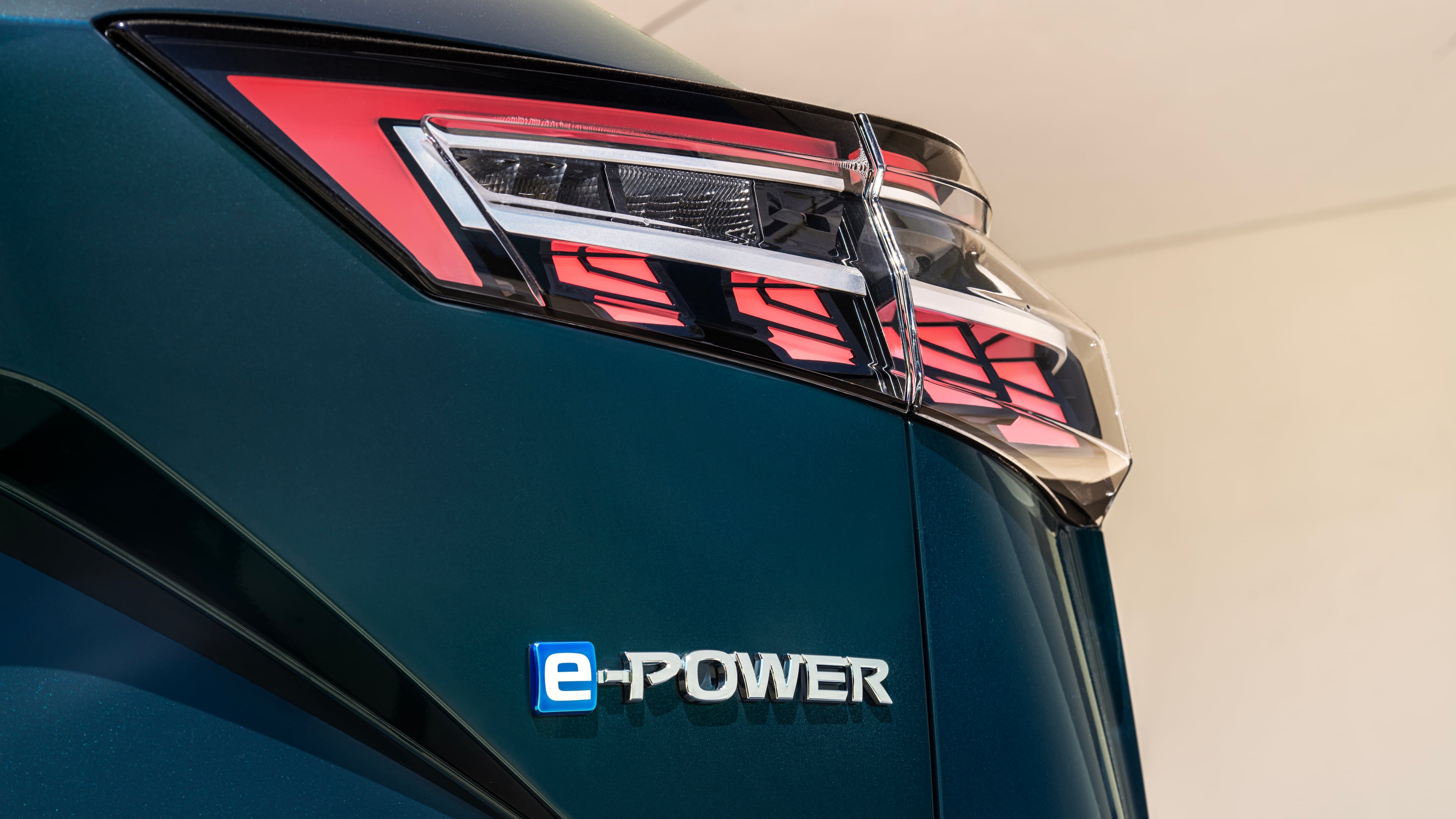
A new kind of hybrid, called e-Power, is coming to the U.S. from Nissan. Basically, it’s a series hybrid, meaning there is a gasoline engine that charges the battery pack, which in turn drives an electric motor (two electric motors for models with all-wheel drive). While e-Power vehicles do have a gasoline engine, the gasoline engine does not drive the wheels.
The benefit is similar to that of a typical hybrid — good power and high miles per gallon. In Europe, the Nissan Qashqai e-Power is rated in the low- to mid-50s mpg (U.S.) equivalent on the official test cycle, with some owners seeing over 40 mpg in real-world use. U.S. EPA numbers for a Rogue e-Power aren’t out yet, but it’s reasonable to expect fuel economy comfortably above a conventional gasoline Rogue with a 33 mpg rating, especially in city driving.

Series vs. parallel: two paths to hybrid power
In a parallel hybrid like the Toyota Prius or RAV4 Hybrid, the gas engine and the electric motor share the job of moving the car. At low speeds or with light throttle, the electric motor might do most of the work. When you merge onto the highway or climb a hill, the gas engine joins in. The power flows through a complex transmission that blends the two sources.
In a series hybrid like Nissan’s e-Power, the power flow is much simpler. The gasoline engine never sends power directly to the wheels. It spins a generator, and the generator feeds the battery pack, which supplies the electric motor. From the driver’s seat, you’re always being pulled along by electric power, even though there’s still a gas tank and an engine under the hood.
Behind the wheel
I drove a Nissan Qashqai e-Power. It feels a lot like an electric car. It has the instant torque of an EV without the inconvenience of having to plug in. The vehicle charges the small traction battery and powers the motor using the gasoline engine and regenerative braking.
It’s at its best when you take a short trip on the highway, then get off and run errands in town, because the around-town part can run mostly on electricity and the gas engine stays off much of the time. If you accelerate hard or travel uphill, the gas engine comes on to provide extra power.
E-Power provides plenty of acceleration. It’s quiet, and even when the gas engine does turn on, it isn’t loud or intrusive. That smooth, mostly electric feel is where it stands out from some traditional hybrids.
Two electrified Rogues
The Nissan Qashqai is a small SUV similar to the Nissan Rogue Sport that we used to have here in the U.S. A 2026 Rogue Plug-In Hybrid is on the way, and Nissan also plans to bring its e-Power series-hybrid system to a future Rogue for North America.
The idea is for e-Power to join, not replace, the conventional gasoline Rogue and the plug-in hybrid, giving shoppers multiple levels of electrification in the same basic vehicle.
Where e-Power fits for shoppers
For shoppers, the question is how it fits into an already crowded field of “electrified” choices.
A Rogue with e-Power makes the most sense for drivers who mostly do everyday commuting and errands and want a quieter, more electric feel, but don’t have a good place to plug in. You still gas up at a pump, but the wheels are always driven by electric motors.
A future plug-in hybrid Rogue will likely appeal to buyers who can charge at home and want to do most of their local driving without using gasoline at all. Nissan will still have the Leaf hatchback for buyers ready to go fully electric.
A strategic hedge for Nissan
For Nissan, bringing e-Power to the Rogue is not just a powertrain experiment, it’s a hedge. The company still needs to sell conventional gasoline Rogues to price-sensitive buyers, and it will have the Leaf hatchback for buyers ready to go fully electric.
Will American buyers see e-Power as the best of both worlds? Consumers will weigh in soon.
Look for the e-Power Rogue to be on sale by late 2026.
Brian Moody is a senior editor of Kelley Blue Book and Autotrader and an automotive expert specializing in transportation, car shopping, electric cars, in-car technology and future vehicles.
The Steering Column is a weekly consumer auto column from Cox Automotive. Cox Automotive and The Atlanta Journal-Constitution are owned by parent company, Atlanta-based Cox Enterprises.