From garden to kitchen, learn all about herbs

UGArden is the University of Georgia’s 4-acre organic student teaching farm. Half an acre is devoted to medicinal herbs, and Noelle Joy is the herb program manager.
As an undergrad studying nutrition science, she first connected with the garden as a volunteer. “I felt like I had found my people,” she said, and she stayed on as an intern, then was awarded a grant to study holy basil for her master’s degree, combining horticulture and food science. Master’s completed, she was given the opportunity to create her own job by expanding the existing medicinal herb program into a production herb farm and business offering medicinal herb products. She and the students produce salves, soaps, lip balms and teas from herbs grown at the farm.
Three years later, she is working on her Ph.D. in horticulture and still managing the herb program. She calls herself an “herbal farmer/scientist.”

Growing herbs, preserving them and recognizing their value as medicine is her passion. She is happy to share her favorite seed sources (Strictly Medicinal Seeds, Southern Exposure Seed and Johnny's Seed) and places to learn more about herbs (Botanologos School of Herbal Studies, Chestnut School of Herbal Medicine and learningherbs.com). The herb farm also offers a spring plant sale for those who want to skip the seed starting and get right to growing, and she uses her Instagram account (@iamnoellejoy) as another source for information about growing herbs.
She’s got a list of the herbs she thinks we should all be growing.
Her absolute favorite is holy basil, Ocimum tenuiflorum. “It’s considered an adaptogen, meaning it belongs to a class of herbs that can help your body adapt to stress. It’s also called ‘tulsi,’ which is Sanskrit and translates to ‘holy basil’ and is one of the most sacred herbs in India.”
Holy basil is an easy-to-grow annual plant for Georgia, able to adapt to our long growing season and hot/wet/dry shifting conditions. It’s also a plant that can be harvested repeatedly throughout the season. “And it tastes really good. Depending on the variety, it is a little bit sweet, a little bit licorice, a little bit warming. I like to add it to tea blends for the synergy it provides, improving flavor and making everything work well together.”
Other herbs she thinks we should grow in our Georgia gardens (along with a few culinary uses for each):
Perennial herbs:
• Mints. “My favorite way to use peppermint is in a glass with a little lime and soda water, or chopped into a fruit salad or made into tea. I also like licorice mint, also known as anise hyssop, which is great for digestion.”
• Thyme. “Dried, it’s great in all kinds of Italian dishes, and used fresh or dried, it’s delicious in pasta sauce. I also like adding fresh thyme to winter squash or root vegetables, and it makes a great culinary oil.”
• Lemon balm. “Great for tea, great in fruit salad and I really love frozen pops made from lemon balm tea.”
• Rosemary. “I love it stuffed inside a chicken or fish before roasting and it makes a really nice vinegar and infused oil.”
Annual herbs (some of which are perennial in areas where there is no frost):
• Lemongrass. “It’s great in tea but it’s also used a lot in Thai cooking and is the base for many Thai soups.”
• Lemon verbena. “This one is fibrous so it’s not easy to use in cooking, but it has a bright, lemony flavor and is great for making vinegar or tea.”
• Culinary basil. “I can list so many dishes — pesto, caprese salad, smoked salmon with basil. It’s good in so many things.”
• Parsley. “I like parsley mixed with basil when making pesto. The parsley keeps the mixture a beautiful green color. And I just chop it up and add to all kinds of dishes, as well as infusing it in vinegar.”
• Hibiscus roselle. “This is the medicinal hibiscus and the dark red calyx gives a beautiful red color to any dish it’s added to. While we’re most familiar with using the calyx, all parts of the plant are edible, including the leaves and flowers. The immature seed pods taste like tart okra.”

GETTING MORE OUT OF HERBS
When you grow herbs, you can certainly use them fresh, but Noelle Joy of UGArden’s herb farm can help us preserve the harvest for use all year-round.
Her tips for drying herbs:
• Keep them in an area with good air flow, using a fan if needed to keep air circulating. This is particularly important in humid Georgia.
• Keep them out of direct sunlight, which can turn the herbs brown and reduces their essential oils.
“There’s no fixed time for how long it takes to dry herbs. To know if the herbs are completely dry, use the ‘snap test.’ The stems will snap and the leaves will feel dry. If the stems are still able to bend, there’s still moisture in the herbs and they may develop mold.” Once completely dry, remove any stems and store the herbs in an airtight container, only crushing the leaves when ready to use. “Stored in a cool, dark place, dried herbs can last one to two years.”
For making herbal extracts:
• You can use either fresh or dried herbs. The benefit of extracting from fresh herbs is that they retain all their vitality.
• Vinegar is great for this use, especially because it is good at extracting minerals from the herbs.
• If using fresh herbs, use a ratio of 2 parts fresh herb to 1 part vinegar. If using dried herbs, use a ratio of 1 part dried herb to 5 parts vinegar.
• Break up or chop the herb, then put it in a glass container and add vinegar.
• If you’re using a canning jar, put a layer of wax paper between the jar and the lid since vinegar can corrode the lid.
• Let the vinegar sit anywhere from a few days to six weeks, shaking it every day. Taste periodically and strain off the vinegar when you’re happy with the taste. “For roughly chopped herbs, I use a fine mesh metal strainer. For straining dried powdered herbs, I like using cheesecloth or a flour sack dish towel.”
• Store your vinegar in the refrigerator and expect it to last six months.
For infusing oil with herbs:
• “I encourage people to use dried herbs for this. You can work with fresh herbs, but then you have to be very careful because the moisture in herbs can contribute to contamination of the oil.”
• Powder your dried herb and mix it with the oil in the ratio of 1 part herb to 4 parts oil, by weight.
• The oil should then be heated to 100 degrees and remain there for anywhere from a few hours to several days.
• When the oil has the flavor you want, strain it and then store in a cool, dark place for six months to a year.
• If you wish, add spices like cayenne to your infused oil.
RECIPES
Noelle Joy of UGArden’s herb farm encourages you to take time this year to grow your own fresh herbs. But whether they’re homegrown or store-bought, she’s provided recipes perfect for summer meals.

Pink “Lemonade” Tea
We didn’t have dried lemongrass on hand, so we made this tea with fresh lemongrass, peeling off the tough outer leaves, cutting them with scissors into 1/4-inch slices and using about 1/4 cup. Until your hibiscus grows and you can harvest the calyx, dried hibiscus is available in the Hispanic food section of many grocery stores.
This tea would also make great frozen pops. Just pour into a pop mold and freeze.
- 1 1/2 tablespoons dried lemongrass
- 1 1/2 tablespoons dried hibiscus calyx
- 2 sprigs fresh peppermint, basil, or holy basil, optional
- 4 cups water
- 1 tablespoon honey, or as desired
- In large (at least 4-cup) heatproof measuring cup, combine lemongrass, hibiscus and fresh herb, if using. Bring water to a boil and pour into measuring cup. Cover and let steep 30 minutes. Pour tea into a 1-quart canning jar, straining out herbs, and adding honey to taste for sweetness. Drink hot or refrigerate and serve cold. Makes 4 cups.
Nutritional information
Per serving: (1/2 cup) 9 calories (percent of calories from fat, 1), trace protein, 2 grams carbohydrates, trace fiber, trace fat (no saturated fat), no cholesterol, trace sodium.— Adapted from a recipe provided by Noelle Joy of UGArden.

Herbed Potato, Green Bean, and Cherry Tomato Salad
This simple salad is a delicious way to take advantage of freshly harvested potatoes, green beans and tomatoes. It makes a great dinner salad with or without a protein. We can see adding grilled chicken or really good canned tuna and Nicoise olives, which would turn it into a sort of Nicoise salad.
- 2 pounds Yukon gold or other waxy potatoes, cut into medium-size chunks
- Salt
- 1 pound green beans, trimmed
- 1 pint cherry tomatoes, sliced in half
- 1/4 cup Parsley- and Basil-Infused Red Wine Vinegar (see recipe)
- 1/4 cup olive oil
- 1/2 teaspoon Dijon mustard
- 1/2 teaspoon salt
- Freshly cracked black pepper, to taste
- Pinch cayenne, optional
- 1/4 cup chopped parsley
- 1/4 cup chopped basil
- In a large saucepan, cover potatoes with cold water. Add a generous pinch of salt and bring water to a boil. Reduce heat and simmer until potatoes are tender, about 15 minutes. Drain and cool slightly.
- While potatoes are cooking, in a medium saucepan, bring water to a boil. Add green beans and cook 3 minutes until tender, but still crisp. Drain into a colander and run cool water over green beans so they stop cooking.
- Combine potatoes and green beans in a large bowl. Add cherry tomatoes.
- In a medium bowl, whisk together vinegar, olive oil, Dijon mustard, salt, black pepper and cayenne. Pour over vegetable mixture and toss to coat vegetables. Add parsley and basil and taste for seasoning, adding more dressing if needed. Let salad sit at room temperature 2 hours before serving. Serve at room temperature. Serves 8.
Nutritional information
Per serving: 174 calories (percent of calories from fat, 35), 4 grams protein, 25 grams carbohydrates, 4 grams fiber, 7 grams fat (trace saturated fat), no cholesterol, 114 milligrams sodium.— Adapted from a recipe provided by Noelle Joy of UGArden.

Parsley- and Basil-Infused Red Wine Vinegar
- 1/4 cup chopped fresh parsley
- 1/4 cup chopped fresh basil
- 1 cup red wine vinegar
- In a glass jar, combine parsley and basil. Add vinegar and cap tightly. If using a canning jar, put a layer of wax paper in between the jar and the lid (the vinegar can corrode the lid). Let steep for at least 3 days and up to 6 weeks, tasting as you go until you achieve the desired flavor. When ready, strain out herbs, cover and store. Store your vinegar in the refrigerator and expect it to last 6 months. Makes 1 cup.
Nutritional information
Per serving: 3 calories (percent of calories from fat, 12), trace protein, trace carbohydrates, trace fiber, trace fat (no saturated fat), no cholesterol, 2 milligrams sodium.— Adapted from a recipe provided by Noelle Joy of UGArden.

Rosemary-Lemon Vinaigrette
Joy suggests this versatile vinaigrette is good for salads, drizzled over roasted root vegetables, or used to dress pasta.
- 1/3 cup Rosemary-Infused Olive Oil (see recipe)
- Juice of 1 lemon
- Salt and pepper
- In a glass jar, combine oil and lemon juice. Shake to blend, then season to taste. Use immediately. Makes 1/2 cup.
Nutritional information
Per serving: 80 calories (percent of calories from fat, 99), trace protein, trace carbohydrates, trace fiber, 9 grams fat (no saturated fat), no cholesterol, 18 milligrams sodium.— Adapted from a recipe provided by Noelle Joy of UGArden.
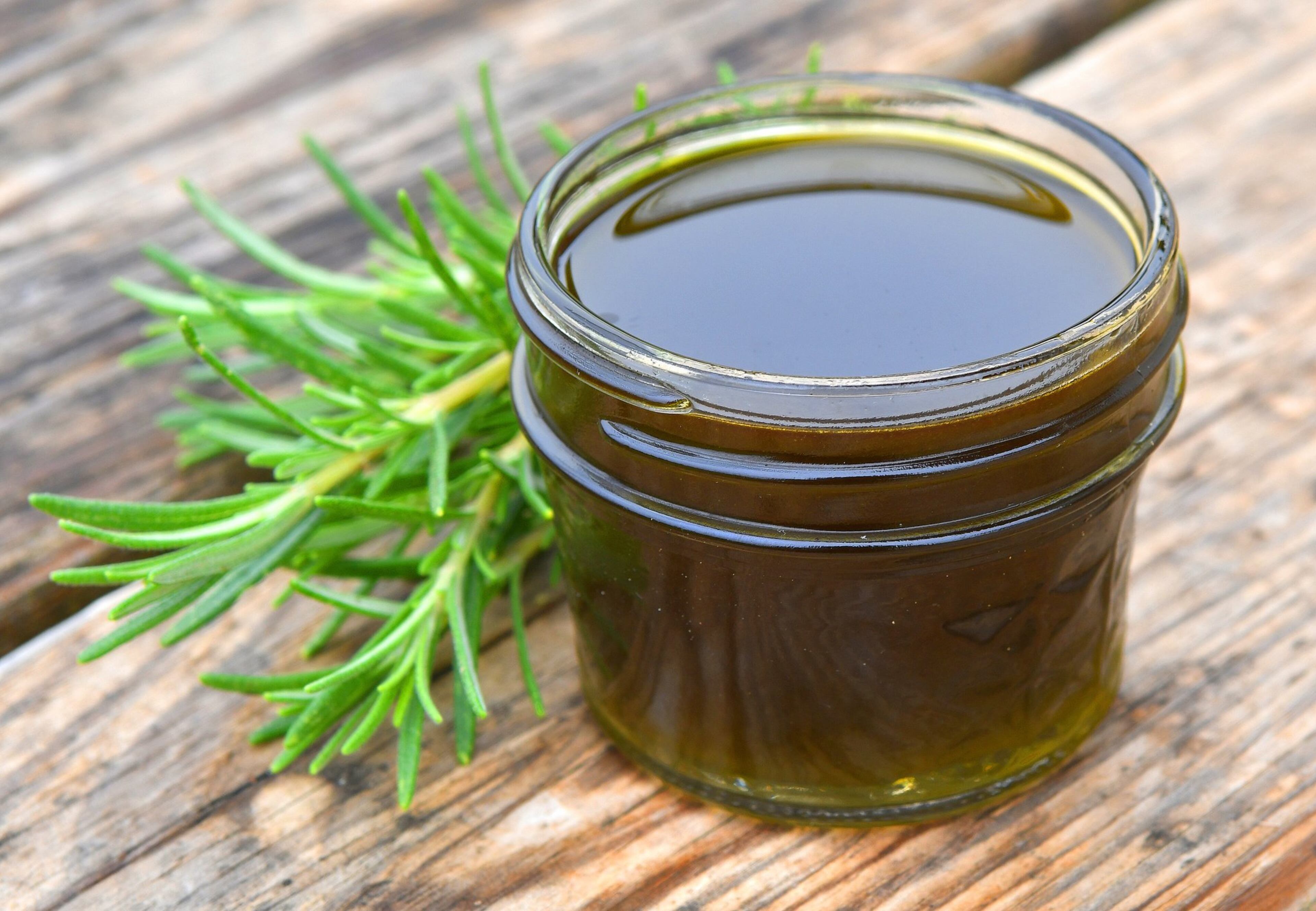
Rosemary-Infused Olive Oil
Herbal-infused oils need gentle heat, preferably around 100 degrees, to release the aromatic and other plant properties. Joy suggests three ways to accomplish this. Instead, we decided to use a sous vide to maintain the proper temperature.
Here are Joy’s suggestions:
1. Use a yogurt maker, or the “yogurt” setting on an instant cooker. Place the capped jar in either appliance, add water around the jar and let it run for 2 to 3 days.
2. Heat oven to the lowest setting. Turn off oven and put capped jar in oven. Let sit until oven cools. When oven has completed cooled, 2 to 3 hours, remove jar from oven, heat oven to lowest setting, then turn off oven and return capped jar. Repeat for two to three days.
3. Put jar in brown paper bag, fold down top, and place in a warm, sunny windowsill. This method takes the longest, about a week.
Joy notes it’s best to use dried herbs for infusing oils. “Fresh herbs contain water that could contaminate the oil. If you do use fresh herbs, let them wilt for a day before infusing and then use up the oil within a few weeks.”
- 1/4 cup dried rosemary
- 1 cup olive oil
- With a mortar and pestle or coffee grinder, process the dried rosemary until it is a fine powder. Pour powder into a glass jar and add olive oil. Put on lid and shake well. Use one of the methods in the notes to warm the oil.
- When the oil is ready, line a medium bowl with cheesecloth or a flour sack dish towel. Pour oil into bowl and use scraper to get everything out of the jar. Gather up all the corners of the cheesecloth or towel and start twisting to press the oils out and into the bowl. Continue twisting the towel, adding more pressure until you have squeezed as much oil out as possible. Discard the cheesecloth or rinse out the dish towel and add a few drops of dish detergent to remove the oil. Then launder as usual. Store in a cool, dark place for 6 months to a year. Makes 1 cup.
Nutritional information
Per serving: 120 calories (percent of calories from fat, 99), trace protein, trace carbohydrates, no fiber, 14 grams fat (no saturated fat), no cholesterol, trace sodium.— Adapted from a recipe provided by Noelle Joy of UGArden.

Holy Basil-Coconut-Dark Chocolate Bark
Making your own chocolate bark is easy and fun. Customize to suit your household’s taste but stick with dark chocolate so you can enjoy its health benefits.
- 2 teaspoons dried holy basil
- 1/2 cup unsweetened coconut flakes
- 10 ounces good-quality dark chocolate
- With a mortar and pestle or coffee grinder, process the dried holy basil until it is a fine powder.
- In a small dry skillet, heat coconut flakes over medium-high heat, stirring constantly, until lightly browned and fragrant. Remove from heat immediately and move to a medium bowl.
- In a small saucepan over low heat, melt chocolate. Remove from heat and add to bowl of coconut flakes. Stir in holy basil and mix well. Pour mixture out onto a silicone baking sheet or parchment paper and spread to desired thickness. Let mixture cool completely, then break bark into pieces and store in a cool, dry place. Makes 3/4 pound.
Nutritional information
Per serving: (1 ounce) 146 calories (percent of calories from fat, 53), 1 gram protein, 16 grams carbohydrates, 2 grams fiber, 9 grams fat (trace saturated fat), 2 milligrams cholesterol, 16 milligrams sodium.— Adapted from a recipe provided by Noelle Joy of UGArden.
RELATED:
Read more stories like this by liking Atlanta Restaurant Scene on Facebook, following @ATLDiningNews on Twitter and @ajcdining on Instagram.