
Invesco exec says she once fell into trap of underestimating her abilities
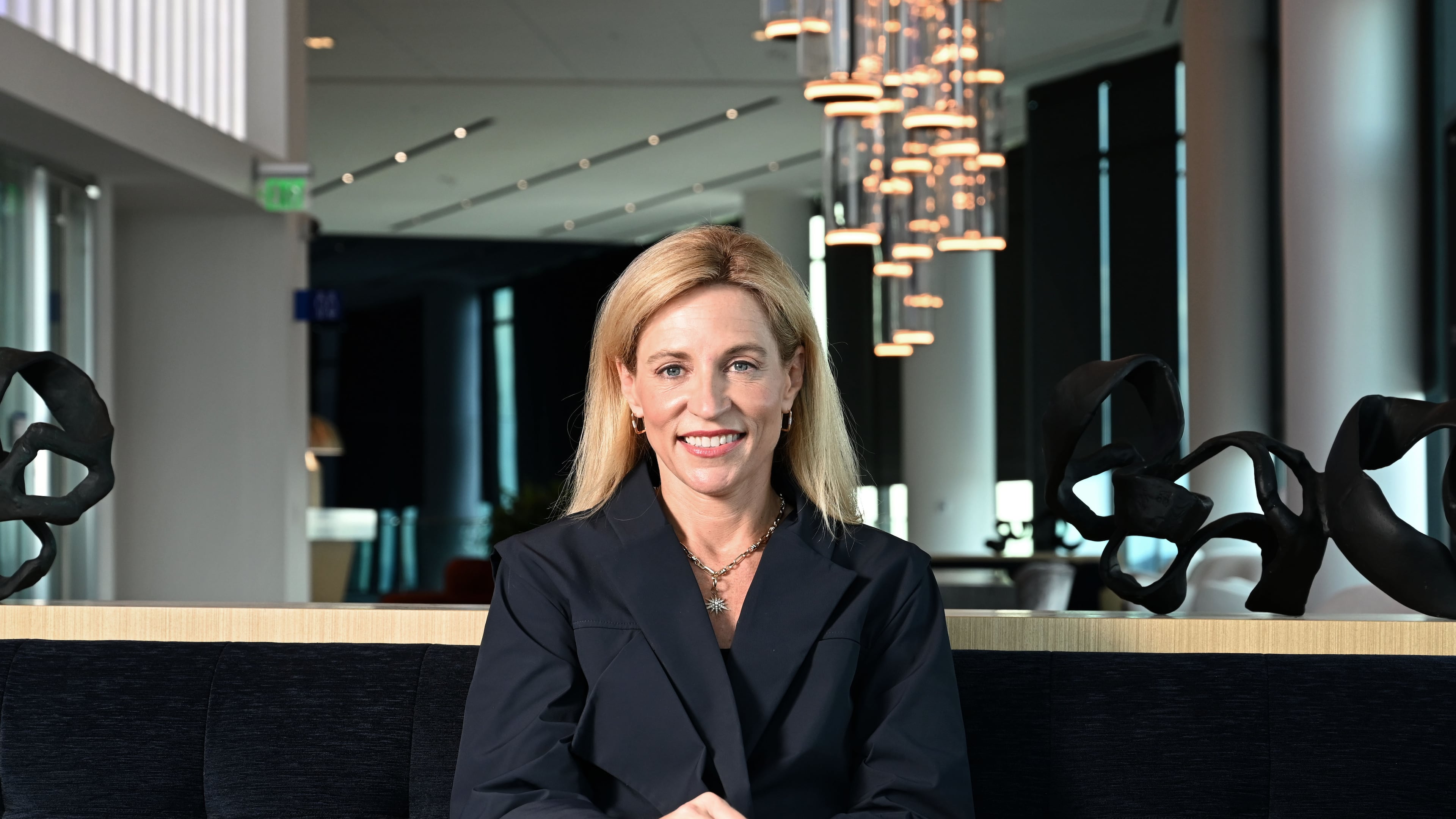
As a math major in college, Allison Dukes had her eye on a career in banking or investment banking. She got her chance through a SunTrust training program nearly 30 years ago.
But after starting her job at the Atlanta-based bank, “What I found that I really enjoyed so much about banking wasn’t the analytical side of it, but it was the clients. It was the relationships,” she said.
That experience shaped her path to the role of chief financial officer at SunTrust.
After the bank in 2019 merged with BB&T and became Truist, moving its headquarters to Charlotte, North Carolina, Dukes opted to stay in Atlanta.
So in 2020, she took a job as chief financial officer of Atlanta-based investment management firm Invesco, known for mutual funds like the Invesco QQQ tech fund held by investors through their 401(k)s.
From her early days at SunTrust, Dukes worked in investment banking, focused on corporate clients — and found she loved learning about the businesses they led.
“I was really intrigued by the opportunity to work with those different management teams,” Dukes said. “Just learning, watching them, watching how they manage their businesses, how they led in times of uncertainty and how they built their strategies.”
“I felt like I got to have a front-row seat to lots of different businesses and lots of different industries,” she said.
At Invesco’s Midtown headquarters, Dukes, 51, sat down with The Atlanta Journal-Constitution to share her views on what it takes to get on a path to the C-suite, what she learned when she made a brief foray into the startup world and how she makes trade-offs between her professional and personal life.
Edited for length and clarity.
Q. It seems like there are a variety of types of pathways to an executive role at a bank or a financial firm. I’m curious about your thoughts on that.
A. I might take that more from the angle of financial services broadly. …
I think that the path to an executive role, and certainly the path to a C-suite at a financial services firm, really depends on your ability to understand how to create value, both for clients and for shareholders.
Q. I wanted to ask you about early in your career, your departure to join a startup — and why you decided to do that — what that was like?
A. That was a little two-year departure early in my banking career. … That was the late ’90s (and) right there at the beginning of 2000 when it was really the advent of the dot-com boom. …
I was young, I was single and it was an awesome opportunity to join as I think the fourth or fifth employee of (legal services company) Axiom Global, which is still a thriving firm today. … It was a gamble to join as the director of finance.
We were wrapping up our business plan and building out our strategy and landing our first client. And I’ll never forget when we actually closed our first transaction, and everyone looked at me and said, “I think we need to send them a bill.”
And I was like, “I could do that. I could figure out how to generate an invoice.”
It was truly the first building blocks: We were working out of someone’s guest bedroom. …
We definitely faltered here and there, a small team sometimes making it up as we went along, and then having to figure out how we were going to turn that into something that was successful.
I left after only two years, mainly because I felt like I had more banking in me. I missed being in front of clients.

Q. What is your advice for people who are navigating their personal life developments and what that means for their career?
A. You do have to make trade-offs, and you do have to find balance, and you do have to reevaluate your circumstances periodically, regularly, and make sure you’re satisfying the needs of both your career, but also your personal life and your family. …
For me, my family is incredibly important and just a massive part of who I am. And so, there have been multiple times throughout my career where I’ve evaluated the table and looked at everything we had going on and made some decisions around what I wanted to trade.
Sometimes it was trading for more time at work. Sometimes it was trading for more time with my family. …
I’m better at my work when I’m really happy, and my family makes me really happy, and work makes me really happy. And I’m better for my family when I am really fulfilled in my career.
Q. Can you tell me about the Invesco Women’s Network, what it does and why it’s important?
A. It was (started as) Invesco’s first foray into creating networks for people to connect with people that had shared experiences. …
I spend a lot of time talking to young women about careers, in finance in particular.
We still don’t attract as many women into financial services as we would like. I think a lot of women self-select out early, like in high school, where they determine that they’re not finance people, or they’re not as mathematically or quantitatively oriented.
I’m often trying to fight that narrative with young women, that it isn’t as quantitative as they might have told themselves. Not every field is, or not every part of financial services is. It’s really much more about strategy and how you think, and how do you connect with people, and how you really can create value through a disciplined thought process.
And I think women make terrific leaders in financial services, but we’ve got to really start with getting more young women engaged and retaining them through the life cycle of a career. …
Early on, I was a little reticent to make jumps into areas that I was unfamiliar with. … I underestimated my own abilities in that and probably fell into the classic trap of thinking I needed to be 100% qualified. And found that I got pushed out of the nest more because other people saw something in me.
Q. What’s your favorite restaurant for a business lunch?
A. Blue Ridge Grill has been such an institution in Atlanta for decades now. Easy to get to, easy to get in and out of. They serve a great lunch, and they understand you’re on the clock, so they get you in and out, but with terrific service.
Q. What do you love most about Atlanta?
A. I was born at DeKalb General, which is now Emory (Decatur) Hospital, and my parents were raised here. My grandparents lived here. … What is now SCAD was once my great-grandparents’ house on Peachtree, when there was no highway running through the backyard. …
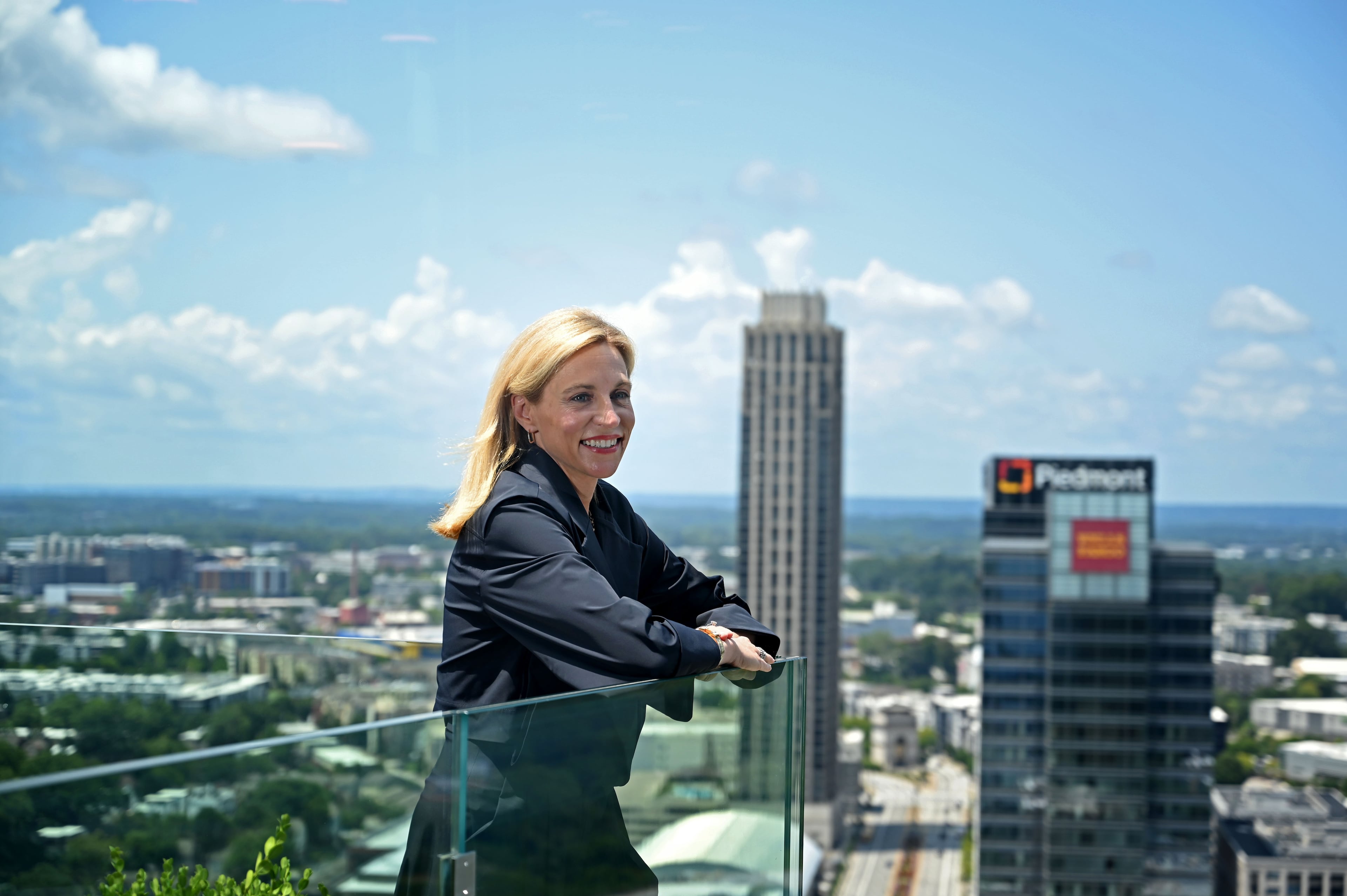
So, I love the history of Atlanta. … I love the fact that it’s a thriving city with an incredible business community tucked into a very livable, almost suburbanlike landscape.
I love “the Atlanta way.” I really feel committed to the Atlanta way, that Atlanta’s roots are really anchored in the leadership of the business community, and that business leaders in the city have a long history of working together collaboratively to advance the city forward.
I feel a great responsibility to continue that, to be a part of that.
I look around at what makes the city great and the stories of the leaders who made hard decisions and made bold decisions at times, but they weren’t always clear or popular. …
So I find that there are a lot of us natives that are still here, but we’ve had millions of people join us. And it’s the kind of city that welcomes everybody, and it’s what makes the city so great.
Q. What’s an example of a bold decision that wasn’t necessarily popular initially?
A. The stories around when Martin Luther King won the Nobel (Peace) Prize, and leaders in this town were the ones who went door to door and said, “You will show up at the Nobel Prize ceremony downtown in the hotel ballroom. We will be there.” Even when that was a time that there was racial division in the city and the business leaders in the city, I think, really led from the front. …
That was a pivotal moment, not just for Atlanta but for U.S. history, and there were some great leaders that made sure the right things happened in that moment.
AJC Her+Story is a series in The Atlanta Journal-Constitution highlighting women founders, creators, executives and professionals. It is about building a community. Know someone the AJC should feature in AJC Her+Story? Email us at herstory@ajc.com with your suggestions. Check out more of our AJC Her+Story coverage at ajc.com/herstory.