
Her firm was targeted by the anti-DEI movement. Now she’s telling her story.


Three years ago, when a lawsuit was filed in federal court against her investment firm, Arian Simone said she didn’t know how irrevocably her life would be changed.
Now, Simone is telling more of her story.
In her new book, Simone details the legal battle that made her and her Atlanta-based venture capital firm Fearless Fund the first targets in the fight against corporate diversity, equity and inclusion programs.
Amid the pandemic and after the killing of George Floyd, companies and institutions vowed to help the economic conditions of Black Americans.
Fearless Fund was founded by Black women to invest in women of color. Through its first venture fund, Fearless invested $26 million into dozens of startups founded by Black, Latina and Asian women. At least eight of those startups were based in Atlanta, including Slutty Vegan.
But in August 2023, the conservative American Alliance of Equal Rights sued Fearless Fund and its foundation over a $20,000 small business grant program the VC firm’s nonprofit provided to Black women entrepreneurs, alleging it was discriminatory against non-Black businesspeople.
The suit came as Donald Trump, seeking to return to the White House, made the battle against DEI efforts a key part of his campaign.
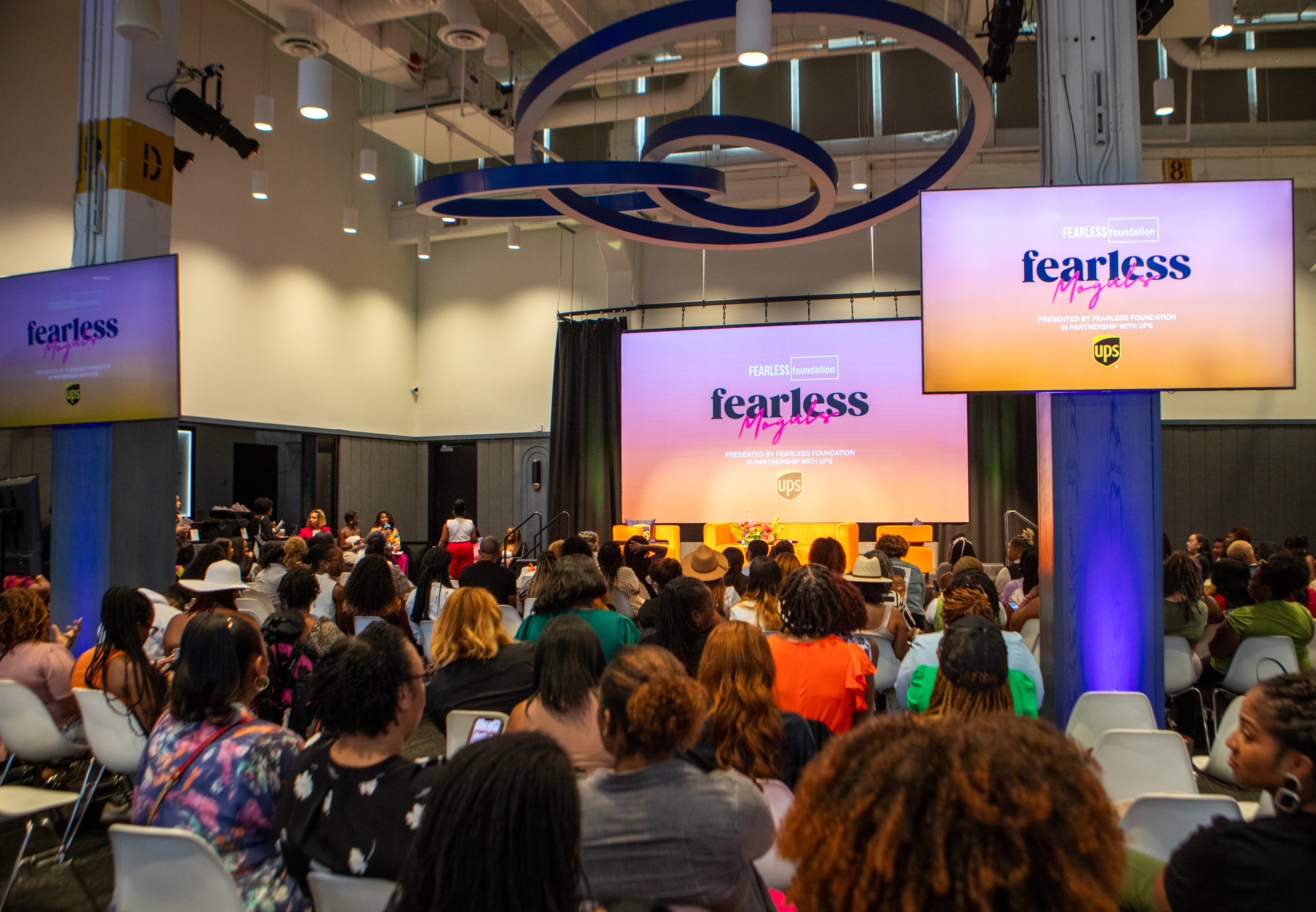
After a year of federal court hearings and legal motions traded back and forth, Fearless and the Alliance settled the lawsuit, ending the grant.
“As of today, the Fearless Fund has permanently closed the grant contest and will never reopen it,” the Alliance said in a statement at the time.
In “Fearless Freedom: A Manifesto for Unlocking Wealth and Equality for All,” Simone walks readers through each of the case’s key dates as well as the quieter, more difficult personal moments she said she faced navigating the legal battle.
She also weaves in her upbringing in Detroit, the civil rights leaders like Rosa Parks and Betty Shabazz, the wife of Malcolm X, who she grew up around, and lays out her thoughts on business, venture capital and the policies she believes can help people achieve economic equity. The book comes out Tuesday.
Simone spoke with The Atlanta Journal-Constitution ahead of her book tour stopping in Atlanta. She will be in conversation with Stacey Abrams, who wrote the afterword for the book, on Saturday at the Decatur Book Festival. Simone will stop at New Birth Missionary Baptist Church in Stonecrest on Sunday.
This interview has been edited for length and clarity.
Q: When I was reading the book, I was struck by how many things were woven together. It kind of felt like part memoir, part VC guide, part history book, part manifesto, and so I’m curious, what was your impetus to to even write the book?
A: I wanted to write this book because, one, we are at a time where African American history is being abolished in many places, so I wanted to make sure that this story was documented because it’s very important for people to know what took place. Also, I wanted to write this book because I feel that through the experience that I went through, that people also need a guide of how do we move forward. We work in the space of reducing the wealth gap, but what does that really mean and what is the solution for us to really get this reduced? So I wanted to provide some practical solutions.
Q: What was the writing process like for you?
A: I started writing a book, actually, even about building the fund in (either 2021 or 2022). In the process of writing, I got interrupted with the court case. I started writing a book about not just building a fund, about economic justice. Because my experience even building the fund, I felt some days like we should have just put on army fatigues, as I stated in the book, to go to work. …
In the original writing, when I first began, I offered solutions then for economic justice. They just became more expounded upon because I was living through the experience.
Q: You give us insight into the emotional and social toll that the lawsuit had on you. Very high stress, you became wary about who to trust, you were hounded by TMZ off a flight. How are things now for you?
A: Things now are wonderful. There are people who recognize me in public and they thank me for our great work. It’s not as intense as it was during the court case, thank God.
Q: When you were writing, who were you imagining would be reading this book?
A: That became a large discussion, even with the publishing team. I explained to them that people in the startup space would be people who are reading it. People in college, I definitely said, would be people who are reading it. … There were so many people during the court case that said, ‘I’m studying you in school right now.’ So I knew from an undergrad and a law school level that there would be many people who would be reading the book because I still get stopped to just say, ‘Oh my gosh, you were my case study in school.’ … So it just shows you just the weight of what was going on at the time and how we have been in a very pivotal inflection in today’s economy, society and climate.
Q: What advice would you give to women of color now trying to start a business or get funding in this current political and economic climate, with everything that you have experienced and know?
A: The reality is it’s always been difficult for women of color raising capital. That’s why we do the work that we do. I can’t say that the advice would be much different than the advice I may have given, honestly, in 2019. … There were many obstacles and barriers for access to capital to women of color, and unfortunately, they just still exist today. So, women of color starting businesses, they’re aware of what the landscape is, and I’m just so happy that it just never discourages them in their pursuit, we just continue to work through them. But I would let them know that there are still funding resources out there that will definitely support them in their journey.
Q: And is Fearless Fund still funding female women of color business owners?
A: The work of the Fearless Fund is the same, and we’re even doing the work globally. … We are still cutting checks. We are still investing. We still have our loan program going on. We haven’t stopped anything. … It’s not illegal to fund women of color, and we still do it.
Q: In the book, you write that you thought that the increased exposure from the lawsuit would boost your funding, but then you say, ‘Boy, was I wrong. …’ What exactly happened there?
A: The reason why I was wrong, I wasn’t aware that we were on the verge of an anti-DEI climate. … I wasn’t aware that the climate had shifted because we are the first court case in the anti-DEI war. We’re the ones right after the (U.S. Supreme Court) ruling for affirmative action being abolished at all the universities that took place in June of 2023. I thought the climate was still very pro-DEI, mind you. In the book, like I said, I was DEI darling. I’m on the Bank of America’s website, homepage. People go to check their bank accounts, they see me. I’m in national commercials. I mean, all the corporations, they were parading my image around, and I was still thinking we were in that moment. I’m like, ‘Oh, they sued us? … Oh, they’ll see really quickly. People will start investing.’
I had no clue we were the beginning of an anti-DEI movement.
Q: And at what point do you feel like you realized, ‘Oh, this is not just one court case. This is a movement.’
A: When I found out that our investors were getting threatening letters, I realized something else was going on, and I found that out very early in the court case. When I started seeing other people get sued after us. When I saw my good friend Elizabeth Gore (co-founder and president of financial technology company Hello Alice) get sued for helping Black entrepreneurs, who is a Caucasian woman. She got sued a few weeks after me. So that’s when I realized, oh, something else is going on here. This is not an individual lawsuit.
Q: What do you hope people are left with after reading your book?
A: That they have the empowerment to affect change just right where they are, and I have a chapter dedicated to that, you know, it doesn’t serve the world when anybody is just shrinking and not operating in their full selves. That the new leader that everybody is looking for is actually you.
Q: You grew up around a lot of politicians, a lot of activists, a lot of movement folks. What lessons do you feel like you learned from Mrs. Rosa Parks and Dr. Shabazz and all the people who were coming through your home?
A: You have the ability to affect change right where you’re at, because all of those people did just that. They had what I would call your everyday careers, and yet they are our leaders and our figures and our faces of different eras of the Civil Rights Movement, but yet, they came from everyday careers. And that’s something that it showed me. These people were not celebrities; they were not even high in society. They were your everyday working person that just chose change and knew that they could affect change, and I think that is just so beautiful.