
She started as a clerk at Norfolk Southern. Now she’s a top executive.

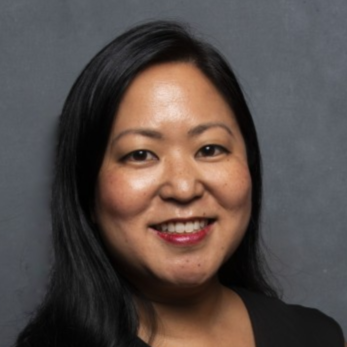
From her office on the 12th floor of Norfolk Southern’s skyscraper in Midtown Atlanta, a big part of Dianne Barnett’s job as chief mechanical officer is to improve safety of the Fortune 500 railroad.
Follow the tracks from Atlanta about 150 miles west, and that’s where Barnett’s career with Norfolk Southern began, as a stenographer clerk in Birmingham, Alabama.
That’s where she grew up, and where Barnett’s father was a locomotive supervisor who encouraged her to go to a Norfolk Southern hiring session.
“I explained to the hiring manager that I really wasn’t interested in being a stenographer clerk because I wasn’t sure what it was,” Barnett said. “He told me they really were in a pinch, and if I could just, you know, help them out for a little while, I wouldn’t be in the department for very long. There would be many other opportunities for me to move on to other positions.”
Within a few months, Barnett became a locomotive supervisor, then advanced to other positions in cities all over Norfolk Southern’s rail network — and eventually to the Atlanta headquarters.

In the past year as Norfolk Southern prepares for a merger with Union Pacific, Barnett has advanced from senior director of mechanical to assistant vice president, then became chief mechanical officer in June.
After the merger, Norfolk Southern’s Atlanta headquarters is expected to be left with less than half its current management positions within three years. But Barnett said, “We’re continuing to progress. … The combined company, just like Norfolk Southern, is interested in the best talent.”
One of her key missions is improving safety through technological innovation. The need for safety improvements became starkly urgent after Norfolk Southern’s toxic derailment of a train in East Palestine, Ohio, in 2023.
“East Palestine was a moment that was really a game changer for us in terms of like how we looked at safety,” Barnett said. “We’ve always been very safety conscious, but we saw that we had other opportunities.”
Since then, the railroad has worked on a number of improvements — including the rollout of digital train inspection portals that use artificial intelligence and technology developed with the Georgia Tech Research Institute to detect potential defects.
“The portals have been hugely successful in terms of improving our safety operation from a proactive standpoint, but now it’s always pushing (for) what’s next,” Barnett said.

Barnett, who is part of Norfolk Southern’s Women in Operations Steering Committee, isn’t an engineer or a machinist. But she has been through training for electricians for locomotives as well as some machinist training.
And part of her career was spent at Atlanta’s Inman Yard, where she ran the day-to-day operation handling the locomotives.
She said one of the key lessons she has learned in her path moving up the ranks is “you have to be willing to roll your sleeves up.”
There’s a difference between working on a locomotive in a climate-controlled shop and “something at 2 a.m. and it’s snowing sideways, and you have to go find where the train is broken down,” Barnett said. “So these are things that you cannot be afraid to experience yourself.”
Barnett sat down with The Atlanta Journal-Constitution to talk about mentorship, her favorite place for a business lunch in Midtown and a work experience that prompted her to draft a resignation letter.
Edited for length and clarity.
Q. What is a typical day like for you?
A. I’m an early, early riser, and typically I do my devotion early. … And then I essentially start looking at reports, anything that has occurred overnight that I need to address. I’m on call 24/7.
Then I’m in the office normally before 5:30 (a.m.) — if there’s anything that’s critical that we need to really focus on, making sure that we’ve got the proper resources that are en route to address issues. …
We are always trying to figure out: How do we keep our people safer?
Throughout the day, (I’m) also meeting with vendors, collaborating with them on reliability issues.
Q. What are the hardest parts of your job?
A. At times, it is getting people to understand their potential. I think people are accustomed to quick wins. Things that are more challenging, sometimes they tend to throw in the towel.
(Also), we’re all alpha types. So sometimes it is being in a situation with other departments where you’re not necessarily seeing eye to eye, and just being able to step back.
(And) the primary challenge would be just making sure that we’ve got the resources … in terms of retention, in terms of succession planning. That’s probably the most challenging thing, truthfully.
Q. Do you meet young people who want to follow in a similar career path, and if so, what’s your advice to them?
A. I do. … (At) Norfolk Southern, we have so many different titles and occupations that you can explore. We’ve got pilots and doctors and nurses, etc.
They have to take the first step, and then when they get in the door, they can’t be afraid to roll their sleeves up. It’s going to be work, but nothing worth having is not work.

Q. What’s your favorite restaurant for a business lunch?
A. STK is a very nice restaurant. The ambiance is good. I think most people love steak, and it’s a relaxing atmosphere.
Q. What do you love most about Atlanta?
A. There’s so much to do. Atlanta is full of smaller communities. You don’t really have to leave your particular neighborhood to find great restaurants, shopping.
Q. What breaks your heart about Atlanta?
A. I have had my (8-year-old) daughter with me sometimes, and we’ve come through downtown — and having to explain to her why there are people that don’t appear to have homes.
And explaining to her that she’s very blessed, and there are so many people that are blessed, but everybody doesn’t have it that way.
She helps put together goodie bags. Like if we’re going to be coming here, she may say, “Hey, can we make sandwiches?” And so, just that’s one of the things that breaks my heart about the city.
Q. What’s one mistake that you’ve made that transformed how you approached your career?
A. When I worked at our Atlanta facility here at Inman Yard, I was filling in for my supervisor who covered the division, which essentially was Georgia, Florida, North and South Carolina.
That was nine days of me covering four states, and there’s a lot that can happen in four states.
I just didn’t feel things went well. If there are train delays for whatever reason, if there is an incident like a derailment that took place that my team couldn’t readily identify what was the cause within a 24-hour period … I felt like I was not meeting my own expectations.
I’m my harshest critic. I’m like, ‘Oof. By the time he gets back, he’s going to definitely fire me.’
So I, at one point, had written out my resignation letter.
When he came back (I said,) “If I were you, I would fire me.” So I give him this letter. I kind of explain, it just didn’t feel like it went well.
And he looked at the letter … he says, “I’m going to give this back to you, and I don’t want you to ever do that again. So we’re going to forget that you even did it; I’m going to ignore it. We’re going to keep moving along.”
And what that taught me was, I have to give myself grace.
I don’t know everything; I’m really not supposed to know everything. There’s no one person that is singularly capable of doing all things. …
I grow. I learned from it. Don’t let it happen a second time.
Q. How do you approach mentorship?
A. I think it’s done best when it’s organic. …
One of my earlier supervisors — I would get off work, I was covered in oil from working on locomotives, and periodically he’d just say, “Come to my office before you leave.” …
He would just talk to me about how things are going. … He’d ask me about my family. … He would ask me about my dog. …
He would inject career tips, but he also talked to me about me — and what moved me and what drove me.
AJC Her+Story is a series in The Atlanta Journal-Constitution highlighting women founders, creators, executives and professionals. It is about building a community. Know someone the AJC should feature in AJC Her+Story? Email us at herstory@ajc.com with your suggestions. Check out more of our AJC Her+Story coverage at ajc.com/herstory.