Norfolk Southern doesn’t have the crews to keep trains moving, union says
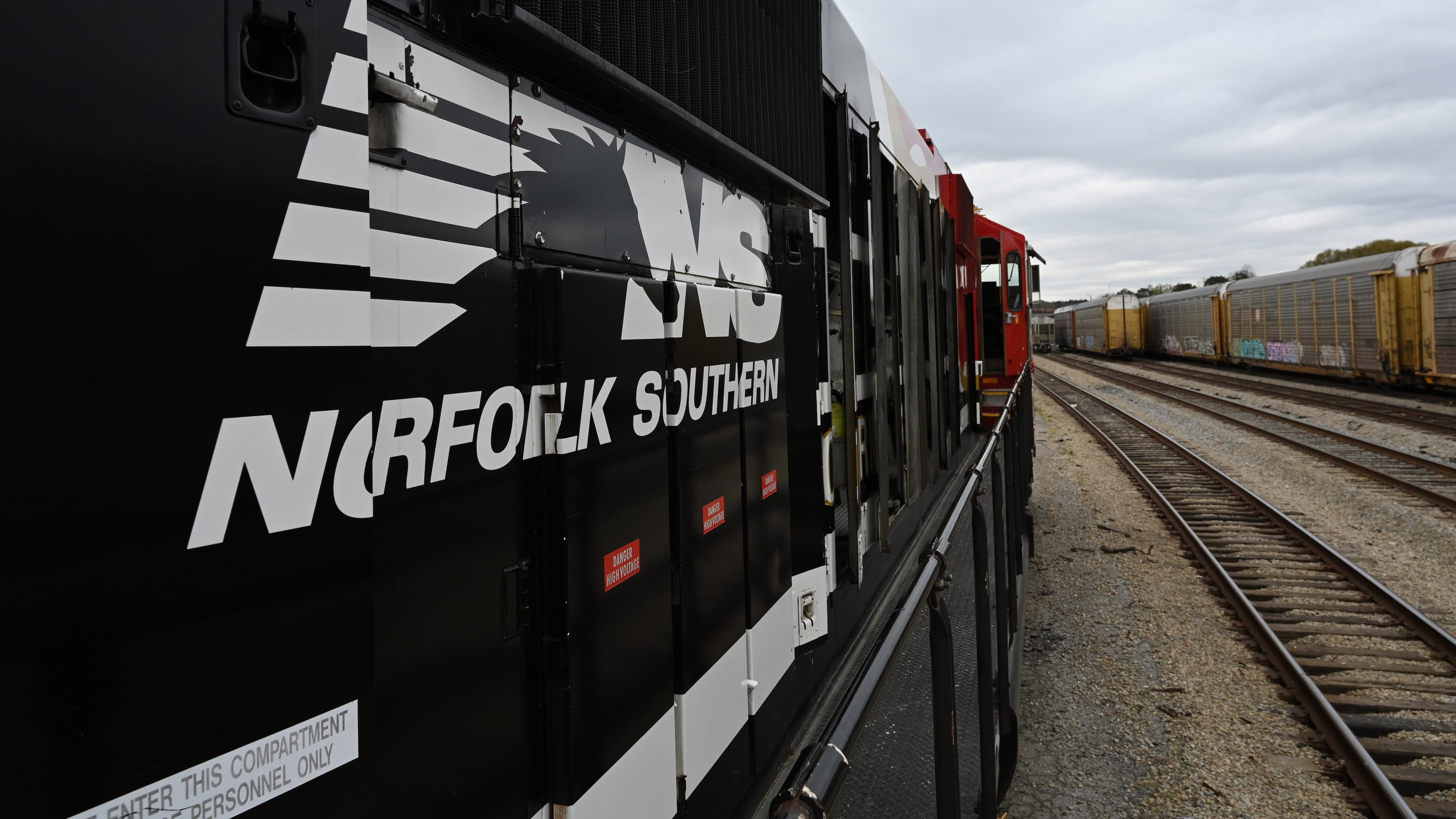
Norfolk Southern has been in the thick of trying to get an unprecedented merger approved that could have a generational impact on the nation’s railroad industry.
But it still has a railroad to run. And for the last few months, that operation has had some struggles.
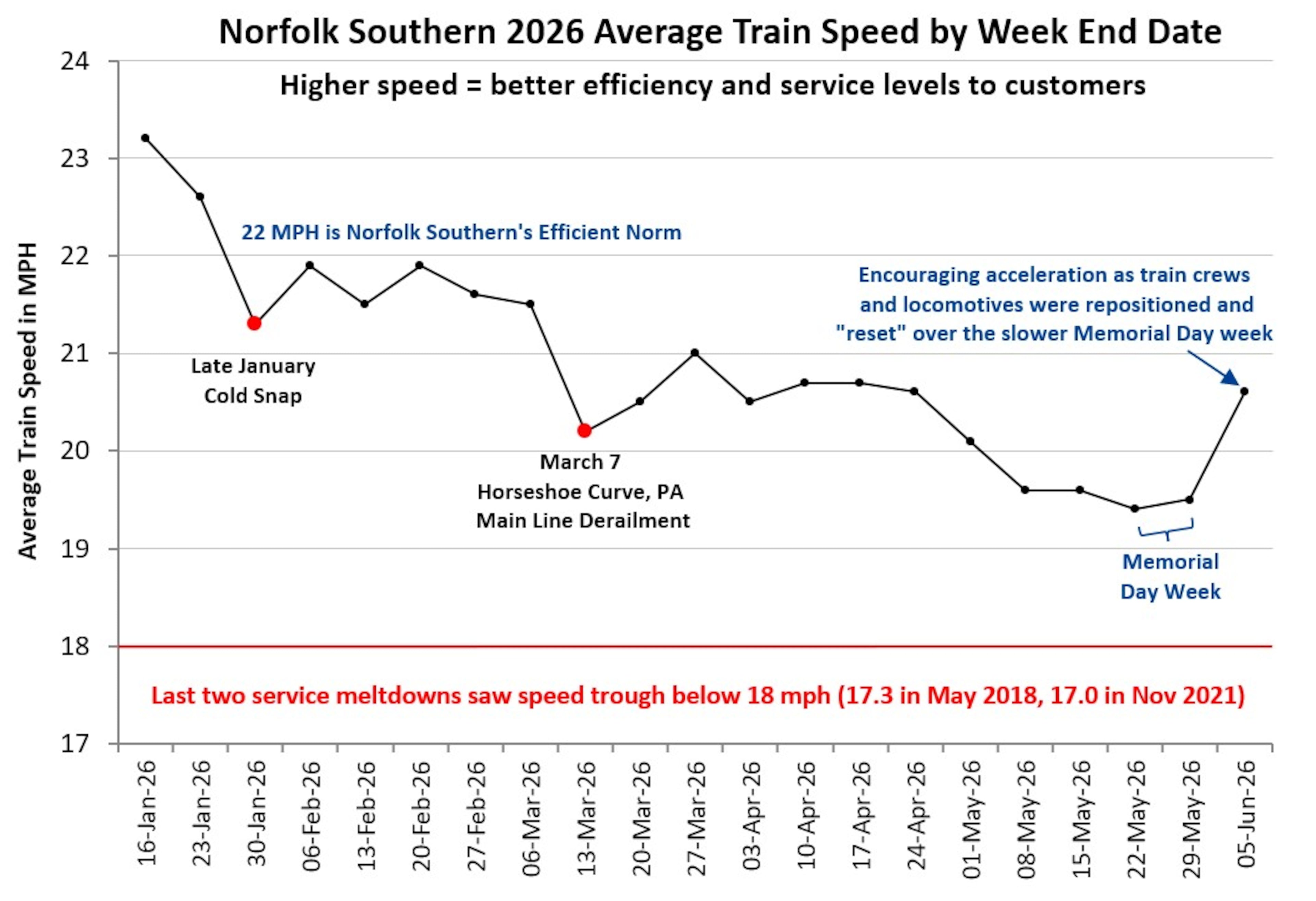
The Atlanta-based rail giant in May saw a dip of about 20% in network velocity since Christmas, a key indicator of service performance that shows how fast its trains are moving.
And at the end of last month it announced the sudden resignation of Chief Operating Officer John Orr, who had been brought in amid investor pressure following the 2023 East Palestine, Ohio, derailment.
Norfolk Southern is a prominent Atlanta employer and an important cog in the U.S. economy, moving about 7 million railcar loads of freight across its 22-state eastern U.S. network last year.
The railroad has blamed a few months of tough winter weather for the slowdown, as well as unexpected freight demand. That surge was triggered by spiking fuel prices that have driven more freight onto rail from trucks.
Norfolk Southern also noted to The Atlanta Journal-Constitution that last week its velocity started to tick back up.
But one of its largest unions says the network is struggling because there aren’t enough crew to keep trains moving — and the shortage is the worst some of its leadership have seen in decades.
The railroad “doesn’t have the needed manpower to keep trains running the way they should. They can’t run normal operations,” Brotherhood of Locomotive Engineers and Trainmen National President Mark Wallace told the AJC in a statement.
BLET has more than 4,600 members at Norfolk Southern.
While all train crew are guaranteed rest days between trips, the union says many of its members have struggled to get planned time off such as vacation days approved by the company because of the shortage.
“It’s hard to retain new hires, younger workers are walking away, mid-level folks are quitting. The workforce that has remained is exhausted. Engineers and other railroaders can’t get time off — even for a day,” Wallace said.
One member, he noted, was told he wouldn’t be allowed to take time off to attend his daughter’s medical school graduation. Another had trouble getting bereavement time approved when his father unexpectedly died.
The $85 billion acquisition of Norfolk Southern by Union Pacific is expected to trigger cost savings and potentially thousands of lost white collar jobs in Atlanta, but the railroads have promised all union jobs will be protected.
Norfolk Southern told the AJC the notion it is unable to staff its operation is inaccurate. Its other major crew union, SMART-TD, declined to comment.
While SMART has endorsed Norfolk Southern’s proposed merger with Union Pacific, BLET has taken a strong stance against it.
But Wallace flagged, operational issues could also cause backsliding for the railroad’s safety metrics, something his and other unions have previously warned the merger could threaten.
Orr told investors on an April earnings call that “extreme and network-wide winter weather in the first quarter tested the network.”
“Our focus remains on improving our train speed while maintaining balanced discipline around energy management and service levels, a core operational priority,” he said.
Norfolk Southern CEO Mark George added, “We told you at the beginning of the year that we were focused on preserving safety, maintaining service, and controlling costs while we were going to fight for every dollar of quality revenue we could. We did exactly that in the first quarter.”

‘Not out of the woods’
The network health has been “in free fall since February,” independent rail industry analyst Rick Paterson wrote in a recent report on the nation’s railroad networks.
While around Christmas Norfolk Southern’s network velocity was more than 24 mph, it had fallen to more than 19 mph in the last week of May, he noted.
He said the network’s last two service “meltdowns” saw velocity slow to around 17 mph.
Norfolk Southern’s velocity ticked back up to more than 20 mph last week, which is “encouraging,” he told the AJC in a follow-up interview.
“It’s the best outcome we could have hoped for. It does hint that they may be able to reverse the deceleration in the network and spin it up,” he said. “They’re not out of the woods but there are fewer wolves circling.”
In response to Paterson’s analysis, Norfolk Southern spokeswoman Heather Garcia said, “We’ve been transparent about having had a period of operational pressure over the past several months that we are managing through.”
“Of course, velocity matters, but it’s not the full story of service performance, which is why we’re focused on improving performance in a disciplined and sustainable way, including resource management and hiring,” she added.
As to the reasons behind the slowdown this year, Paterson said the merger can’t be ignored.
“Service stability has been a challenge at this company, and what we’re now seeing, we suspect, is that because it’s engaged in a potential merger with Union Pacific … it’s under intense pressure to keep the financials strong,” he said.
“That involves keeping operating margins and profit margins strong, and that requires cost cuts. Cost cuts requires lower head count, and that’s a dangerous game to play in this industry.”
Paterson points to the company’s total train and engine employee headcount, the employees responsible for keeping the trains moving.
It was at a four-year low in March, he said, based on data reported to the Federal Railway Administration.
The danger, he said, is when headcount isn’t ready for unanticipated freight volume spike.
“It takes about six months to train a train conductor. So handling volumes now requires a forecast that volumes would improve six months ago,” Paterson said.
“But six months ago the outlook was very dim. You can’t predict wars, you can’t predict a spike in fuel prices. You can’t have predicted the sheer scale at which truck pricing has exploded.”
Garcia, the Norfolk Southern spokeswoman, responded that the railroad is continuing to hire and brought on 1,400 conductor trainees in 2025.
But, she said, “Many of the inputs driving today’s performance were set months ago during a very different freight environment.”
“Additional business is a great signal, and we’re actively aligning crew resources to current demand levels with intention of targeted efforts to increase hiring,” Garcia said.
“The unions will give a more dire version of reality,” Paterson said. “The railroads will say everything is fine. The truth is always somewhere in the middle.”
Norfolk Southern’s recent operational struggles have coincided with COO Orr’s resignation on May 31.
Wallace said that crew headcount has dropped “under John Orr’s directives.”
“How much of that is related to the proposed merger with Union Pacific, we don’t know,” he added.
Orr resigned, the company stated, “on account of proposed changes in the Company’s operations that would result in a diminution of his duties and responsibilities.” Norfolk Southern declined to provide a further explanation.
He will continue to serve as an adviser through the completion of the proposed merger or June 1, 2027, whichever comes sooner. And he is eligible for a $2.25 million payout if the merger is completed — and eligible for his severance package now.
His exit is a “huge deal,” said independent rail industry analyst Tony Hatch. “He was sort of their operating savior after East Palestine.”
“I would assume the morale is not great in Atlanta. This is probably not helpful to that,” Hatch added. “It makes people wonder what’s going on there.”
The company’s chief mechanical officer, Brian Barr has been named the new COO.
Garcia said: “This team — Brian Barr as our ops lead, VPs with deep experience, and railroaders who know how to get the job done — understands how to stabilize performance, and they’re executing plans now.”