Shortcuts transform bo ssam from a party dinner to a weeknight meal
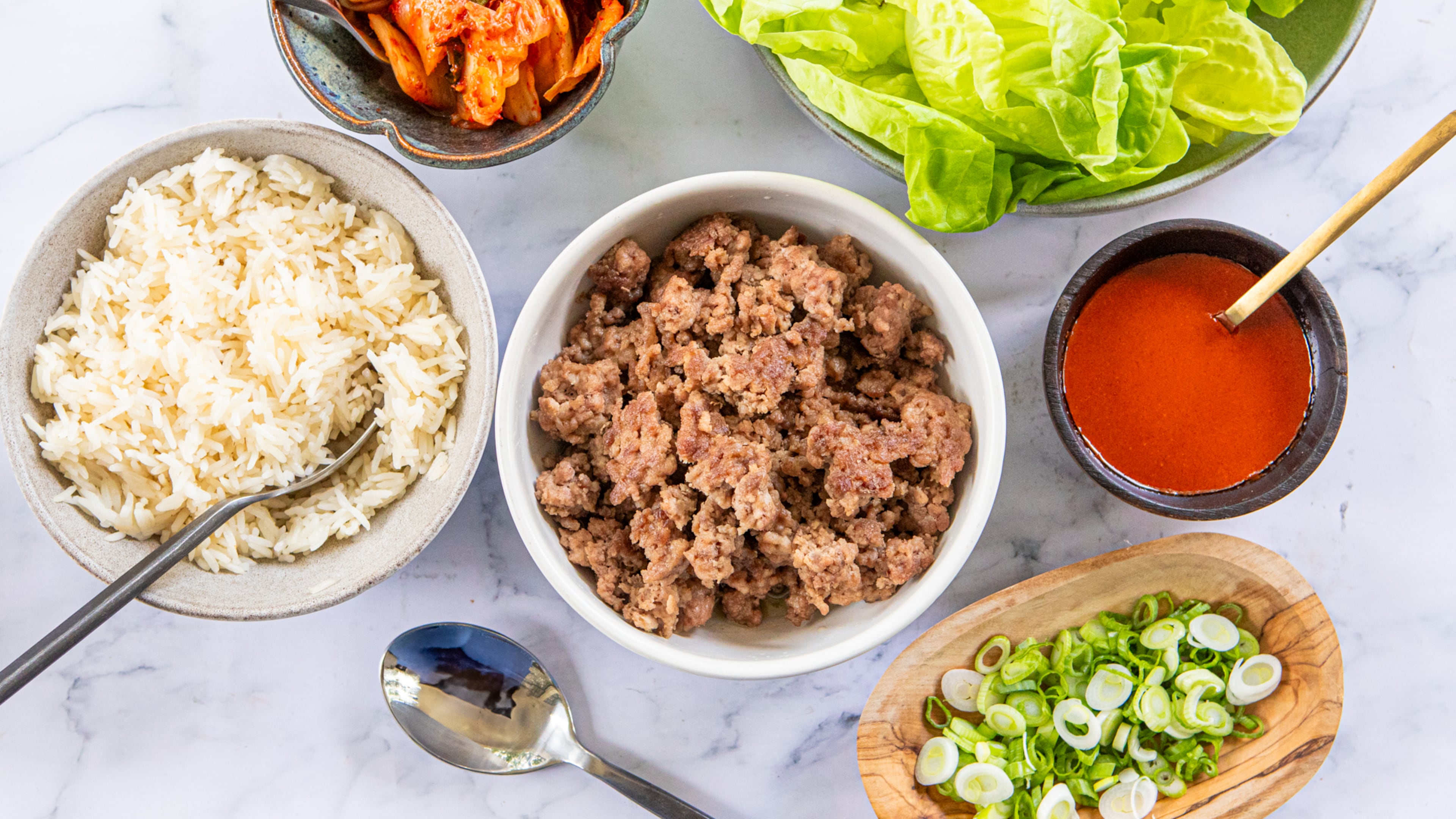
Bo ssam, a Korean family-style dish that pairs tender pork belly, leafy wrappers and a table of accompaniments, makes a fun dinner party meal. But what if you want to bring the dinner party vibe to a weeknight? It’s possible if you take these shortcuts.
How to prepare quick-cooking ground pork for speedy bo ssam
Instead of boiling pork belly or roasting a bone-in shoulder, both of which take at least an hour — if not several — to turn tender, use ground pork. It cooks in just a few minutes and, when cooked properly, is both juicy and crisp.
The trick is to cook the pork like a giant burger: Heat a slick of oil over high heat in a large skillet, then add the pork in a single thin layer. Now, here’s the most important part: Don’t touch it. Leave the meat to sizzle and brown on its own. Disturbing the meat (and/or seasoning it with salt) now will cause it to release more of its juices into the pan, creating steam, which impedes browning.
Once juices begin to pool on the top of the meat, the bottom should be deeply browned. From here, season with salt and use a spatula to break up the meat into bite-sized pieces.
Turn gochujang into a simple, spicy sauce
While a traditional bo ssam meal includes multiple sauces, that’s not possible in a streamlined 5:30 Challenge recipe. Instead, choose a sauce made with spicy gochujang for the most impact. Gochujang is a fermented paste made from chiles, soybeans and glutinous rice.
When shopping, look for gochujang paste in a red tub instead of gochujang sauce, usually in a tube. Depending on the brand, gochujang sauce can contain a wide range of additional ingredients; using the paste ensures consistent results. Balance gochujang’s heat and make it drizzlier by mixing the paste with rice vinegar and vegetable oil.
Streamline the accompaniments for shortcut bo ssam
In addition to the meat and sauce, bo ssam typically requires a leafy wrap, rice and side dishes. Some traditional recipes call for wrapping with brined napa cabbage leaves, but, again, this is a time-consuming step. A head of leafy butter lettuce works just fine and takes only a minute or two to divide the leaves and place on a plate. Instead of cooking dry rice, pick up a couple of microwaveable white rice packs. These cook in just 90 seconds.
The rice and lettuce make the pork a complete meal, but if you’d like to add a couple of additional accompaniments, serve the bo ssam with kimchi and sliced scallions.
Ultra-shortcut bo ssam
- 2 tablespoons vegetable oil, divided
- 1 pound ground pork
- 1 teaspoon kosher salt, plus more to taste
- ¼ cup gochujang
- 2 tablespoons rice vinegar
- 2 (8.8-ounce) microwaveable white rice pouches
- 1 head butter lettuce
- On the side: Kimchi and thinly sliced scallions (optional)
- Heat 1 tablespoon oil in a large skillet over high heat. When the oil is shimmering, add the pork. Use a spatula to press the pork into a single thin layer. Cook, undisturbed, until the bottom is well-browned and the pork’s juices are pooling on top of the meat, 3 to 4 minutes. Season with salt. Use the spatula to break the meat up into bite-sized pieces. Continue to cook, stirring, until the meat is no longer pink, 2 to 3 minutes. Transfer to a serving bowl.
- Make the sauce: In a small bowl, whisk together gochujang, vinegar and remaining 1 tablespoon oil. Season to taste with salt.
- Heat the rice according to the package directions and transfer it to a serving bowl.
- Divide the lettuce into individual leaves and place them on a serving platter.
- Serve the meal family style: Have diners pile the pork and rice on the lettuce leaves. Top with kimchi and scallions, if using. Drizzle with sauce and eat hot, with rice on the side.
Serves 4.