Buckhead’s Koshu Club serves pure luxury, no matter how you define it
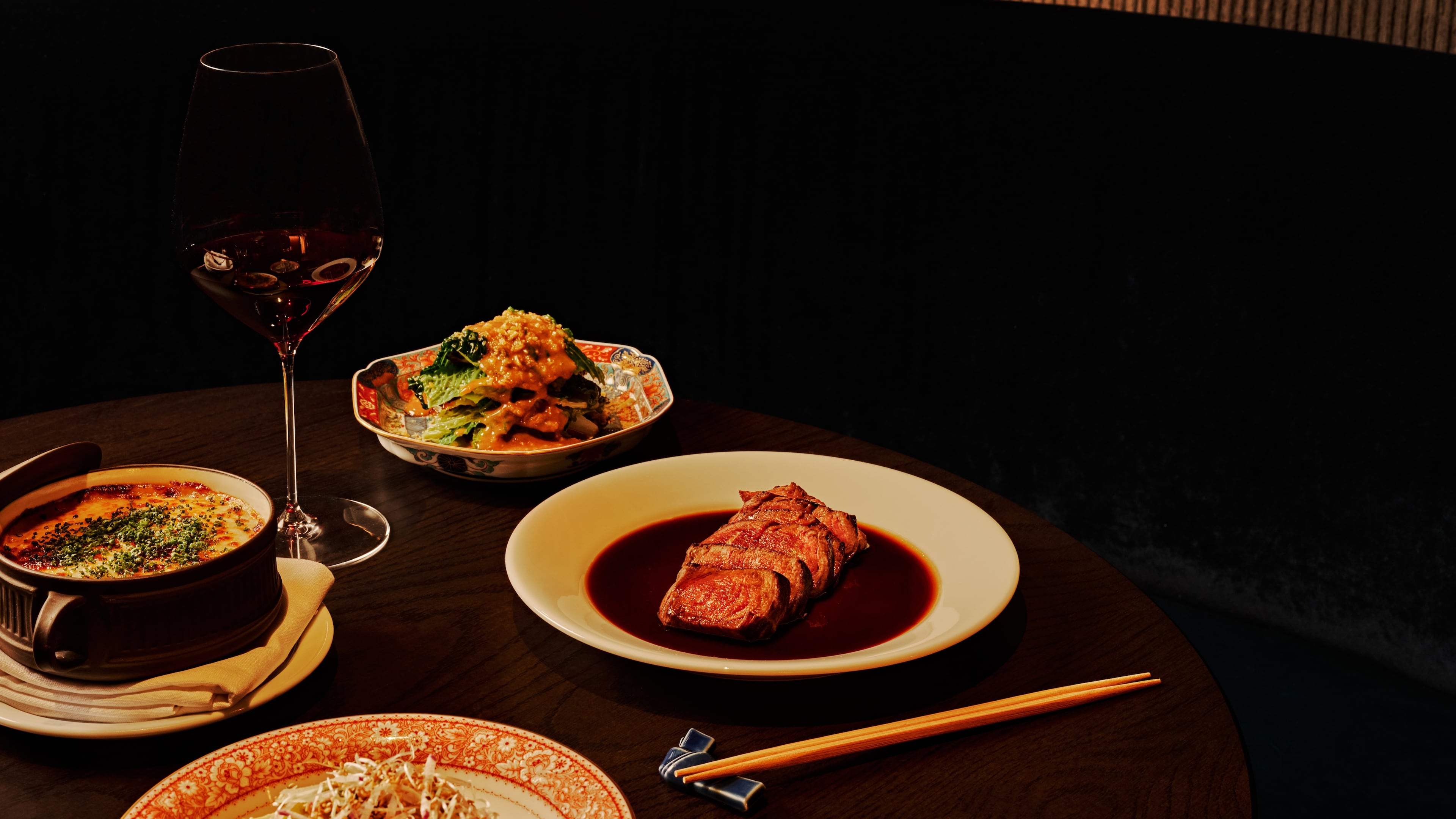
Luxury is a personal, subjective concept; it can be a synonym for excess, rarity, exclusivity or expense. A meal at Koshu Club, which faces the St. Regis Atlanta across West Paces Ferry Road in Buckhead, qualifies for any and all of those descriptions.
For me, luxury equates to craftsmanship. I think the time, skill and attention to detail poured into something creates value more than a label or a high price tag. Koshu Club scores high marks for those craft-driven qualities, too.
Yet, aside from being luxurious, Koshu Club is difficult to define. The cuisine is inspired by Japanese culinary tradition, but not strictly Japanese. The menu centers on steak, but it’s not a steakhouse.
The restaurant’s initial announcement said Koshu Club draws influences from “classic Showa-era supper clubs,” which sent me down a lengthy research rabbit hole to figure out exactly what that meant. In the simplest terms, it’s a Japanese version of midcentury modernism. The restaurant’s style is most similar to Japan’s latest wave of high-end cocktail bars, executive chef J. Trent Harris told The Atlanta Journal-Constitution.
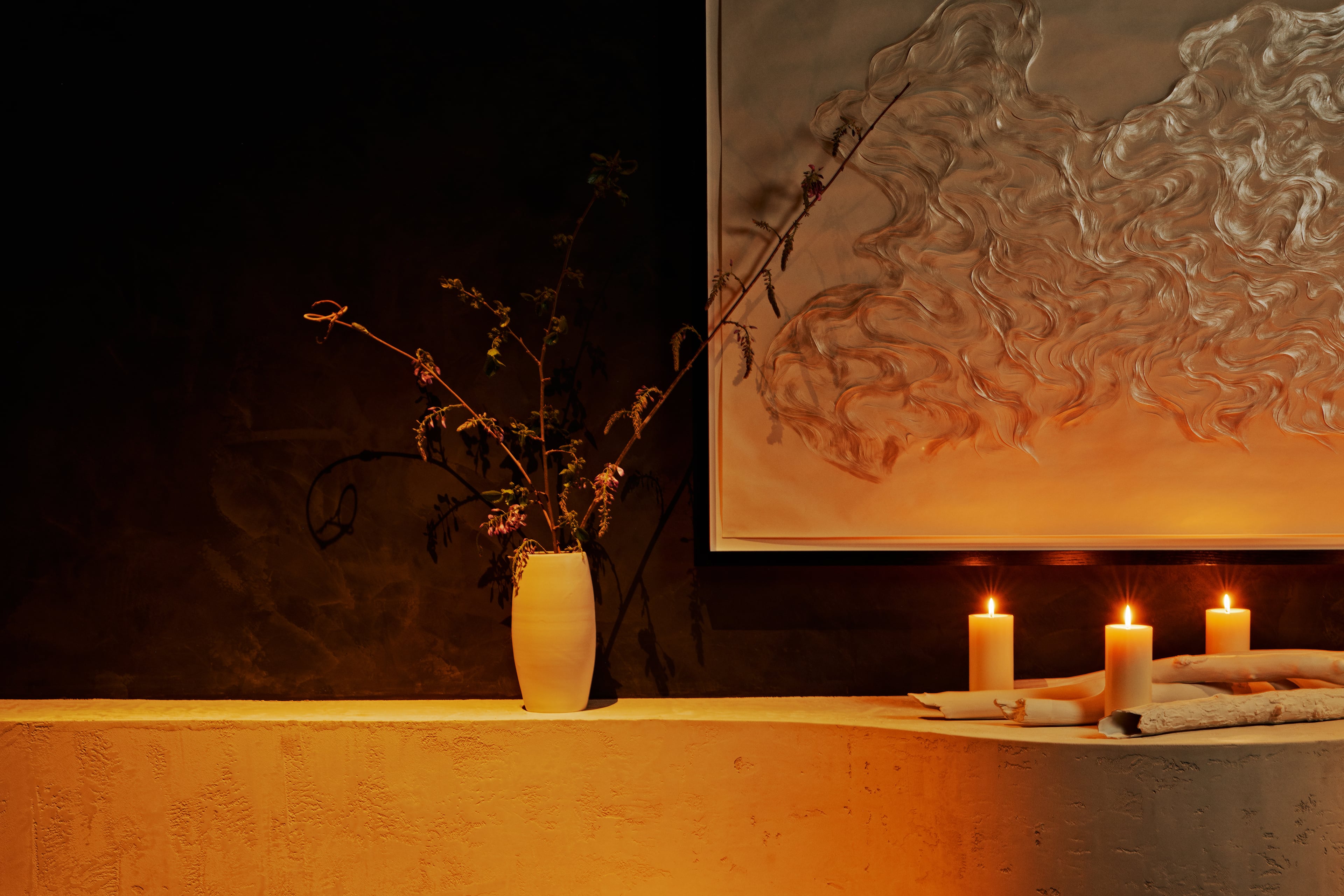
It all makes sense once you pass through the subtly marked door on the ground floor of the tony 99 West Paces building. The heavy, windowless door closes softly, sealing you in an environment where no expense is spared.
While building Koshu Club, the Castellucci Hospitality Group borrowed several tricks from Mujo, its first venture with Harris. The decor is dark and moody, yet the rooms pulse with energy thanks to theatrical lighting and a well-designed sound system playing a highly curated, genre-hopping playlist. Classic rock and modern hip-hop send a message: It’s OK to have fun here.
The way Mujo revolves around exceptional Japanese seafood, Koshu Club revolves around painstakingly sourced beef, from both Japanese and domestic farms.
In the U.S., the term “wagyu” has been diluted to the point that it’s practically meaningless. But the imported beef at Koshu Club comes from genetically distinct cattle raised on small-scale farms in Japan; this is as bona fide as any wagyu I’ve had.
The steaks at Koshu Club change depending on seasonality and availability, much like the fish at Mujo. The small cattle operations in Japan supply these cuts in limited quantities, so the steak selection regularly changes as some options run out and others take their place.
Any steak that comes with this long of a preamble is bound to be expensive, and Koshu Club’s prices can elicit gasps. On a recent visit, the 8-ounce serving of Takamori rib-eye costs $297. I tried a 4-ounce portion of the slightly lower-priced olive striploin, which cost $143.
The steak is so named because its flavor is reminiscent of olives, and olives are served as an accompaniment to prove the label’s accuracy. The meat was ethereal, rich in a way that completely separates it from other beef. The fat deepens the umami but doesn’t bulldoze the rest of the complex, delicate flavors. It isn’t difficult to believe this is near the pinnacle of what beef can be.
Koshu Club’s American wagyu steaks are priced more in line with what I see at high-end steakhouses in town; the 24-ounce American wagyu ribeye from Chatel Farms was $165, while an 8-ounce New York strip from Mishima Reserve was $95.
Both steaks were excellent, each beautifully cooked to a precise medium-rare temperature. Some might prefer these cuts, with their more recognizable flavor and texture, over the mind-expanding and pricey Japanese wagyu.
Koshu Club’s steaks are all cooked robatayaki-style, using a Japanese robata grill and traditional binchotan, charcoal that is denser and burns hotter than typical lump charcoal. The low-technology method requires a different type of expertise than searing steak under a commercial broiler.

Each steak comes with one of six sauces, and your server can recommend which might pair best with your chosen cut of beef. I suggest getting the sauce served on the side, especially for the Japanese wagyu, so you can taste the meat first. Otherwise, the au poivre sauce is tough to beat — it takes some self-control not to drink the decadent, heavily spiced sauce directly from its little carafe.
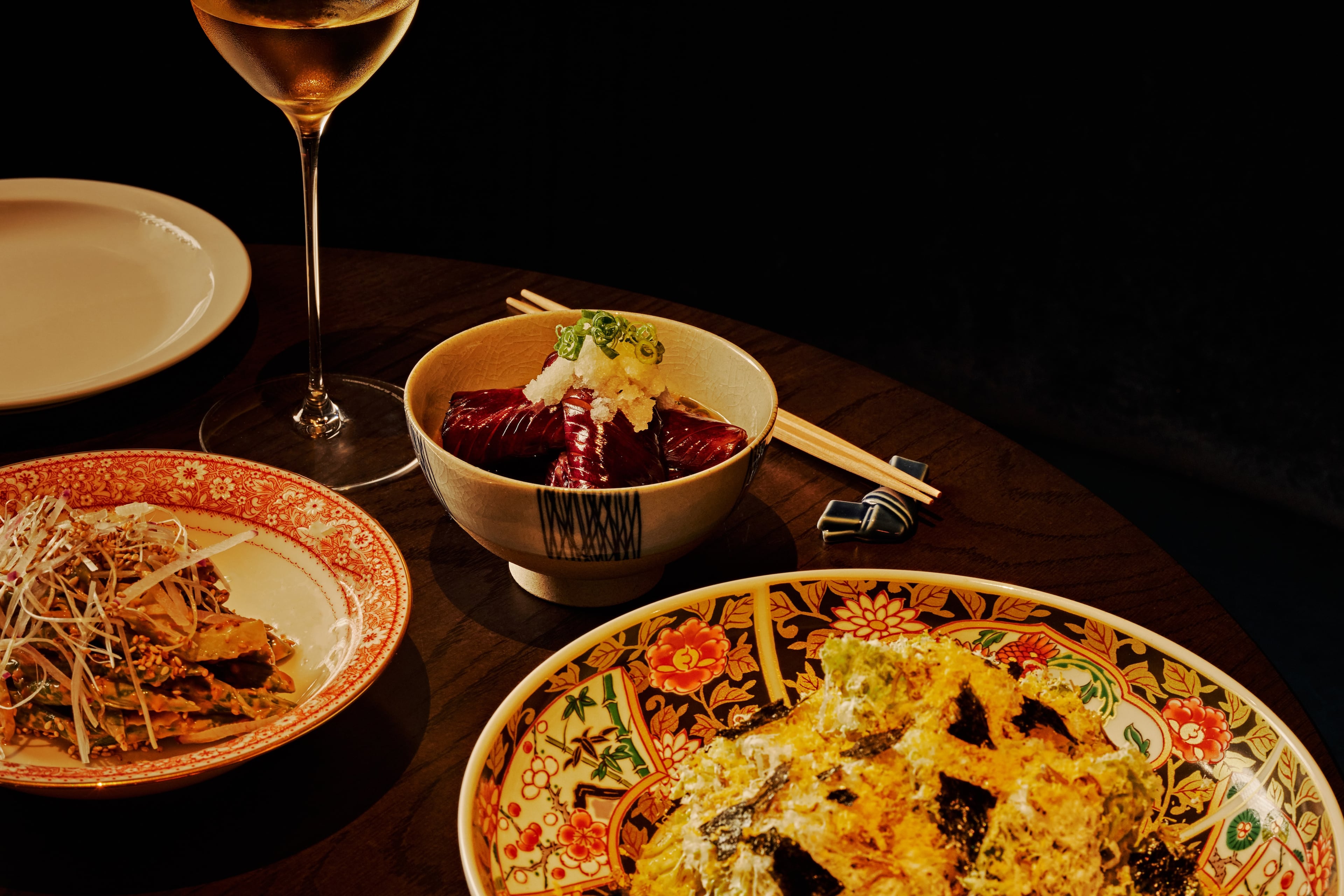
Other standouts from the menu included the Edo Caesar, a salad topped with a decadent snowdrift of Parmesan, and a lovely, surprisingly casual caviar service with toasted shokupan and roasted chive creme.
There’s a fabulous sandwich on the appetizer menu that feels like a real bargain at $23; the wagyu menchi katsu sando is almost like a Japanese patty melt, the patty made from truly incredible beef.
It’s also easy to imagine visiting Koshu Club for a date night just to order the kaisen moriawase, a sashimi platter that featured sea bream, scallop, king prawn and bluefin tuna when I ordered it. The beautifully arranged seafood selection is like a small taste of Mujo and would go well with a couple of Flying Vs, the restaurant’s sharp, savory version of a martini.
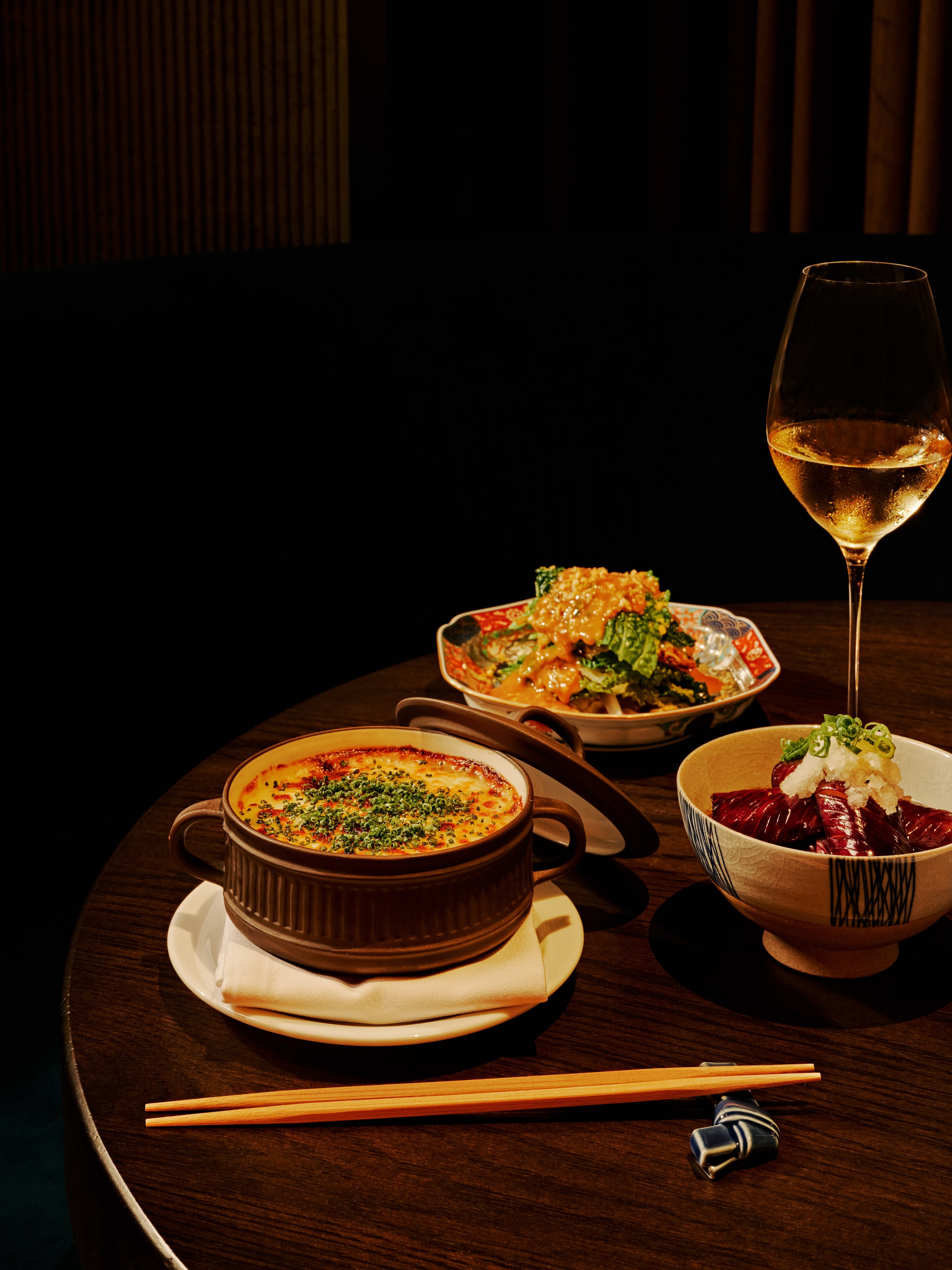
While Koshu Club’s dinner menu is relatively small, it changes regularly, and the beverage program ensures there are plenty of reasons to come back and explore. Federico Castellucci, CEO of the restaurant group, said the company made a significant investment in the wine cellar, so Koshu Club opened with a much deeper selection than most new restaurants.
Castellucci also highlighted the restaurant’s novel strategy for serving rare and interesting wines by the glass. The beverage team, led by Nick Quinones, looks for large-format wine bottles from their suppliers, products that are traditionally more difficult to sell. Large-format wines age more slowly and evenly than those in standard bottles, and the restaurant uses a Coravin device to pour individual glasses without exposing the wine to air. As a result, Koshu Club offers unusually well-aged, esoteric wines one glass at a time.
A dedicated sake sommelier can provide recommendations from a thoughtfully curated list of sake by the glass or bottle. Prices for wine and sake by the glass tend to be in the $20-$30 range, though the large-format special, a 2017 Komorebi chardonnay from Matt Taylor Wines in Sonoma, was $90 for a full glass.
Koshu Club’s service staff is professional and buttoned-up, as one would expect at a restaurant of this caliber. Nearly every item on the menu has a long story behind it, but the servers let you ask the questions and only delve as deep as you’re interested. They ask diners to place their food orders at the beginning of the meal and course out the dishes with appropriate timing.
Koshu Club is an excellent restaurant in every sense, immediately stepping into a small, elite circle of Atlanta’s best. While its commitment to quality and service (and yes, luxury) resembles that of its sister restaurant, I can’t quite put Koshu Club on the same level as Mujo. It doesn’t offer the same paradigm-shifting, expectation-shattering experience.

Mujo represented a seismic shift in Atlanta’s dining scene, ushering in the city’s current omakase era. It was the No. 1 restaurant on the Atlanta 50, and omakase restaurants have dominated Atlanta’s Michelin Guide. With Mujo, the Castellucci group captured lightning in a bottle.
What Koshu Club does, and especially the beef it procures, is special. And at these prices, everything should be special. Though I liked the two fish entrees — the codlike gindara misozuke and the king salmon yuanyaki — I’m not sure I’d order them again at $63 and $75, respectively. The side dishes, each $18, were uniformly good. Yet, there wasn’t a thunderbolt moment or bite that made me forget how much the meal cost.
Each time I left Koshu Club, I had no real complaints. The experience was incredibly luxurious, by my own definition and just about any other.
While Koshu Club might not transform the Atlanta dining scene, it would not surprise me to hear from diners who felt their brain chemistry forever altered by an impeccable slice of Japanese wagyu or the perfect wine pairing. Koshu Club is one of the very few restaurants where a meal could change the way you think about food, and that’s a true achievement.
Koshu Club
4 out of 5 stars (excellent)
Food: Japanese steak
Service: excellent
Noise level: moderate to loud
Recommended dishes: Edo Caesar, wagyu menchi katsu sando, kaisen moriawase, caviar service, gindara misozuke, New York strip, rib eye, olive striploin, sweet potato fondant, yamitsuki cabbage
Vegetarian dishes: green beans goma-ae, yamitsuke cabbage, white rice (note: many vegetable dishes on the menu use dashi, a broth made with fish flakes called katsuobushi)
Alcohol: full bar with a deeply considered wine program, including rare wines by the glass, and a sake sommelier
Price range: $75 — $150 per person, excluding drinks
Hours: 5-10 p.m. Sunday-Monday, 5:15-11 p.m. Tuesday-Saturday
Accessibility: fully ADA accessible
Parking: paid valet in building
Nearest MARTA station: 1.2 miles from Buckhead station
Reservations: highly recommended
Outdoor dining: no
Takeout: no
Address, phone: 99 W. Paces Ferry Rd. NW, Atlanta. 404-806-1404
Website: koshuclubatl.com
The Atlanta Journal-Constitution’s dining critics conduct reviews anonymously. Reservations are not made in their name, nor do they provide restaurants with advance notice about their visits. Our critics always make multiple visits, sample the full range of the menu and pay for all of their meals. AJC dining critics wait at least one month after a new restaurant has opened before visiting.