Midtown church on ‘peril’ list lays out its redevelopment plan

The fate of one of Midtown Atlanta’s oldest church halls is starting to come into focus.
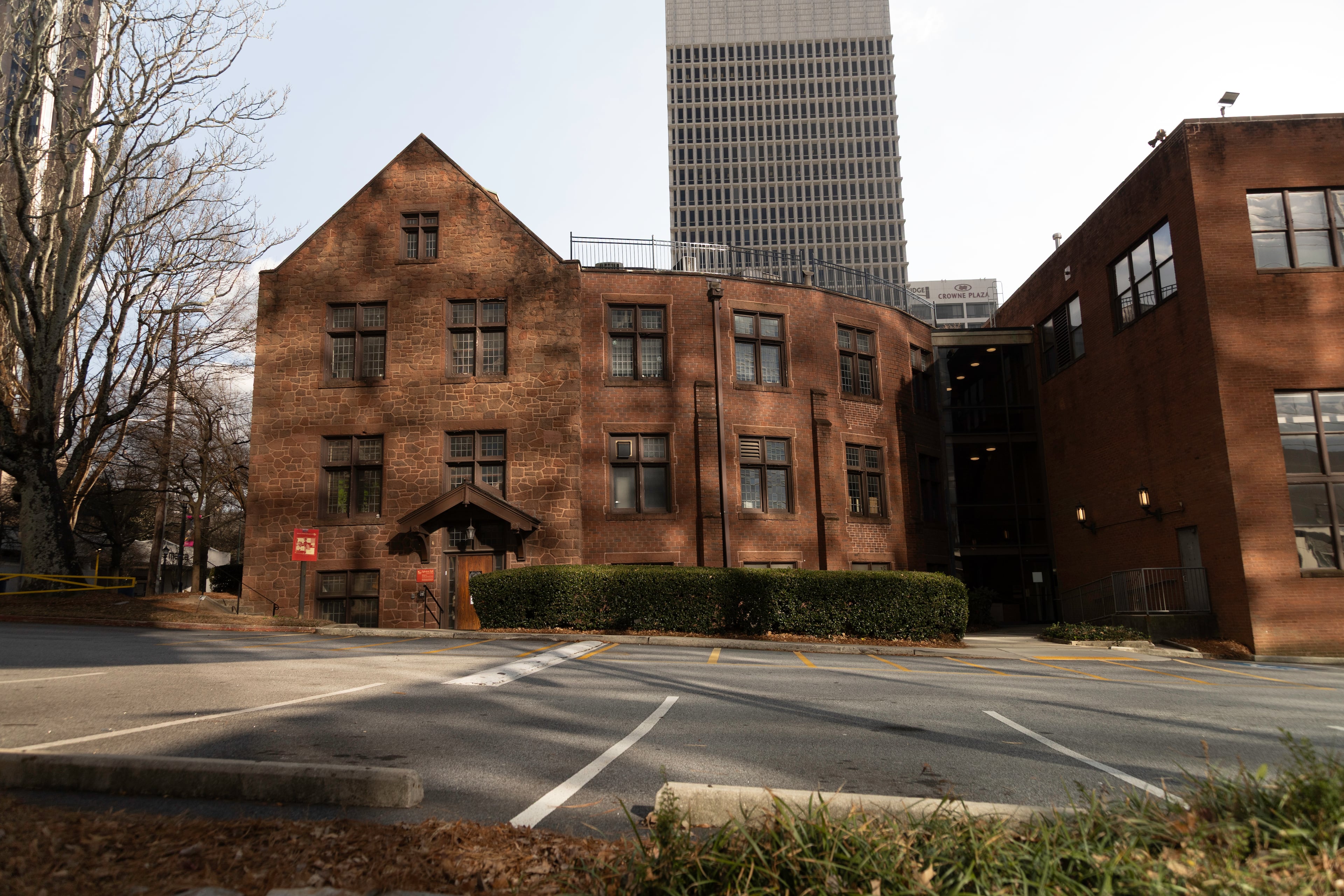
All Saints’ Episcopal Church is pursuing a sweeping renovation for its one-block campus, including the 108-year-old Egleston Hall that recently suffered structural damage. The potential that it could be torn down raised alarm bells earlier this year among historic preservationists.
So will the church hall be preserved? Yes and no.
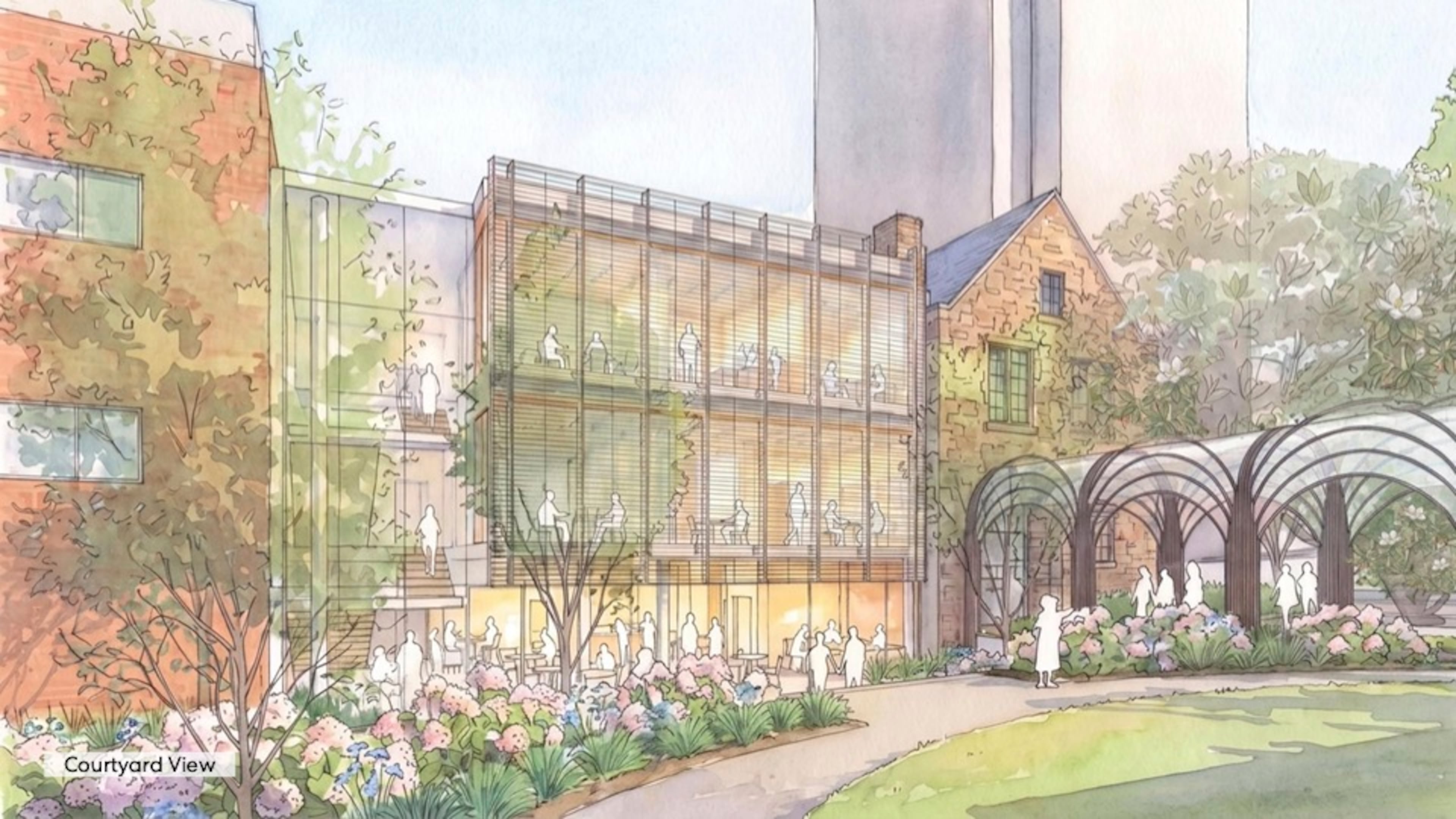
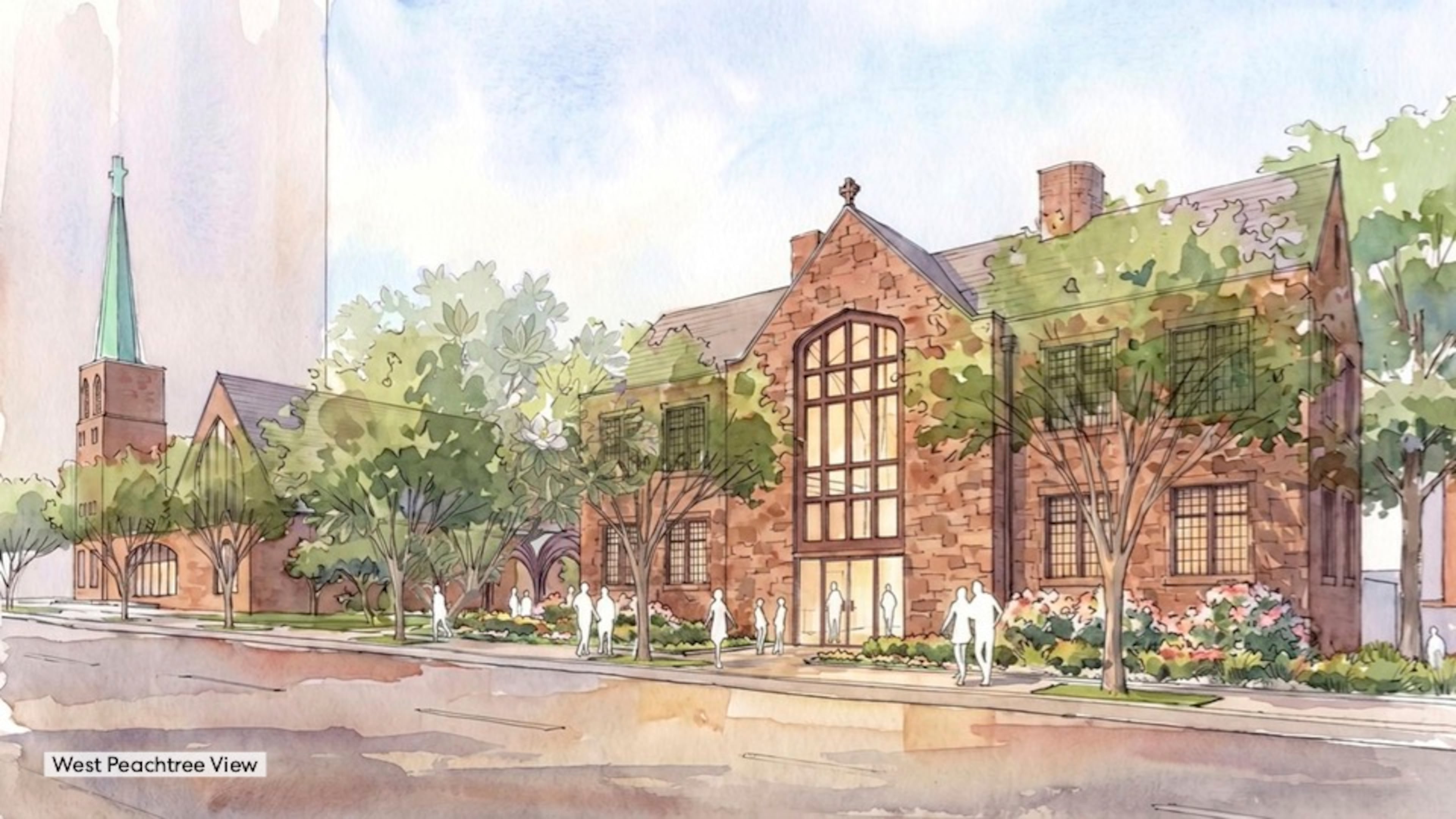
The All Saints’ vestry last month unveiled its preferred plan for Egleston Hall, a $21.7 million project that maintains the building’s historic facade along West Peachtree Street. It also involves demolishing the horseshoe-shaped part of the structure to make way for new construction.
Church leaders selected it among three plans they presented to the parish and said it will best serve All Saints’ future. The others involved full preservation and total demolition.
“We’re able to take the preservation of the West Peachtree facade, what people feel and see predominantly as Egleston Hall, and take the lessons learned from the new-build option and incorporate those,” Mark Diedrich, a member of All Saints’ task force spearheading the campus redevelopment, told the parish Sept. 20 during the unveiling.
Briley Brisendine, All Saints’ senior warden, told The Atlanta Journal-Constitution last week the vast majority of the church’s membership has signaled support for the plan. But the decision didn’t please those aiming to save the entire building.
“It is disappointing that they’re choosing basically function over form here, deciding to demolish a part of the historic building,” said Wright Mitchell, president and CEO of the Georgia Trust for Historic Preservation, which placed Egleston Hall on its 2026 “Places in Peril” list.
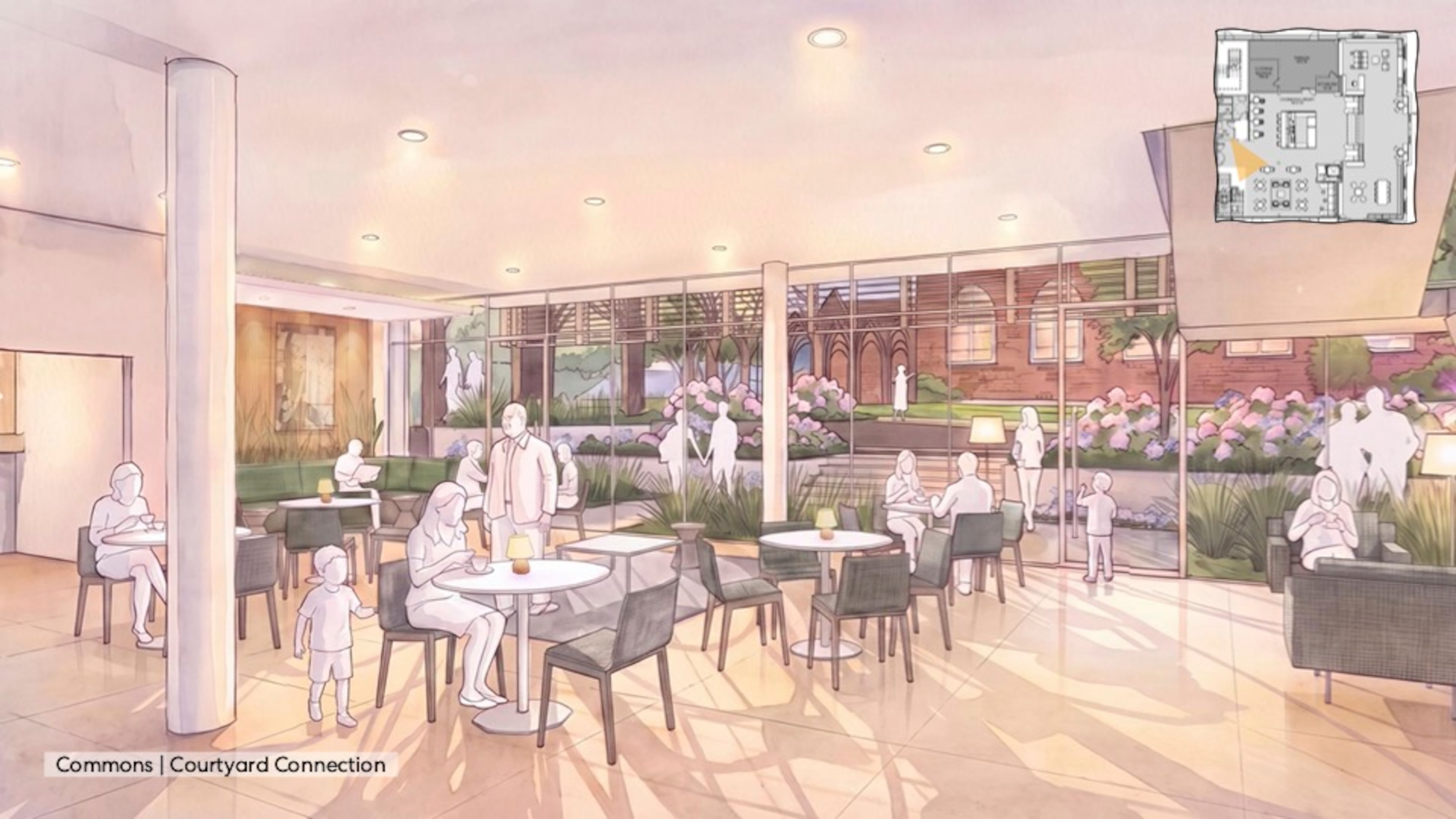
Renderings show a glassy gathering area replacing the horseshoe-shaped portion of the church hall, one of the last examples of what’s known as “Akron Plan” architecture standing in Atlanta. In feedback sessions held since the unveiling, Brisendine said “over 97% of the comments have been positive and fully supportive.”
“We’re delivering on a plan that honors our history and prepares us for the future,” he continued.
Tom Weyandt, a longtime All Saints’ member and former planning director for the Atlanta Regional Commission, wasn’t among them.
“They have a facade that has been pretty much violated by putting in this glass door and then putting an airport lounge behind it,” he said.
Culture and cracks
The church’s roots date to 1901, and the campus now spans an entire block of Midtown. But its neighbors have changed over the past 125 years.
Its neighbors now include the North Avenue MARTA station, the Varsity and several skyscrapers, including Atlanta’s tallest, Bank of America Plaza. In 2021, Norfolk Southern opened its Atlanta headquarters across the street from Egleston Hall.
Simon Mainwaring, All Saints’ rector, told the AJC earlier this year that construction of a nearby building caused a water table to drop by more than 20 feet, but he declined to name the specific tower. The damage resulted in structural shifts that compromised Egleston Hall’s foundation.

An undisclosed financial settlement was reached between the church and the new building’s owner, which the Georgia Trust said is Norfolk Southern. Mainwaring said funds from the settlement would help kick-start the block’s redevelopment, which will begin with Egleston Hall.
Since it was built in 1918, Egleston Hall has served a litany of purposes for All Saints’. It was a center for worship, Sunday school classes, music performances, community events and education. The Carter Family and Blind Willie McTell also recorded music sessions inside the hall in the 1930s.

The parish has historically been one of Atlanta’s loudest progressive church voices, and its members were prominent advocates during the Civil Rights Movement, AIDS crisis and debate over marriage equality laws. David Mitchell, executive director of the Atlanta Preservation Center and of no relation to the head of the Georgia Trust, said that history is threatened by demolition.
“You think about the Civil Rights component that happened in that building. You think about all the aspects that happened with LGBTQ+ issues and surrounding AIDS,” he said. “These spaces would be a great showing of where the church had courage through its faith and through its mission.”
‘For the next 100 years’
All Saints’ has hired architecture firm Perkins & Will to help develop the church’s master plan. The three plans for Egleston Hall ranged from $19.7 million to $21.7 million, with the selected option being the most expensive.
“This is an opportunity for us to prepare for the next 100 years,” Brisendine said. “So we want to make sure we get that right.”
The church’s priorities were boiled down a list of six goals, revolving around creating a new common area for community, ministry, music and offices. Meg Fogel, co-chair of the All Saints’ task force, said a revamped Egleston Hall presented opportunity to serve and connect with people outside of Sunday services.
“A lot of us that are here on Sundays don’t come back until the next Sunday,” she told the parish Sept. 20. “But there are hundreds of people that are here on this block inside of our block every single week, so this will allow them an additional space to be and build relationships.”
Diedrich, the other task force representative, described the glassy design as a “palate cleaner” between the historic stone and brick that would be preserved.
A fundraising campaign will take place to shore up the project’s financing. The church did not have a timeline for when construction could begin. A presentation by Perkins & Will on March 22 showed 2028 is likely the soonest they could pursue permits or begin any type of construction. Perkins & Will declined to comment for this article, referring the AJC to All Saints’.
Preservationists are pursuing a Hail Mary, reaching out to the Atlanta City Council to try to get a historic landmark status for Egleston Hall. David Mitchell is leading that effort, saying it could sooth concerns “for the people who have heartburn over the preservation part.” Landmark status typically refers to only exterior facades, and it’s unclear if the council will take up the effort.
“This illustrates why buildings need to be landmarked because decisions made at the whim of a vestry can have permanent, long-term damaging efforts to the architectural landscape of our city,” said Wright Mitchell of the Georgia Trust.
Brisendine said the parish is united in its vision going forward, saying the reported divisiveness is overblown.
“This process, in my view, was not at all a divisive process. It was just the opposite,” Brisendine said. “ … There’s a tremendous amount of excitement in the parish for what we see as the future vision for the church.”