Why a Norwegian firm chose Georgia for an innovative way to produce aluminum
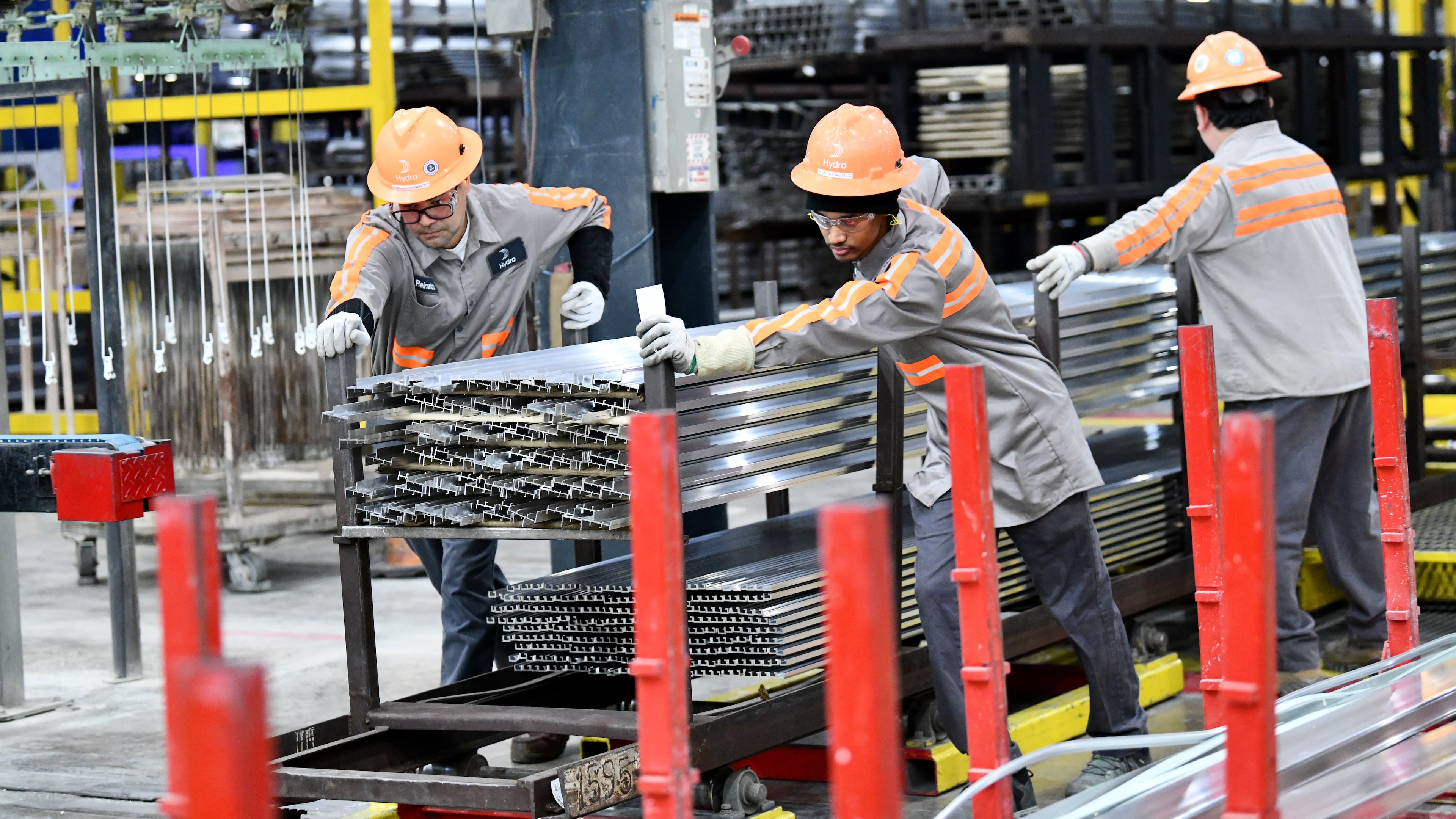
Whether you know it or not, aluminum is a vital part of your everyday life. From driving a car to gazing out a window at home, aluminum products are what help make that happen.
And there’s a good chance some of those products came from a plant about 50 miles north of Atlanta, at an aluminum extrusion plant in Gainesville owned by aluminum giant Hydro. Now, that production is getting a little greener thanks to a new innovation in the plant — though it came at a cost.
Hydro is one of the world’s largest integrated aluminum companies, which means it does everything from mining bauxite, the world’s main source of aluminum, to extruding a finished product. Though the company is headquartered in Norway, it has a large footprint in the United States.
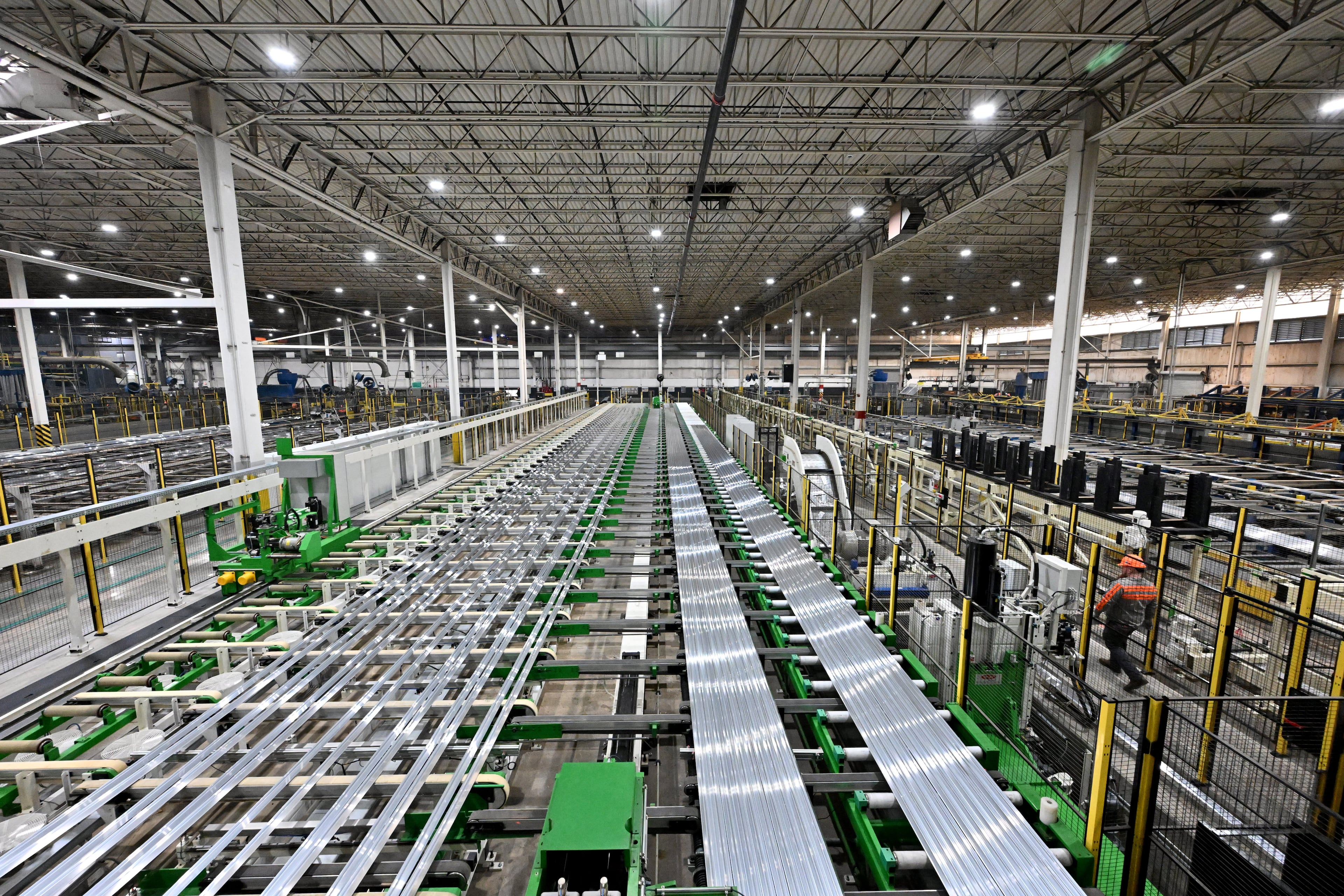
Inside its 350,000-square-foot Gainesville facility, gleaming polished concrete floors reflect shelves stacked high with aluminum in a variety of shapes. In the center of it all is a large, whirring green and white machine, Hydro’s first electric extrusion press.
Hydro has more than 5,500 employees just in the U.S. Across North America, the company operates 21 extrusion production plants, including in Gainesville. Overall, the company last year pulled in $21.5 billion in global revenue.
Despite having operations on nearly every continent in the world, Hydro chose Gainesville to pilot this technology.
“We’ll start off with it here, and then we’ll learn from it, see if we can utilize the same type of technology in some of the other sites,” Eivind Kallevik, Hydro’s CEO and president, told The Atlanta Journal-Constitution.
Aluminum extrusion works a bit like a kid’s Play-Doh press but is much more energy-intensive. Instead of pushing colored dough through a star-shaped die, solid rods of aluminum are heated and put under heavy pressure through a press that can produce anything from siding to a window frame.
“The electric press takes down the ecological footprint,” Kallevik said. “So, less oil usage, it’s more water usage, less gas usage, more renewable energy.”

Hydro has had its facility in Gainesville since the late 1980s. There are about 350 employees at the site, some of whom have been with the company for decades. The plant’s workforce is one of the reasons Hydro decided to pilot the electric press in Georgia.
“This area has really hard-working people,” said Jeff Lehman, senior vice president of extrusions North America at Hydro.
“We have a lot of folks … they’ve been here the entire time the place has been open. So we want to continue investing in that because when you have a good workforce, and you’re geographically in a good place, and you have a state that likes business, you want to continue to expand,” Lehman said.
But that investment came at a cost.

Like most other businesses with international supply chains, Hydro has been hit by President Donald Trump’s tariffs. Aluminum is subject to a 50% import tax and the new electric press, which had to be brought from Europe, was hit with multimillion-dollar fees.
Hydro put in the order for the press in late 2024. Then, a few months later, Trump began implementing tariffs across a swath of goods and countries. Lehman said Hydro paid millions of dollars in tariffs on the equipment.
“It can limit future investment to an extent if (the tariffs are) too severe,” he said.
But despite tariffs, Hydro is still fully committed to the U.S.
“We’ve been in the U.S. for a long, long time,” Kallevik said. “We consider this pretty much as our home market. And it’s the biggest geography where we operate in terms of people as well. So, we will continue to look for business opportunities in the U.S., as we have done for the last decades.”
About the Author

Mirtha Donastorg is a reporter on The Atlanta Journal-Constitution’s business team focusing on Black wealth, entrepreneurship, and minority-owned businesses as well as innovation at Atlanta’s HBCUs.