Georgia roof shingles factory is ramping up, hoping for a homebuilding boom

PEACHTREE CITY — Every minute, a new pallet of roof shingles rolls off assembly lines in this cavernous factory south of Atlanta.
After a multiyear and $140 million expansion, the Saint-Gobain plant doubled its capacity, and is now capable of churning out enough CertainTeed shingles to cover 200,000 roofs a year. It’s an investment the French company announced in 2022, tied to projections of booming population growth — and for homebuilding — in the South.
“Driving into work, you see the houses. You see the development,” said John Panuski, office manager for the factory’s operator, Saint-Gobain. “So we’re very excited to be able to put shingles on those homes.”
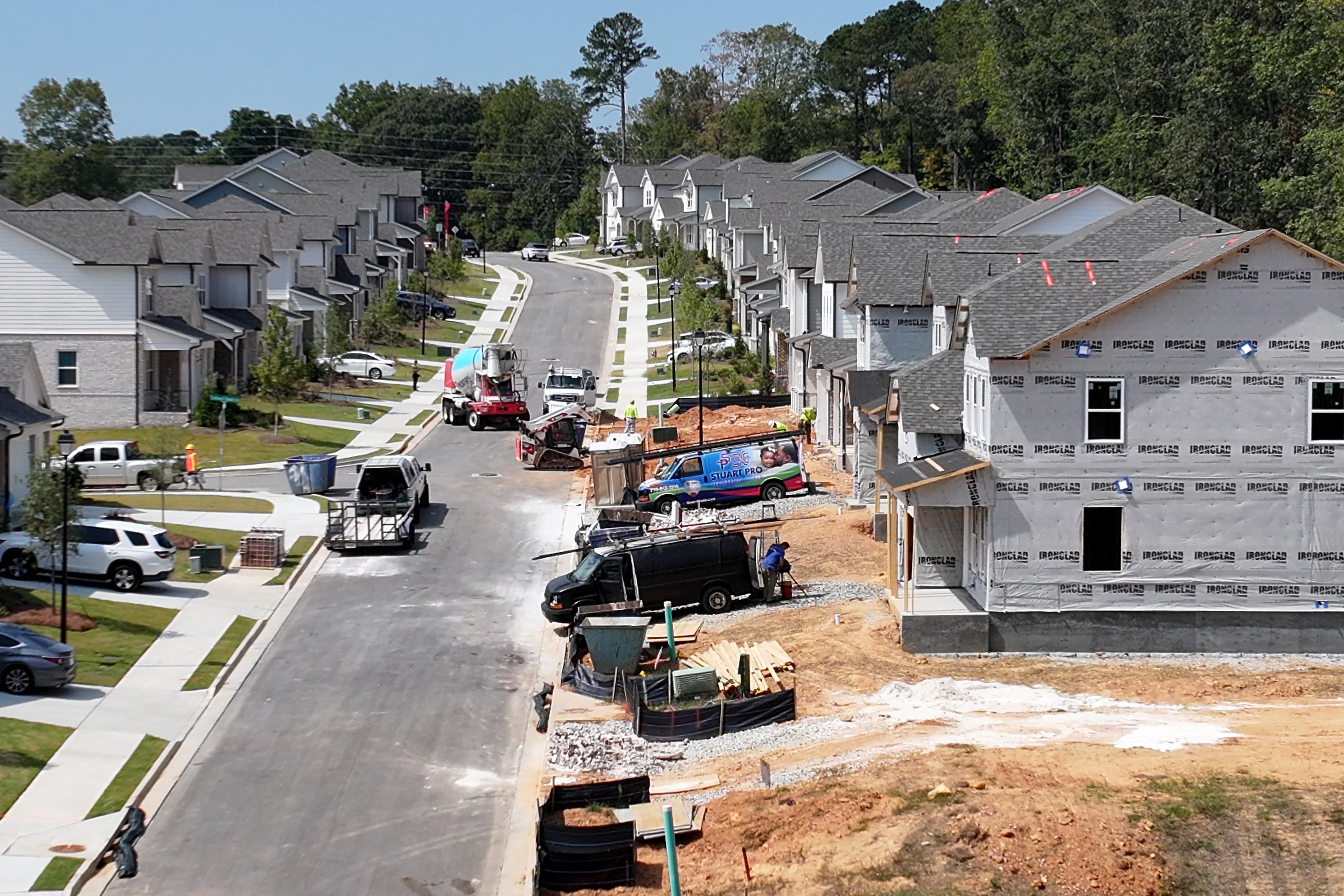
Leaders of Saint-Gobain, a French construction giant, said they’re supercharging their Peachtree City shingle-making operation as a bet on the housing construction market not just in Georgia but across the South. Every house needs a roof, and suppliers like Saint-Gobain’s factory play a vital part in the residential homebuilding and renovation supply chain.
Like much of the country, Georgia’s housing supply is massively underbuilt, especially given metro Atlanta’s booming population growth. Mark Rayfield, Saint-Gobain’s North American CEO, said that’s a sign of vast opportunity.
“You just follow the population,” he told The Atlanta Journal-Constitution. “Population growth is in the Southeast and the Southwest. … We need to be near where the growth is.”
Housing restraints
Despite the demand for more houses, especially at lower price points, they’ve only gotten harder to build.
The price of the construction materials needed to build single-family homes and townhomes skyrocketed after the COVID-19 pandemic roiled supply chains. Those costs have remained elevated even after the prices of other construction goods have softened, according to U.S. Bureau of Labor Statistics data.
The impact of tariffs instituted by the Trump administration and other headwinds has rippled through the homebuilding sector, including Vinings-based Home Depot. Ted Decker, the company’s president and CEO, told investors in November that, “Housing has been soft for some time.”
The National Association of Home Builders said the number of new housing construction projects has also declined. New construction starts in October across the country dipped 10.1% from a year earlier.
“Elevated mortgage rates earlier in the year have restrained buyer demand and weighed on home building activity, alongside persistently high construction costs,” Danushka Nanayakkara-Skillington, NAHB’s assistant vice president for forecasting and analysis, wrote last month in an analysis on housing market challenges.
Trump imposed sweeping tariffs last year in part to stimulate domestic manufacturing and foreign investment in the United States. Saint-Gobain announced its Peachtree City expansion before Trump’s White House return.
“We buy local, build local and sell local. So we aren’t heavily impacted by tariffs,” Rayfield said. “Obviously labor and materials have some inflationary pressure, but if you can limit the (international) freight, you can limit the impact.”
On Friday, the U.S. Supreme Court struck down most of the tariffs Trump enacted in 2025, calling ones instituted under emergency authorities illegal. Later that day, the president announced he would slap global trade partners with an across the board 10% import tax and launch trade investigations that could underpin future trade restrictions.
Amid the uncertainty, construction companies entered 2026 with lower expectations than the year prior, according to an industry survey released last month by the Associated General Contractors of America. Aside from the booming data center sector, most contractors dampened their outlook on building most other projects, including housing.
“One reason for their lowered expectations is the contractors are increasingly worried about the broader economy and the possibility of a recession and the outlook for material costs amid ongoing policy uncertainty,” Jeffrey Shoaf, the organization’s CEO, said in January when discussing the survey’s findings.
“At the same time, many firms remain concerned about persistent labor shortages and impacts of increased tariffs,” he continued.
Those challenges and headwinds remain pertinent, especially as affordability has become a buzzword across the political spectrum. Gov. Brian Kemp, who attended Saint-Gobain’s expansion ribbon-cutting ceremony earlier this month, said Georgia’s population growth and other economic projects require new housing — and all the homebuilding suppliers that make construction possible.

“As our state economy continues to grow in both size and strength, we also know the need for quality housing is also on the rise in many parts of our state,” Kemp said.
Chronically underbuilt
The lack of new housing supply, which contributes to a lack of affordable homes, in large part dates back to the fallout of the Great Recession.
When the housing bubble burst, it deflated new home construction for years. The number of single-family building permits issued in Georgia is currently about half what it was before 2008, according to U.S. Census Bureau data.
Rayfield said the country is about 4 million homes underbuilt as a result of that slowdown. He said Georgia is likely 400,000 homes shy of demand.
“We need more affordable homes in North America,” he said. “ … That’s why we’re expanding this plant (in Peachtree City) and going forward.”
With roughly 180 employees, Saint-Gobain’s facility at 200 Sierra Dr. is able to process 36 gigantic rolls of fiberglass into asphalt shingles every day. When unfurled, those rolls would stretch more than 250 miles — the equivalent of five round-trip drives from the factory to Hartfield-Jackson Atlanta International Airport.

The shingles are produced under Saint-Gobain’s CertainTeed brand, but the French company operates 10 facilities in the Peach State and employs 600 Georgians. Each of those operations acts as a different homebuilding supplier, including a Social Circle facility that churns out window and door trims and a Dublin factory that pumps out insulation.
The Peachtree City facility will soon get all its fiberglass rolls from a plant in North Carolina, which is part of Saint-Gobain’s $7 billion of North American investments since 2020. Rayfield said keeping the supply chain in the Southeast, where his company sees housing construction opportunity, insulates Saint-Gobain from tariffs and lowers prices overall.
“If you can move faster, have a sustainable and resilient house and use less materials and less time, you get more affordability,” he said. “That’s out goal.”
About the Author

Zachary Hansen, a Georgia native, covers economic development and commercial real estate for the AJC. He's been with the newspaper since 2018 and enjoys diving into complex stories that affect people's lives.


