Remembering Bill Lucas’ Braves legacy on 50th anniversary of history
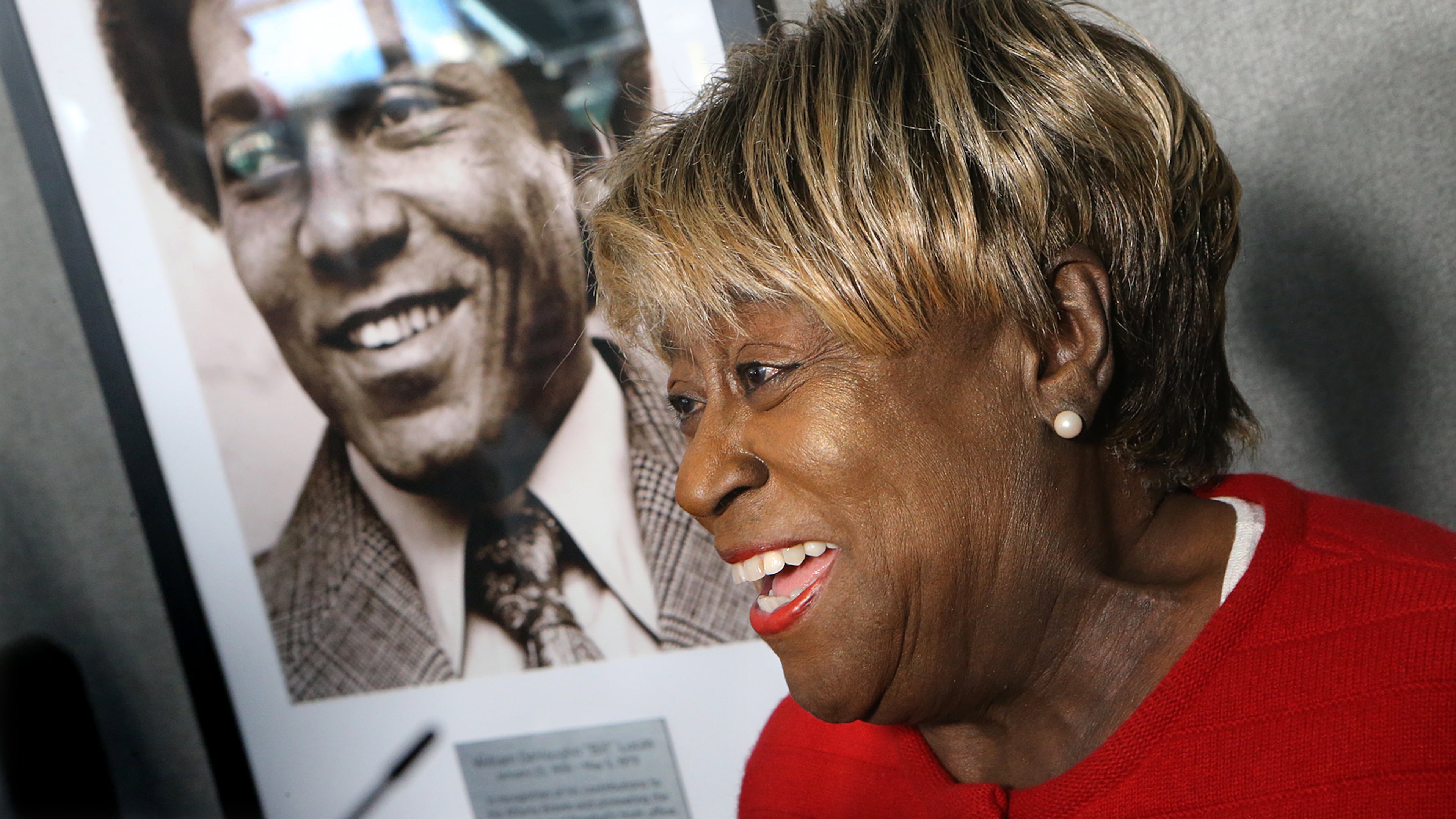
Bill Lucas is an architect of what the Braves have become, an individual whose vision and character remains imprinted on the franchise today.
Fifty years ago Saturday, Lucas became the first Black general manager in baseball. His title was vice president of player personnel — owner Ted Turner retained the GM label — but Lucas oversaw the Braves’ baseball operations from 1976 to May 1979, when he suffered cardiac arrest and a cerebral hemorrhage and died at age 43.
His time as an executive left a legacy that helped transform the Braves into a sustained winner.
“He set the tone for the Braves’ way of doing things,” two-time MVP winner Dale Murphy told The Atlanta Journal-Constitution. “We felt like a family. His influence is still (in the organization). I think that’s a great thing about a man of Bill’s character.
“He set the tone. That’s a tribute to him and the way Bill was, the way he did his work and loved the Braves. It’s reverberated still. His impact is lasting.”
Lucas hailed from Jacksonville, Florida, and played baseball at Florida A&M. He spent several seasons in the Braves’ farm system — and two years in the Army — before shifting to the Braves’ front office in 1965 in a public relations role. He moved into player development two years later, became farm director in 1972, then completed his rapid ascension by taking over GM duties in September 1976.
The historic promotion was instrumental in turning the Braves into what they remain today.
“I can’t talk about ‘Luke’ without crying,” Lucas’ widow, Rubye, told the AJC. “I just think what a great, great opportunity that was given to him. He worked so hard to make sure that everybody knew that African American people could be successful in these types of jobs. He’d say, ‘I have to do well because I am paving the way for others.’”
Lucas’ fingerprints were all over the 1982 division-winning Braves (back then, division titles weren’t so common for the franchise). He drafted Bob Horner, who’s one of the most recognized players from the earliest WTBS Braves days, among other future major leaguers. He oversaw young Murphy’s early career. He acquired Gary Matthews and Jeff Burroughs. He signed Phil Niekro to an extension despite some tenuous negotiations with Turner.
Lucas had a close relationship with Turner, who considered him a brother. He was friends with so many other important Braves figures, from Hank Aaron (his brother-in-law) to Dusty Baker to Ralph Garr to Murphy to Bobby Cox, whom he hired as a 36-year-old first-time manager in 1977. Cox later said of Lucas: “When you thought of the Braves’ organization, you thought of Bill Lucas.”
Lucas was known for his scouting acumen. He was even more well regarded for his people skills. He was said to have a photographic memory, amazing people with his remembrance of details through the years. He was among the few who could successfully push back on the fiery Turner.
He connected easily with those around him. He stood up for others and what he felt was right. He held lofty aspirations, but he compartmentalized well, staying focused on the day-to-day work. His kindness and belief in people made him a lauded motivator — similar to the traits that made Cox such a beloved figure.
Lucas had a knack for comforting others. He was relatable and considered a good listener, wanting to hear others’ stories. He had a presence largely thanks to what those who knew him remember as a charming sense of humor.
“There was no room my dad walked into that you wouldn’t know he was there,” his daughter, Wonya, who had an illustrious career as a TV executive, told the AJC. “There would be 100 people, but you’d know he’s there.
“My dad was focused on understanding those who worked with him, for him and around him. He had an intellectual curiosity as it relates to people. … He had an ability to make everyone feel special, seen and heard. And he’d see the potential in people.”
It should be noted, too, that Lucas was among the first to emphasize the Braves’ philosophy of developing homegrown talent. He was part of the front office that signed the team’s first free agent, pitcher Andy Messersmith, in 1976. But as the sport’s landscape changed, Lucas saw the value in prioritizing internal development.
“From that point on, he said we would grow our own,” Rubye said. “We’re not going to pay (big) money for (free agents). We’ll grow our own, then pay them. The Braves’ farm system would develop their own players, so he hired scouts — many from Georgia — to go scout everywhere. They found so many wonderful, talented young men with great character.”
So many who knew Lucas attest to his thoughtfulness and professionalism. He was the first person to greet Murphy as a teenager joining the franchise, and even became friends with his parents. Lucas personally flew to the Dominican Republic to give Murphy his $2,500 bonus check while the player was playing winter ball in 1977 (the bonus was then at Lucas’ discretion). He mentored Bob Watson, who later became the second Black GM and first to win a World Series with the Yankees in 1996.
Lucas was part of the front office that signed Negro leagues legend Satchel Paige, then 62, in 1968 so he could get his pension. “Satchel stayed with us during the day and Luke (Lucas) would take him to the hotel at night, shot pool and clicked those false teeth most of the day,” Rubye recalled.
Lucas was considered a cherished friend, leader and salesman because of his authenticity. He was a good evaluator because of what those who knew him chalked up to God-given perspective.
“He said he could go scout a kid and just watching them one time, he would know whether they had a shot to play professional baseball,” said Bill Lucas Jr., who played minor league baseball, including in Anderson, South Carolina, during Brian Snitker’s first foray into managing. “He said there were some kids he either signed or drafted that nobody else really wanted, but he knew they had it in them to make it someday.”
Perhaps Lucas’ greatest long-term impact was paving the way for Cox to join the organization. Lucas knew Cox from their minor-league playing days and they became friends. “He knew Bobby was a great guy with young men,” Rubye said.
Lucas contacted Cox, then the Yankees’ first base coach, and Cox visited Atlanta incognito to discuss joining the Braves. Rubye remembers hosting Cox at their home. Lucas laid out a case for Cox to become the franchise’s manager. Cox, of course, eventually accepted the position and became a Hall of Famer who’s synonymous with the franchise.
“That’s a remarkable hire when you think about it,” Murphy said. “Bill and Ted saw something in Bobby. They saw a similarity in how we’re going to do things here. But hiring a young, unproven manager at that time, they had a really good sense for personnel decisions.”
Murphy referred to Lucas’ death as one of the saddest days of his life. He remembers being emotional as he spoke at Lucas’ funeral. Turner promised to take care of Rubye and the family, and eventually he convinced Rubye to leave her longtime teaching job to work at Turner Broadcasting, where she became an executive.
The Braves didn’t reach 70 wins in any of Lucas’ full seasons. It was a true rebuild, a recalibration that the franchise needed. It set the tone for the future. Lucas didn’t get to see the fruits of his labor, but the great organizational turnaround for which he aspired occurred.
It wouldn’t have happened without his vision.
“I learned how to live gracefully during hard times,” said his daughter, Andrea, who lost her father when she was 14. “There were some bad records when he was there, the team was rebuilding. But I learned how to manage life gracefully. … I learned how to look at a tough situation, even when it seems overwhelming, and break it down, see what are the options and how do I make it better? Those are life lessons I got at a very young age with him.
“It’s a sense of pride and happiness that people recognize what he did. He was rebuilding, and that’s the toughest time for a team. But people did recognize that he was trying to build them into a winning team. I’m very proud that people give him credit as part of the beginning of that process.”
The Braves have honored Lucas’ legacy throughout the years. Their baseball operations conference room at Truist Park is named after him. They have the Bill Lucas Apprenticeship that provides opportunities for people of diverse backgrounds to get into baseball. Rubye is on the board of the Braves Foundation while Wonya is on the board of Atlanta Braves Holdings.
Braves historian Sam Wallace will have small exhibit in the South End Trading Co. Vault during the team’s upcoming homestand, which is Tuesday-Thursday. It’s the final homestand of the regular season before the team begins its latest postseason run — and continues building on what Lucas helped start decades ago.
“Everybody in the Braves organization, from the groundskeepers up, still make us feel that we’re family and that we’re a part of the Braves,” Rubye said, fighting off tears. “I am truly grateful.”