Kirby Smart shrugs off decision by LSU to add NFL players
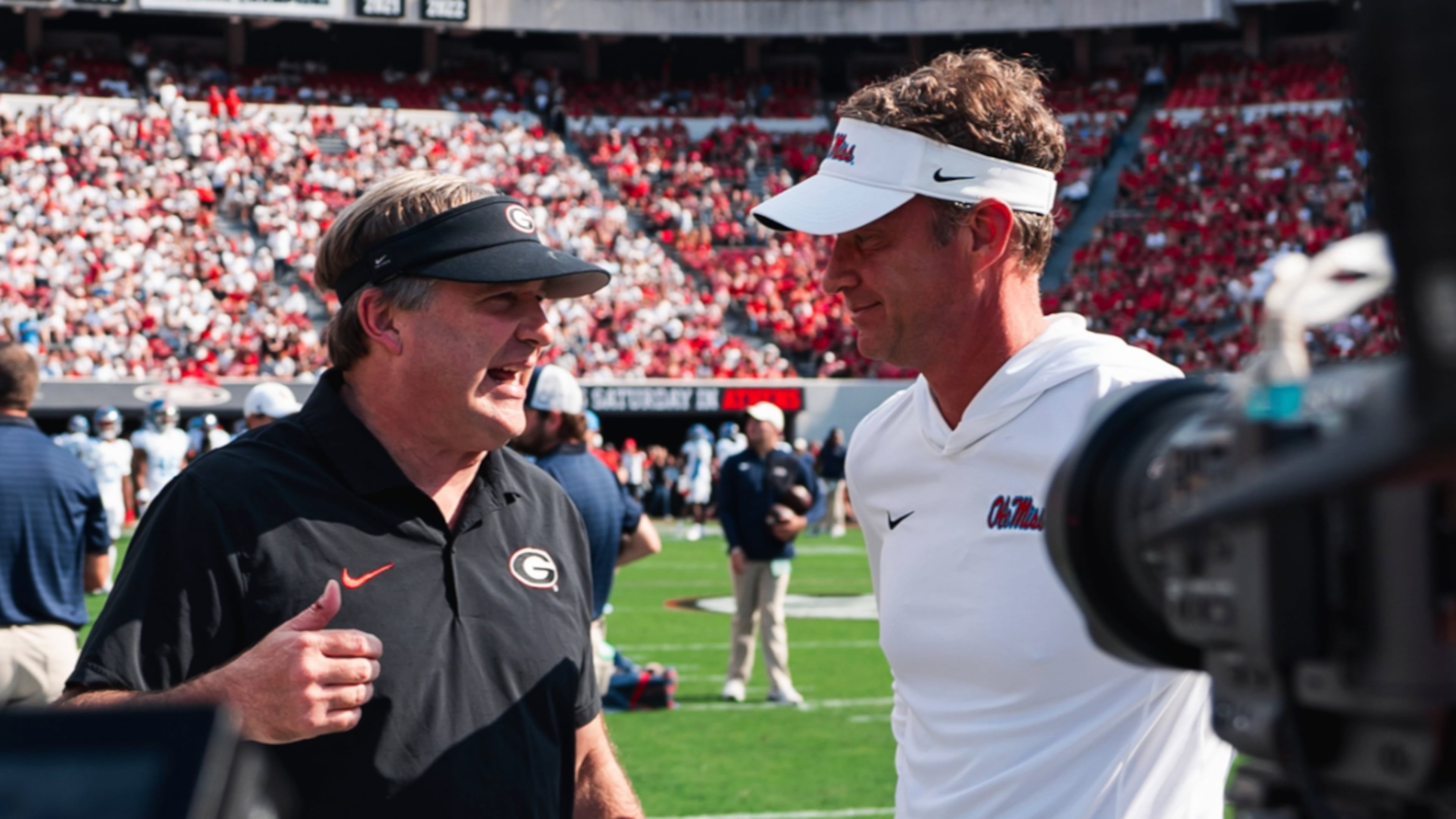
Lane Kiffin might ultimately get the last laugh on the SEC adding two former NFL players to LSU’s roster, but Kirby Smart’s not sweating it.
“I don’t have any qualms about teams that are trying to have acquisitions and get players from the NFL,” Smart said on Friday during an appearance on 92.9 The Game.
“If they think it’s the right thing for their team — I just don’t think it’s the right thing for ours.”
The SEC, along with the three other “Power 4” conferences, voted to ban former professional and NFL players from returning to college sports last week, but on Friday, a judge in Baton Rouge, Louisiana, granted a request from players’ attorneys to prohibit the SEC from enforcing sanctions against a school, coach or athlete if the players return to play at the collegiate level.
The SEC had deemed a violation would be in order, which would constitute a half-season suspension of the head coach, a 50% forfeiture of a school’s athletic budget and a forfeiture of league voting privileges, per a Yahoo.com report.
A preliminary injunction hearing, which will determine if the restraining order allowing the players to return will be more permanent, is scheduled for Thursday in Baton Rouge with the SEC and commissioner Greg Sankey now added to the case as defendants.
Smart has said he wants to keep his focus on his program, which opens the season Saturday at 3 p.m. with a home game against FCS-level Tennessee State, but he’s made his stance on the issue clear.
“I want great players as much as the next guy, (and) everyone wants to get the best team they can and that (Class of 2022 NFL players) is a competitive market to do that,” Smart said.
But, Smart indicated, it’s not what he envisions as best for the college game.
“There’s a certain line everyone has to make a decision if they want to cross, if they feel comfortable with it,” Smart said, “and I’m an enthusiast of traditional college football, and it being college football that everyone has to make a decision if they want to cross (over into the NFL) and if they feel comfortable with it.
“I’m an enthusiast of traditional college football, and it being college football players.”
Kiffin has denied accusations in a CBS Sports story citing anonymous sources that he or LSU orchestrated the lawsuits that have opened the doors for two of his former Ole Miss players who were signed as NFL rookies to return to play for him at the collegiate level.
“That’s really the first I’ve heard of that,” Kiffin said on Sirius XM College Sports Radio. “I know that sounds crazy. We’ve had practice, and I don’t see the social media stuff.
“These kids made these decisions on their own with attorneys of what they do,” Kiffin said. “Everyone wants to point to the Louisiana (court) case, but there’s cases in South Carolina, Texas, California, all over that have already won.”
Former Ole Miss starting tight end Dae’Quan Wright and defensive lineman Zxavian Harris were among the Louisiana plaintiffs that challenged the NCAA’s new “5 for 5” rule, which was enacted on June 23, 2026.
Smart said he understands the essence of the case, that the rule for a fifth year of eligibility was passed after the players completed what was previously the limit of their respective eligibility.
“You can make a case for a lot of the guys in the 2022 Class that, ‘Hey, they wouldn’t have gone if they’d known this,’“ Smart said.
The Georgia coach pointed out last week that eligibility rules have changed often in recent history, and several other players have been affected who didn’t have the recourse to take advantage of the legal system.
“That’s why I went through the circumstances of so many changes in college football over the last 10 to 15 years (last week) …,” Smart said. “It changes, and everybody is affected by it, and each group has been impacted differently.”
Texas A&M coach Mike Elko recently expressed frustration over the lack of governance the NCAA is experiencing.
“There’s a game tonight (Friday), there’s a game (Saturday), and we’re not even really sure what the rules are around who can play on our teams this fall,” Elko said. “I think if you want a statement about where we are as an overall governance structure, that’s where we are.”
Missouri coach Eli Drinkwitz said it’s a reflection of poor leadership.
“We spent all summer politicking the Save College Sports Act, and then at the last moment we all tried to get behind it; that’s not how Washington, D.C., works — we’ve been trying to do it for six years, and it took a while to even get on board, and now you see the results,” Drinkwitz said. “If that bill had passed, this stuff isn’t happening right now, because there’s a framework for what the future of college athletics looks like.
“This is the second-biggest sport in the United States, most-watched sports in the United States, and for us to be operating like this is a complete clown show; it’s disappointing. Coaches have been on the forefront of saying this, and it’s been ignored.”
Drinkwitz, like Smart, said he’ll focus on his team moving forward, but “if I’m told I can add players, then I’ll look to add players, I’m going to do what I’m supposed to do to help the University of Missouri win, that’s my job, that’s what the president, the board and the fans expect out of me, so whatever the rules are we’ll try to play by those rules, it would just be nice if those rules weren’t adjusted by tweets on social media, or by courtrooms, or lawyers, but that’s our fault because we didn’t pass a bill to get it done.”