Takeaways from Tuesday’s U.S. Senate debate
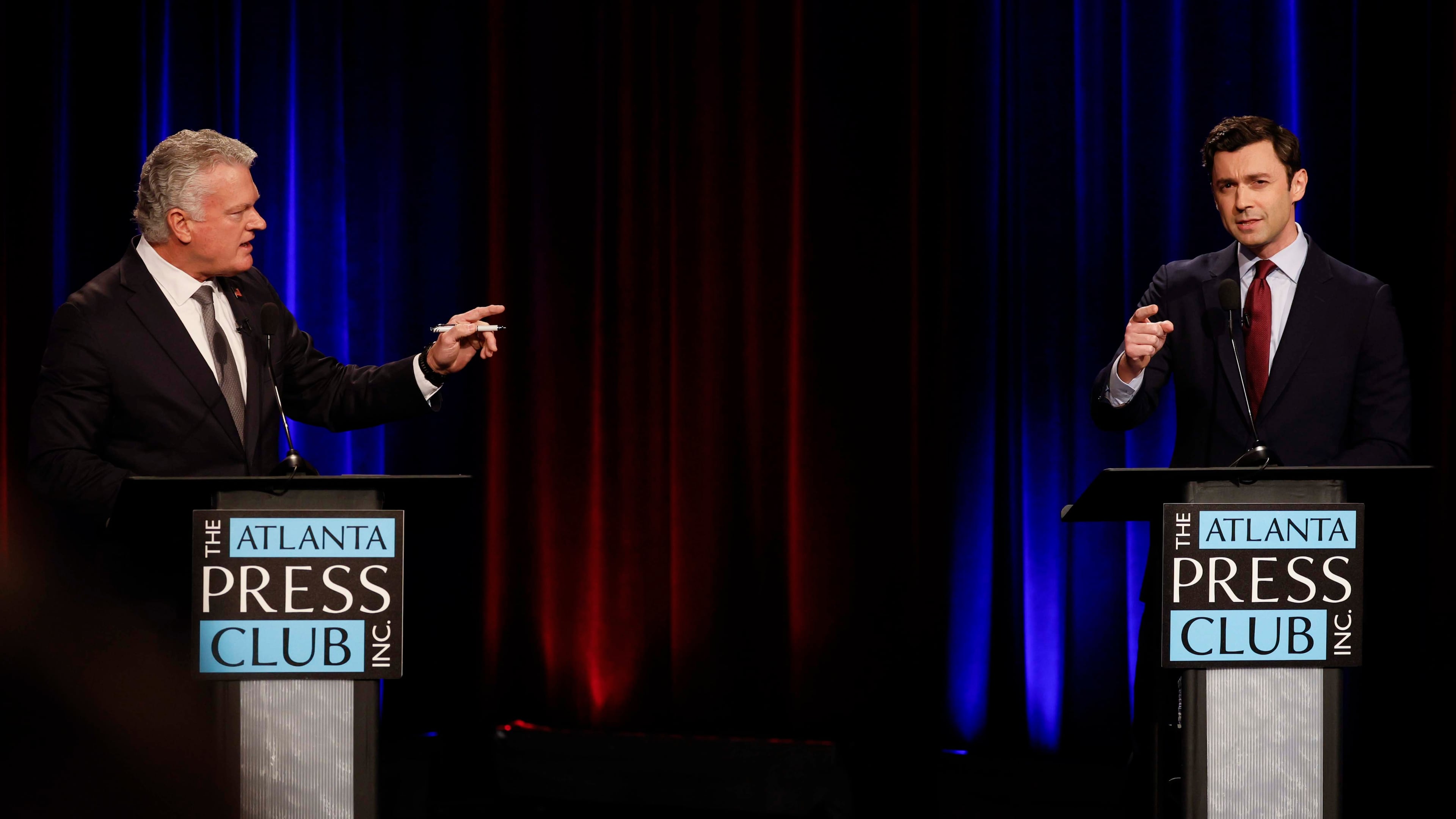

After spending much of his first debate against U.S. Sen. Jon Ossoff on the defensive, U.S. Rep. Mike Collins came out swinging Tuesday night.
Collins’ opening statement during the hourlong event hosted by the Atlanta Press Club as part of its Loudermilk-Young Debate Series included sharp attacks and name-calling.
“This is a race between Georgia and Georgetown,” he said. “Somebody who has created jobs and opportunities right here in Georgia on this red clay, versus a globe-trotting, trust fund kid who got to the Senate and then, at every turn, has voted to make our life less safe, more expensive and worse off.”
Ossoff launched his own attack by saying he planned to hold Collins accountable for his position on the issues and his many controversies.
“We’re going to pick up right where we left off last week and ask him questions he refused to answer,” Ossoff said.
Insults and unanswered questions were largely the theme of Tuesday night’s debate, which was streamed online and aired live on Georgia Public Broadcasting stations.
Here are five takeaways from the debate.
Collins sharpened his attacks
It appears that Collins and his team wanted to hit back stronger at Ossoff after it looked like Ossoff got the best of him during their first debate last week.
In his opening statement, he called Ossoff a “coward who lies about his accomplishments and views his success not as what he does for Georgia, but the number of jokes that he gets on social media and the praises that he gets from his radical friends.”
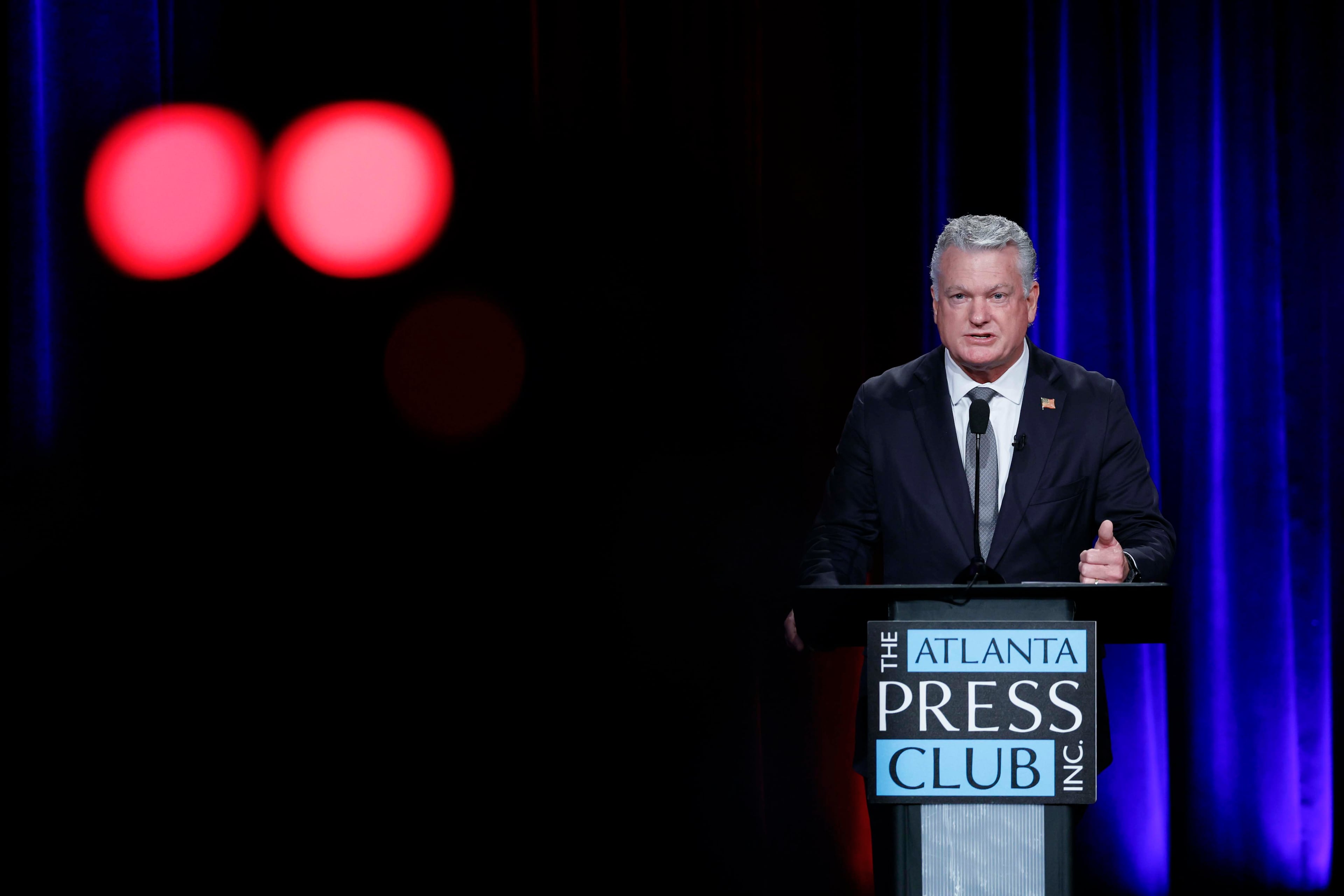
Later, he accused Ossoff of being “too cowardly” to support to the Laken Riley Act, named for a Georgia student killed by a man who entered the country illegally, until it was politically expedient to do so.
Ossoff, who is known for his pointed attacks, repeatedly asked Collins to denounce his perceived ties to white nationalism.
Crosstalk
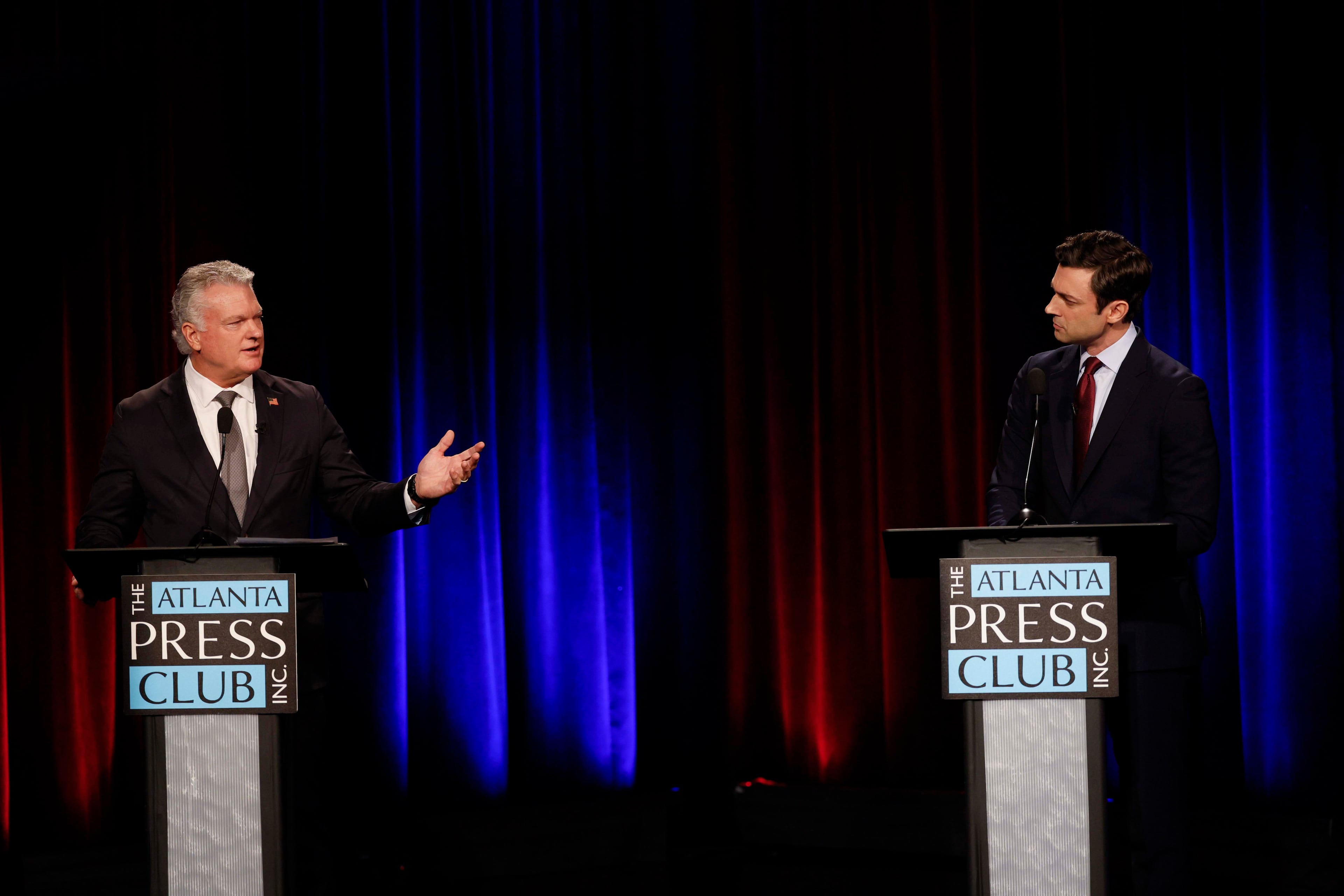
The debate rules included opportunities for rebuttals and even allowed the candidates to ask one another questions. But the back-and-forth often led to chaotic crosstalk as Ossoff and Collins each insisted on the last word.
The most potent example of this was when the debate focused on Collins’ ties to people accused of spreading white nationalist and neo-Nazi messages, including his son-in-law.
Collins took that opportunity to bring up Reid Hoffman, a donor to Ossoff who was also named in the Epstein files.
As they traded barbs, both of their microphones were muted.
“We are going to have to move on, gentlemen. We are going to have to move on,” host Donna Lowry said.
A lot of Reid Hoffman
Collins mentioned Hoffman at least 10 times during the debate, often as a rebuttal to questions about his own associates.
Hoffman, a co-founder of LinkedIn, was an associate of convicted child trafficker Jeffrey Epstein. Hoffman says he regrets forging a relationship with Epstein and has never been publicly accused by victims of sex trafficking. But conservatives have faulted Ossoff for accepting donations from Hoffman.
“Jon Ossoff has been out there running ads (about) protecting children, paid for by one of Jeffrey Epstein’s friends, Reid Hoffman, a man who visited the Epstein Island and is also leading a million-dollar super PAC that’s supporting his campaign,” Collins said.
Hoffman has donated $7,000, the maximum allowed, directly to Ossoff’s campaign. He also donated $1 million to a political committee associated with Ossoff called New Engagement PAC, Fox News reported.
Collins demanded that Ossoff return the money. Ossoff fired back, albeit without talking about Hoffman.
“Mike, you really want to mention the Epstein files?” he asked. “You only voted to release the Epstein files after Donald Trump gave you permission.”
Collins clarifies abortion position
Ossoff brought up that when Collins was first running for Congress four years ago he said he supported banning abortions “without exception.”
“He believes that if you are in a late-term pregnancy and you risk hemorrhaging to death or irrevocable injury you must not be able to terminate that pregnancy,” Ossoff said. “That’s what he said. Let’s see if he tries to change his position tonight.”
Collins responded that he support’s Georgia’s current abortion law, including language that allows abortion in some cases.
“The Georgia Legislature got it right that the governor and Legislature allowed for three exceptions with the heinous rapes or incest or in the life of the mother,” Collins said. “But my opponent Jon Ossoff is completely the opposite; he’s all for abortion up and to and past birth.”
Ossoff said he supports “the standard of privacy that was established in Roe v. Wade” when it comes to abortions. But he said Collins needed to account for his shifting position on an abortion ban “without exception.”
Collins said his words four years ago were being misinterpreted. He clarified that when he said “without exception” he didn’t mean a total ban but that had no reservations about supporting Georgia’s law.
Ossoff defends voting for Laken Riley Act
Ossoff said he does not regret supporting the Laken Riley Act, named for a nursing student killed by a man who entered the country illegally. But he also criticized the Trump Administration’s heavy-handed enforcement.
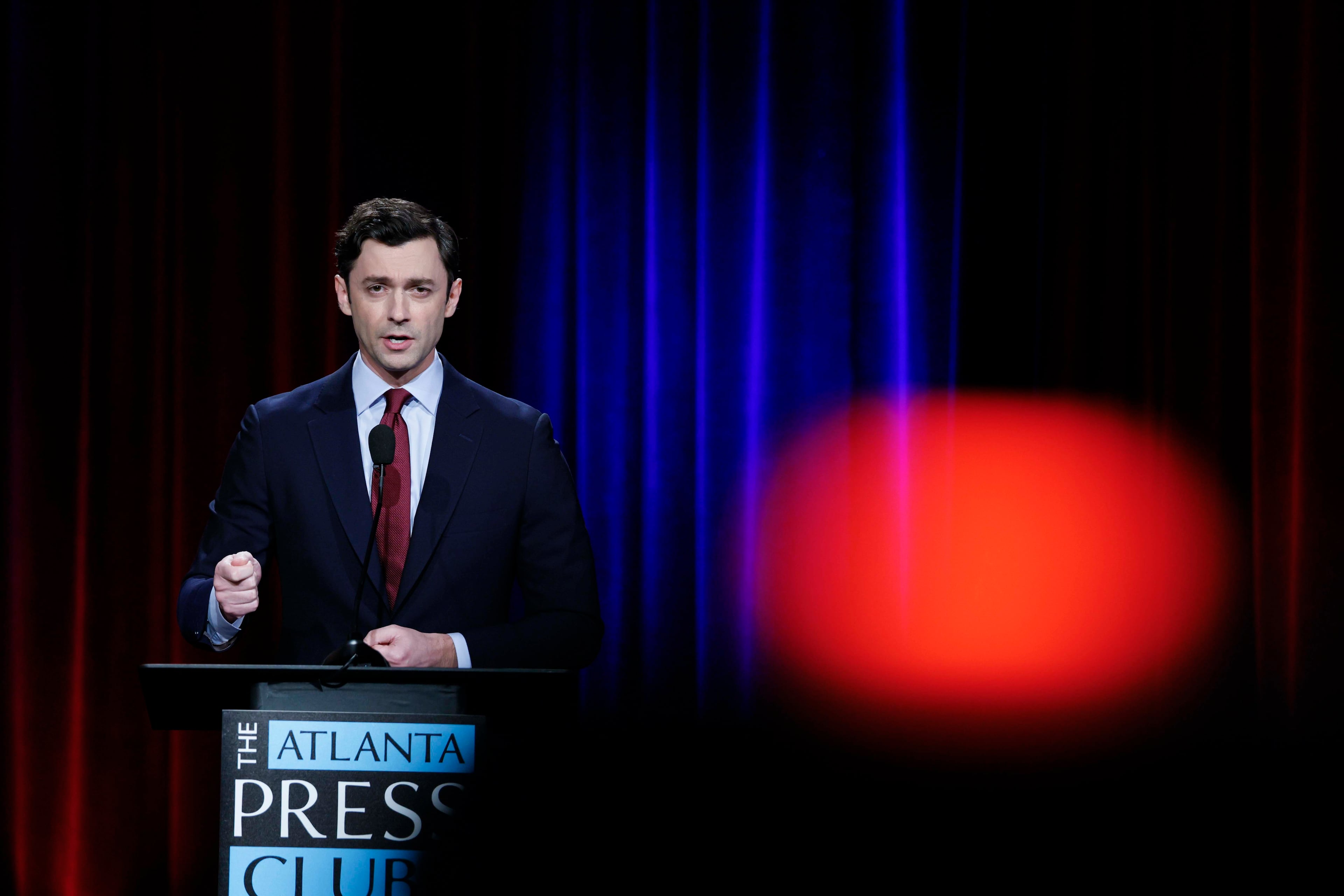
“If you’re in the United States illegally and you commit a crime, you’ve got to leave,” Ossoff said. “It is also right that provisions of that law were over-broad, and we need to address that.”
He said that Trump, with Collins’ support, was responsible for detaining people with no criminal records, separating families and the deaths of American citizens caught up in federal action.
He also called out a social media post by Collins where he joked about killing a migrant accused of assaulting a police officer by pushing him off a helicopter into the ocean.
Collins did not address his post, but he said that he was proud to serve as the primary sponsor of the Laken Riley Act.
“I know the Laken Riley Act has been responsible for removing over 20,000 illegal criminals from our streets, making this country safer,” he said.