Bottoms touted changes to cash bail as mayor. Republicans are using it against her.
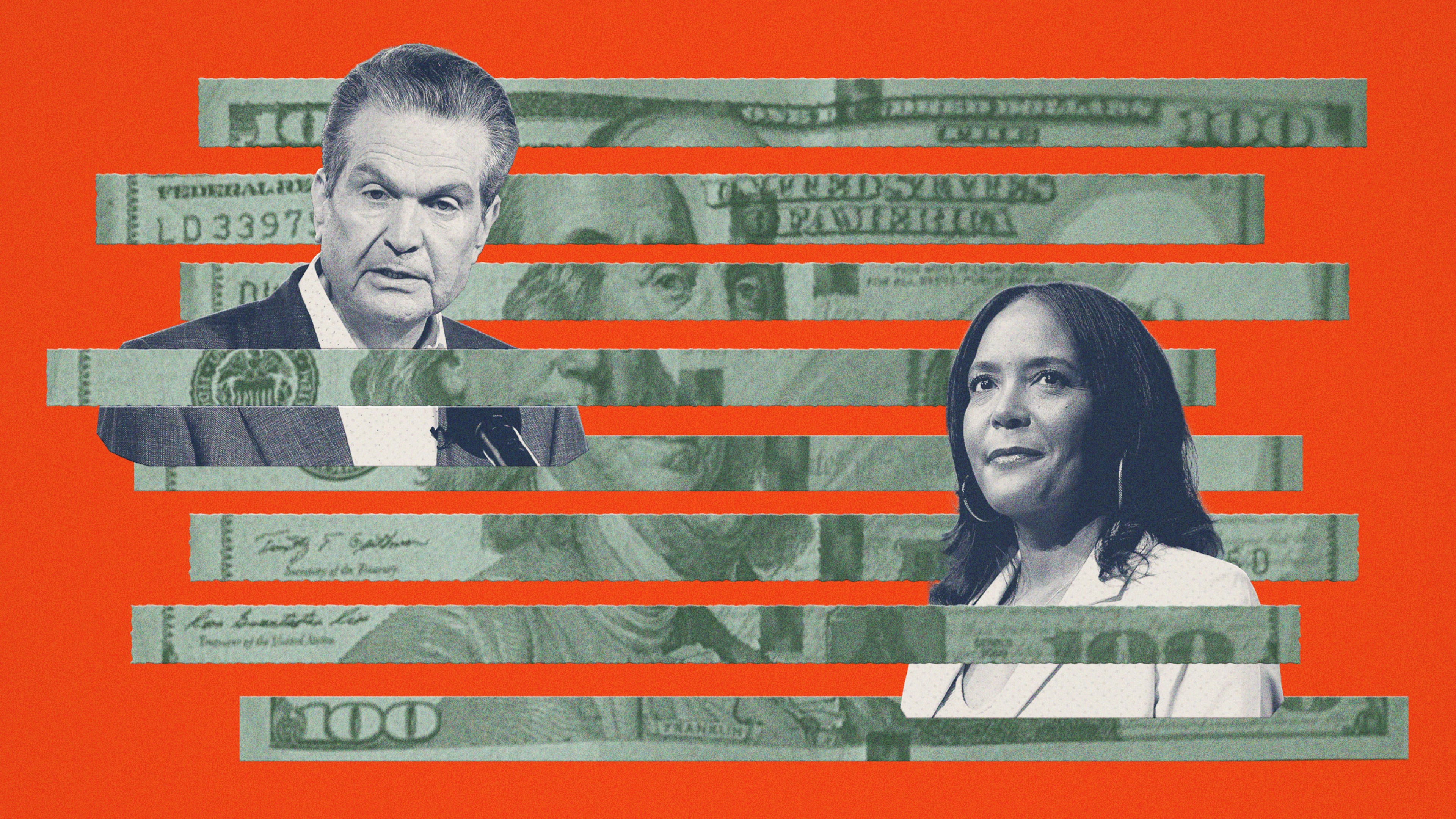

In her first act as mayor of Atlanta in 2018, Keisha Lance Bottoms signed an ordinance ending cash bail for low-level offenders — a measure aimed at saving taxpayers money and preventing people from languishing in jail simply because they couldn’t afford to pay.
It was praised by criminal justice advocates as a step toward a new, more thoughtful approach to the court system. Just a few months later, then-Republican Gov. Nathan Deal would sign a law requiring judges to consider a defendant’s financial status when setting bail.
But now that decision has become a flashpoint in Georgia’s race for governor as Bottoms, the Democratic nominee, fights off criticism from Republican Rick Jackson, who paints easing cash bail as a steppingstone to the spike in violent crime that plagued Atlanta during the coronavirus pandemic.
The city-level change did away with cash bail requirements for crimes related to traffic, city ordinance violations and nonviolent misdemeanor charges. It also gave the Atlanta City Detention Center the authority to release people with pending charges that were covered in the legislation.
In the two years after the change, the Atlanta Municipal Court reported the number of defendants not showing up for hearings had more than doubled, and one-third of them committed another offense before their first violation was processed. But the new rules remained in place.

Jackson’s campaign has made public safety during Bottoms’ tenure a key point of attack in his campaign, seizing on the cash bail change in a blitz of ads on social media. It has noted the low-level misdemeanor offenses covered included things like loitering, disorderly conduct, panhandling and trespass.
“The exact street-level behavior police use to interrupt gang activity, robberies and car break-ins before they happen,” Jackson spokesperson Garrison Douglas said. “When you tell people there is no consequence for the small stuff, you get more of the big stuff.”
The Bottoms campaign has defended the move, noting the cash bail change did not apply to people accused of violent crimes.
“Yet again, Slick Rick Jackson is lying about Keisha in a desperate attempt to run from his record of profiting off of Georgia’s pain and supporting 100% of Donald Trump’s disastrous agenda,” Bottoms’ spokesperson TaNisha Cameron said. “As governor, her priority will be keeping Georgians safe.”
It’s a debate Georgia voters have heard before. In the 2018 and 2022 races for governor, Democrat Stacey Abrams campaigned on eliminating the cash bail system for low-level offenders. Republican Brian Kemp pledged to expand cash bail for individuals with a history of avoiding court appearances.
It was a promise Kemp kept after he won. The state Legislature passed, and Kemp signed expanded cash bail requirements in 2024. The legislation added 30 offenses to the list of crimes for which judges must require cash bail.
Neither the Bottoms nor Jackson campaigns said whether they would seek changes to the state’s cash bail laws if elected.
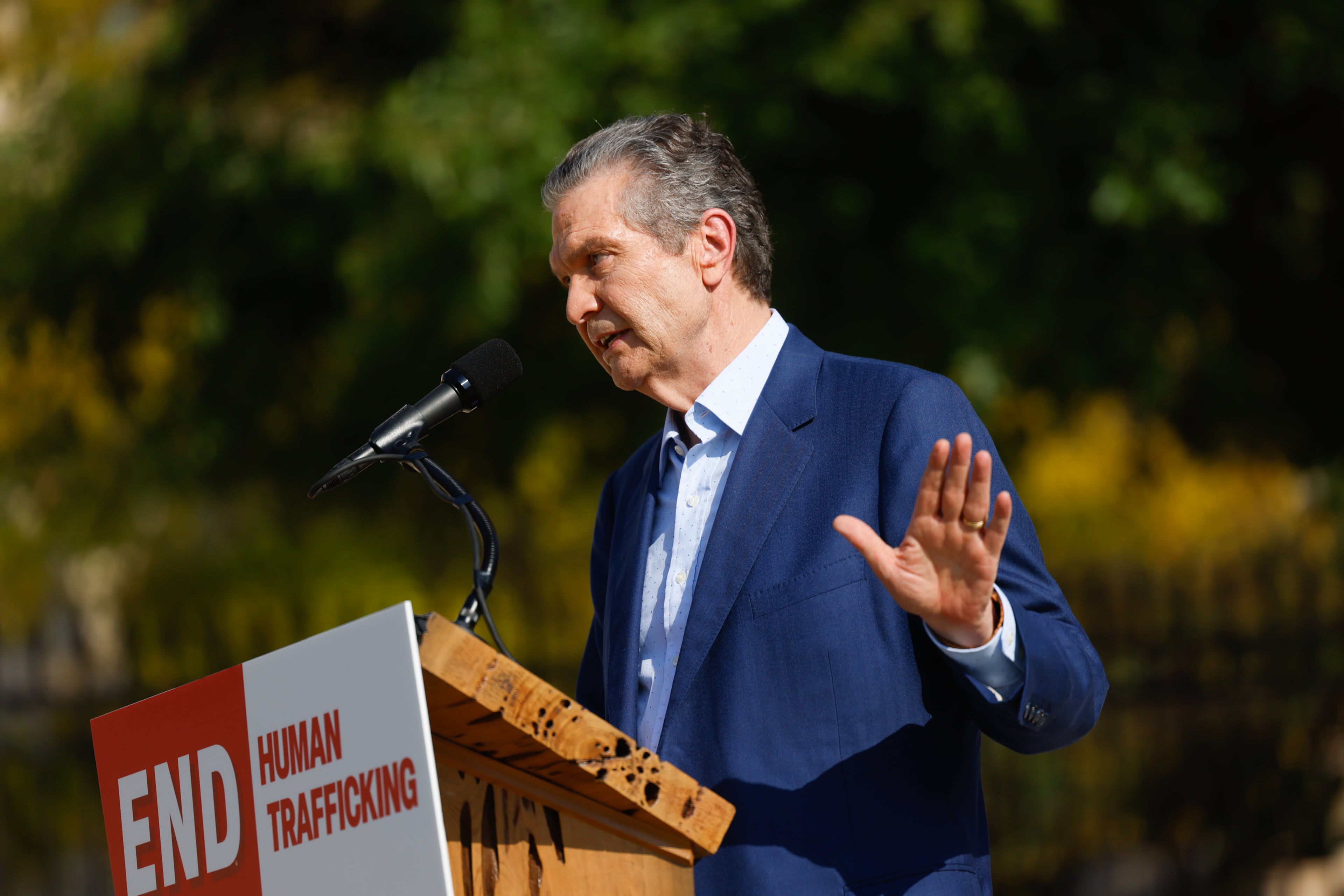
Last year, Trump signed an executive order threatening to punish cities for eliminating cash bail requirements, drawing national attention to the conversation over who should remain behind bars until trial.
Jeremy Cherson, director of communications for The Bail Project — a nonprofit that provides free bail assistance for low-income individuals — said the nationwide change in tone was largely driven by fears fueled by the COVID-19 pandemic.
The political rhetoric, he said, inaccurately conflates easing cash bail requirements for low-level offenders with violent crime increases.
“The truth is that explaining cash bail reform is much more complicated than the counter narrative, which is just ‘lock them all up,’” Cherson said.
Growing partisan divide over cash bail
Politicians from both political parties were racing to embrace criminal justice reform in the 2010s amid overcrowded prisons and growing cost pressures on state budgets.
Atlanta’s cash bail changes “were part of a larger culture in Georgia of being leaders in the nation on criminal justice reform,” said Tiffany Roberts, policy director for The Southern Center for Human Rights.
Criminal justice advocates say the positive attitudes eroded over recent years into contentious partisan fights at the local and national level.
“It speaks to the power of the negative messaging around bail reform as a proxy for soft-on-crime,” Roberts said.
The impacts of Atlanta’s cash bail ordinance did draw criticism inside City Hall and fueled calls to revisit the legislation years later.
Failure to appear cases ramped up in the months following the change. But supporters noted a cyberattack on Atlanta City Hall — which also impacted Municipal Court records — made a mandated six-month review of the impacts nearly impossible.
At a recent Atlanta City Council work session, Council member Michael Julian Bond slammed advocates who pushed for the cash bail ordinance in the first place, calling the city’s system “inferior.”
Bond told The Atlanta Journal-Constitution that his concerns around the legislation were related to a new process for how people were notified for their court appearances, which he said caused a dramatic spike in people not showing up to hearings.
The longtime council member — a vocal supporter of Bottoms — called Jackson’s ads “disingenuous” by inferring that easing cash bail requirements led to an increase in violent crime.
“You can only benefit from bail reform anywhere in Georgia if you’re charged with something that’s nonviolent,” he said.
Rodney Bryant, who was Atlanta’s police chief from 2020 to 2022 during the height of the pandemic, also said the cash bail changes did not impact police operations and crime “as we continued to put violent offenders and felonies in state court.”

The 2024 state law that expanded the list of offenses subject to cash bail superseded Atlanta’s ordinance. It included crimes such as drag racing, trespassing, unlawful assembly, forgery, racketeering and conspiracy. It also swept in lower-level, nonviolent offenses, including failure to appear in court for a traffic citation.
“What we were seeing was individuals were walking in the back door of the jail, basically to turn around and within 30 to 40 minutes they were walking back out with no repercussions at all — no bond, nothing,” said state Sen. Randy Robertson, R-Cataula, who sponsored the law.
But criminal justice advocates argue it unfairly jails poor Georgians who can’t afford to pay.
Roberts, with the Southern Center for Human Rights, said a common misconception around cash bail is that “the average person believes that bail and guilt are connected.”
“Bail is something that applies to people who are still presumed innocent — they have not been convicted of anything,” Roberts said. ”The only question that the court is asking is: may this person safely fight their case from their home?”