Is Georgia losing some of its political battleground luster?
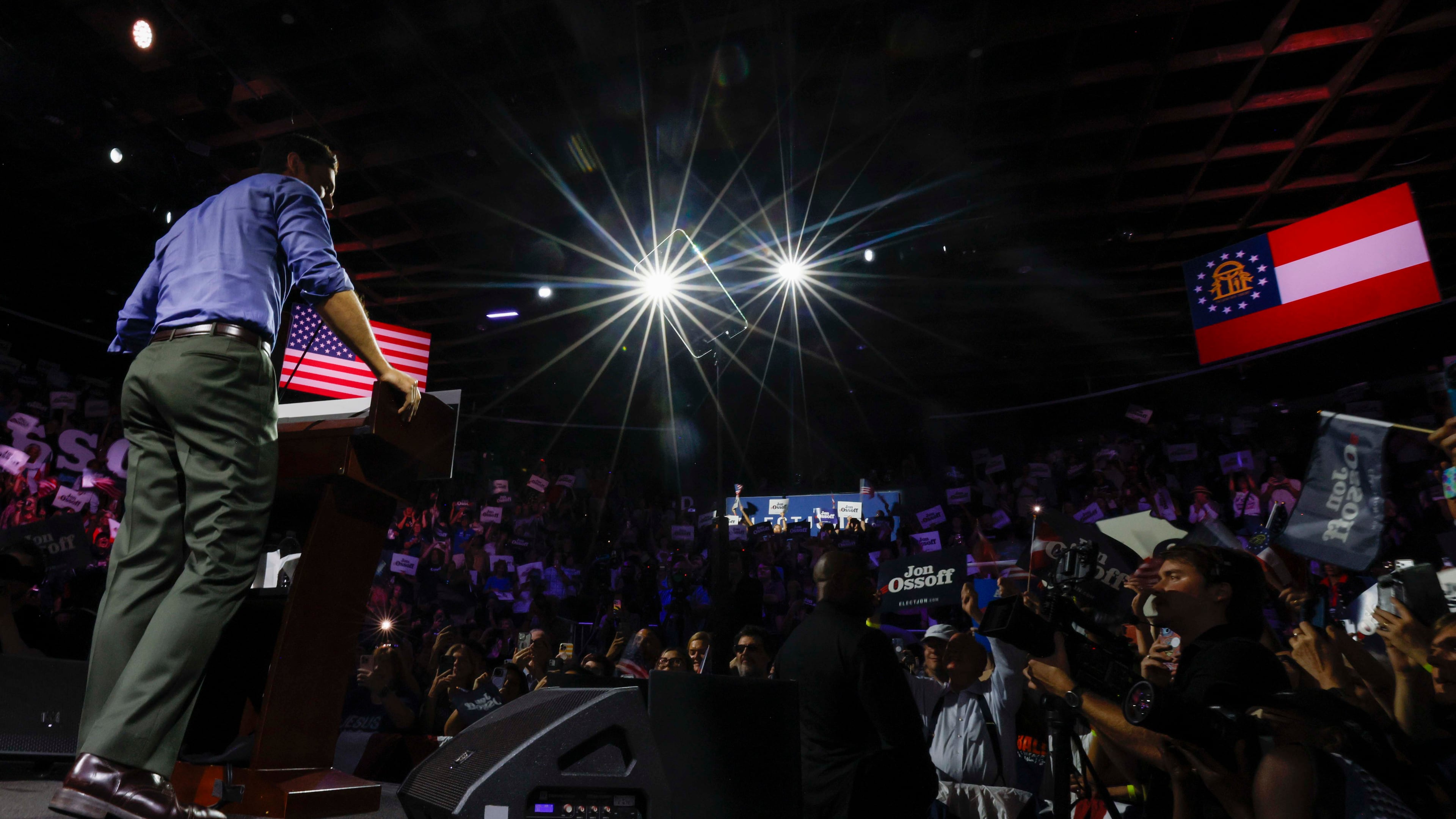

For six years, Georgia politicians barely had to ask for national attention. It came looking for them.
Joe Biden’s razor-thin victory here in 2020 made him the first Democratic White House contender to carry Georgia in nearly three decades. Donald Trump’s fixation on his defeat kept the state in the spotlight long after the votes were counted.
Twin U.S. Senate runoffs decided control of Congress. Two years later, U.S. Sen. Raphael Warnock and Herschel Walker fought one of the most closely watched races in the country.
Trump’s feud with Gov. Brian Kemp and other Georgia Republicans became a test of his grip on the GOP. And when Fulton County prosecutors charged him with trying to overturn his 2020 defeat, it became home for one of his most consequential legal battles, too.
Georgia seemed so central to Democratic ambitions that party leaders boasted of bringing their convention to Atlanta. Biden tried to vault the state to the front of the presidential primary calendar.
Georgia wasn’t just a political battleground. It sure felt like the center of the political universe.
Lately, though, the universe seems to be expanding. And as Georgia’s fall campaign kicks into high gear, there are growing signs that the state no longer commands the singular national attention it once did.
Democrats passed Georgia over this summer when they selected six other states to open the 2028 voting schedule. Weeks later, Atlanta was bounced from its quest to host the Democratic National Convention for the second consecutive cycle.
Not long ago, party leaders were fighting to prove the state belonged on the national battleground map. Now they’re fighting to make sure it stays near the top of it.
“Everything we’re hearing at the national level is that the path to victory for Democrats runs through the South, but national party leaders are continually ignoring that,” said state Rep. Michelle Au, a Johns Creek Democrat.
“If you want to grow the party, you have to go where growth is possible. And they’re just not doing that.”
Even Georgia’s marquee 2026 contest is no longer quite the matchup it once seemed destined to be.
U.S. Sen. Jon Ossoff entered the cycle as one of the most vulnerable Democratic incumbents in the nation, the only one up for reelection in a state Trump won in 2024. Republicans quickly committed tens of millions of dollars to defeat him.
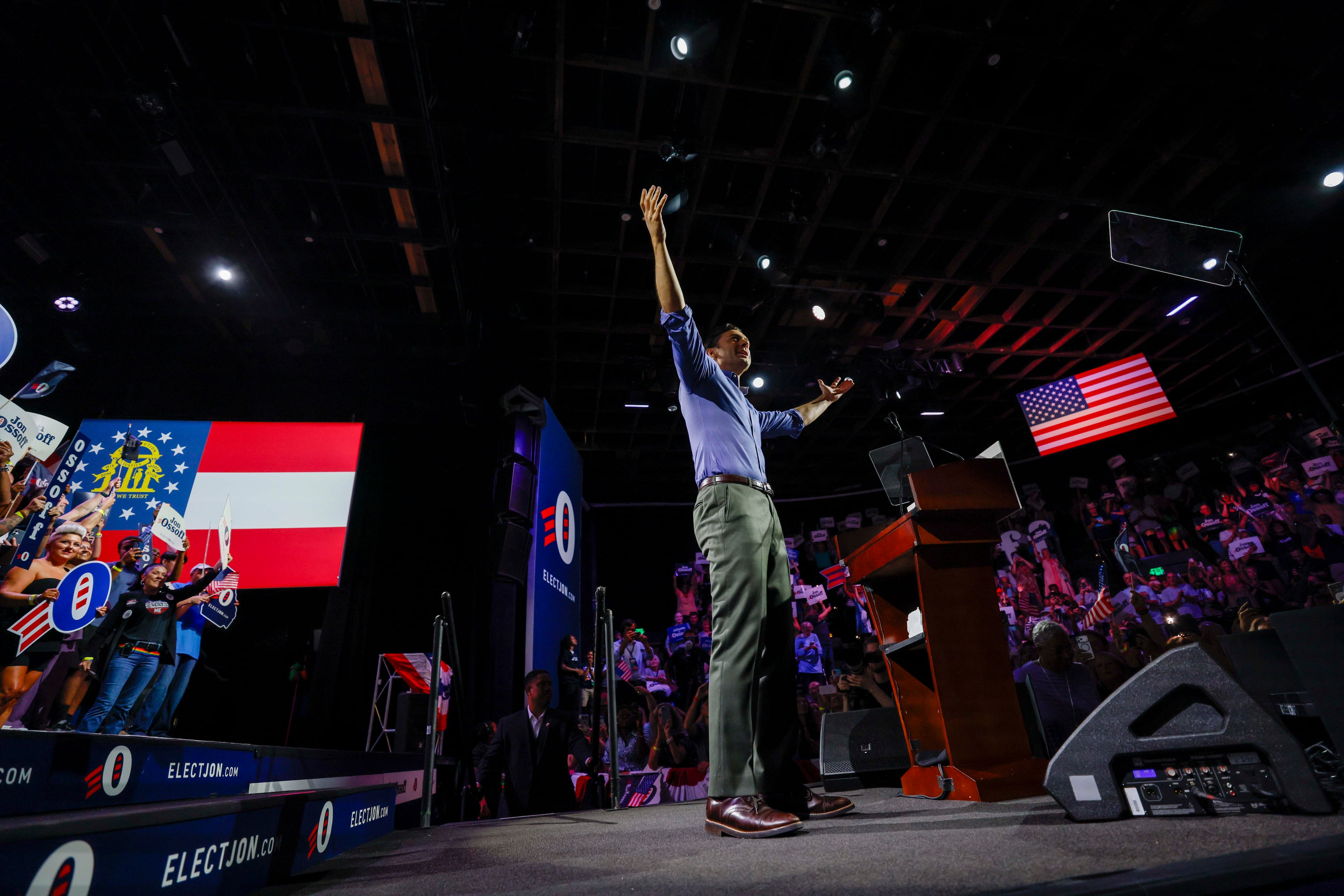
But Ossoff now leads Republican U.S. Rep. Mike Collins in every major public poll, commands a vast fundraising advantage and has some GOP strategists worried about a lopsided defeat. The national chatter around Ossoff is focused more on his 2028 presidential potential than his November chances.
Meanwhile, other states are elbowing their way back onto the battleground map.
Texas, long the white whale of Democratic politics, suddenly boasts a genuinely competitive Senate race. So does Iowa, now considered a toss-up. Contests in Alaska, Maine and Ohio are drawing money and attention that not long ago seemed destined for Georgia.
And Ossoff now finds himself confronting questions about whether his enormous campaign stockpile and the party’s national resources would be better spent helping Senate candidates elsewhere.
“I don’t believe the polls or make decisions based on the polls,” Ossoff said, adding that he’s taking nothing for granted. “I’m running every day like I’m behind.”
‘Focused on the future’
That doesn’t mean Georgia has suddenly become a forgotten political backwater.
Trump reclaimed the state in 2024 by just 2 percentage points. Democrats could capture the governor’s office and other statewide posts they haven’t controlled in decades, and have an outside shot of flipping the Georgia House.
The FBI’s seizure of hundreds of boxes of Fulton County’s 2020 election records offered a jarring reminder that Trump’s false claims of a “stolen election” still hang over state and national politics.
And some of Georgia’s most prominent political figures are already spilling into the conversation about 2028.
Even though Ossoff has firmly rejected White House talk, prediction markets peg him as an early favorite. His Georgia counterpart, U.S. Sen. Raphael Warnock, is drawing his own speculation as he expands his profile. Former Republican U.S. Rep. Marjorie Taylor Greene is in a constant, and very public, fight over who gets to inherit the future of Trump’s MAGA movement.

The demographic and political forces that transformed Georgia haven’t suddenly petered out. The suburban realignment and rise of split-ticket voters that made the state competitive are still in play.
What has changed is the competition. Georgia’s emergence over the last decade coincided with a shrinking battleground map as states like Florida, Iowa and Ohio became less competitive.
That left Georgia among a small clutch of states commanding an outsized share of campaign money, visits by presidential candidates who once spurned the state and heaps of national attention.
Now some old battlegrounds are flickering back to life, and some unexpected ones are joining them. Georgia suddenly has more competition for the national spotlight.
But that doesn’t mean ambitious national politicians are looking away.

Former U.S. Transportation Secretary Pete Buttigieg, a potential Democratic 2028 hopeful, recalled a time when pundits and party leaders “wrote off Georgia, just assumed it’s a red state that wasn’t worth competing in.”
Now he sees Georgia as a “purple state trending blue” that remains at the heart of a national dialogue over split-ticket voters. And he’s been working to deepen his ties to the state.
“Anybody who is focused on the future of the national Democratic Party is, or ought to be, paying a lot of attention to Georgia right now,” he said.
‘An opportunity missed’
Perhaps nothing illustrates Georgia’s anxiety about its place in that new landscape more than the reaction to the recent Democratic snubs.
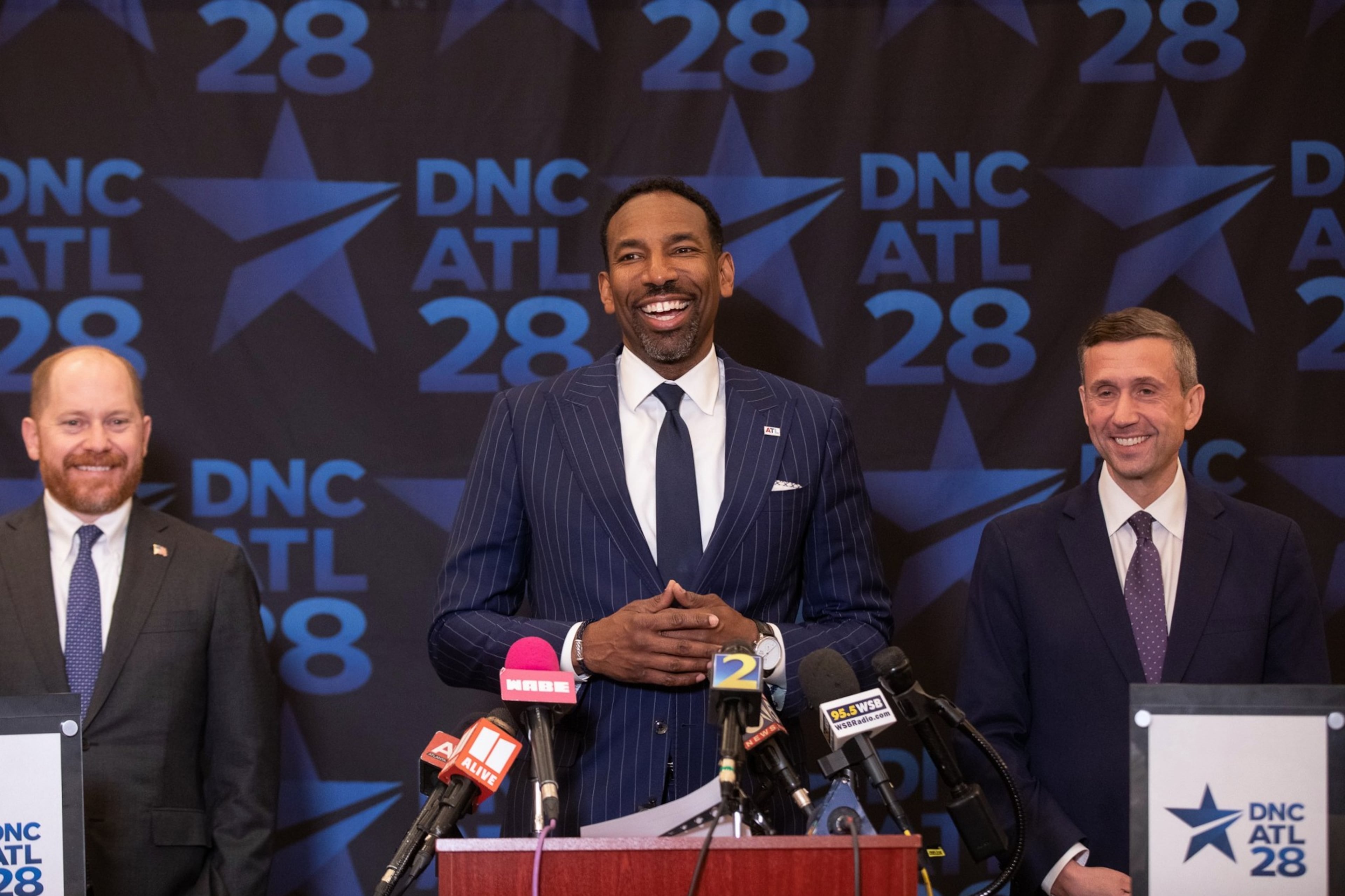
A furious Atlanta Mayor Andre Dickens blasted national Democrats for retreating to “safe spaces” rather than embracing a region that will determine the party’s future.
“They are abandoning Atlanta, abandoning the South, and once again abandoning Black voters,” he said.
State Democratic Party Chair Charlie Bailey called the convention snub a strategic mistake that deprives his party of a generational opportunity to deepen its foothold in the South.
“Nothing against all those other wonderful American cities, but I think it should have come here,” he said, pointing to the region’s explosive growth. “We have got to have more strongholds in the South, not just battlegrounds. It was an opportunity missed.”
Now state Democrats are using the snubs to sharpen a familiar pitch that Georgia still belongs near the top of the map, this time for the 2028 cycle.
“Georgia is more than a swing state. It’s more than that — a bellwether for Democratic performance nationwide,” said longtime Democratic strategist Fred Hicks. “And it deserves significant top-tier investment.”