Libertarians won’t be on the ballot in Georgia, meaning likely no runoffs
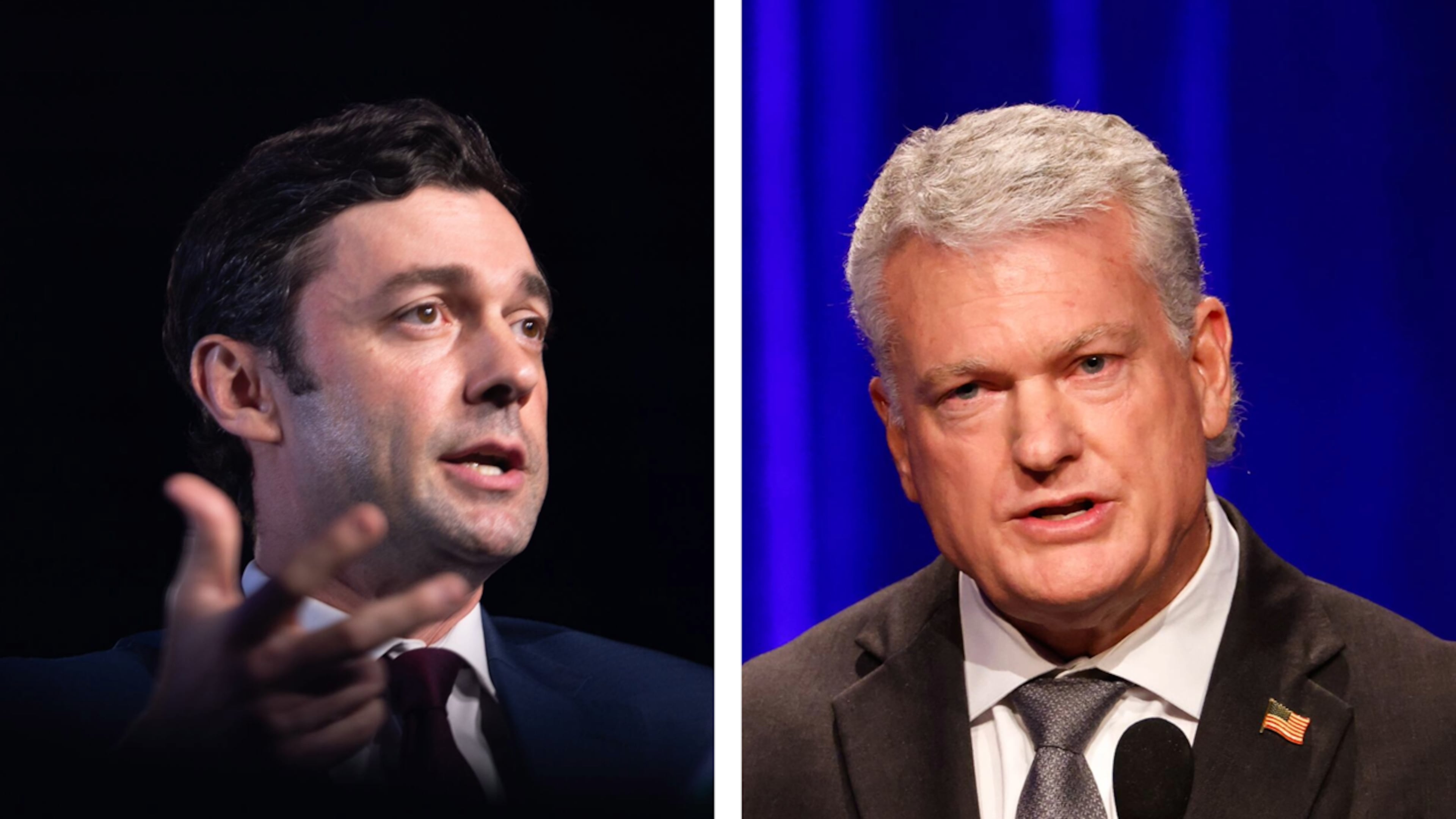

One of the biggest wild cards in Georgia politics won’t be on the November ballot. It means there likely won’t be statewide runoff races in Georgia this year.
The Libertarian Party of Georgia said it can’t submit the roughly 72,000 signatures required by the Tuesday deadline to qualify statewide candidates for the ballot.
It means Georgia voters won’t have a Libertarian option in statewide races in November, removing third-party candidates that have repeatedly forced high-profile contests into overtime elections.
“It is clear that the current law exists simply to advantage Democrats and Republicans, who have never had to petition to get onto the ballot as they were grandfathered in when the law was first written,” said Brian Allen, the party’s acting chair.
State law says third-party candidates must win at least 1% of the vote in a statewide election to automatically qualify for the next election. If they don’t, they have to collect signatures of 1% of active voters. That’s about 70,000 signatures in Georgia.
Libertarian presidential nominee Chase Oliver, also a former Georgia candidate for higher office, received only 0.4% of the Georgia vote in 2024.
It marks the likely end of one of the most unpredictable forces in Georgia politics this election cycle, though Libertarian contenders can still try to run as write-in candidates.
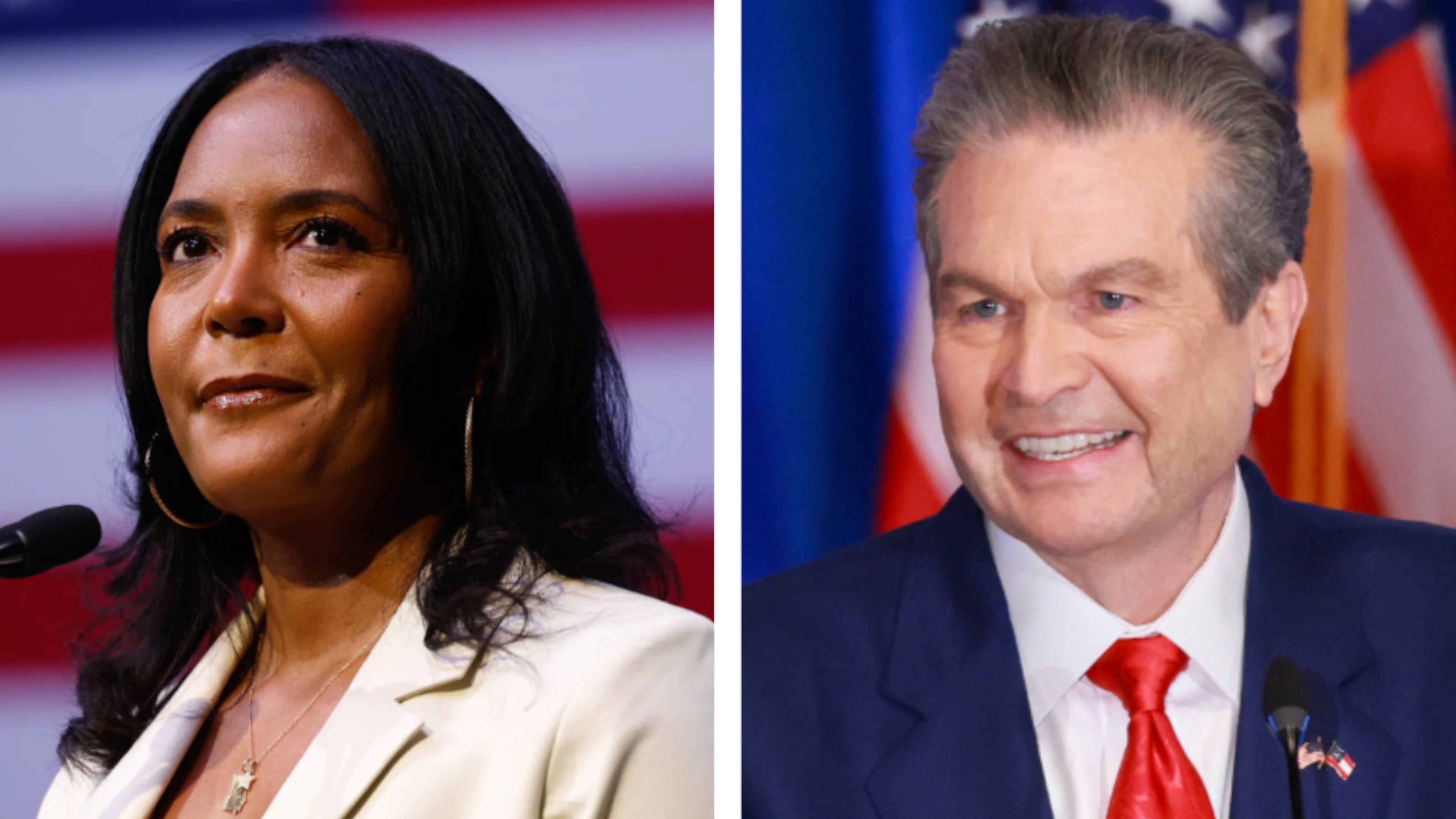
It also means the marquee contests between Republican Rick Jackson and Democrat Keisha Lance Bottoms for governor, and Democratic U.S. Sen. Jon Ossoff and Republican U.S. Rep. Mike Collins for the Senate, will now almost certainly be settled with the Nov. 3 vote.
A runoff is still theoretically possible, but highly unlikely. Georgia law requires a statewide candidate to win more than 50% of the vote, so an extraordinarily close race combined with a small number of write-in votes could still send the top two finishers into overtime.
But without a Libertarian candidate on the ballot, the dynamic that helped force Georgia’s modern runoffs is gone.
Reshaping politics
Libertarian candidates rarely win more than a few percentage points. But in Georgia, that’s enough to change everything.
Georgia law requires statewide candidates to win an outright majority, not just a plurality, of votes. Even a modest Libertarian showing could keep Republicans or Democrats from reaching the 50% needed for victory and force a runoff weeks later.
Those overtime races have often reshaped politics in Georgia and beyond.
In 1992, Libertarian Jim Hudson won about 3% of the vote, preventing Democratic U.S. Sen. Wyche Fowler from an outright victory. Republican Paul Coverdell ultimately won the runoff, an upset that lifted GOP prospects in an era dominated by Democrats.
Nearly three decades later, Libertarian Shane Hazel captured enough votes in the 2020 U.S. Senate race to keep Republican David Perdue a whisker below the majority threshold, triggering the January 2021 runoff that Democrat Jon Ossoff won.
Combined with Raphael Warnock’s victory over Republican Kelly Loeffler in a separate Senate runoff, the results handed Democrats control of the U.S. Senate.
In 2022, Oliver won roughly 2% of the vote in the Senate race, pushing Warnock and Republican Herschel Walker into a December runoff that Warnock ultimately won.
Those elections helped cement Georgia’s reputation as the nation’s runoff capital, drawing a torrent of outside spending and armies of campaign staff and volunteers after Election Day.
They also drove many Georgians to exhaustion. While campaigns elsewhere around the nation packed up, Georgians endured weeks, and sometimes months, of additional television ads, text messages, mailers and candidate visits through holiday season.
The 2020 Senate runoffs stretched through Thanksgiving, Christmas and New Year’s Day before deciding control of the U.S. Senate, prompting lawmakers to shorten Georgia’s runoff period from nine weeks to four.
While many Georgians will cheer the shorter campaign season, the change also deprives voters of a third-party option in the state’s biggest contests, in part because of restrictive ballot-access laws.
Georgia’s rules date to a 1943 law originally enacted to block Communist Party candidates from the ballot. Over the decades, the statute evolved into one of the nation’s highest barriers for all third-party candidates.
Supporters argue the rules prevent overcrowded ballots and ensure candidates demonstrate meaningful support before automatically qualifying. But Allen and others counter that the requirements protect the two major parties and limit voter options.
Allen said the last time a third party successfully gathered enough signatures for statewide ballot access was in 2000.
“There is no valid reason why the state should require over 70,000 signatures for a candidate to be on the ballot when research has shown that it only takes a 5,000 signature requirement to prevent ballot crowding,” he said.