Georgia judges OK millions in wrongful conviction claims under new law
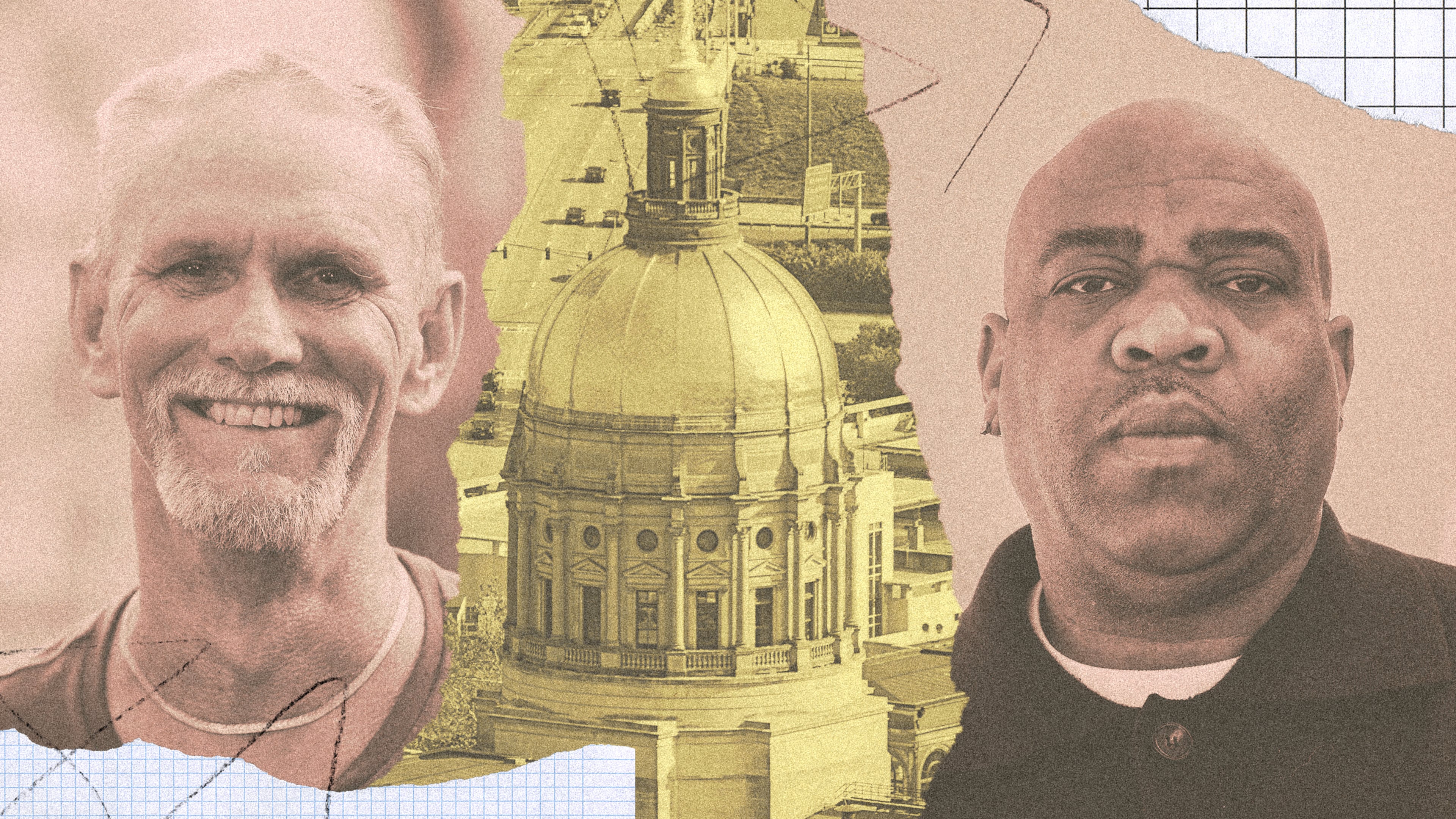
A year ago, the Legislature tasked a relatively unknown group of Georgia judges with something rare: building out a legal process from scratch to compensate Georgia’s wrongfully convicted.
At the time, there were few solid estimates of how many people would come forward, nor did anyone know how exactly the Office of State Administrative Hearings judges — in charge of creating the infrastructure — would handle the requests.
Over the past year, the court has seen a deluge of wrongful conviction claims: 56 of them as of late June, according to OSAH statistics. More than 60% have been rejected. And for the eight people who have been successful in proving their innocence, the results have varied greatly.
A nearly $1.6 million award was approved last month for Dennis Perry, who spent 21 years in prison and was exonerated in 2021 after DNA evidence and extensive reporting from The Atlanta Journal-Constitution tied another suspect to a 1985 double homicide near Brunswick. Ronnie Bartlett, whose conviction for running an illegal gambling operation at his restaurant outside of Warner Robins was overturned in 2019 after two years in prison, received no compensation but nearly $10,000 in attorney’s fees in April because he did not provide definitive evidence of his incarceration dates.

Meanwhile, a claim from Samuel Scott, a Savannah man on the National Registry of Exonerations, was denied because he “did not prove that he did not commit the crime for which he was convicted,” according to OSAH. In 2002, Scott was cleared by DNA evidence after spending 15 years in prison for a 1986 rape.
So far, the judges — otherwise known for handling driver’s license suspensions and weedy disputes between the public and state agencies, not criminal law — have approved more than $6.4 million in awards, though some of those judgments have been appealed. Thirty-four people have seen their claims denied. And 14 are awaiting decisions from OSAH .
In interviews with The Atlanta Journal-Constitution, many stakeholders say the process is overall functioning as intended.
“You always worry when you start something new like this that there would be so many stalls and delays. But as I understand it, it seems to be established, and the claims being heard and adjudicated,” said state Rep. Katie Dempsey, R-Rome, who worked for years to get the legislation passed through the General Assembly.
Others say they believe the Legislature should clarify legal gray areas.
One of them is Pete Skandalakis, the executive director of the Prosecuting Attorneys’ Council of Georgia. He said the state agency, which represents the interests of prosecutors, is “surprised at the number of cases that have been filed and concerned about the amount of time that already understaffed DA’s offices are having to devote to these matters.”
Kristin Verrill, executive director of the Georgia Innocence Project, said it’s not a surprise that different strategies from attorneys representing the wrongfully convicted have yielded divergent results.
“We do think that the law is doing what it’s intended to do, which is to provide a consistent process for seeking compensation if you’ve been wrongfully convicted and incarcerated,” said Verrill, whose organization worked to clear the name of many of the people seeking compensation.
Parsing through claims
The passage of the wrongful conviction law was one of the big surprises of the 2025 legislative session. Similar proposals had floated around the state House for years.
Before it passed, people seeking compensation were required to navigate the highly partisan world of the General Assembly, which led to wildly inconsistent awards — if they were granted at all.
Proponents had argued Georgia needed to get in line with more than three-dozen other states and the federal government, which had standardized the way it compensated people to try and insulate the process as much as possible from politics.
The new law set out the parameters: People who had been acquitted, pardoned or had their convictions reversed or vacated were entitled to roughly $75,000 for each year they wrongfully spent behind bars, and $100,000 per year on death row. But first they needed to prove their innocence by a preponderance of evidence — in other words, that it’s more likely than not they didn’t commit the crime of which they were convicted.
OSAH judges met with stakeholders and their peers in other states as they began planning.
Almost immediately, it became clear that some of the applicants were ineligible, according to Madison Mischik, a staff attorney for OSAH. The court received applications from people who might have spent time in jail pretrial but were ultimately acquitted. Or they were convicted and served their prison sentences, but their convictions were never overturned or vacated. In one case, a woman who sought compensation had received a pardon, but an OSAH judge determined the pardon wasn’t based on her innocence.
So court staff created a process to filter out ineligible people.
Overall, Mischik said the court has been able to keep up with the pace of new claims.
“There has been a learning process, I think, for all parties involved … and we’ve had to figure some things out as we’ve gone along, but I think it’s been going very well,” she said.
Hearings before the OSAH judges have a decidedly different feeling from a typical criminal trial.
There are no juries, just a single judge. Unlike a regular trial, where prosecutors take the lead in presenting evidence and defense attorneys try and poke holes in the case, OSAH’s compensation hearings are essentially reversed. Attorneys representing the claimants have the burden to show their clients did not commit the crime, which often requires boiling down thousands of pages of records from their client’s previous trial and appeals into something digestible.
At a typical criminal trial, defense attorneys often opt against putting their clients on the witness stand, out of fear they could say something under cross-examination that could hurt their case. But attorneys who have presented compensation claims before OSAH say they have quickly learned their clients are far more likely to be successful if they do testify.
“It’s sort of like in a civil case, where having a sympathetic plaintiff, somebody who speaks well and expresses themselves, makes a huge difference to your chances of success,” Atlanta defense attorney Andrew Fleischman said.
Some of the more closely contested claims have felt like mini trials, with multiple expert witnesses testifying.
That was the case in May, when Ashley Jordan, whose experience with the criminal justice system was the focus of Season 11 of the AJC’s true crime podcast “Breakdown,” presented her compensation request before a judge.
Jordan’s attorneys called two expert medical witnesses to testify that the former Army officer didn’t kill her 3-day-old daughter in 2008 and that the baby instead died of natural causes. Meanwhile, the Muscogee DA’s office, which contested the claim, called the medical examiner, whose testimony was critical to sending Jordan and her then-husband, Albert Debelbot, to prison for more than 12 years before the state Supreme Court vacated their convictions. An OSAH judge on Wednesday ruled that both Jordan and Debelbot proved their innocence and are eligible for compensation, but has not determined an amount.
Changes needed?
Some stakeholders say the Legislature needs to clarify certain aspects of the law, especially how to handle people who had previously received awards from the state before the new statute went into effect.
The issue has come up multiple times in recent months.
One prominent example involves John Jerome White, a man who was wrongfully convicted of a 1979 rape in Meriwether County and was later exonerated by DNA evidence.
In 2009, the Legislature signed off on a $500,000 award for White. His attorney argued the previous amount was part of a separate legislative process and thus shouldn’t count against what his client was entitled to under the new statute. An OSAH judge agreed, determining in March that White deserved a nearly $920,000 award. Prosecutors fought back, appealing to Superior Court.
Eventually the parties struck an agreement to account for the money that White had previously been given from the state. He will now receive roughly $546,000.
State Rep. Scott Holcomb, the Atlanta Democrat who worked for years to shepherd the legislation with Dempsey, indicated he’s open to reviewing the issue.
“We should also tighten up the language so that a poor charging decision does not allow compensation by someone who actually committed a crime,” he said. But Holcomb added that he’s pleased with the law’s implementation so far.
Others, meanwhile, want lawmakers to formalize the role of the state attorney general’s office in the process. Herb Cranford Jr., the top prosecutor for the Coweta Judicial Circuit, said DAs don’t have the legal authority to sign off on awards to claimants using taxpayer dollars and that the AG should be involved.
Verrill, the head of the Georgia Innocence Project, said her organization favors allowing more time for the law to play out before amending it — a position echoed by Dempsey, the Rome Republican who helped pass the law.
Verill said she felt like the OSAH judges were handling cases “appropriately and fairly.” But she did express frustration at how Scott, the Savannah man exonerated by DNA evidence, was denied a payout.
“Is disheartening to see because those are people for whom the law was intended to compensate,” she said.
Fleischman, the Atlanta defense attorney, has represented seven people who have sought awards before OSAH. He noted the current group seeking compensation is relatively large because the law as written allows old cases to be considered for only a short period of time. But after those cases are processed, the people who will be eligible for awards will be few and far between.
“These are people who won appeals, very difficult to do, and then persevered and went to trial, difficult to do, and then won that trial, difficult to do. So a subset of a subset of a subset,” he said.
“Probably, in a couple years from now, there will hardly be any of these cases anymore,” Fleischman said.