Fulton ruling hands Trump administration another loss amid election push
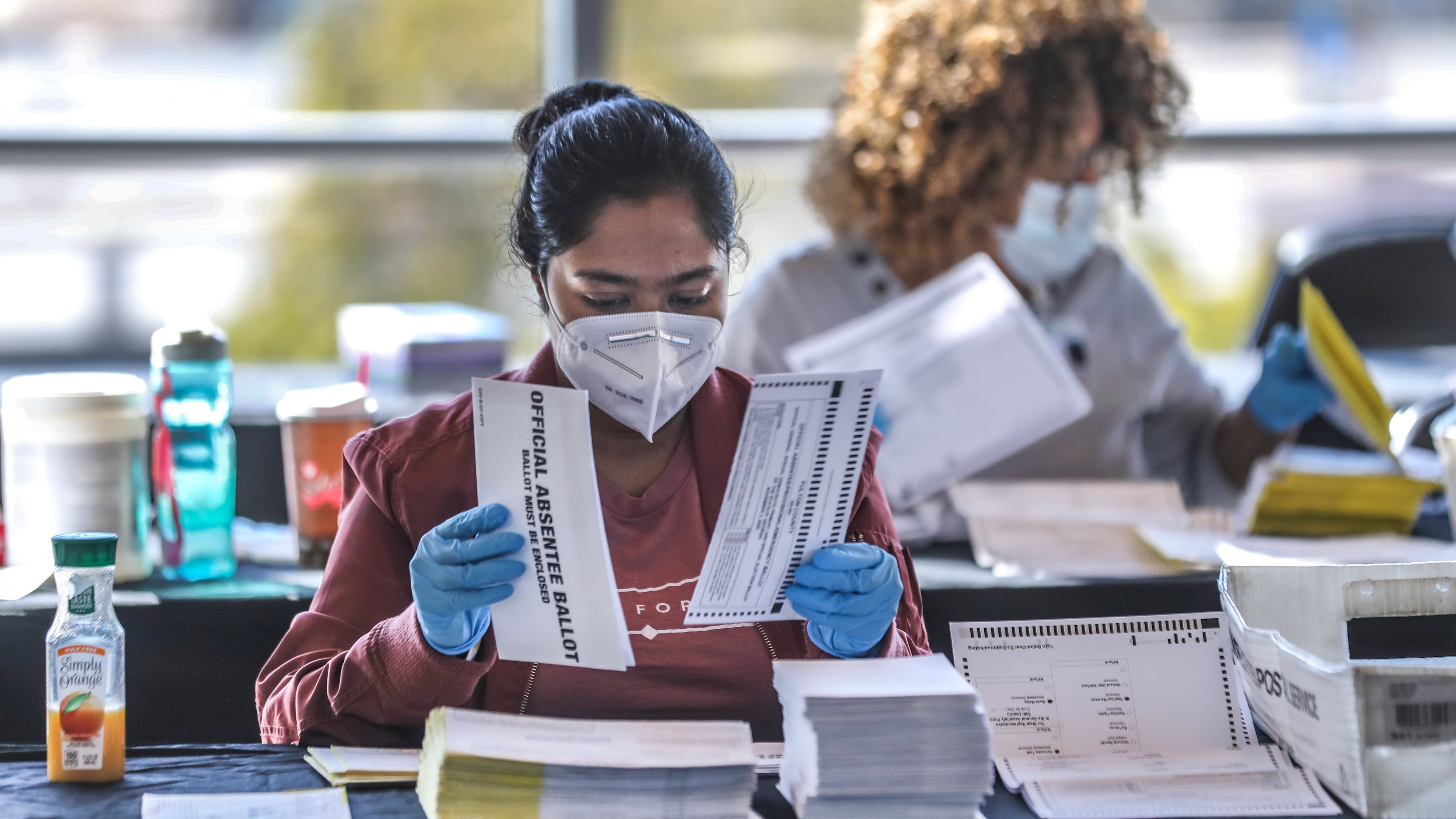

A federal judge’s decision to block a subpoena seeking the identities of thousands of Fulton County’s 2020 election workers is the latest in a string of defeats for the U.S. Department of Justice as it aims to carry out President Donald Trump’s pledge of retribution against his enemies.
Courts rarely block Justice Department subpoenas, as judges often give the government a wide berth to investigate wrongdoing. But U.S. District Judge Billy Ray II’s ruling this week was at least the third time this year the courts have blocked the Trump administration’s attempts to probe people and institutions he believes have wronged him.
In March, a judge in Washington quashed government subpoenas aimed at Federal Reserve Chair Jerome Powell, whom Trump has been trying to remove from office. And in June, a judge blocked a series of grand jury subpoenas aimed at Minnesota Gov. Tim Walz, who was former Vice President Kamala Harris’ running mate in the 2024 presidential election.
In the Fulton County case, Ray wrote that grand juries are “an independent entity” that operates with oversight from the court. While he said it’s true the grand jury works with the Department of Justice, “that does not give the DOJ the right to use the Grand Jury to do whatever the DOJ wants.”
Trump was indicted in four separate cases after he left office in 2021. The charges included falsifying business records, mishandling classified documents and trying to overturn the results of the 2020 presidential election. Trump was convicted in the business records case, which originated in New York. The other cases were all dismissed after Trump was elected to a second term as president in 2024, including an election interference case based in Fulton County.
Trump has said he is a victim of politically motivated prosecutors, and he vowed to carry out retribution once he returned to the White House. But some of his methods have run into roadblocks in the courts, which have included rulings from judges that Trump nominated to the bench. Ray, who quashed the Fulton County subpoena, was nominated by Trump back in 2017.
“His order joins what seems to be a landslide of court decisions that deny the Department of Justice the use of the government’s vast powers to pursue partisan ends rather than legitimate law enforcement,” Georgia State University law professor Clark Cunningham said.
The Justice Department’s Fulton County subpoena was part of an investigation that began in January. That month the FBI seized more than 600 boxes of Fulton County’s 2020 election records. Another Trump-nominated judge called parts of the affidavit used to justify the Fulton ballot seizure “troubling” and “defective.”

The subpoena sought the names, duties, addresses, email addresses and personal phone numbers of all of Fulton County’s 2020 election workers, both paid and volunteers. In a 28-page ruling, Ray called DOJ’s demand “staggering” and “an arbitrary fishing expedition.”
A DOJ spokesperson said the ruling jeopardizes a “long-delayed assessment of 2020 election processes” and that the department is “considering all options to challenge.”
Lynsey Barron, an attorney and former federal prosecutor, said grand juries exist to investigate crimes and charge people for committing crimes.
“It is not supposed to be used as a tool to gather intel on your enemies and that is something the Justice Department has been unabashedly doing for well over a year,” she said.
The rulings are part of a series of decisions against the Trump administration as it tries to investigate the 2020 race and assert more control over elections ahead of the midterms. The Justice Department has sued 30 states, including Georgia, demanding unredacted rolls of registered voters. The department has lost 11 of those cases so far. The Georgia case is still pending.
The Justice Department has shown no sign of slowing down. On Tuesday, it warned officials in Georgia and every other state they could face criminal prosecution for knowingly allowing noncitizens on voter rolls or allowing such voters to receive or cast ballots during federal elections. And a recently revealed internal FBI memo demanded that 260 analysts from across the country to each complete hundreds of “records checks” related to Fulton’s 2020 election as part of a “priority” investigation. The Trump administration has revealed no public evidence of wrongdoing.
Georgia’s 2020 election is among the most extensively examined in U.S. history, having been the subject of multiple audits, vote counts, investigations and court rulings. Ray’s ruling this week suggests the courts are increasingly skeptical that the Trump administration’s Fulton investigation serves any prosecutable purpose. The judge wrote the DOJ’s subpoena “threatens to chill participation in future elections.”
During a court hearing in May, Ray raised concerns about how the personal information of thousands of election staffers might be used.
“If it was provided to the president and it was improper to do so and he did disclose that information, I’m not really sure what I would do about it,” he said.