Georgia lawmakers can erase Black districts. That doesn’t mean they should.
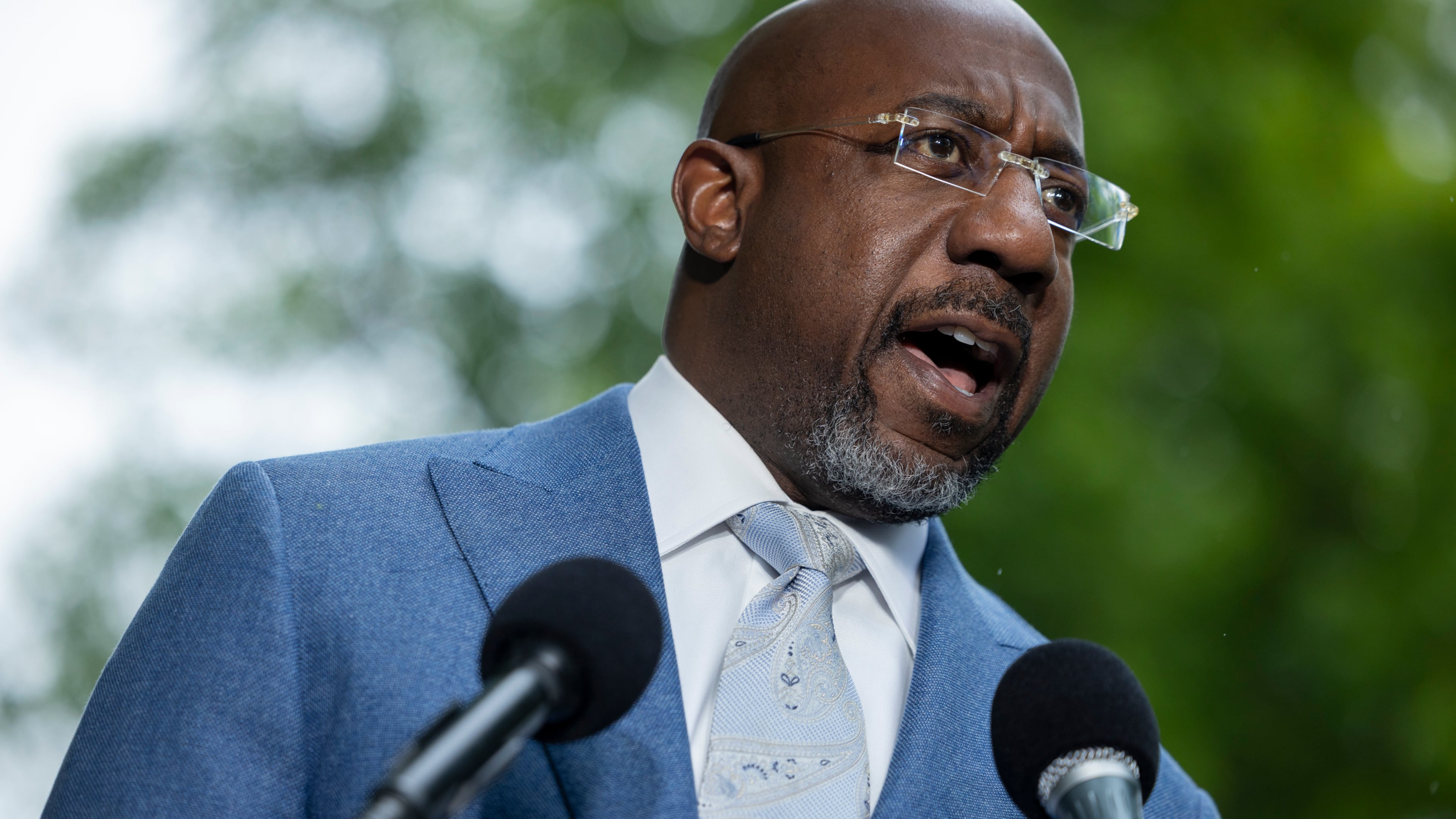
An extraordinary meeting happened at the U.S. Capitol this week, where House Speaker Mike Johnson, a Republican, called U.S. Sen. Raphael Warnock into his office to discuss an interview the senator recently gave to The New York Times.
In the interview, Warnock criticized Johnson for convening a prayer circle of GOP lawmakers on the House floor ahead of the vote on President Donald Trump’s “One Big Beautiful Bill Act” last year, which both cut taxes and slashed funding for Medicaid and food stamp programs.
“I don’t understand how you read that (bill), say a long prayer, hold hands with your fellow legislators, and then cut a trillion dollars — $1 trillion — out of Medicaid calling it waste, fraud, and abuse,” Warnock said.
On the same day the law passed, Johnson also showed reporters the Capitol prayer room. It’s a little-known sanctuary where members often go for prayer and reflection and where the Speaker said Republicans gathered to pray for the legislation.
Warnock told The New York Times the whole episode made him ask himself “whether the religion is more performative than substantive,” adding that Christian leaders have often been on the wrong side of moral issues, including slavery and civil rights.
The Georgia senator was hardly alone in his criticism of the tax cut bill or Johnson’s visible displays of faith before Republicans passed it.
But he was the only Democrat Johnson called into his office to discuss what he’d said about the speaker, who is an evangelical Southern Baptist and often says the Bible guides his thinking, just like Warnock.
After the meeting in the Capitol, Johnson and Warnock both declined to recount the exact conversation for reporters. But their polite descriptions give you the idea they did not leave seeing eye-to-eye. The speaker said the meeting had been “productive,” while Warnock told Politico they had “agreed to disagree.”
More importantly, a source with knowledge of the conversation told me the Speaker and the senator both agreed to pray for each other.
It’s hard to think of a better argument for having diverse leaders in Washington than two devoutly Christian men, with nearly opposite views of what that means in practice and policy, sitting down and hearing the other’s point of view. And then praying for each other.
Were Warnock not in the Capitol, the House Speaker would not have been in the room with a Black pastor who grew up in Savannah public housing, pushing him to see the issue from another, but equally important, perspective.
It’s the same value that U.S. Rep. Sanford Bishop brings to the House Appropriations Committee, where he is a senior leader on funding for farms and nutrition programs. Bishop was the first Black lawmaker to chair his agriculture subcommittee. While he routinely pushes for laws and funding to benefit Georgia farmers generally, he also works to help Black farms and struggling families specifically, since he knows the obstacles they face at home in his rural, poor district.
Last week, Bishop spoke on the House floor to object to a bill that will cut funding for the Special Supplemental Nutrition Program for Women, Infants, and Children. “Do we not want fresh and healthy food for women, infants, and school children? Do we want to keep turning this country back instead of moving it forward?” he said.
Bishop’s 2nd Congressional District, which is 50% Black, is the one most likely to be redrawn by Republican lawmakers starting next week when they convene for a special legislative session. But it won’t be the only one.
GOP leaders have shared few details of the political maps they’ll propose, but by eliminating additional majority-minority districts it’s possible that Georgia could end up with an 11-3 Republican-Democratic split in Congress. That would give Republicans two extra seats. Across the South, Democrats fear as many as 26 majority-Black legislative seats could be lost. Were Warnock in the House instead of elected statewide in the Senate, we can reasonably assume his seat could be drawn out, too.
The redistricting portion of the special session was made possible by the U.S. Supreme Court in May, when justices struck down Louisiana’s political maps and drastically weakened protections of the Voting Rights Act in the process. President Donald Trump has demanded Republican-controlled states redraw their districts to maximize GOP control of Congress while he’s still in the White House.
But just because Republican lawmakers can redraw the maps to eliminate Black districts next week doesn’t mean they should.
Not only are they risking backlash from voters in Georgia, which is a battleground state by any measure, they risk losing the voices of the lawmakers who represent the diversity of the state and history we’ve all lived through to get here.
When Republican lawmakers debated changes to election laws in 2021, they heard from Black lawmakers whose parents were barred from voting in Georgia decades before. When the Georgia Senate wanted to put a statue of U.S. Supreme Court Justice Clarence Thomas on the state Capitol grounds, Black senators stood to say they wouldn’t want their own grandchildren to visit the Capitol and see the statue as an example of what they should become.
In the same way Warnock’s voice is making a difference in Washington, Black and minority voices matter in the U.S. House and Georgia General Assembly. More importantly, their constituents matter and should be able to choose their representatives instead of their representatives choosing them.
Whether Republican lawmakers agree remains to be seen.